
Embarking on a cross-country journey from the bustling metropolis of New York to the sun-drenched sprawl of Los Angeles is an iconic American adventure. It’s a voyage that traverses diverse landscapes, vibrant cultures, and a significant chunk of the continent. The most common question that arises when contemplating such a trip is simple yet fundamental: “How many miles from New York to Los Angeles?” While the answer might seem straightforward, the actual mileage can vary depending on the mode of transport and the specific route taken, offering a fascinating glimpse into the scale of the United States.

This epic road trip, often undertaken by those seeking the quintessential American experience, stretches across thousands of miles. Whether you’re dreaming of cruising down historic highways or seeking the most efficient route, understanding the distance is the first step in planning an unforgettable adventure. This article will delve into the various distances, popular routes, and considerations for your journey between these two iconic cities, touching upon the wealth of experiences awaiting you along the way.
The Direct Distance: A Straight Line and a Realistic Drive
The most direct, or “as the crow flies,” distance between New York City and Los Angeles is approximately 2,445 miles (about 3,935 kilometers). This figure represents the shortest possible distance if one were to draw a straight line on a map between the two points. However, this is purely theoretical for terrestrial travel and doesn’t account for any roads, terrain, or geographical features.
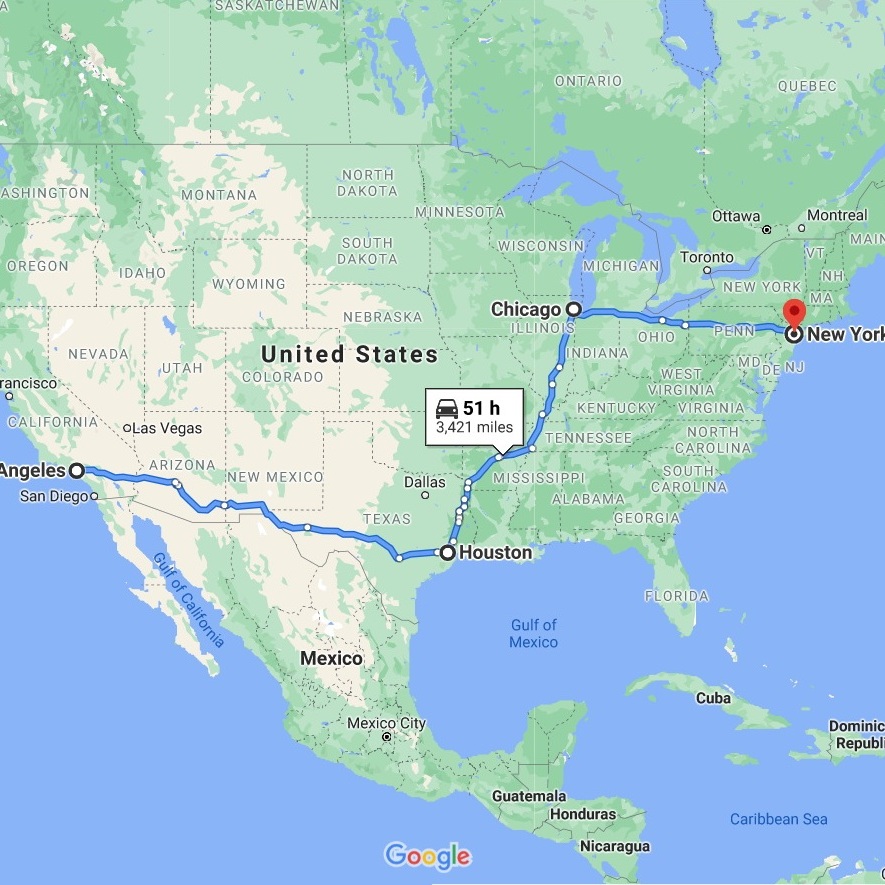
When it comes to driving, the mileage naturally increases due to the necessity of following established road networks. The most commonly cited driving distance between New York and Los Angeles is around 2,800 miles (approximately 4,500 kilometers). This estimate typically follows major interstate highways that connect the East Coast to the West Coast, offering a balance between speed and accessibility.
Key Interstate Routes and Their Mileage
Several primary interstate highways form the backbone of this cross-country drive. The most popular and often the most efficient route typically involves a combination of Interstate 80 (I-80) and Interstate 70 (I-70), or variants that connect them.
-
The Northern Route (I-80 Focus): A route heavily utilizing I-80 would take travelers across states like Pennsylvania, Ohio, Illinois, Iowa, Nebraska, Wyoming, Utah, Nevada, and finally into California. This route often offers breathtaking scenery, particularly as you pass through the Rocky Mountains in Wyoming and Utah. The mileage for this route can hover around 2,800 to 2,900 miles, depending on specific detours or starting points within New York City.
-
The Central Route (I-70 Focus): Another popular option involves a significant portion of I-70, passing through states such as Pennsylvania, Ohio, Indiana, Illinois, Missouri, Kansas, Colorado, Utah, and then connecting to routes that head southwest towards Los Angeles. This route is famous for its passage through the majestic landscapes of Colorado, including the Rocky Mountains. The mileage here is comparable, often falling within the 2,800 to 2,900-mile range.
-
The Southern Route (I-40 Focus): For those seeking warmer weather or a different set of attractions, a southern route might be preferred, often utilizing I-40. This route would typically start by heading south from New York to connect with I-40 in states like Tennessee or Oklahoma, then continuing through Texas, New Mexico, Arizona, and into California. This route can be slightly longer, sometimes reaching closer to 2,900 to 3,000 miles, but it offers a distinct set of cultural and natural landmarks.
The exact mileage can fluctuate based on the specific starting point in the vastness of New York City (e.g., Manhattan vs. Brooklyn) and the precise entry and exit points into Los Angeles. Factors such as current road construction, preferred scenic detours, and even gas station stops can add or subtract a few miles. Therefore, it’s always advisable to use a reliable GPS or mapping service for real-time route planning.
Beyond the Miles: The Travel Experience and Its Dimensions
Understanding the mileage is crucial for logistics, but the true value of a journey from New York to Los Angeles lies in the experiences and discoveries made along the way. The United States is a tapestry of diverse landscapes, cultures, and attractions, and this cross-country trip offers a unique opportunity to witness it firsthand.
The Appeal of the Road Trip: Destinations and Attractions
The journey between these two iconic cities is more than just covering distance; it’s about the unfolding narrative of America. From the historic cobblestone streets of Philadelphia to the architectural marvels of Chicago, the endless prairies of the Midwest to the rugged beauty of the Grand Canyon, and the glitz of Las Vegas to the serene deserts of Arizona, countless landmarks and attractions beckon.
-
Midwestern Charm and Landmarks: Traveling through the Midwest might lead you to explore cities like Chicago, renowned for its towering skyscrapers and vibrant blues music scene, or St. Louis, home to the majestic Gateway Arch. You might find yourself captivated by the vast farmlands, the historic Route 66, or the natural beauty of places like Badlands National Park.
-
Mountain Majesty and Desert Wonders: As you venture westward, the landscape transforms dramatically. The Rocky Mountains offer unparalleled vistas, with opportunities for hiking, skiing, or simply soaking in the panoramic views. Further on, the stark beauty of the desert unfolds, with iconic sights like the Grand Canyon National Park in Arizona, the otherworldly landscapes of Zion National Park in Utah, or the shimmering lights of Las Vegas in Nevada.
- California Dreaming: Reaching California marks the final leg of the journey. Depending on your route, you might pass through the stunning coastal highways, the fertile valleys, or the dramatic mountain ranges that define the state. The anticipation builds as you approach the sprawling urban landscape of Los Angeles, a city synonymous with entertainment, innovation, and a unique coastal lifestyle.
Accommodation and Lifestyle Choices
The sheer distance and the potential for exploration mean that a New York to Los Angeles trip is rarely completed in a single sitting. It necessitates overnight stays, offering a chance to experience different facets of American hospitality and lifestyle.
-
Hotels and Resorts: From charming boutique hotels in small towns to luxurious resorts offering a respite from the road, the options for accommodation are vast. Consider the amenities you desire – perhaps a swimming pool to cool off after a long day of driving, or a pet-friendly establishment if you’re traveling with a furry companion. Many travelers opt for well-known hotel chains like Holiday Inn, Best Western, or Marriott properties, which are typically found along major interstates and offer consistent quality and services. For a more unique experience, local motels and inns can provide a glimpse into regional character.
-
Villas and Apartments for Extended Stays: For those embarking on a more leisurely journey, or perhaps relocating, renting apartments or villas along the route can provide a home-away-from-home feel. This is particularly attractive for families or groups who prefer to unpack and settle in for a few days in a particular city or region, allowing for deeper exploration of local attractions and culture.
-
Budget vs. Luxury Travel: The distance also opens up a spectrum of travel styles. Budget travelers might focus on affordable motels, camping, or even sleeper car train options, prioritizing mileage over comfort. Conversely, luxury travelers might opt for premium hotels, fine dining experiences in major cities, and perhaps even private jet charters for a swift and opulent transit. The choice depends entirely on individual preferences, budget, and the desired pace of the journey.
Planning Your Cross-Country Expedition
The question “How many miles from New York to Los Angeles?” is the starting point for a much larger planning endeavor. Whether you’re looking for the quickest drive, the most scenic route, or a journey filled with specific cultural touchstones, careful planning is key to maximizing your experience.
The Fastest vs. The Scenic Route
For those whose primary goal is to reach Los Angeles as quickly as possible, adhering to the most direct interstate highways is paramount. This typically means minimizing stops and prioritizing speed. Mapping services will usually suggest routes that utilize sections of I-80 or I-70 and then connect to westward arteries. The estimated driving time for the 2,800-mile journey, assuming an average speed and factoring in essential stops for fuel and rest, is typically between 40 to 45 hours of pure driving time. This translates into a minimum of 4-5 days of travel if you drive 8-10 hours per day.
However, for many, the journey itself is the destination. A scenic route might involve deviating from the fastest interstates to explore national parks, charming small towns, or points of historical interest. This could mean spending more time on routes like the historic Route 66, traversing state highways that offer breathtaking natural beauty, or making significant detours to visit landmarks like Mount Rushmore or Yellowstone National Park. Such a journey can easily extend to two weeks or more, allowing for in-depth exploration and a more relaxed pace.
Modes of Transport and Their Implications
While driving is perhaps the most iconic way to cover the miles from New York to Los Angeles, it’s not the only option.
-
Driving: As discussed, this offers the ultimate freedom and flexibility, allowing for spontaneous stops and the exploration of off-the-beaten-path attractions. It requires careful planning regarding vehicle maintenance, lodging, and budgeting for fuel, food, and potential tolls.
-
Flying: For those who prioritize time and simply need to get from point A to point B, flying is the most efficient method. Numerous airlines, including American Airlines, Delta Air Lines, and United Airlines, offer direct flights between New York City airports (like JFK or LGA) and Los Angeles International Airport (LAX). The flight time is approximately 5-6 hours, making it a vastly different experience in terms of duration compared to driving.
-
Train: Amtrak offers cross-country train routes, providing a more relaxed and scenic way to travel. While significantly slower than flying, it allows passengers to enjoy the changing landscapes, move around the train, and avoid the stress of driving. The journey by train typically takes around 3 days and involves at least one change of trains, often in Chicago. It’s an experience that appeals to those who appreciate the journey and want to disconnect from the hustle of everyday life.
-
Bus: For the most budget-conscious travelers, bus services like Greyhound offer a way to traverse the country. This is the slowest option, often taking 3-4 days or more with multiple stops and transfers.
Ultimately, the number of miles from New York to Los Angeles is a statistic, but the true measure of this journey is the wealth of experiences, memories, and personal growth it offers. Whether you choose the open road, the skies, or the rails, the adventure of crossing the United States is a testament to the vastness and diversity of this incredible country.
LifeOutOfTheBox is a participant in the Amazon Services LLC Associates Program, an affiliate advertising program designed to provide a means for sites to earn advertising fees by advertising and linking to Amazon.com. Amazon, the Amazon logo, AmazonSupply, and the AmazonSupply logo are trademarks of Amazon.com, Inc. or its affiliates. As an Amazon Associate we earn affiliate commissions from qualifying purchases.