
The question of the distance between Alaska and Russia evokes a sense of wonder and intrigue, hinting at a geographical proximity that belies the vastness of the Pacific Ocean separating the two great nations. For travelers and adventurers, this unique juncture of continents represents one of the planet’s most extreme and fascinating frontiers. It’s a place where ancient history, remarkable wildlife, and geopolitical significance converge, offering a glimpse into a world few ever experience. Understanding this distance is not merely a geographical exercise; it’s the first step in appreciating the profound travel experiences and historical narratives embedded in this remote corner of the globe.

Bridging Continents: The Bering Strait’s True Proximity
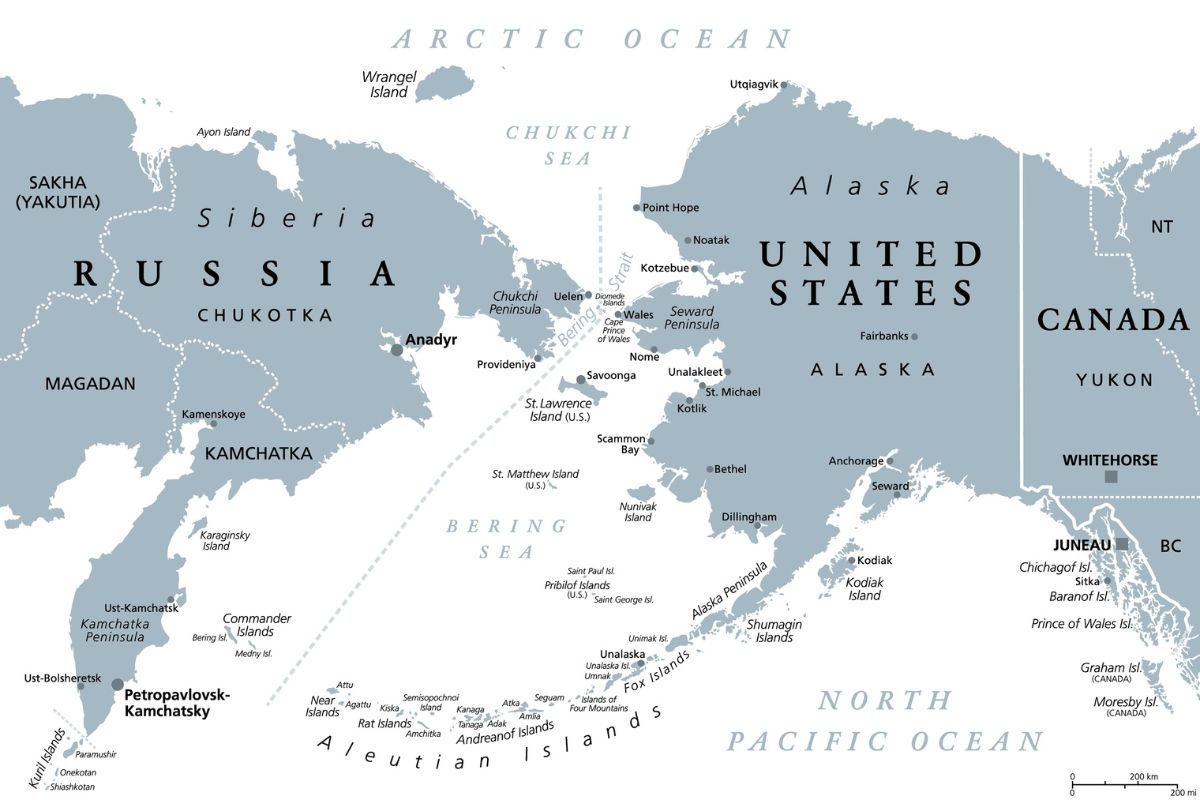
At its core, the distance between Alaska, a state of the United States, and Russia is defined by the Bering Strait. This narrow waterway, connecting the Chukchi Sea (part of the Arctic Ocean) to the Bering Sea (part of the Pacific Ocean), is one of the world’s most strategically important and biologically rich marine environments. For intrepid travelers, it represents the ultimate “edge of the world” destination, a place where continents almost touch.
The Narrowest Point: A Mere 55 Miles
The answer to “how many miles” is surprisingly small when considering the scale of continents. At its narrowest point, the Bering Strait is approximately 55 miles (88 kilometers) wide. This stretch of water separates Cape Dezhnev on the Chukotka Peninsula in Russia from Cape Prince of Wales on the Seward Peninsula in Alaska. To put this into perspective, 55 miles is a distance many people commute daily. While traversing it by conventional means is far more challenging due to extreme weather, sea ice, and geopolitical restrictions, the sheer proximity is astounding. This narrowness has shaped everything from ancient human migration patterns to modern-day geopolitical strategies and, most importantly for travelers, the unique character of the region as an ultimate adventure destination.
The Diomede Islands: Stepping Stones in the Strait
Adding another layer of fascination to this geographical puzzle are the Diomede Islands. These two rocky islands sit almost precisely in the middle of the Bering Strait, acting as natural stepping stones between the continents.
- Big Diomede Island (also known as Imaqliq or Ratmanov Island) belongs to Russia.
- Little Diomede Island (also known as Kigiktaq) belongs to the United States.
These islands are separated by an astonishingly small gap of approximately 2.4 miles (3.8 kilometers). This makes them the closest landmasses between the two countries, a truly unique feature for any traveler interested in extreme geography. What makes them even more remarkable is that the International Date Line runs precisely between them. This means that when it’s Monday on Little Diomede Island (USA), it’s already Tuesday on Big Diomede Island (Russia). Locals sometimes refer to them as “Tomorrow Island” and “Yesterday Island,” an incredible concept for any traveler to ponder. While public access to Big Diomede Island is highly restricted, Little Diomede Island is home to an Inupiat community, offering a rare opportunity for extremely adventurous travelers to experience a vibrant Indigenous culture at the very edge of the world.
A Journey Through Time: Historical and Contemporary Crossings
The Bering Strait is not just a geographical marker; it’s a testament to millennia of movement, exploration, and human endurance. From ancient migrations to modern-day expeditions, the desire to traverse this icy frontier has captivated humanity.
Ancient Migrations: The Bering Land Bridge
Perhaps the most significant “crossing” in human history involved what is known as the Bering Land Bridge or Beringia. During the last Ice Age, vast quantities of the Earth’s water were locked up in glaciers, causing global sea levels to drop significantly. This exposed a vast landmass that connected Asia and North America, stretching hundreds of miles from north to south. This fertile, treeless steppe tundra, teeming with megafauna, served as a crucial migration corridor for early humans, who crossed from what is now Siberia into Alaska, eventually populating the Americas. For travelers, understanding the concept of the Bering Land Bridge transforms the contemporary Bering Strait from a mere waterway into a profound historical pathway, an echo of humanity’s earliest and most daring migrations. The remnants of this ancient landscape, though submerged, continue to shape the biodiversity and unique ecological systems of the surrounding land and sea.
Modern-Day Expeditions and Challenges
In modern times, the idea of crossing the Bering Strait remains a formidable challenge and an ultimate feat of adventure travel, largely due to extreme environmental conditions and stringent geopolitical realities. The waters are notoriously cold, often ice-choked for much of the year, and subject to powerful currents and unpredictable storms.
Despite these obstacles, a few remarkable individuals and teams have attempted and even succeeded in various forms of crossing:
- In 1987, American long-distance swimmer Lynne Cox made a historic swim across the frigid waters from Little Diomede Island to Big Diomede Island, a powerful symbolic gesture during the Cold War.
- Later, in 1998, a team attempted to walk across the frozen Bering Strait, although not fully succeeding due to treacherous ice conditions.
- More recently, British explorer Karl Bushby attempted a continuous ‘world walk’ that included a crossing of the Bering Strait, albeit facing significant logistical and permitting hurdles.
These stories highlight the extraordinary nature of the region. For the vast majority of travelers, a direct crossing is impractical or impossible due to severe weather, the need for specialized equipment, and complex border regulations. Both the United States and Russia maintain strict control over their respective waters and coastlines, designating them as sensitive border zones. This means that while the idea of a direct journey between continents is alluring, the contemporary travel experience focuses more on exploring the accessible coastal regions and understanding the strait from a safe, legal, and respectful distance.
The Allure of the Far North: Travel Experiences in the Bering Region
While direct crossings are largely restricted, the regions bordering the Bering Strait offer unparalleled travel experiences for those seeking raw nature, rich Indigenous cultures, and the thrill of exploring one of the planet’s wildest frontiers. This is true adventure travel, far removed from conventional tourist trails.
Exploring Alaska’s Western Frontier
The Alaskan side of the Bering Strait is accessible to adventurous travelers, providing a gateway to understanding the unique character of this borderland.
- Nome: This historic gold rush town on the Seward Peninsula is a primary hub for travel to Western Alaska. It’s famous as the finish line of the Iditarod Trail Sled Dog Race and offers insights into gold mining history, Inupiat culture, and breathtaking Arctic scenery. From Nome, travelers can arrange flights or boat trips to smaller coastal villages, getting closer to the strait itself.
- Kotzebue: Further north, above the Arctic Circle, Kotzebue is a vibrant Inupiat community that offers deep cultural immersion. Visitors can learn about traditional subsistence lifestyles, explore the Northwest Arctic Heritage Center, and witness the incredible wildlife of the Arctic National Wildlife Refuge.
- Wildlife Viewing: The Bering Strait region is a biodiversity hotspot. Travel here offers unparalleled opportunities for viewing marine mammals such as gray whales, bowhead whales, walruses, and seals. Polar bears are also found further north. Birdwatchers will revel in the migratory bird populations that flock to the cliffs and tundras during the short summer.
- Adventure Activities: Beyond wildlife, the Alaskan frontier provides opportunities for dog sledding tours, ice fishing, tundra hiking, and cultural tours that connect travelers with the Indigenous communities who have thrived in this challenging environment for millennia. Visiting Little Diomede Island, though logistically complex, is a once-in-a-lifetime experience for those who make the journey, offering a tangible connection to the International Date Line and a vibrant community.
Russia’s Chukotka: A Glimpse into the East
On the Russian side, the Chukotka Autonomous Okrug is an even more remote and largely inaccessible destination for international travelers. This vast region, encompassing Cape Dezhnev and Big Diomede Island, is characterized by its harsh Arctic climate, rugged tundra, and a sparse population, primarily Chukchi and Yupik Indigenous communities. Travel to Chukotka is highly regulated, requiring special permits that are difficult to obtain for foreign citizens, making it one of the world’s least visited regions. For the most determined and patient of adventurers, however, the reward would be an encounter with a pristine wilderness, unique Indigenous cultures, and a perspective on the Bering Strait from its eastern shores. While practical travel guides are scarce, the allure of Chukotka for intrepid explorers is undeniable, representing the ultimate challenge in extreme travel.
The Dream of Connection: Future Travel Possibilities
The relatively short distance across the Bering Strait has long fueled ambitious proposals for a physical connection between North America and Asia. While these remain largely theoretical, they speak to the enduring human desire to bridge geographical divides and transform global travel and trade.
The Bering Strait Tunnel/Bridge Concept
For over a century, engineers, visionaries, and even politicians have pondered the feasibility of constructing a bridge or, more commonly, a tunnel across the Bering Strait. Such a project, often dubbed the “Intercontinental Peace Bridge” or “Trans-Bering Strait Tunnel,” would be an engineering marvel of unprecedented scale.
- Engineering Challenges: The deep, often ice-laden waters, seismic activity, and extreme weather conditions present immense hurdles. A tunnel would need to be incredibly long (up to 60 miles, including connections to railway networks), deep, and withstand the harshest Arctic environment.
- Astronomical Costs: Estimates for such a project run into hundreds of billions, possibly trillions, of dollars, requiring immense international cooperation and investment that has, so far, proven elusive.
- Geopolitical Hurdles: Beyond the technical and financial aspects, the political will and cooperation between the United States and Russia would be paramount, a challenge in itself given historical and contemporary relations.
Despite these obstacles, the concept persists, fueled by the vision of a connected world where goods could travel from London to New York by rail, fundamentally reshaping global logistics and offering a truly unique travel experience for future generations.

Implications for Travel and Exploration
Should a Bering Strait link ever materialize, its impact on travel and exploration would be revolutionary. A direct rail or road connection would open up the entire Arctic region to a form of overland travel currently unimaginable. Tourists could potentially traverse two continents in a single journey, experiencing the vastness of both the Siberian and Alaskan wildernesses.
However, even without such grand infrastructure, the Bering Strait will always hold a special place in the realm of travel. Its allure lies precisely in its remoteness, its challenges, and its role as a natural border that has shaped human and natural history. For the foreseeable future, the genuine travel experiences will continue to be found in exploring the vibrant coastal communities, marveling at the incredible wildlife, and appreciating the sheer untamed beauty of this corner of the world, rather than simply crossing it. The journey to the Bering Strait is as significant as any crossing, offering profound insights into our planet’s geography and the enduring spirit of adventure.
In conclusion, the distance from Alaska to Russia is incredibly short at its narrowest point – just 55 miles – with the Diomede Islands bringing the two nations within a mere 2.4 miles. This geographical fact has shaped millennia of migration, inspired audacious expeditions, and continues to define an extreme frontier for travel. While a direct crossing remains an elusive dream for most, the regions surrounding the Bering Strait offer unparalleled opportunities for travel, inviting adventurers to explore a landscape rich in history, culture, and untamed natural beauty. It’s a journey not just of miles, but of profound discovery at the crossroads of continents and time.
LifeOutOfTheBox is a participant in the Amazon Services LLC Associates Program, an affiliate advertising program designed to provide a means for sites to earn advertising fees by advertising and linking to Amazon.com. Amazon, the Amazon logo, AmazonSupply, and the AmazonSupply logo are trademarks of Amazon.com, Inc. or its affiliates. As an Amazon Associate we earn affiliate commissions from qualifying purchases.