
The question of “how many miles is it from New York to London?” often sparks images of grand transatlantic voyages and swift aerial crossings. It’s a query that delves beyond a simple numerical answer, touching upon the marvels of modern travel, the allure of two iconic global cities, and the vast expanse that separates them. At its heart, this journey connects the bustling metropolis of the United States with the historic capital of the United Kingdom, representing a bridge between continents and cultures.
The distance itself is substantial, a testament to the sheer size of our planet. However, understanding this journey requires more than just miles; it demands an appreciation for the modes of transport, the time commitment, and the rich experiences awaiting travelers at either end. Whether you’re planning a business trip, a luxury escape, a family vacation, or a budget adventure, the transatlantic route offers a gateway to unforgettable travel experiences, world-class accommodation, unparalleled tourism opportunities, and breathtaking landmarks.
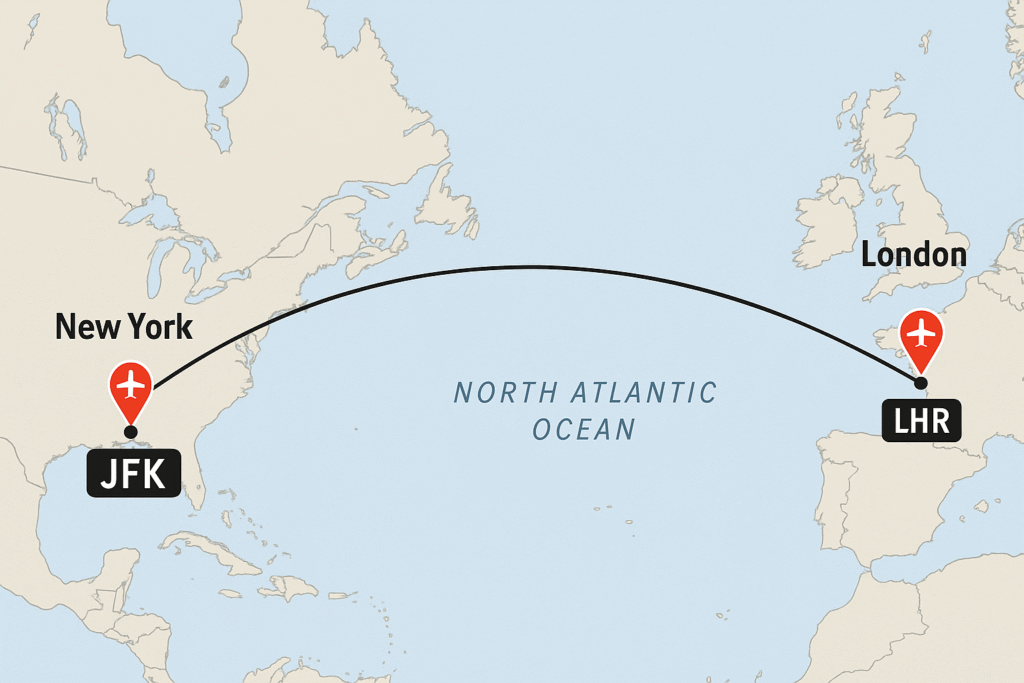
The Transatlantic Divide: Pinpointing the Distance
The physical separation between New York and London is a defining feature of transatlantic travel. While a direct line on a flat map might seem straightforward, the Earth’s spherical shape means the shortest distance is a curve.
The Great Circle Route Explained
When calculating the distance between two points on the globe, especially for long-haul air travel, we refer to the “great circle route.” This isn’t a straight line in the traditional sense, but rather the shortest path between two points on the surface of a sphere. For New York and London, this route arches northward, often passing over parts of Canada, Greenland, and Iceland, before descending towards the United Kingdom.
The approximate great circle distance from New York City to London is generally around 3,450 to 3,500 miles (approximately 5,550 to 5,630 kilometers). This figure can vary slightly depending on the specific airports chosen for departure and arrival. For instance, the distance from John F. Kennedy International Airport (JFK) in New York to London Heathrow Airport (LHR) might differ by a few miles from a flight originating from Newark Liberty International Airport (EWR) to London Gatwick Airport (LGW). These slight variations are minimal but can influence flight planning.
Factors Influencing Actual Flight Paths
While the great circle route defines the theoretical shortest distance, actual flight paths are influenced by a multitude of dynamic factors. Air traffic control plays a crucial role, guiding aircraft to ensure safety and avoid congestion, especially over heavily trafficked air corridors. Weather patterns are another significant variable; powerful jet streams, for example, can either act as a tailwind, significantly shortening eastbound flights, or a headwind, extending westbound journeys. Airlines strategically leverage these natural phenomena to optimize fuel consumption and minimize flight times.
Moreover, considerations like geopolitical airspace restrictions, emergency landing alternate airports, and specific airline operational procedures can lead to minor deviations from the theoretical great circle. Consequently, while the geographic distance remains constant, the actual miles covered by an aircraft in transit can fluctuate, typically within a small margin.
Bridging Continents: Travel Methods and Time
The vast distance between New York and London necessitates efficient travel methods. While air travel has become the predominant choice, the allure of a more leisurely sea voyage still holds a romantic appeal for some.
Air Travel: The Dominant Choice
For the vast majority of travelers, flying is the only practical option for crossing the Atlantic. Direct flights from major New York area airports (JFK, EWR) to London airports (Heathrow, Gatwick) are plentiful, offered by a host of reputable airlines. These include carriers such as British Airways, Virgin Atlantic, Delta Air Lines, United Airlines, and American Airlines, among others.
The average flight time for this route is remarkably consistent. Eastbound flights, which benefit from the prevailing jet stream, typically take between 6 to 8 hours. Westbound flights, flying against the jet stream, usually last a little longer, ranging from 7 to 9 hours. These times refer to direct, non-stop services. Flights with layovers, while potentially offering cost savings, will naturally extend the overall journey duration considerably.
The experience of air travel has evolved significantly. Modern aircraft offer a range of cabin classes, from economy to premium economy, business class, and luxurious first class suites, each providing varying levels of comfort, space, and amenities. In-flight entertainment systems are standard, offering movies, TV shows, music, and games to help pass the time. Despite the comfort, the significant time zone difference (five hours ahead in London compared to New York) often leads to jet lag, a common aspect of long-haul international travel that requires careful management upon arrival.
A Nostalgic Glimpse: Ocean Liners
Before the advent of commercial air travel, crossing the Atlantic by ocean liner was the primary mode of transportation. While no longer a practical option for urgent travel, a few luxury cruise lines still offer scheduled transatlantic crossings, preserving a bygone era of elegant sea voyages. The most famous proponent of this grand tradition is the Cunard Line’s Queen Mary 2.
A journey aboard the Queen Mary 2 typically takes around 7 days, offering a stark contrast to the swiftness of air travel. This mode of transport is less about reaching a destination quickly and more about the journey itself – a luxurious, unhurried experience. Passengers can indulge in gourmet dining, attend formal balls, enjoy Broadway-style shows, and relax in opulent surroundings, truly embracing a lifestyle of classic sea travel. While it’s not a common choice for commuters or budget travelers, it represents a unique and memorable way to bridge the gap between New York and London, especially for those seeking a distinct travel experience that echoes history.
From Concrete Jungles to Historic Capitals: What Awaits
The journey from New York to London isn’t just about covering miles; it’s about transitioning between two of the world’s most vibrant and influential cities, each offering a unique tapestry of culture, history, and modernity.
New York: The City That Never Sleeps

Upon arrival in New York, travelers are immediately immersed in an exhilarating urban landscape. This city is a kaleidoscope of iconic landmarks, diverse neighborhoods, and endless activities, catering to every imaginable interest.
-
Landmarks and Attractions: No visit to New York is complete without seeing the majestic Statue of Liberty on Liberty Island, often paired with a visit to Ellis Island, gateway to millions of immigrants. Ascend the Empire State Building or Top of the Rock for breathtaking panoramic views of the skyline. Times Square, with its dazzling billboards and bustling energy, is a spectacle in itself. Escape the urban intensity in the sprawling greenery of Central Park, or catch a world-class show in the Broadway Theatre District. Other notable sights include the Brooklyn Bridge, Grand Central Terminal, and the solemn 9/11 Memorial & Museum.
-
Culture & Lifestyle: New York’s cultural scene is unparalleled. Explore the vast collections of the Metropolitan Museum of Art and the contemporary masterpieces at the Museum of Modern Art (MoMA). Wander through the charming streets of Greenwich Village, known for its bohemian history and vibrant nightlife, or experience the rich cultural heritage of Harlem. The city is a culinary paradise, offering everything from Michelin-starred fine dining to diverse street food vendors, reflecting its multicultural population.
-
Accommodation: New York boasts an extensive range of accommodation options. For luxury travel, iconic hotels like The Plaza Hotel or the Four Seasons Hotel New York Downtown offer unparalleled service and amenities. Mid-range hotels are plentiful across all boroughs, while budget travelers can find comfortable hostels and guesthouses. For longer stays or a more local experience, serviced apartments are also a popular choice.
-
Travel Tips: Navigating New York is made easy by its comprehensive subway system, an essential part of any visit. Consider purchasing a MetroCard for convenience. Walking is also an excellent way to explore individual neighborhoods. Be prepared for crowds, especially in popular tourist areas, and always allow ample time for travel between destinations.
London: A Tapestry of History and Modernity
Arriving in London transports you to a city where centuries of history seamlessly blend with contemporary innovation. From ancient royal traditions to cutting-edge art and fashion, London offers an endlessly captivating experience.
-
Landmarks and Attractions: The city is replete with world-famous landmarks. Witness the Changing of the Guard at Buckingham Palace, explore the historic Tower of London and its Crown Jewels, or marvel at the architectural grandeur of the Houses of Parliament and Big Ben. Visit the solemn Westminster Abbey, a site of coronations and royal weddings, and take a ride on the London Eye for breathtaking views across the River Thames. The British Museum, Trafalgar Square, Piccadilly Circus, and St Paul’s Cathedral are also essential stops for any itinerary. Don’t forget to take in the impressive architecture of The Shard.
-
Culture & Lifestyle: London’s cultural scene is as diverse as its population. Catch a world-class play in the West End theatre district, explore the vibrant markets of Covent Garden and Borough Market, or wander through the colourful streets of Notting Hill. For a taste of London’s edgy creativity, head to Shoreditch and Soho. The city’s culinary landscape ranges from traditional pub fare to innovative Michelin-starred restaurants, offering a feast for every palate. The green spaces of Hyde Park and Kensington Gardens provide peaceful retreats from the urban bustle.
-
Accommodation: London offers a superb array of hotels and accommodations. For those seeking luxury, legendary establishments like The Ritz London, Claridge’s, or The Savoy provide unparalleled elegance. Boutique hotels abound in stylish neighborhoods, while chains cater to business travelers and families. Numerous apartments and long-term stay options are available for extended visits, providing a home-away-from-home experience.
-
Travel Tips: The London Underground, affectionately known as “the Tube,” is the most efficient way to get around. Purchase an Oyster card for convenient travel. Black cabs and buses also offer excellent transport options. Be prepared for occasional rain, and remember that tipping customs differ slightly from the United States. Embrace the local pub culture for a truly authentic London experience.
Planning Your Transatlantic Journey: Essential Considerations
Embarking on a journey from New York to London involves more than just booking a flight. Thoughtful planning, encompassing budget, timing, and logistical details, can significantly enhance your overall travel experience.
Cost of Travel
The financial aspect of transatlantic travel can vary widely. Flight prices are heavily influenced by the season, booking in advance, and the airline chosen. Peak travel seasons (summer, holidays) will inevitably see higher fares, while booking several months out can yield significant savings. Budget airlines may offer lower base fares, but often charge extra for luggage, seat selection, and in-flight amenities. Full-service carriers typically include these as standard.
Accommodation costs in both New York and London range from budget-friendly hostels to opulent luxury resorts. Researching and comparing options, as well as booking in advance, especially during popular times, is crucial. On-the-ground expenses for food, local transport, entrance fees to attractions, and shopping should also be factored into your overall budget. Travelers can opt for luxury travel experiences, indulging in fine dining and high-end shopping, or embrace budget travel strategies by utilizing public transport, eating at local eateries, and seeking out free attractions.
Best Time to Visit
Both New York and London are year-round destinations, but the best time to visit largely depends on your preferences. Spring (April to June) and autumn (September to November) are often considered ideal. During these shoulder seasons, the weather is generally pleasant, and the crowds are less intense than in the summer. Major cultural events, festivals, and exhibitions also frequently occur during these periods.
Summer (July to August) brings warmer weather and vibrant outdoor activities but also higher prices and larger crowds. Winter (December to March) can be chilly, with the possibility of snow, especially in New York. However, the festive atmosphere around Christmas and New Year’s in both cities can be magical, and airfares and accommodation prices are generally lower, except during holiday peaks.
Visa and Entry Requirements
Before planning your trip, it is vital to check the latest visa and entry requirements for citizens of your country. For citizens of the United States and the United Kingdom, short tourist stays generally do not require a visa, but specific requirements for duration of stay and necessary documentation apply. Other nationalities may need to apply for a visa in advance. Always refer to the official government websites of the destination country for the most up-to-date and accurate information to ensure a smooth entry.

Making the Most of Your Trip
To truly enhance your transatlantic journey, consider crafting a detailed itinerary. Pre-booking popular attractions, especially those with timed entry, can save valuable time and ensure access. Research local culture and customs to enrich your experience and foster respectful interactions. Travel insurance is highly recommended for international trips, offering peace of mind against unforeseen circumstances. Whether you envision a whirlwind sightseeing adventure, a leisurely cultural immersion, or a focused business stay, careful planning is the cornerstone of an exceptional journey from New York to London.
Ultimately, the journey from New York to London is an iconic transatlantic experience that, while defined by thousands of miles, is shaped by moments of anticipation, discovery, and connection. It’s a route that promises not just a change of scenery, but a profound immersion into two distinct yet equally captivating global hubs. So, calculate your miles, pack your bags, and prepare for an adventure that transcends mere distance.
LifeOutOfTheBox is a participant in the Amazon Services LLC Associates Program, an affiliate advertising program designed to provide a means for sites to earn advertising fees by advertising and linking to Amazon.com. Amazon, the Amazon logo, AmazonSupply, and the AmazonSupply logo are trademarks of Amazon.com, Inc. or its affiliates. As an Amazon Associate we earn affiliate commissions from qualifying purchases.