
Embarking on a journey to the heart of the Rocky Mountains means setting your sights on Denver, Colorado – a city renowned for its vibrant culture, breathtaking natural beauty, and status as a major economic and recreational hub in the Western United States. For any prospective traveler, the first and often most fundamental question is, “How far is it?” Understanding the mileage to Denver is not merely about a number; it’s the starting point for planning an unforgettable travel experience, whether you envision a cross-country road trip, a quick flight, or a leisurely train ride.
This guide aims to demystify the distances to Denver from various major points across the nation, offering insights into travel methods, estimated durations, and key considerations for your journey. As the “Mile High City,” Denver’s elevation is well-known, but its geographic accessibility is equally significant, drawing millions of visitors annually. By understanding the mileage and various routes, you can better prepare for the adventure that awaits in this dynamic city nestled against the dramatic backdrop of the Front Range.
The Geographic Pull of Denver: A Central Hub
Denver’s location plays a pivotal role in its appeal as a travel destination. Situated almost precisely in the geographic center of the continental United States, it serves as a natural crossroads for travelers heading east or west, north or south. This strategic position makes it accessible from a wide array of starting points, each offering a unique journey and a distinct mileage calculation. The city’s growth and development have further solidified its status as a major transportation nexus, with extensive highway networks, a bustling international airport, and reliable rail connections facilitating travel from virtually anywhere.
Understanding the ‘distance’ to Denver involves more than just a direct line on a map. It encompasses the practical driving routes, the efficiency of air travel, and the scenic detours that can turn a simple trip into an extraordinary adventure. The choice of travel mode significantly impacts the perceived distance, transforming thousands of miles into a matter of hours or days, depending on your preference and itinerary.
Understanding Mile Markers: What ‘Distance’ Truly Means
When we talk about the distance to Denver, we’re generally referring to the road mileage, which accounts for the actual routes cars and trucks take along interstates and highways. This is different from “as the crow flies” or straight-line distance, which is useful for aviation but less so for ground travel planning. Road mileage inherently includes the twists, turns, and detours necessary to navigate terrain and existing infrastructure. Therefore, while a straight-line distance might be shorter, the practical driving distance will always be greater. Factors like road closures, construction, and even weather can further alter real-time travel distances and times. Planning your trip means considering these variables, ensuring a realistic understanding of your journey’s demands.
Driving to Denver: Routes, Distances, and Road Trip Wisdom
For many, the quintessential American travel experience is the road trip, and driving to Denver offers a fantastic opportunity to see a vast expanse of the country. The mileage can vary significantly depending on your starting point, ranging from a few hundred miles to over two thousand. A well-planned road trip requires careful consideration of vehicle maintenance, rest stops, fuel costs, and potential overnight stays.
Key Distances from Major US Cities
Here’s a general overview of approximate driving distances from several prominent U.S. cities to Denver:
- From Kansas City, Missouri: Roughly 600 miles. This journey typically takes about 9-10 hours, primarily via Interstate 70 (I-70) straight west through Kansas.
- From Salt Lake City, Utah: Approximately 520 miles. Also largely via I-70, this route offers incredible mountain views and takes around 8-9 hours.
- From Dallas, Texas: Around 790 miles. Travelers can expect a 12-13 hour drive, primarily using Interstate 35 (I-35) North to Oklahoma City and then I-44 and I-70 West, or Interstate 25 (I-25) North directly.
- From Phoenix, Arizona: Roughly 850 miles. This route often involves I-17 North to Flagstaff, then I-40 East, eventually connecting with I-25 North to Denver, taking about 13-14 hours.
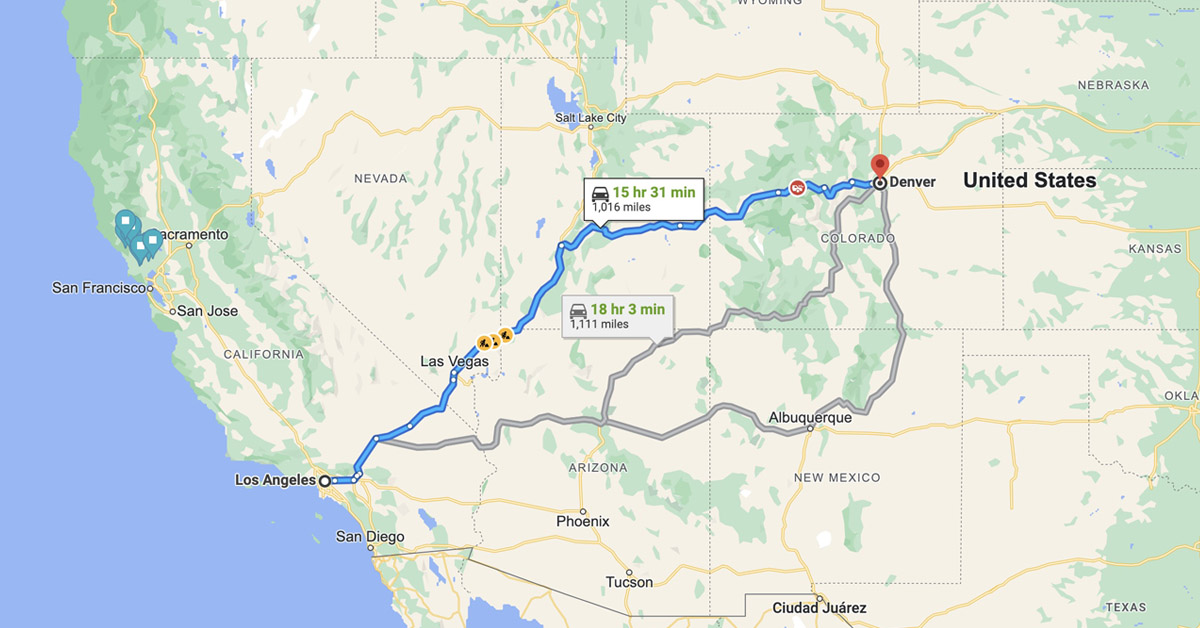
- From Los Angeles, California: Approximately 1,020 miles. A significant cross-state journey of 15-16 hours, often via Interstate 15 (I-15) North to Las Vegas, then connecting to I-70 East.
- From Chicago, Illinois: About 920 miles. This extensive drive typically takes 14-15 hours, primarily following I-80 West through Iowa and Nebraska, then merging onto I-76 into Denver.
- From New York City, New York: A considerable 1,775 miles. This multi-day journey of 26-28 hours generally utilizes I-80 West across multiple states.
These figures are estimates and can fluctuate based on traffic, specific starting addresses, and chosen routes. Always consult a reliable navigation system for the most accurate, real-time information.
Planning Your Denver Road Trip: What to Consider
Beyond the raw mileage, a successful road trip to Denver hinges on meticulous planning. Vehicle preparation is paramount; ensure your car is in excellent condition, with recent oil changes, tire checks, and fluid top-offs. The diverse climates you might encounter, especially when approaching Colorado’s mountains, necessitate proper tire pressure and potentially winter tires or chains if traveling in colder months.
Route selection can significantly impact your experience. While speed is often a priority, scenic routes might offer a more enriching journey, even if they add a few miles or hours. Consider breaking up longer drives with overnight stays in interesting towns along the way. Omaha, St. Louis, or Grand Junction are popular choices, offering opportunities to rest and explore. Budgeting for fuel, food, and lodging is also crucial. Gasoline prices can vary widely by state, so anticipating fuel stops can save money. Finally, travel insurance can be a wise investment, providing peace of mind against unexpected breakdowns or medical emergencies.

Scenic Drives and Alternative Routes
For those seeking more than just a direct path, many routes to Denver offer stunning scenery. Traveling through Utah on I-70, for instance, you’ll encounter dramatic red rock canyons and vast desert landscapes before ascending into the majestic Rocky Mountains of Colorado. From the south, routes passing through New Mexico or parts of Arizona can reveal unique southwestern vistas. Even sections of I-80 through Wyoming offer expansive plains views and glimpses of distant mountain ranges, leading eventually to the eastern plains of Colorado and the approach to Denver. These alternative routes might add mileage but significantly enhance the travel experience, transforming the journey into an integral part of the adventure.
Flying to Denver: The Fastest Way to the Mile High City
For travelers prioritizing speed and convenience, flying is undoubtedly the most efficient way to reach Denver. What might take days by car can be accomplished in a matter of hours, making air travel ideal for shorter trips or those with limited time.
Denver International Airport (DIA): Your Gateway
Denver International Airport (DIA) is a massive, modern facility located approximately 25 miles northeast of downtown Denver. It is one of the busiest airports in the world and serves as a major hub for several airlines, including United Airlines and Southwest Airlines. Its extensive network of domestic and international flights connects Denver to nearly every major city in the U.S. and numerous global destinations. Upon arrival, travelers have multiple options for reaching the city center, including the A Line commuter train, rental cars, shuttles, and ride-sharing services. The efficiency and connectivity of DIA streamline the final leg of your journey, bringing you quickly from the tarmac to Denver’s vibrant streets.
Flight Durations and Major Hubs
While the “miles” are still technically there, flying reduces them to a temporal measure. Here are typical non-stop flight durations from various major U.S. cities to Denver:
- From Kansas City: ~1 hour 30 minutes
- From Salt Lake City: ~1 hour 15 minutes
- From Dallas/Houston: ~2 hours 30 minutes
- From Phoenix: ~2 hours
- From Los Angeles/San Francisco: ~2 hours 30 minutes
- From Chicago: ~2 hours 30 minutes
- From New York City: ~4 hours
- From Miami, Florida: ~4 hours 30 minutes
- From Seattle, Washington: ~2 hours 30 minutes
- From Atlanta, Georgia: ~3 hours
- From Minneapolis, Minnesota: ~2 hours
These times do not include travel to and from airports, security checks, or potential layovers, which can significantly extend the overall travel time. Booking flights in advance, especially during peak seasons, is advisable to secure better prices and preferred schedules.
Beyond Miles: The Journey’s True Value
While understanding the mileage and flight durations to Denver is fundamental, the true value of any travel experience often lies beyond these numbers. It’s about the journey itself, the preparation, and the anticipation of arriving at a destination that promises adventure, relaxation, or discovery.
Alternative Travel: Rail and Bus Options
For those who prefer a slower pace or wish to avoid driving or flying, alternative ground transportation options exist. Amtrak provides scenic train routes to Denver, with its historic Union Station serving as a vibrant transportation and social hub downtown. The California Zephyr, for example, offers a breathtaking journey through the Rocky Mountains and across the plains from Chicago or San Francisco, transforming thousands of miles into a multi-day scenic adventure. Bus services like Greyhound also connect Denver to cities nationwide, offering an economical travel alternative, albeit with longer travel times compared to driving. While these options naturally involve longer durations due to stops and slower speeds, they offer a unique perspective on the country’s diverse landscapes and can be an experience in themselves.

Making the Most of Your Denver Arrival
Regardless of how many miles you cover or how you choose to travel, arriving in Denver is the culmination of your planning and journey. From the moment you see the distinct city skyline against the mountain backdrop, the effort invested in understanding your travel options and distances becomes worthwhile. Denver offers a wealth of experiences, from exploring its vibrant neighborhoods and culinary scene to embarking on outdoor adventures in the nearby mountains. Destinations like Red Rocks Amphitheatre, Pikes Peak, and the Garden of the Gods are popular day trips, easily accessible from the city.
The question “How many miles is it to Denver, Colorado?” is more than just a logistical query; it’s the gateway to planning an adventure. Whether you’re navigating the intricate network of interstate highways, soaring above the clouds, or enjoying the rhythmic sway of a train, the journey to the Mile High City promises to be as memorable as the destination itself. By understanding the distances and travel methods, you empower yourself to craft a trip that perfectly aligns with your time, budget, and sense of adventure.
LifeOutOfTheBox is a participant in the Amazon Services LLC Associates Program, an affiliate advertising program designed to provide a means for sites to earn advertising fees by advertising and linking to Amazon.com. Amazon, the Amazon logo, AmazonSupply, and the AmazonSupply logo are trademarks of Amazon.com, Inc. or its affiliates. As an Amazon Associate we earn affiliate commissions from qualifying purchases.