
The vast expanse of the United States stretches from the sun-drenched shores of California to the bustling metropolis of New York, a journey that sparks curiosity for many. When contemplating this iconic cross-country trek, one of the most fundamental questions is: “How many miles is Los Angeles to New York?” This inquiry forms the bedrock of planning any significant travel adventure, influencing everything from transportation choices to the overall duration of the trip. Understanding this distance is the first step in unlocking the myriad possibilities that lie between these two legendary cities.

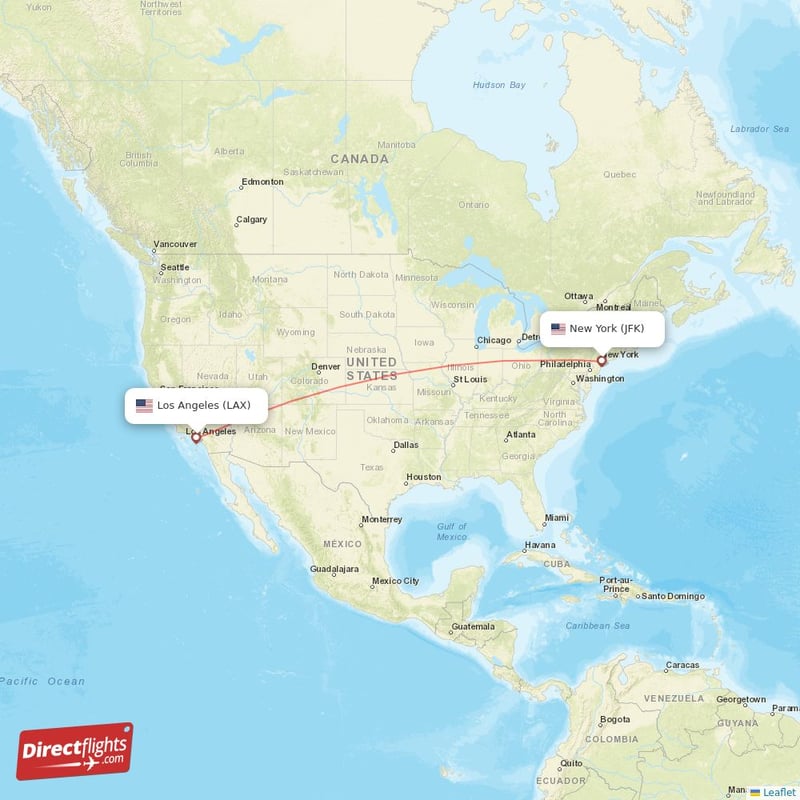
This continental divide, a significant stretch of land offering diverse landscapes, cultures, and experiences, is approximately 2,790 miles when traveling by air, and can range from 2,800 to 3,500 miles depending on the specific driving route taken. This considerable mileage underscores the epic nature of traversing the United States from coast to coast. It’s a distance that has captured the imagination of travelers, adventurers, and dreamers for generations, representing not just a physical journey but also a cultural and geographical immersion into the heart of America.
The Journey Across America: Routes and Distances
The question of “how many miles” is intrinsically tied to the chosen mode of transport. Each method offers a unique perspective on the United States, revealing different facets of its character. Whether you prefer the speed and efficiency of air travel, the freedom and flexibility of a road trip, or the classic charm of a train journey, the distance remains a constant, yet its impact on your experience is profoundly shaped by your travel style.
Flying Coast to Coast: The Speed of Modern Travel
For those seeking the quickest way to bridge the gap between Los Angeles and New York, air travel is the undisputed champion. A direct flight typically covers the 2,790 miles in about five to six hours of flight time, not including time spent at airports for check-in, security, and boarding. This allows travelers to maximize their time exploring either destination, fitting a cross-country adventure into a busy schedule. Major airlines like American Airlines, Delta Air Lines, and United Airlines offer numerous daily flights connecting Los Angeles International Airport (LAX) with New York’s John F. Kennedy International Airport (JFK), LaGuardia Airport (LGA), and Newark Liberty International Airport (EWR). The sheer volume of flights ensures flexibility in scheduling, making it the most practical option for business travelers and those on short vacations.
Road Tripping: The Open Road Adventure
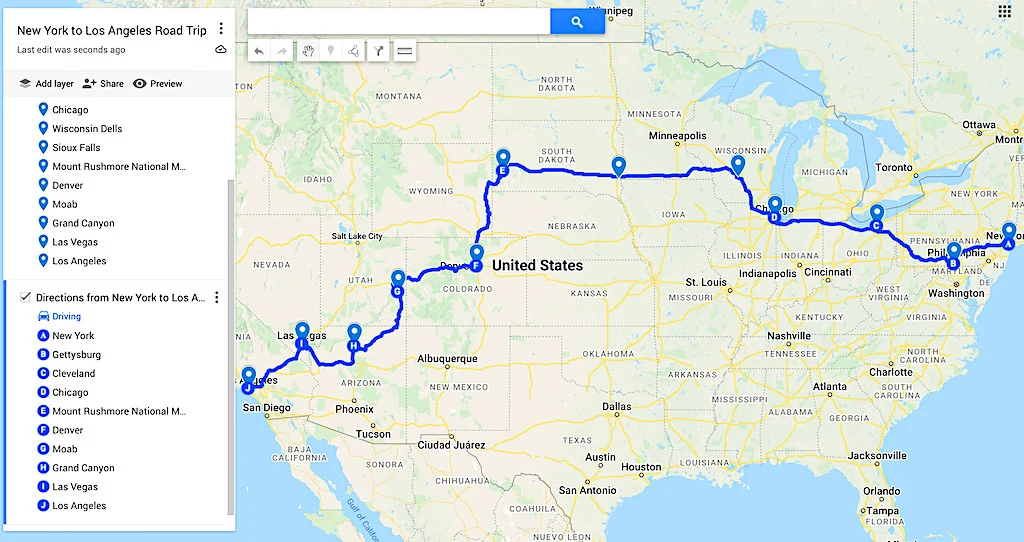
Embarking on a road trip from Los Angeles to New York is an entirely different proposition, transforming the journey itself into a significant part of the experience. This is where the mileage truly becomes a canvas for exploration. While a direct, non-stop drive would be an arduous undertaking, most travelers opt for routes that allow for sightseeing and discovery. The most common driving routes, often utilizing major interstates like Interstate 10 (I-10), Interstate 40 (I-40), Interstate 70 (I-70), or Interstate 80 (I-80), can span anywhere from 2,800 to over 3,500 miles.
The choice of route dictates the landscapes you’ll traverse. Heading south via I-10 might take you through the deserts of the Southwest, cities like Phoenix and Austin, and the bayous of Louisiana. A more central path using I-40 or I-70 could lead you through the painted deserts of Arizona, the majestic peaks of the Rocky Mountains, the sprawling plains of the Midwest, and historical sites along the way. Opting for the northern route via I-80 might expose you to the dramatic scenery of the Sierra Nevada mountains, the salt flats of Utah, and the Great Lakes region.
This journey is not merely about covering miles; it’s about experiencing the diverse tapestry of the United States. Along the way, you can stop at iconic landmarks like the Grand Canyon National Park, the historic Route 66, the vibrant music scene in Nashville, the architectural marvels of Chicago, and the natural beauty of Niagara Falls. The average driving time, assuming an average of 8-10 hours of driving per day, can range from 4 to 7 days, depending on the number of stops and the pace of travel. This allows for a deeply immersive experience, encountering local cultures, sampling regional cuisines, and discovering hidden gems that are often missed on faster travel methods.
Rail Travel: A Scenic and Relaxing Odyssey
For a romantic and scenic perspective on the cross-country distance, rail travel offers a unique and often overlooked option. While not as fast as flying, it provides a comfortable and leisurely way to witness the changing landscapes of America. The journey from Los Angeles to New York by train, typically undertaken with Amtrak, involves multiple connections and can take approximately 65 to 75 hours, or roughly three days and nights.
The most common routing would involve taking the Southwest Chief from Los Angeles Union Station to Chicago Union Station, a journey of around 43 hours, offering stunning views of the American Southwest. From Chicago, you would then board the Lake Shore Limited or the Capitol Limited eastward towards New York City, another 18-20 hours of travel. This route allows passengers to witness the transition from the arid West to the lush Midwest and finally the bustling East Coast.
Train travel offers a different kind of immersion. You can relax in your seat, observe the passing scenery from a unique vantage point, and often enjoy amenities like dining cars and sleeping accommodations. It’s a journey that encourages reflection and provides a sense of continuum, a stark contrast to the disembodied experience of flying. While the mileage is still substantial, the experience of traversing it by train is one of grace and contemplation, allowing you to truly appreciate the vastness and beauty of the United States.
Planning Your Transcontinental Adventure
Understanding the mileage is the first step, but planning a trip of this magnitude involves much more. Considerations for accommodation, activities, and lifestyle choices all play a crucial role in shaping the overall experience, especially when traveling such a significant distance. Whether you’re looking for luxury or budget-friendly options, family fun or a solo exploration, the journey from Los Angeles to New York can be tailored to meet a wide array of travel desires.
Accommodation and Lifestyle Choices
The choice of where to stay along the route profoundly impacts the budget and the experience. In cities like Los Angeles and New York, a vast array of hotels are available, from opulent five-star establishments like the Beverly Hills Hotel to more budget-friendly options. Resorts in scenic locations and charming villas can offer unique stays, while apartments provide a sense of home for longer stays. For a road trip, the types of accommodation vary from roadside motels and boutique inns in small towns to well-known hotel chains like Marriott or Hilton in larger cities.
Budget travelers might opt for hostels, budget hotels, or camping in national parks. Luxury travelers might seek out five-star hotels, private residences, or exclusive resorts in destinations like Aspen or Scottsdale. Family trips might prioritize hotels with family suites or vacation rentals with amenities like pools and kitchens. Business travelers might focus on hotels with excellent business facilities and convenient locations. The lifestyle you adopt for this journey—whether it’s a fast-paced exploration or a leisurely discovery—will directly influence your accommodation choices.
Exploring Attractions and Local Culture
The journey between Los Angeles and New York is a treasure trove of attractions. Along the driving routes, countless landmarks, both natural and man-made, beckon. The natural wonders of Zion National Park and Arches National Park in Utah offer breathtaking vistas. Historic sites like the Gateway Arch National Park in St. Louis and the Mount Rushmore National Memorial in South Dakota provide glimpses into the nation’s past.
Cultural experiences abound. In cities like New Orleans, you can immerse yourself in the unique jazz music and Creole cuisine. Chicago offers world-class museums, iconic architecture, and a vibrant blues scene. Philadelphia provides a deep dive into American history with sites like Independence Hall and the Liberty Bell Center.
Food is a significant part of the travel experience, with each region boasting its own specialties. From the barbecue of Texas and the Creole dishes of Louisiana to the deep-dish pizza of Chicago and the diverse culinary landscape of New York City, tasting your way across the country is an adventure in itself. Engaging with local culture through food, festivals, and interactions with residents enriches the journey immeasurably.
Tips for a Smooth Transcontinental Journey
Regardless of your chosen mode of transport, planning is key to a successful trip. For driving, ensure your vehicle is in good condition, pack essentials, and have a reliable navigation system. Consider booking accommodations in advance, especially during peak travel seasons. For flying, book flights strategically to get the best prices and times. For train travel, book sleeper compartments if you desire more comfort on the overnight legs.
It’s also wise to factor in potential delays, whether due to weather, traffic, or mechanical issues. Flexibility in your itinerary can turn potential setbacks into unexpected opportunities for discovery. Understanding the time zone changes across the country is also important for planning. The transition from Pacific Time to Mountain Time, Central Time, and finally Eastern Time can affect arrival and departure times, as well as the length of your day.
Ultimately, the question “How many miles is Los Angeles to New York?” is just the beginning of a much larger narrative. It’s a gateway to understanding the scale of the United States, the diversity of its landscapes, and the richness of its cultures. Whether you choose to fly, drive, or take the train, the journey itself becomes an integral part of the story, a memorable expedition across the heart of America.
LifeOutOfTheBox is a participant in the Amazon Services LLC Associates Program, an affiliate advertising program designed to provide a means for sites to earn advertising fees by advertising and linking to Amazon.com. Amazon, the Amazon logo, AmazonSupply, and the AmazonSupply logo are trademarks of Amazon.com, Inc. or its affiliates. As an Amazon Associate we earn affiliate commissions from qualifying purchases.