
Florida, the Sunshine State, has long been a beacon for those seeking warmer climes, abundant recreational opportunities, and a vibrant lifestyle. Its allure extends beyond seasonal tourism, captivating a significant number of individuals and families looking to establish permanent residency. Understanding the daily influx of people moving to Florida offers a fascinating glimpse into the state’s enduring appeal and its dynamic demographic shifts. This constant migration impacts everything from housing markets and infrastructure to the very fabric of its diverse communities.
The Enduring Magnetism of Florida
Florida’s appeal is multi-faceted, drawing a diverse population for a variety of compelling reasons. The state’s unique geographical position, blessed with miles of coastline and a tropical to subtropical climate, provides an unparalleled environment for outdoor living and year-round recreation. This intrinsic advantage acts as a powerful magnet, drawing those who desire a lifestyle centered around beaches, boating, fishing, and a general appreciation for the natural environment.
Climate and Outdoor Lifestyle
The most frequently cited reason for relocation to Florida is its climate. The absence of harsh winters, coupled with ample sunshine, allows for an active lifestyle that can be enjoyed throughout the year. From the serene Gulf Coast beaches of St. Petersburg to the lively Atlantic shores near Miami, outdoor enthusiasts find endless opportunities. Activities such as swimming, surfing, kayaking, golf, and tennis are not merely seasonal pastimes but daily possibilities. The warmth and sunshine foster a sense of well-being and encourage a more relaxed pace of life, which is highly attractive to many.
Economic Opportunities and Business Growth
Beyond its natural beauty, Florida has cultivated a robust and diversifying economy. Major metropolitan areas like Orlando, Tampa, and Jacksonville have become hubs for various industries, including aerospace, technology, healthcare, and finance. The state’s business-friendly environment, characterized by lower taxes and less regulation compared to many other states, has spurred significant growth. This economic vitality translates into more job opportunities, attracting professionals and entrepreneurs alike. The burgeoning tech scene, particularly in Austin and growing pockets within Florida, also plays a role in drawing skilled workers.
Affordability and Quality of Life
While coastal areas can be expensive, many parts of Florida still offer a more affordable cost of living than comparable regions in the Northeast or West Coast. The absence of state income tax is a significant financial draw for individuals and families. This financial advantage, combined with the high quality of life, encompassing access to cultural attractions, diverse dining, and family-friendly entertainment, makes Florida an attractive proposition for those looking to improve their overall well-being without compromising their financial stability. The burgeoning arts scene in cities like Sarasota adds another layer to its cultural appeal.
Quantifying the Daily Migration: Trends and Data
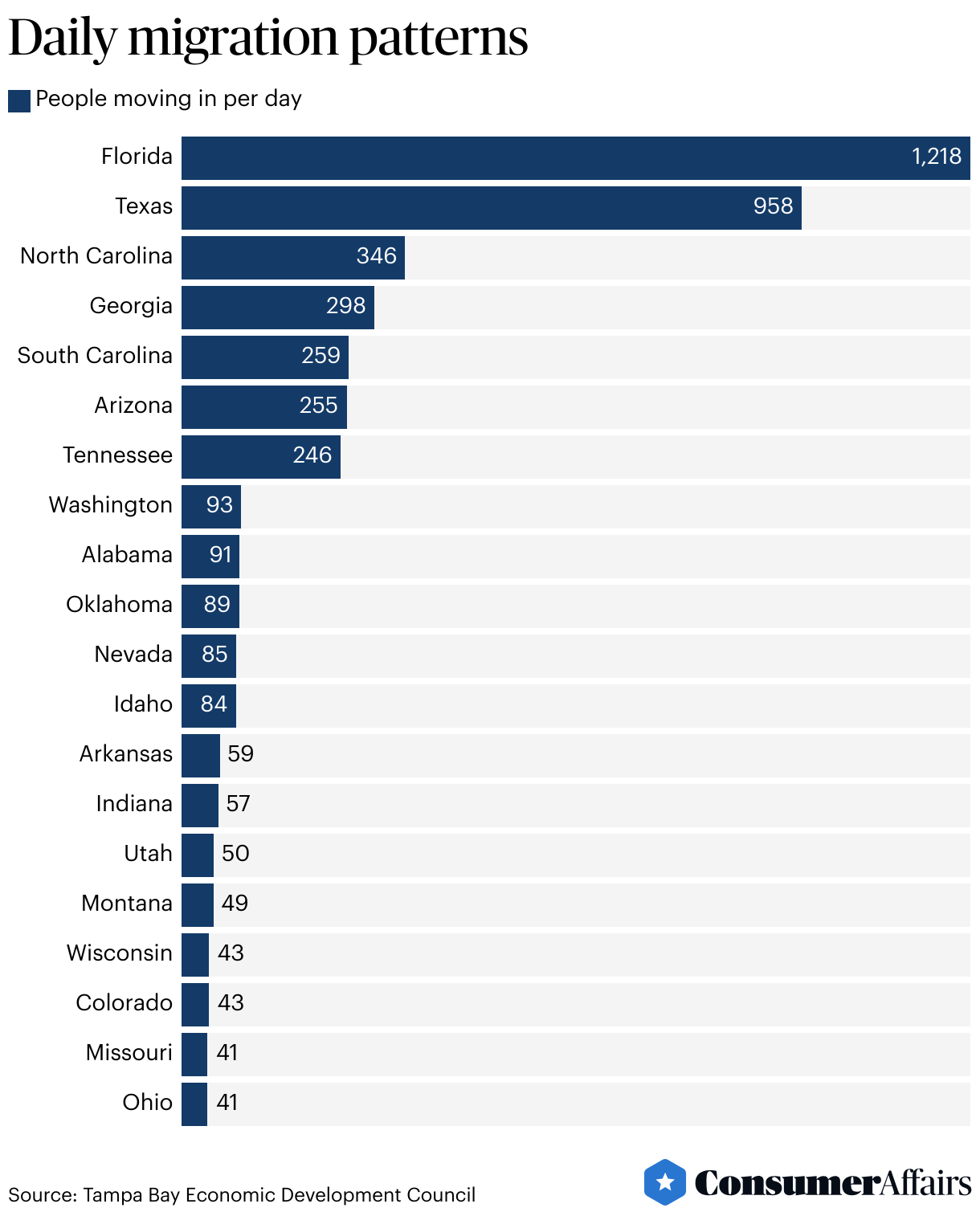
Estimating the precise number of people moving to Florida each day is a complex statistical endeavor, involving the analysis of various data points and projections. While no single definitive real-time tracker exists, demographers and researchers utilize a combination of official census data, movers’ data, driver’s license changes, and voter registration records to paint a comprehensive picture. These metrics, when aggregated and analyzed, consistently point to a substantial daily influx.
State-Level Population Growth
Official U.S. Census Bureau data consistently ranks Florida among the fastest-growing states in the nation. These reports, typically released annually, provide a broad overview of population changes. For instance, recent Census Bureau estimates have indicated that Florida is adding hundreds of thousands of residents each year. To translate this into a daily figure, one must divide the annual net migration by 365. This calculation, though a simplification, provides a tangible estimate of the daily population increase due to migration. For example, if a state adds 200,000 residents annually, it implies an average of over 500 new residents per day.
Movers’ Data and Relocation Services
Companies specializing in relocation services and tracking moving trends offer valuable, albeit proprietary, insights. These firms often analyze data from moving companies, shipping manifests, and change-of-address requests. Their reports frequently highlight Florida as a top destination for interstate moves. While the exact figures are not publicly disclosed, the consistent reporting of Florida as a leading destination underscores the significant daily flow of people. These services often specialize in assisting with moves to popular cities like Naples and the Florida Keys.
Driver’s License and Vehicle Registrations
Another key indicator is the change in driver’s license and vehicle registration data. When individuals move to Florida from out of state, they are typically required to obtain a Florida driver’s license and register their vehicles within a specified timeframe. State agencies track these changes, and a consistent increase in these applications signifies new residents establishing themselves. This data, when analyzed by county or region, can also reveal which areas are experiencing the most significant growth within the state, such as the popular communities around Palm Beach and Fort Lauderdale.
The Impact of Seasonal vs. Permanent Residents
It is crucial to distinguish between seasonal visitors and permanent movers. While Florida attracts millions of tourists annually, the focus of this analysis is on individuals and families establishing residency. Movers’ data and official census projections are more attuned to permanent relocations. Understanding this distinction is vital for accurate demographic analysis and for planning infrastructure and services that cater to a growing permanent population, not just transient visitors.
Drivers of the Daily Influx

The continuous stream of people moving to Florida is driven by a confluence of factors, ranging from the desire for a higher quality of life to strategic economic decisions. These drivers are not static but evolve with national trends and the state’s own development.
Retirement and ‘Snowbirds’
Historically, Florida has been a premier destination for retirees. The warm weather, abundant recreational activities, and tax advantages make it an ideal location for those looking to enjoy their golden years. While “snowbirds” often refer to seasonal residents who spend only part of the year in Florida, a significant portion of this demographic eventually transitions to permanent residency. The availability of retirement communities and healthcare facilities catering to seniors, such as those found in areas like The Villages, further reinforces this trend.
Young Professionals and Families
Florida’s appeal is not limited to retirees. Young professionals and families are increasingly drawn to the state for its growing job market, more affordable housing compared to some other major metropolitan areas, and family-friendly environments. Cities like Tampa, with its revitalized downtown and diverse industries, and the growing tech corridor in Tampa Bay are attracting a younger demographic. The quality of public and private schools, coupled with the state’s extensive park system and attractions like Walt Disney World, make it an attractive place to raise a family.
Business Relocations and Entrepreneurship
Florida’s business-friendly climate, coupled with its strategic location and growing workforce, has led to an increase in business relocations and entrepreneurial activity. Companies, ranging from startups to established corporations, are choosing Florida for its favorable tax policies and access to talent. This corporate migration, in turn, creates job opportunities that attract individuals and families, further fueling the population growth. The expansion of industries in areas like Miami-Dade County and the research hubs in Gainesville are significant contributors.
In-State Migration and Regional Shifts
It is also important to acknowledge that a portion of the population growth comes from within Florida itself. As economic opportunities shift, or as individuals seek different lifestyles, they may move from one Florida city or region to another. For example, individuals might move from inland areas to the coast, or from more densely populated areas to developing suburbs in Central Florida. These internal movements contribute to the overall demographic dynamics of the state.
Implications of Daily Migration
The consistent influx of people moving to Florida has profound and far-reaching implications for the state. These impacts are felt across various sectors, necessitating strategic planning and adaptation by state and local governments, businesses, and residents.
Housing Market Dynamics
One of the most immediate and visible impacts of a growing population is on the housing market. Increased demand for homes, whether for purchase or rental, tends to drive up prices and reduce inventory. This can create challenges for long-time residents and those with lower incomes, making affordability a significant concern in many popular areas, particularly along the coast in cities like Sarasota and Fort Myers. Developers are continuously working to meet this demand, leading to new construction projects across the state.
Infrastructure and Public Services
A growing population places increased strain on existing infrastructure, including roads, public transportation, utilities, and healthcare facilities. Expanding roadways to alleviate traffic congestion, upgrading water and sewer systems, and ensuring adequate capacity in schools and hospitals are critical needs. The state government and local municipalities must continually invest in and expand these services to accommodate the rising number of residents. This includes improvements to major arteries like I-75 and public transit in areas like Miami-Dade Transit.
Economic and Workforce Development
While population growth fuels economic expansion through increased consumer spending and a larger labor pool, it also presents challenges in ensuring that the workforce meets the demands of a growing economy. Developing training programs, attracting skilled workers, and supporting small businesses are crucial for sustained economic health. The influx of new residents often brings diverse skills and perspectives, which can invigorate local economies and foster innovation, especially in sectors like hospitality in Orlando and agriculture in South Florida.
Environmental Considerations
Florida’s unique natural environment, including its sensitive ecosystems and abundant wildlife, faces increased pressure with a growing population. Managing urban sprawl, protecting natural resources, ensuring adequate water supply, and addressing potential environmental impacts from development are paramount concerns. Sustainable planning and conservation efforts are vital to preserving the state’s natural beauty for future generations. The protection of areas like the Everglades National Park and coastal preserves is of utmost importance.

Conclusion: A State in Constant Motion
The question of “how many people are moving to Florida each day?” doesn’t yield a single, static number but rather a dynamic, ongoing trend. The data consistently indicates a substantial daily migration, driven by a potent combination of climate, economic opportunity, and an attractive lifestyle. This continuous influx shapes the state’s demographics, economy, and environment. As Florida continues to grow, understanding these trends and proactively addressing the associated challenges will be essential to maintaining its appeal and ensuring a high quality of life for all its residents, both new and long-established. The Sunshine State remains a powerful draw, a testament to its enduring allure in the American landscape.
LifeOutOfTheBox is a participant in the Amazon Services LLC Associates Program, an affiliate advertising program designed to provide a means for sites to earn advertising fees by advertising and linking to Amazon.com. Amazon, the Amazon logo, AmazonSupply, and the AmazonSupply logo are trademarks of Amazon.com, Inc. or its affiliates. As an Amazon Associate we earn affiliate commissions from qualifying purchases.