
New York, often called the Empire State, is a land of fascinating contrasts, boasting both sprawling urban centers and vast natural landscapes. From the bustling streets of Manhattan to the serene wilderness of the Adirondack Mountains, its demographic tapestry is as rich and varied as its geography. The question “How many people live in New York?” seems simple, yet its answer unveils a complex narrative of growth, diversity, and an enduring magnetism that continues to draw people from across the globe. Understanding this population dynamic is crucial not only for grasping the state’s cultural and economic heartbeat but also for appreciating its profound impact on travel, tourism, and the unique lifestyle it offers.

The sheer volume of individuals residing within New York’s borders shapes every aspect of life, from the demand for accommodations and the vibrant culinary scene to the preservation of its iconic landmarks and the relentless pace of urban living. This article delves deep into the latest population figures, explores the historical trends that have molded this demographic giant, dissects its diverse cultural fabric, and examines how these factors intricately weave into the visitor experience and the everyday lives of its inhabitants.
The Population Landscape of New York
To truly comprehend the scale of New York’s population, one must distinguish between the city and the state, as the figures, though interconnected, represent vastly different realities. The story of New York’s populace is one of enduring appeal, marked by significant historical milestones and continuous evolution, making it a pivotal hub within the United States.
New York City vs. New York State: A Tale of Two Scales
At the heart of the state’s population density is, undoubtedly, New York City. Often referred to as “the city that never sleeps,” New York City is a global icon and one of the world’s most populous megacities. As of the latest estimates, New York City’s population hovers around 8.3 to 8.4 million residents. This staggering number makes it the most populous city in the United States, concentrated within its five boroughs: Manhattan, Brooklyn, Queens, The Bronx, and Staten Island. The density is particularly pronounced in Manhattan, where millions live and work within a relatively small island area, creating an unparalleled urban environment.
Contrastingly, the entire New York State encompasses a much larger geographical area and a broader demographic spread. The total population of New York State is approximately 19.5 to 19.6 million people. This figure includes New York City and its vast surrounding metropolitan area, extending into Long Island, the Hudson Valley, and all the way to Upstate New York, including major cities like Buffalo, Rochester, Syracuse, and the state capital, Albany. The vast majority of the state’s population resides within the metropolitan region surrounding New York City, highlighting the city’s gravitational pull. While Upstate New York offers a more rural or suburban experience, with charming towns, natural wonders like Niagara Falls, and serene landscapes, the overall population density significantly decreases outside the immediate orbit of the five boroughs.
Historical Growth and Future Projections
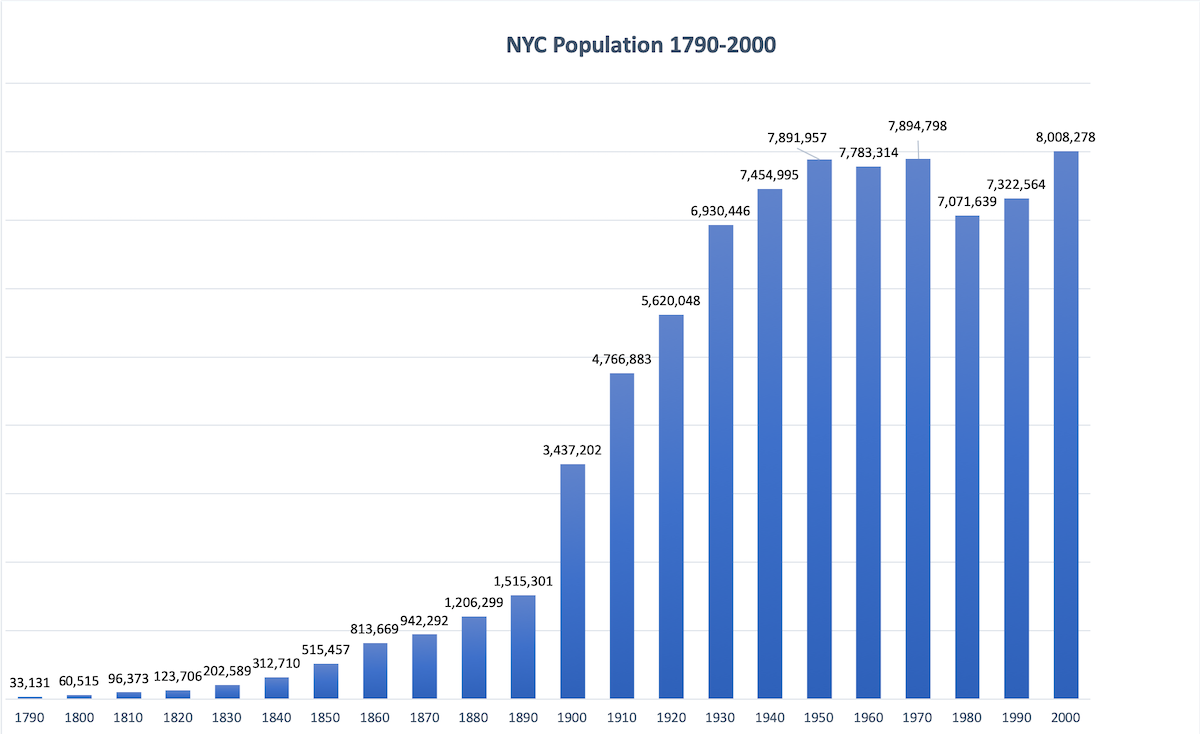
New York’s population trajectory has been one of consistent, albeit sometimes fluctuating, growth since its earliest days as a colonial outpost. In the 17th and 18th centuries, the nascent settlement of New Amsterdam (later New York) quickly became a melting pot due to its strategic port location, attracting immigrants from various European nations. The 19th and early 20th centuries witnessed an unprecedented boom, largely fueled by waves of immigration passing through Ellis Island. Millions arrived seeking new opportunities, rapidly transforming New York City into a global metropolis and significantly boosting the state’s overall population.
Post-World War II, urban decentralization and suburbanization led to some population shifts, but New York City and the broader metropolitan area continued to thrive due to its strong economic engines in finance, media, and culture. Recent decades have seen continued, though slower, growth, with the city experiencing a rebound in the early 21st century after a period of decline. The allure of opportunity, cultural richness, and diversity remains a powerful magnet.
Looking ahead, population projections for New York State indicate a pattern of stabilization or slight growth, particularly driven by international immigration. While some areas of Upstate New York may face challenges of out-migration, the vibrancy and economic dynamism of New York City are expected to continue attracting new residents. These demographic shifts have profound implications for urban planning, infrastructure development, and the sustainable management of resources, including accommodation options and public services for both residents and the millions of tourists who visit annually.
Demographics: A Melting Pot of Cultures
The sheer number of people in New York tells only part of the story. The true essence of the state, especially New York City, lies in its unparalleled demographic diversity. It is a microcosm of the world, where cultures converge, languages intertwine, and traditions are celebrated side by side, creating a vibrant tapestry that enriches the lives of residents and fascinates visitors.
Ethnic Diversity and Linguistic Richness
New York City is arguably the most ethnically diverse city in the world. It is a place where over 200 languages are spoken, and communities from virtually every corner of the globe have established roots. Major ethnic groups include significant populations of White (non-Hispanic), Hispanic or Latino, Black or African American, and Asian residents, alongside a vibrant mix of other racial and ethnic backgrounds. Neighborhoods like Chinatown, Little Italy, Jackson Heights in Queens, and Harlem are testaments to this incredible cultural mosaic, each offering a distinct cultural immersion.
This diversity extends across New York State, though with varying concentrations. While Upstate New York might exhibit less international diversity in smaller towns, its larger cities also reflect a significant mix of ethnic backgrounds, shaped by historical migration patterns and industrial development. This cultural richness is not merely statistical; it manifests daily in the food, music, art, festivals, and distinct neighborhood characters that define the New York experience, making it a prime destination for travelers seeking authentic cultural encounters.
Age and Socioeconomic Structure
The population of New York also presents a varied age and socioeconomic profile. New York City, in particular, has a relatively young and dynamic population, attracting young professionals and recent graduates drawn to its career opportunities and vibrant social scene. However, it also has a significant population of families and retirees, creating a diverse age distribution. This impacts everything from the types of educational institutions available to the demand for diverse healthcare and social services.

Socioeconomically, New York State exhibits a wide spectrum. While New York City is home to immense wealth, particularly in its Financial District on Wall Street, it also contends with significant income inequality and areas of poverty. This disparity influences urban planning, public policy, and the availability of affordable housing and services. For visitors, this translates into a diverse range of experiences, from ultra-luxury accommodations and fine dining to budget-friendly options and immersive cultural experiences in less affluent neighborhoods. Understanding these dynamics helps travelers appreciate the multifaceted reality of life in New York.
New York’s Population and the Tourism Experience
The massive and diverse population of New York is intrinsically linked to its status as a premier global travel destination. The sheer number of residents, coupled with the millions of annual visitors, creates a unique dynamic that shapes every aspect of the tourism experience, from navigating popular sites to savoring local culture.
Navigating Crowds: Attractions and Public Spaces
One of the most immediate impacts of New York’s dense population is the constant presence of crowds, especially in New York City’s most famous attractions. Iconic landmarks like the Statue of Liberty, the Empire State Building, and Times Square are perpetually bustling. Even sprawling green spaces like Central Park see millions of visitors and locals alike enjoying its tranquil escapes. For travelers, this means strategic planning is often necessary – booking tickets in advance, visiting during off-peak hours, or exploring lesser-known gems can enhance the experience.
The city’s extensive public transportation system, including its subway and bus networks, is a testament to the necessity of moving such a large population efficiently. While sometimes crowded, it remains an indispensable tool for both residents and tourists to navigate the sprawling metropolis, connecting attractions, neighborhoods, and business districts with remarkable ease. Understanding and adapting to this bustling environment is key to a smooth and enjoyable New York travel experience.
Culinary Delights and Cultural Vibrancy
The demographic diversity fuels an unparalleled culinary scene in New York. From Michelin-starred restaurants to humble food trucks, every cuisine imaginable can be found, reflecting the myriad cultures that call the state home. Travelers can embark on a global gastronomic journey without leaving New York City, sampling authentic Chinese dim sum in Flushing, Italian pasta in Greenwich Village, Indian curries in Curry Hill, or Caribbean flavors in Flatbush. This rich food culture is a significant draw for tourists and a daily pleasure for residents.
Beyond food, the cultural vibrancy is equally profound. Broadway theaters, world-class museums like the Metropolitan Museum of Art and the Museum of Modern Art (MoMA), live music venues, art galleries, and countless festivals contribute to an endlessly stimulating environment. The sheer number of creative individuals drawn to New York ensures a constant flow of innovative performances, exhibitions, and events. This rich cultural landscape offers an infinite array of experiences for every type of traveler, from art aficionados to history buffs and entertainment seekers.
Living and Visiting: Accommodation and Lifestyle in the Empire State
The population density and the influx of tourists profoundly influence the choices and costs associated with both living and staying in New York. This section explores how the state’s demographics shape its accommodation market and the distinct lifestyles found within its borders.
Finding Your Stay: Hotels, Apartments, and More
With millions of residents and an equally massive influx of tourists, finding suitable accommodation in New York is a critical consideration. New York City, in particular, boasts an incredibly diverse range of options, from luxurious five-star hotels near Times Square to boutique hotels in SoHo and apartments for short-term rental across its boroughs. The demand keeps prices competitive, especially during peak travel seasons, making early booking essential for travelers.
For those planning an extended visit or even contemplating a long-term stay, the residential market is equally robust but challenging. The high population density translates into some of the highest rental and purchase prices for apartments in the United States. This leads to innovative solutions, such as micro-apartments and shared living spaces, especially for students and young professionals. Outside New York City, in areas like Long Island, the Hudson Valley, or Upstate New York, accommodation options become more varied and often more affordable, ranging from charming bed and breakfasts to scenic resorts and vacation villas, catering to different travel budgets and preferences.
The New York Lifestyle: From Fast-Paced Urbanity to Suburban Retreats
The lifestyle in New York is as varied as its population. In New York City, life is notoriously fast-paced and competitive. Residents embrace a culture of ambition, innovation, and constant motion. The city offers unparalleled career opportunities, an endless array of entertainment and dining options available 24/7, and a strong sense of community despite the immense scale. It’s a place where convenience is paramount, with everything from grocery stores to gyms operating at all hours. This urban lifestyle, while exhilarating, also comes with challenges such as high living costs and crowded public spaces.
Moving beyond the city, the lifestyle shifts dramatically. Suburbs on Long Island and in Westchester County offer a more traditional family-oriented environment with excellent schools, spacious homes, and a slower pace. Upstate New York provides access to stunning natural beauty, from the tranquil Finger Lakes wine region to the majestic Catskill Mountains. Here, outdoor activities like hiking, skiing, and boating dominate, and communities are often close-knit and imbued with small-town charm.
Whether one is looking for luxury travel, a budget-friendly adventure, a family trip with educational experiences, or a business stay, New York’s diverse population and landscape cater to every need. The ongoing flow of people, both permanent and temporary, ensures that New York remains a dynamic, evolving, and endlessly fascinating destination, making a deep dive into its population numbers far more than a mere statistical exercise—it’s an exploration of a living, breathing global phenomenon.
In conclusion, understanding “How many people live in New York?” opens a window into the state’s vibrant character. With nearly 20 million residents statewide, and over 8 million concentrated in New York City, the numbers alone are impressive. But it is the story behind these figures – the rich tapestry of cultures, the historical journey of immigration, the economic prowess, and the daily rhythm of life – that truly defines the Empire State as a unique and compelling destination for both residents and travelers worldwide. This immense and diverse population is the very engine that drives New York’s enduring appeal, shaping its landmarks, its lifestyle, and its irresistible pull as a global hub.
LifeOutOfTheBox is a participant in the Amazon Services LLC Associates Program, an affiliate advertising program designed to provide a means for sites to earn advertising fees by advertising and linking to Amazon.com. Amazon, the Amazon logo, AmazonSupply, and the AmazonSupply logo are trademarks of Amazon.com, Inc. or its affiliates. As an Amazon Associate we earn affiliate commissions from qualifying purchases.