
Understanding the requirements for obtaining a driver’s license in California is a crucial step for anyone planning to embrace the full scope of travel and exploration this diverse state offers. Whether you’re a new resident eager to navigate the vibrant cities, a long-term visitor looking to embark on epic road trips, or simply curious about the process, the California Department of Motor Vehicles (DMV) knowledge test is your gateway to independent mobility. Possessing a valid California driver’s license unlocks an unparalleled freedom to discover everything from the bustling urban landscapes of Los Angeles and San Francisco to the serene beauty of Yosemite National Park and the sun-drenched beaches of San Diego. This guide demystifies the knowledge test, detailing its structure, content, and the preparation needed to pass with confidence, ensuring your journey through the Golden State begins on the right track.

Navigating the Golden State: Understanding the California DMV Knowledge Test
The promise of California travel is often synonymous with the open road. From cruising along the iconic Pacific Coast Highway to exploring the vast expanses of Death Valley National Park, a driver’s license is more than just a document; it’s a key to unparalleled adventures. The California DMV knowledge test is the initial hurdle, designed to ensure that every driver on the state’s roads possesses a fundamental understanding of traffic laws, road signs, and safe driving practices. This isn’t just about passing an exam; it’s about internalizing the rules that keep everyone safe and make the journey enjoyable. For anyone considering an extended stay, or even short-term travel that involves renting a vehicle, comprehending these regulations is paramount. While international driving permits can be valid for a limited time, a California license offers long-term ease and recognition, simplifying interactions with law enforcement and car rental agencies.
The Core of the Test: Structure and Scoring
The California DMV knowledge test is a carefully structured assessment designed to cover the most critical aspects of safe driving within the state. Its format is straightforward, consisting of multiple-choice questions administered digitally at DMV offices. Knowing the exact number of questions and the required passing score is the first step in effective preparation.
Number of Questions and Passing Score
For most adult applicants (18 years or older) seeking a standard Class C non-commercial driver’s license, the California DMV knowledge test comprises 36 questions. To successfully pass this examination, applicants must correctly answer at least 30 questions, which translates to a passing score of approximately 83.3%. The questions are drawn directly from the official California Driver Handbook and cover a broad range of topics including:
- Road Rules: Understanding right-of-way, turns, lane usage, passing, and parking regulations.
- Traffic Laws: Knowledge of speed limits, signaling requirements, distracted driving laws, and the consequences of driving under the influence (DUI).
- Traffic Signs: Identifying and understanding the meaning of various regulatory, warning, and guide signs.
- Safe Driving Practices: Defensive driving techniques, dealing with hazardous conditions, and pedestrian safety.
It is crucial to remember that the test focuses on practical knowledge that directly impacts road safety and flow.
Variations for Other Licenses and Age Groups
While the 36-question format applies to the majority of adult applicants, there are important variations for other license types and age groups:
- Minors (16-17 years old): Applicants under the age of 18 applying for a provisional permit face a slightly longer test. Their knowledge test consists of 46 questions, and they must answer at least 38 correctly to pass, equating to an 82.6% passing score. This extended test reflects the DMV’s emphasis on ensuring younger drivers have a comprehensive grasp of road rules before operating a vehicle.
- Commercial Driver’s Licenses (CDL – Class A, B): Individuals pursuing a CDL for commercial vehicles will encounter significantly more extensive and specialized knowledge tests. These tests are divided into multiple sections (General Knowledge, Air Brakes, Combination Vehicles, etc.), each with its own set of questions and passing requirements.
- Motorcycle Licenses (Class M): Applicants for a motorcycle endorsement or license must pass a separate knowledge test specifically tailored to motorcycle operation and safety. This test, while also multiple-choice, focuses on unique challenges and rules pertinent to two-wheeled vehicles.
- Renewals: In some cases, drivers renewing an expired license or those flagged for retesting might be required to retake a shorter version of the knowledge test, usually around 18-25 questions.
For most travelers and new residents seeking standard personal transportation, the Class C non-commercial license test will be the relevant benchmark.
Language Options
California is a state with immense cultural diversity, and the DMV acknowledges this by offering the knowledge test in numerous languages beyond English. These include Spanish, Chinese, Hindi, Japanese, Korean, Punjabi, Russian, Tagalog, Vietnamese, and many others. This ensures that language is not an insurmountable barrier to obtaining a driver’s license, making the process more accessible to a broader population, including international visitors who may eventually seek residency or long-term driving privileges.
Essential Preparation for California Road Readiness
Succeeding on the California DMV knowledge test is less about raw intelligence and more about diligent preparation. For those planning to traverse California’s scenic routes or navigate its urban arteries, a thorough understanding of the state’s driving regulations is non-negotiable.
The Official California Driver Handbook
The single most important resource for preparing for your California driver’s test is the Official California Driver Handbook. This comprehensive guide, freely available online on the DMV website, is the direct source of all test questions. It’s not enough to simply skim it; dedicated study is essential. Pay particular attention to:
- Traffic Signs and Signals: Memorize the shapes, colors, and meanings of all common signs.
- Right-of-Way Rules: Understanding who has the right-of-way in various scenarios (intersections, merging, yielding).
- Speed Limits: Knowledge of basic speed law, posted limits, and special speed limits (e.g., near schools).
- Driving Under the Influence (DUI): Understand the severe penalties and zero-tolerance policies.
- Lane Usage: Proper procedures for changing lanes, using HOV (carpool) lanes, and understanding turn lanes.
- Specific California Laws: This includes unique regulations like the “Basic Speed Law,” rules regarding emergency vehicles, specific seat belt laws, and for motorcyclists, lane splitting rules.
Treat the handbook as your primary textbook. Reading it multiple times, highlighting key sections, and taking notes can significantly improve retention.
Practice Tests and Study Strategies
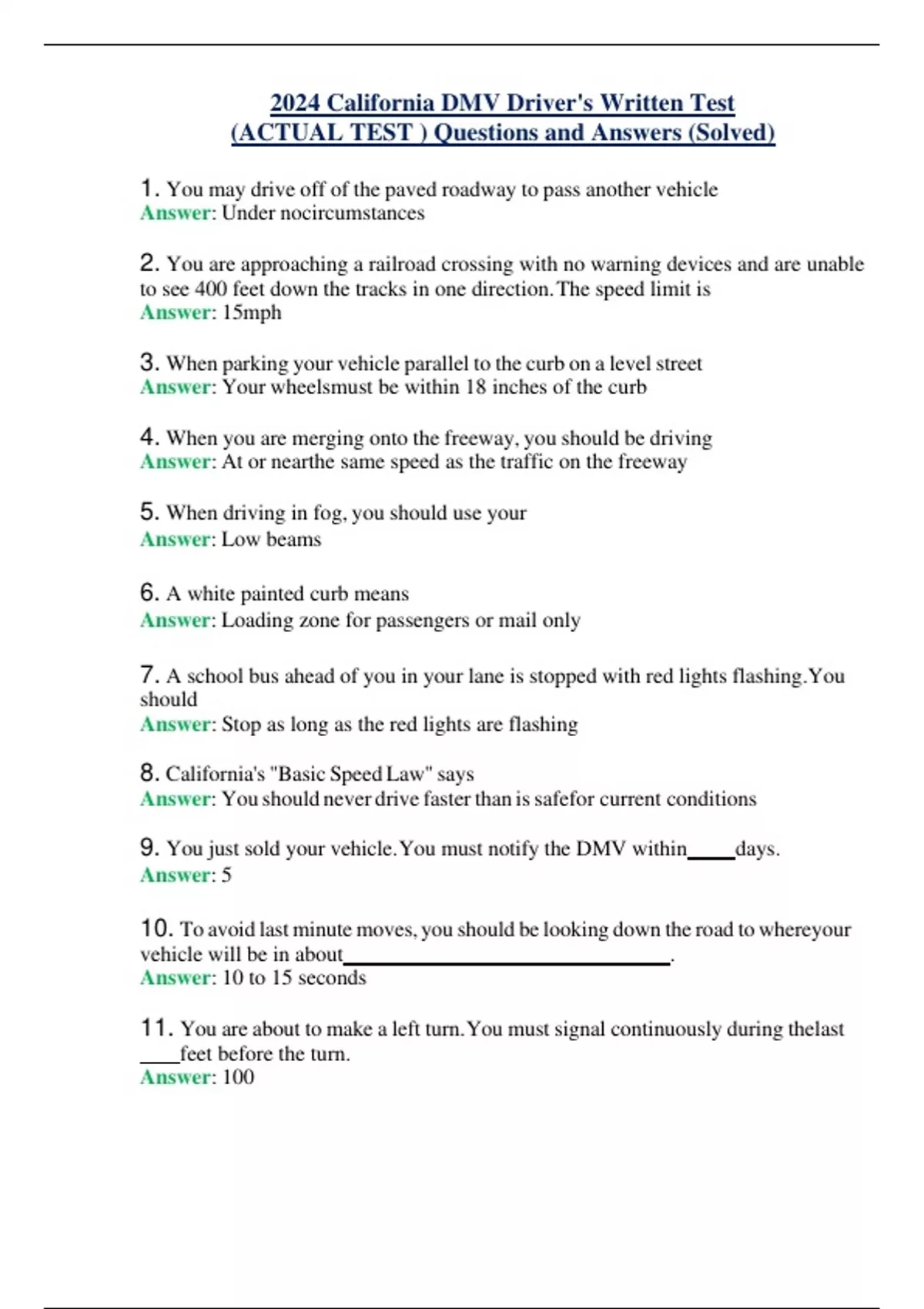
Once you’ve thoroughly reviewed the California Driver Handbook, practice tests become an invaluable tool. Numerous reputable websites, including the DMV’s own site, offer free practice tests that mimic the actual exam’s format and question style.
- Simulate the Exam: Take practice tests under timed conditions to get a feel for the pace required.
- Identify Weak Areas: Pay close attention to questions you answer incorrectly. Go back to the handbook and review the relevant sections until you fully understand the concept.
- Don’t Just Memorize: While some facts need memorization, strive to understand the underlying principles of safe driving. This will help you answer questions that might be phrased slightly differently on the actual test.
- Spaced Repetition: Instead of cramming, spread your study sessions over several days or weeks. This improves long-term memory retention.
What to Expect at the DMV
The process at the DMV office is standardized to ensure efficiency.
- Schedule an Appointment: Always schedule an appointment online beforehand to minimize wait times. Walk-ins are rarely advisable.
- Required Documents: Bring all necessary identification and residency documents. For new applicants, this typically includes proof of identity (e.g., passport, birth certificate), proof of social security number, and proof of California residency.
- Application and Fees: Complete the driver’s license application (DL 44) and pay the application fee.
- Vision Test: You’ll undergo a vision screening to ensure you meet the minimum visual acuity standards.
- Fingerprinting and Photo: Your thumbprint will be taken, and your photo captured for the license.
- The Test Itself: You’ll be directed to a computer terminal to take the knowledge test. Read each question carefully, and select the best answer. If you fail, you generally have two more attempts (a total of three) before needing to reapply, with a mandatory waiting period between attempts.

Beyond the Test: Driving Experiences in California
Passing the California DMV knowledge test is more than just obtaining a piece of plastic; it’s earning the freedom to fully immerse yourself in the diverse travel experiences that the state offers. With your license in hand, the possibilities for exploration become virtually limitless.
Imagine embarking on the legendary drive down the Pacific Coast Highway (Highway 1), winding past breathtaking coastal vistas, quaint towns like Carmel-by-the-Sea, and iconic landmarks such as the Golden Gate Bridge in San Francisco. Or perhaps you’d prefer to venture inland, driving through the dramatic landscapes of Yosemite National Park, where towering granite cliffs and ancient sequoia groves await. Other incredible natural wonders accessible by car include the otherworldly desert scenery of Joshua Tree National Park and the serene beauty of Lake Tahoe.
Beyond natural attractions, a California driver’s license allows you to seamlessly navigate the bustling cityscapes. Explore the entertainment capital of Los Angeles, from Hollywood Boulevard to the beaches of Santa Monica. Drive through the historic streets of San Francisco, or enjoy the laid-back atmosphere and vibrant culture of San Diego.
Driving in California also comes with its own set of nuances. Be prepared for potentially aggressive traffic in major metropolitan areas, especially during rush hour. Understand the rules for carpool (HOV) lanes and familiarize yourself with mountainous driving techniques if you plan to visit regions like the Sierra Nevada or Lake Tahoe in winter. Successfully passing the knowledge test and understanding these local driving conditions are fundamental to a safe, enjoyable, and unforgettable California travel experience.
LifeOutOfTheBox is a participant in the Amazon Services LLC Associates Program, an affiliate advertising program designed to provide a means for sites to earn advertising fees by advertising and linking to Amazon.com. Amazon, the Amazon logo, AmazonSupply, and the AmazonSupply logo are trademarks of Amazon.com, Inc. or its affiliates. As an Amazon Associate we earn affiliate commissions from qualifying purchases.