
Navigating the road to obtaining your driver’s license in Alabama involves several key steps, and a crucial one for aspiring drivers is passing the learner’s permit test. Understanding the structure and content of this examination is vital for preparation and success. This guide aims to demystify the Alabama permit test, focusing specifically on the number of questions you can expect, the types of knowledge it assesses, and how to best prepare yourself for this important milestone in your journey towards independent travel within the state and beyond.
Understanding the Alabama Learner’s Permit Test Structure
The learner’s permit test in Alabama is designed to assess an individual’s fundamental knowledge of traffic laws, safe driving practices, and road signs. It’s a cornerstone of the licensing process, ensuring that new drivers possess the necessary information to operate a vehicle responsibly and safely. The test itself is administered by the Alabama Law Enforcement Agency (ALEA) or authorized third-party providers.
The Number of Questions
A common point of inquiry for many prospective drivers is the exact number of questions on the Alabama permit test. While the specific number can occasionally be subject to minor adjustments by the state, the standard format generally consists of 30 multiple-choice questions. This number has remained consistent for a considerable period, providing a clear target for your study efforts.
The test is administered on a computer at most licensing facilities, offering an efficient and straightforward experience. Some locations might still offer a paper-based version, but the digital format is becoming increasingly prevalent. Each question presents a scenario or asks a direct question about traffic laws or safe driving, with several answer options provided. You must select the correct answer for each question.
Passing Score Requirements
To successfully pass the learner’s permit test, you must achieve a minimum passing score. In Alabama, you are typically required to answer at least 24 out of the 30 questions correctly. This means you can afford to make a few mistakes, but a solid understanding of the material is still essential. The passing threshold is set to ensure that drivers have a substantial grasp of the critical information needed for safe operation of a vehicle.
It’s important to note that the test is designed to be challenging enough to require genuine comprehension, not just memorization of answers. Therefore, focusing on understanding the reasons behind traffic laws and safe practices will be more beneficial than simply trying to recall facts.
Content Areas Covered on the Test
The 30 questions on the Alabama permit test are drawn from a comprehensive range of topics found within the official Alabama Driver Manual. This manual is your primary resource and should be studied thoroughly. The questions are generally categorized into two main areas, with an emphasis on practical application of knowledge.
Road Signs and Signals
A significant portion of the permit test is dedicated to understanding the meaning and function of various road signs, traffic signals, and pavement markings. These visual cues are critical for navigating roadways safely and efficiently. You can expect questions covering:
- Regulatory Signs: Signs that indicate speed limits, “stop,” “yield,” “do not enter,” and other directives that drivers must obey.
- Warning Signs: Signs that alert drivers to potential hazards ahead, such as curves, pedestrian crossings, school zones, or slippery roads.
- Guide Signs: Signs that provide directional information, such as route markers, destination names, and points of interest.
- Traffic Signals: Understanding the meaning of red, yellow, and green lights, as well as arrow signals and flashing lights.
- Pavement Markings: The significance of solid and broken lines, crosswalks, bicycle lanes, and other markings on the road surface.
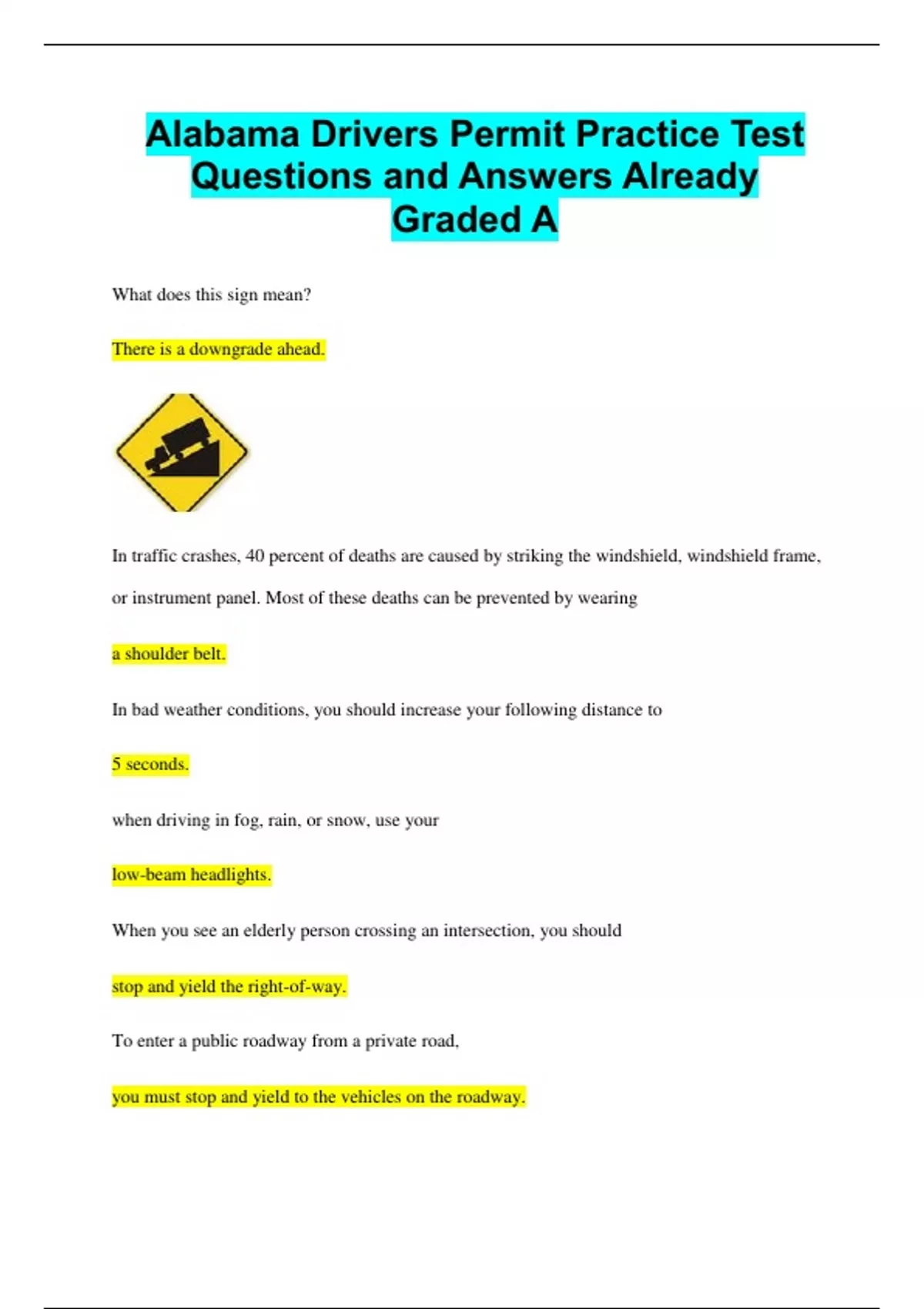
Being able to identify and interpret these signs quickly and accurately is a fundamental skill for any driver. The test will likely present images of signs and ask for their meaning or require you to choose the appropriate action based on a specific sign or signal.
Traffic Laws and Safe Driving Practices
The remainder of the test focuses on Alabama’s specific traffic laws and general principles of safe driving. This section aims to ensure you understand your legal responsibilities as a driver and how to avoid common driving errors and accidents. Key topics include:
- Speed Limits: Understanding posted speed limits and the concept of adjusting speed based on conditions.
- Right-of-Way Rules: Knowing who has the right to proceed in various traffic situations, such as at intersections, when merging, or in parking lots.
- Parking Regulations: Rules regarding where and how you can legally park your vehicle, including restrictions in certain areas.
- Lane Usage and Changing Lanes: Proper procedures for staying in your lane, changing lanes safely, and using multi-lane highways.
- Drunk Driving (DUI) Laws: The legal consequences of driving under the influence of alcohol or drugs, including implied consent laws.
- Seat Belt Laws: The mandatory use of seat belts for drivers and passengers.
- Distracted Driving: The dangers and legal ramifications of using mobile phones or engaging in other distracting behaviors while driving.
- Following Distances: The importance of maintaining a safe following distance from the vehicle ahead (often referred to as the “three-second rule”).
- Accident Procedures: What to do in the event of a traffic accident, including reporting requirements.
- Sharing the Road: Awareness and proper interaction with other road users, such as pedestrians, cyclists, and motorcyclists.
- Vehicle Operation: Basic rules for operating headlights, windshield wipers, and other essential vehicle equipment.
The questions in this section often present hypothetical driving scenarios and ask you to choose the safest or most legally appropriate action. This requires a deeper understanding of principles rather than rote memorization.
Strategies for Success on the Permit Test
Passing the Alabama learner’s permit test requires diligent preparation. Fortunately, ample resources are available to help you master the material. By employing effective study strategies, you can approach the test with confidence.
Thoroughly Study the Alabama Driver Manual
The Alabama Driver Manual is the definitive source of information for the permit test. It contains all the laws, rules, and safety guidelines that you need to know. Make it a priority to read through the entire manual, paying close attention to sections on traffic signs, signals, and laws. Don’t just skim; aim for a comprehensive understanding of each topic.
- Active Reading: Highlight key terms and concepts. Take notes in the margins or in a separate notebook.
- Focus on Understanding: Try to grasp the ‘why’ behind each rule. For example, understand why a certain speed limit is posted in a school zone.
- Review Regularly: Don’t try to cram all the information at once. Break down the manual into manageable sections and review them periodically.
Utilize Practice Tests
Many online resources offer free practice permit tests for Alabama. These practice tests are invaluable for several reasons:
- Familiarization with Format: They simulate the actual test environment, including the multiple-choice question format and the number of questions.
- Identify Weak Areas: After taking a practice test, you can see which topics you struggled with. This allows you to focus your study efforts more effectively on those areas.
- Build Confidence: Successfully completing practice tests can significantly boost your confidence and reduce test anxiety.
Look for practice tests that are specifically designed for the Alabama permit test, as they will use questions similar in style and content to the official exam. Reputable driver education websites and official ALEA resources often provide these.
Understand the “Why” Behind the Rules
As mentioned earlier, the Alabama permit test isn’t just about memorizing facts. It’s about understanding the underlying principles of safe driving and responsible citizenship on the road. When studying a traffic law, consider why it exists. For instance, understanding that pedestrian crossing laws are in place to protect vulnerable road users will help you remember them better and apply them correctly in real-world scenarios.
- Scenario-Based Learning: Try to visualize common driving situations and how the rules apply. For example, picture yourself approaching an intersection with multiple vehicles and determine who has the right-of-way.
- Connect Concepts: See how different rules work together. For example, understanding the dangers of impaired driving directly relates to the importance of designated drivers or ride-sharing services.
Prepare for Test Day Logistics
Beyond studying the material, it’s also wise to be prepared for the practical aspects of taking the test.
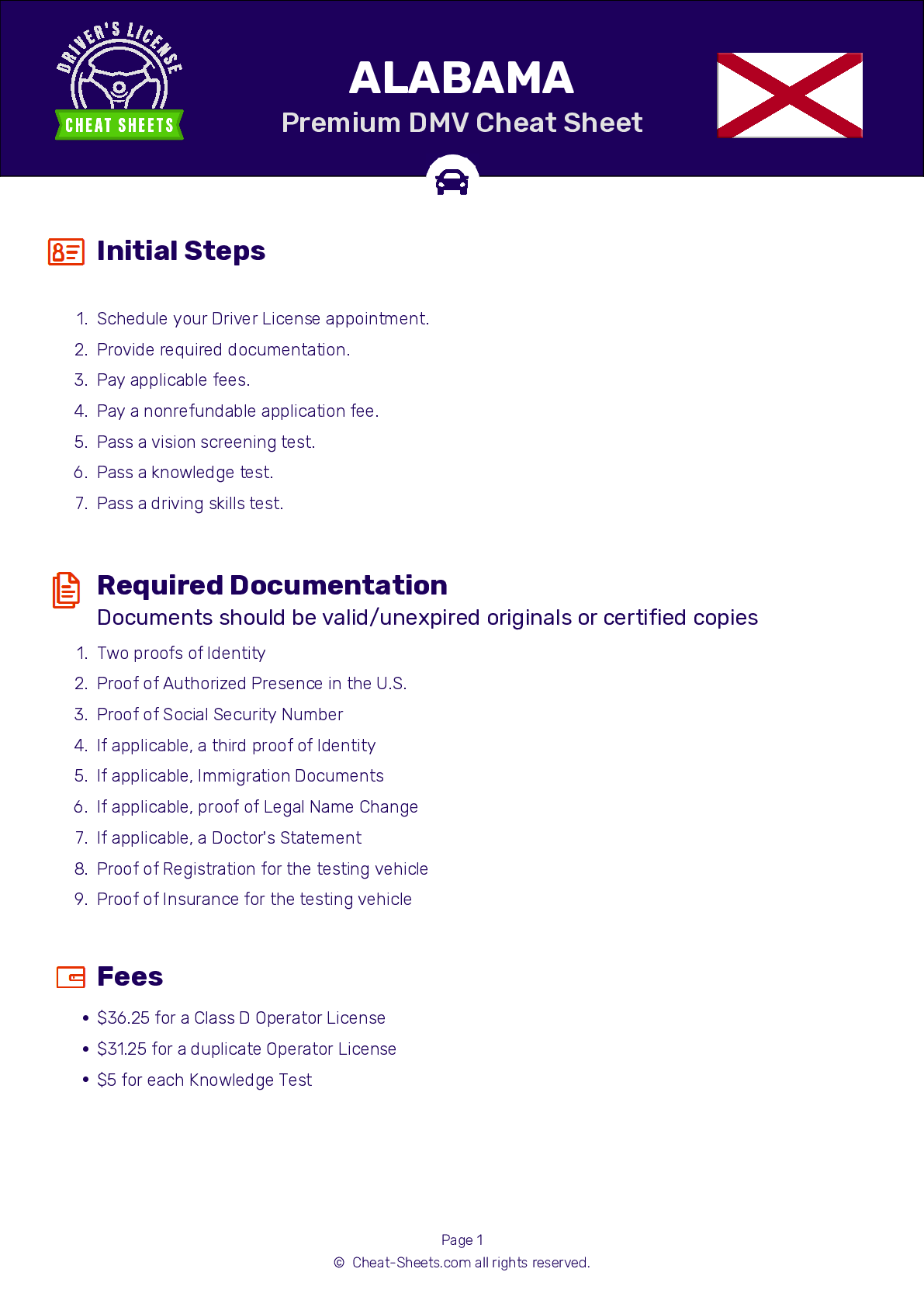
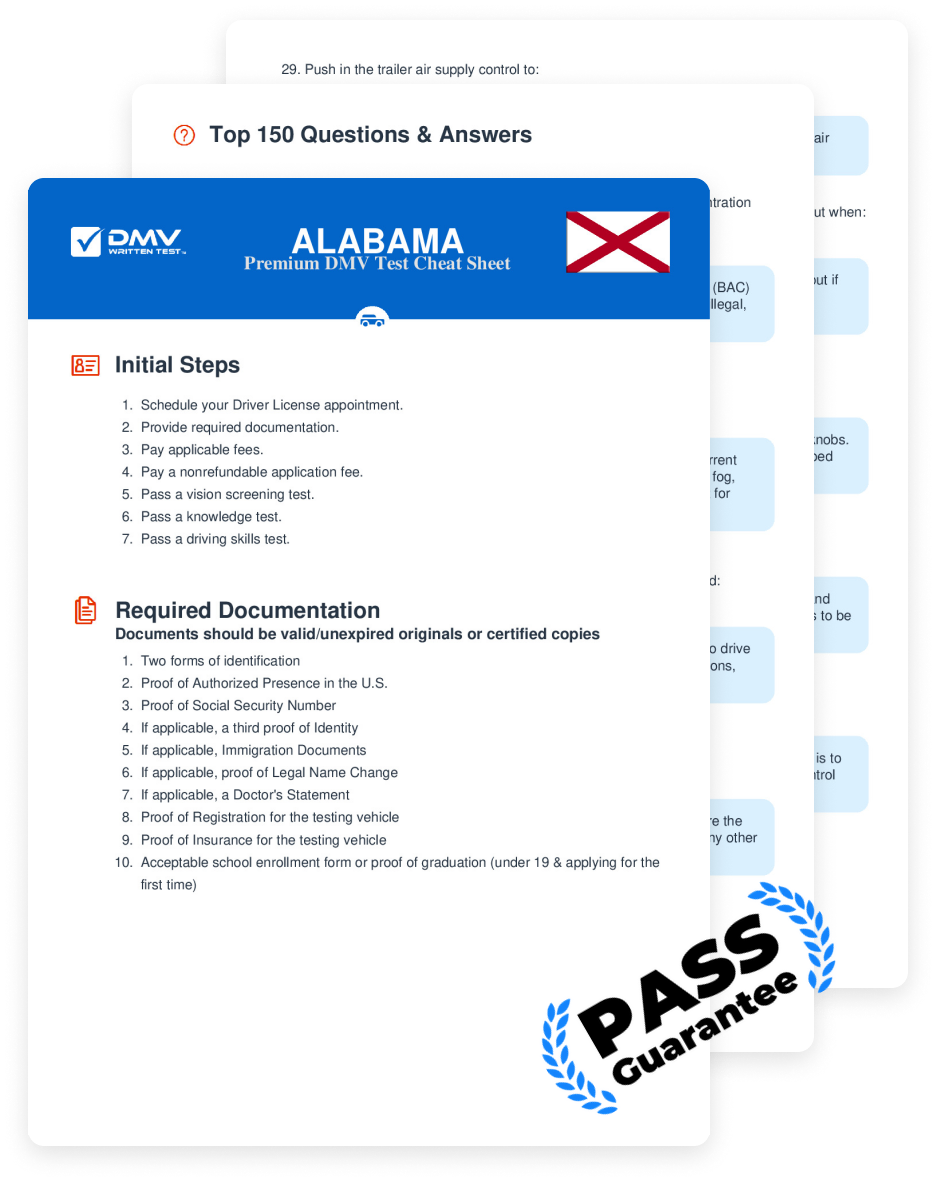
- Required Documents: Ensure you have all the necessary identification and documentation required by the Alabama Law Enforcement Agency (ALEA) for your permit application. This typically includes proof of identity, residency, and social security number.
- Appointment Scheduling: If your local licensing office requires appointments, book yours in advance to avoid long waits or disappointment.
- Rest and Calmness: Get a good night’s sleep before your test day. Try to arrive a little early to avoid rushing. Take a few deep breaths before you begin the exam.
By dedicating time to study the Alabama Driver Manual, utilizing practice tests, and focusing on understanding the principles of safe driving, you will be well-equipped to tackle the 30 questions on the Alabama learner’s permit test and take a significant step towards enjoying the freedom of the open road.
LifeOutOfTheBox is a participant in the Amazon Services LLC Associates Program, an affiliate advertising program designed to provide a means for sites to earn advertising fees by advertising and linking to Amazon.com. Amazon, the Amazon logo, AmazonSupply, and the AmazonSupply logo are trademarks of Amazon.com, Inc. or its affiliates. As an Amazon Associate we earn affiliate commissions from qualifying purchases.