
The Mississippi River, often affectionately called “Old Man River” or “The Great River,” is more than just a body of water; it is a colossal natural landmark, a foundational artery of American history, ecology, and culture. Its immense length and broad embrace across the heartland of the United States have captivated explorers, sustained civilizations, and inspired countless tales. For anyone looking to understand the geographical scope and profound impact of this monumental waterway, a fundamental question often arises: how many states does the Mississippi River actually touch?
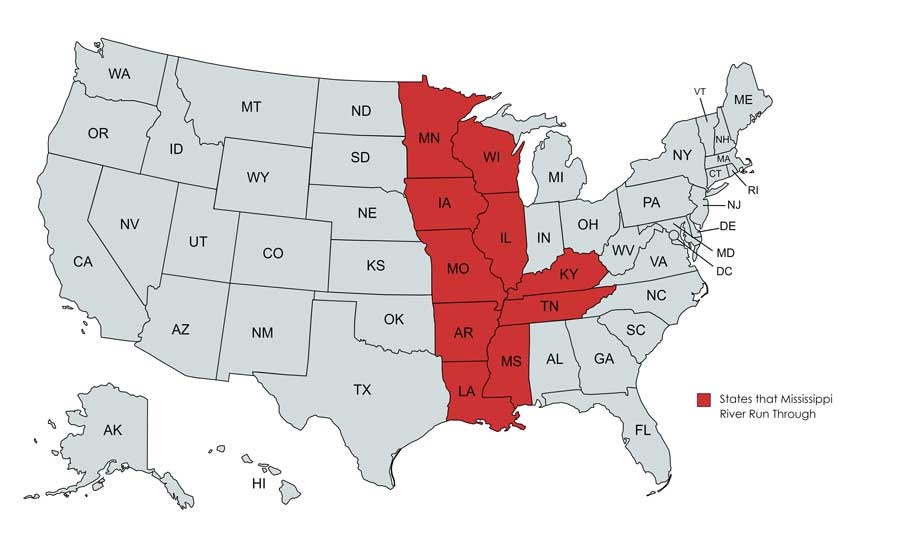
The answer is a precise and impressive ten states. From its humble beginnings in the north to its grand delta in the south, the river forms borders, carves landscapes, and defines the character of a significant portion of the nation. Exploring these ten states reveals a tapestry of natural beauty, historical depth, and vibrant communities, all intrinsically linked by the currents of the Mississippi. This article delves into the journey of this iconic river, highlighting its path through each of these states and illuminating its significance as one of the world’s most famous natural landmarks.
The Majestic Flow: Tracing the Mississippi’s Journey
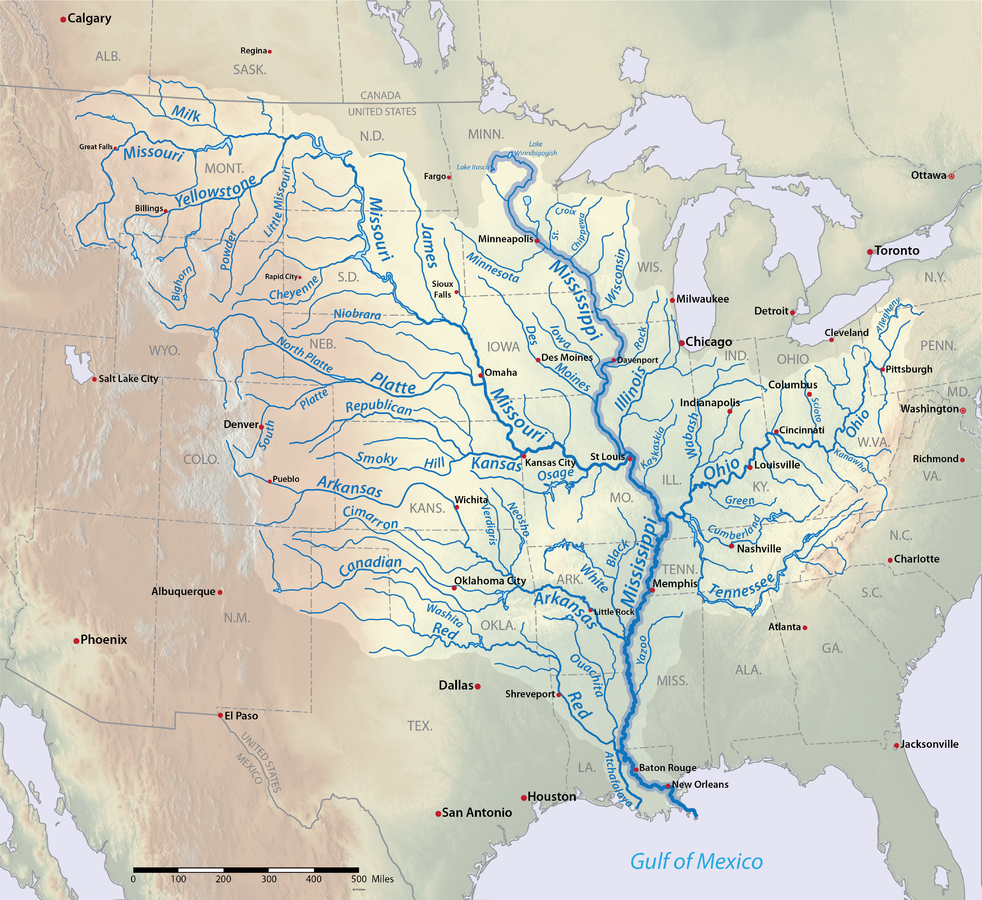
The journey of the Mississippi River begins as a modest stream and gradually transforms into a colossal waterway, carving its path through the American landscape. Understanding its flow requires a state-by-state examination, revealing how this natural wonder shapes the very geography and identity of the regions it touches.
The Source: Minnesota’s Headwaters
The story of the Mississippi River commences in the pristine wilderness of northern Minnesota. Here, in Itasca State Park, a small, clear lake named Lake Itasca gives birth to the mighty river. Visitors can famously step across the infant river on a series of stones, a profound experience marking the very beginning of a 2,340-mile journey. This humble origin in Minnesota underscores the incredible transformation the river undergoes, flowing through diverse landscapes and accumulating strength from numerous tributaries before reaching the Gulf of Mexico. The headwaters area itself is a landmark of natural beauty, offering insight into the untouched ecosystems that once characterized much of the river’s initial stretches.
A North-South Traverse: The Upper Mississippi
As the Mississippi River leaves Minnesota, it quickly begins to define the landscapes and borders of several more states. Initially, it forms the eastern border of Minnesota with Wisconsin, establishing a scenic divide characterized by dramatic bluffs and expansive floodplains. This stretch, often referred to as the Upper Mississippi, is known for its incredible biodiversity, including crucial habitats for migratory birds and various aquatic species.
Further south, the river continues its southward trajectory, forming the entire eastern border of Iowa with Wisconsin and Illinois. These states boast numerous historic river towns that owe their existence and early prosperity to the river’s presence. Cities like Minneapolis and St. Paul in Minnesota, and various smaller communities along the Iowa and Illinois banks, stand as testaments to the river’s enduring economic and cultural influence. The river’s natural beauty in this region, with its broad expanse and forested shores, makes it a prominent landmark for scenic drives and historical exploration.
Finally, the Mississippi River delineates the border between Missouri and Illinois before turning fully into Missouri’s eastern flank. The meeting point near St. Louis, Missouri, is particularly significant, as it marks the confluence with the powerful Missouri River. This dramatic joining of waters signifies a major transition point, where the Mississippi substantially widens and deepens, preparing for its next phase as the “Middle Mississippi.”
The Heart of America: The Middle Mississippi
The middle stretch of the Mississippi River is where it truly earns its moniker as a giant, having absorbed major tributaries and asserting its dominance over the landscape. This segment touches several pivotal states, each bearing the indelible mark of the river’s power and influence.
Where Tributaries Converge: Missouri and Illinois
After its journey along Wisconsin, Iowa, and Illinois, the Mississippi River continues its defining role along the borders of Missouri and Illinois. Here, near St. Louis, the river encounters its largest tributary, the Missouri River. This confluence is a spectacle in itself, where the turbid waters of the Missouri River visibly merge with the clearer Mississippi River, creating a distinct flow for many miles downstream. The addition of the Missouri River more than doubles the Mississippi River’s volume, significantly increasing its width and depth.
Just south of St. Louis, near Cairo, Illinois, the Mississippi River welcomes another mighty contributor: the Ohio River. This second major confluence marks the true transformation into the Lower Mississippi, a river of immense proportions. The strategic importance of these confluences made cities like St. Louis crucial hubs for trade and exploration, and the Gateway Arch National Park stands as a monument to its role as the “Gateway to the West.” The geological impact of these powerful rivers merging has sculpted vast floodplains and fertile agricultural lands, making this region a significant landmark for both natural processes and human settlement.
Expanding Horizons: Kentucky, Tennessee, and Arkansas
Continuing southward, the Mississippi River forms the western border of Kentucky, a state often associated with its bluegrass hills but deeply connected to the river’s flat, fertile delta lands. Its presence here has shaped local economies and transportation routes for centuries.
Adjacent to Kentucky, the river defines the entire western edge of Tennessee, most notably influencing the vibrant city of Memphis. Memphis, perched directly on the bluffs overlooking the Mississippi River, has a rich history tied to river commerce, cotton production, and the birth of the blues. Its riverfront area is a significant landmark, blending historical sites with modern attractions that celebrate its connection to the great river.
Across the river from Tennessee lies Arkansas, where the Mississippi River forms its entire eastern border. This region of Arkansas is characterized by its vast agricultural fields, particularly rice and cotton, which thrive in the rich alluvial soils deposited by the river over millennia. The river’s influence here is overwhelmingly agricultural, shaping the landscape and economy of the “Delta” region of the state. The flat, fertile lands are a natural landmark of agricultural productivity, a direct result of the river’s dynamic geological processes.
The Delta’s Embrace: The Lower Mississippi

The final stretch of the Mississippi River is perhaps its most famous and culturally rich, encompassing the deep south and culminating in the formation of a vast, ecologically diverse delta. This is where the river’s power is most evident, not just in its flow but in its profound impact on human culture and the natural environment.
The Deep South’s Lifeline: Mississippi and Louisiana
As the river leaves Arkansas, it begins to form the western boundary of the state of Mississippi, giving the state its name and much of its identity. The Mississippi Delta region, though geographically encompassing parts of Arkansas and Louisiana, is most closely associated with the state of Mississippi. This area is a distinctive natural and cultural landmark, renowned for its fertile soil, blues music heritage, and the historical legacy of cotton plantations. The river here is wide and slow-moving, meandering through a landscape shaped entirely by its floods and deposits.
Finally, the Mississippi River enters Louisiana, its last and most intimate state connection. In Louisiana, the river ceases to form a border and instead cuts directly through the state, flowing towards the Gulf of Mexico. This state is perhaps more defined by the Mississippi River than any other, from its unique bayous and wetlands to the very foundations of its largest city, New Orleans. New Orleans is a city built on the banks of a bend in the river, its historical French Quarter and vibrant culture inseparable from the trade and people the river brought. The levees that protect New Orleans are a landmark in themselves, a constant reminder of the river’s immense power and human efforts to control it.
Journey’s End: The Gulf of Mexico
The grand journey of the Mississippi River concludes as it empties into the Gulf of Mexico. This vast and complex Mississippi River Delta is an ecological marvel, a vast wetland and estuary system that supports an incredible array of wildlife and plays a critical role in the larger ecosystem of the Gulf of Mexico. The constant deposition of sediment over millennia has created a dynamic, ever-changing landscape of marshes, islands, and distributaries, representing the ultimate landmark forged by the river’s relentless flow. This final destination underscores the river’s role not just as a geographical feature, but as a living, breathing system of immense environmental significance.
A River of History and Heritage
Beyond its geographical reach, the Mississippi River is a living chronicle of American history and a profound wellspring of cultural heritage. Its status as a landmark extends far beyond its physical presence, permeating the very fabric of the nation.
Native American Roots and Early Exploration
For thousands of years before European arrival, indigenous peoples thrived along the banks of the Mississippi River. The river served as a vital source of food, transportation, and spiritual significance. Ancient mound-building cultures, such as those that created the remarkable earthworks at Cahokia Mounds in Illinois, built sophisticated societies dependent on the river’s resources. These archaeological sites are powerful landmarks, offering glimpses into a rich pre-Columbian past.
The first European to sight the Mississippi River is generally credited to Hernando de Soto in 1541. Later, French explorers like Jacques Marquette and Louis Jolliet in 1673, and René-Robert Cavelier, Sieur de La Salle in 1682, extensively explored and mapped its course, claiming the vast Mississippi River Valley for France. Their journals and maps became foundational documents, transforming the river from an indigenous lifeline into a crucial geopolitical landmark for European colonial powers.
Economic Backbone and Cultural Icon
Throughout American history, the Mississippi River has been an indispensable economic backbone. Steamboats, riverboats, and barges transformed it into a superhighway for trade, transporting goods like cotton, timber, and grains from the heartland to markets worldwide. The construction of massive levees, locks, and dams transformed the river into a controlled navigation system, further cementing its role in commerce and industry. These engineering marvels are landmarks of human ingenuity and our ongoing relationship with the natural world.
Culturally, the Mississippi River is etched deep into the American psyche. It is the setting for classic American literature, most famously Mark Twain’s “The Adventures of Tom Sawyer” and “Adventures of Huckleberry Finn,” which immortalized its steamboat era and the lives of its river folk. The river is also the birthplace of distinct musical forms, particularly the blues, which emerged from the Mississippi Delta and profoundly influenced jazz, rock and roll, and countless other genres. Its banks have witnessed the Civil War, the Civil Rights Movement, and countless other pivotal moments, making every mile a historical landmark in itself.
Experiencing the Mississippi Today: A Living Landmark
Today, the Mississippi River continues to be a vibrant and accessible landmark, offering diverse experiences for those who wish to connect with its majesty and heritage. Its enduring presence shapes landscapes and supports communities, inviting exploration and appreciation.
Riverfront Cities and National Parks
The ten states touched by the Mississippi River boast numerous cities that serve as gateways to experiencing its grandeur. From the bustling riverfronts of Minneapolis and St. Paul in Minnesota to the historic charm of Natchez, Mississippi, and the unique vibrancy of New Orleans, Louisiana, each city offers a distinct perspective on river life. Many of these cities feature riverwalks, museums, and historical districts that highlight their connection to the Mississippi, serving as cultural landmarks in their own right.
Along its course, the river also flows through or near several national parks and protected areas. The Gateway Arch National Park in St. Louis, for instance, directly commemorates the city’s role as a portal to the West, shaped by the river. Various national wildlife refuges and state parks dot its banks, offering opportunities for birdwatching, fishing, boating, and hiking, allowing visitors to appreciate the river’s natural beauty and ecological significance. Scenic drives, such as the Great River Road, a designated National Scenic Byway, allow travelers to trace the river’s path, encountering historical markers, charming towns, and breathtaking views along the way. These parks and routes are crucial landmarks for those seeking to immerse themselves in the river’s environment.
Preserving the Great River’s Legacy
The Mississippi River, as a dynamic and vital landmark, faces ongoing challenges related to environmental health, conservation, and sustainable management. Organizations and communities along its entire length are dedicated to preserving its ecological integrity, managing flood risks, and ensuring its continued navigability. Understanding these efforts provides crucial insight into the modern significance of the river. The river’s status as a landmark demands active stewardship, recognizing its role as a source of life, culture, and natural wonder for generations to come.
In conclusion, the Mississippi River touches a total of ten states: Minnesota, Wisconsin, Iowa, Illinois, Missouri, Kentucky, Tennessee, Arkansas, Mississippi, and Louisiana. Each state contributes to the river’s incredible narrative, and in turn, is profoundly shaped by its presence. As a magnificent natural landmark, the Mississippi River embodies the spirit of exploration, the pulse of American commerce, and the rich tapestry of its cultural heritage, continuing to inspire and endure as a central feature of the nation.
LifeOutOfTheBox is a participant in the Amazon Services LLC Associates Program, an affiliate advertising program designed to provide a means for sites to earn advertising fees by advertising and linking to Amazon.com. Amazon, the Amazon logo, AmazonSupply, and the AmazonSupply logo are trademarks of Amazon.com, Inc. or its affiliates. As an Amazon Associate we earn affiliate commissions from qualifying purchases.