
The Lone Star State of Texas is a land of superlatives: vast, diverse, and steeped in rich history and vibrant culture. From its bustling metropolitan centers to its serene, wide-open spaces, Texas offers an unparalleled array of experiences for every type of traveler. One of the fundamental ways this immense state is organized, and a key factor in understanding its regional nuances, is through its county system. If you’ve ever wondered about the administrative backbone of this colossal state, the answer to “How many Texas counties?” is a resounding 254. This makes Texas the state with the highest number of counties in the United States, a fact that profoundly influences its governance, local culture, and tourism landscape.
This multitude of counties is more than just a statistical curiosity; it reflects centuries of historical development, geographical imperatives, and the evolving needs of its diverse populations. For travelers, this administrative division translates into a mosaic of distinct local cultures, unique attractions, and varied accommodation options, making county-by-county exploration a fascinating way to uncover the true spirit of Texas.
The Lone Star State’s Administrative Tapestry
The existence of 254 counties in Texas is not merely an arbitrary number but a testament to its sprawling geography and complex historical narrative. Each county tells a story, contributing to the rich tapestry that defines the Lone Star State.
Unpacking the Number: A Historical Perspective
The proliferation of counties in Texas can be traced back to its early days as a Spanish colony, then a Mexican territory, and finally an independent republic before joining the United States. The Spanish and Mexican influences established large land grants and a hierarchical administrative structure. However, it was during the period of Anglo-American settlement and the Republic of Texas that the county system began to take its distinct shape.
Early settlers often desired local governance for convenience and representation. As the population grew and spread across the vast territory, new communities emerged, each advocating for its own county seat to reduce travel times to the courthouse and centralize local services. The distance between settlements, especially in an era of horse-and-buggy travel, dictated that counties needed to be small enough for citizens to reach the county seat within a day’s journey. This practical consideration, combined with the continuous influx of settlers and political decisions to divide existing counties, led to the gradual increase in their number.
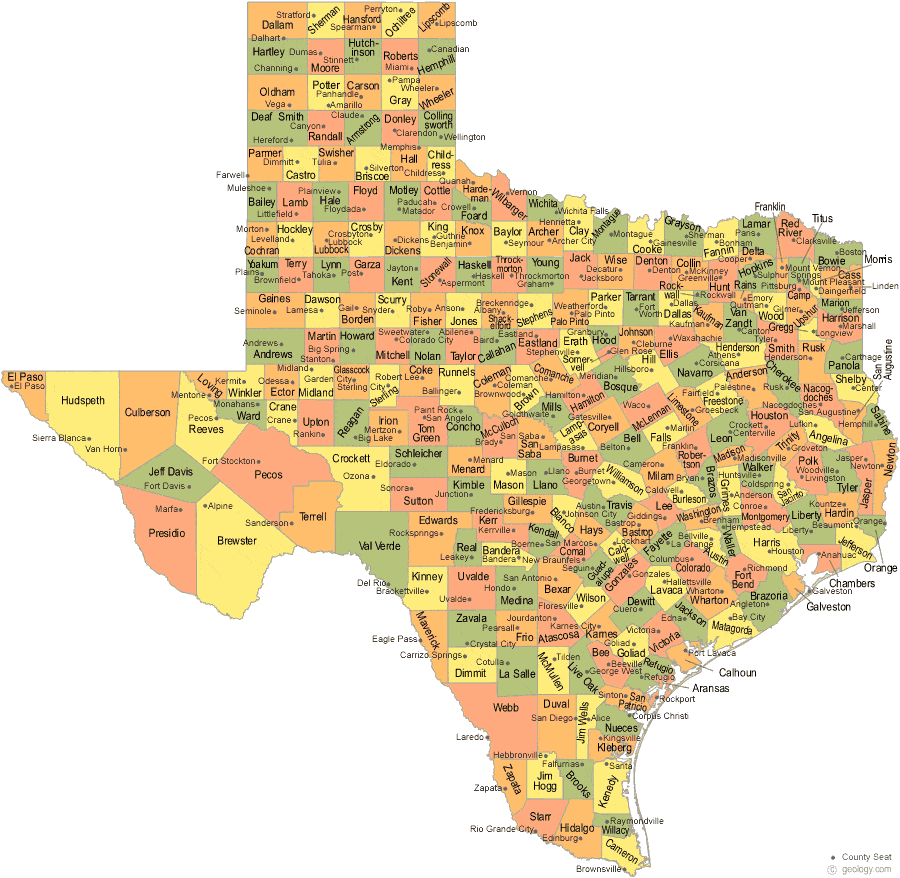
Figures like Stephen F. Austin, often referred to as the “Father of Texas,” played a pivotal role in organizing early settlements into what would become the initial counties. Later, during the statehood period, the drive for local control and access to justice continued to fuel the creation of new counties, particularly as westward expansion progressed. The last county to be created was Kenedy County in 1921, carved out of parts of Hidalgo County and Willacy County, marking the final piece in this intricate administrative puzzle. This historical evolution ensures that each county possesses a unique character, often reflected in its historical landmarks, local festivals, and distinctive culinary traditions, offering travelers an authentic glimpse into Texas’ past.

The Geographic and Cultural Mosaic
The 254 counties of Texas don’t just represent political divisions; they encapsulate the immense geographical and cultural diversity of the state. From the arid deserts and dramatic mountains of West Texas to the lush, pine-laden forests of East Texas, the fertile plains of the Panhandle, and the sun-drenched beaches along the Gulf of Mexico, each region, and often each county within it, presents a distinct landscape and lifestyle.
Consider El Paso County, bordering Mexico, with its vibrant Chihuahuan Desert landscape and rich blend of American and Mexican cultures, contrasting sharply with Galveston County on the coast, known for its historic port city, Victorian architecture, and popular beaches. Similarly, the rolling hills and spring-fed rivers of the Texas Hill Country, encompassing counties like Gillespie County (home to Fredericksburg) and Comal County (featuring New Braunfels), offer a drastically different experience from the agricultural heartland counties of the Panhandle.
This geographic variation directly influences the types of travel experiences available. Outdoor enthusiasts can explore the rugged terrain of Big Bend National Park in Brewster County, while history buffs can delve into the iconic historical sites of Bexar County, particularly San Antonio with The Alamo and its historic missions. Each county, with its local flavor, contributes to Texas’ appeal as a global travel destination, offering a microcosm of unique attractions, regional cuisines (from authentic barbecue joints to diverse Tex-Mex eateries), and community-specific events.

Navigating Texas: Travel, Tourism, and County Exploration
Understanding the county system isn’t just for history buffs; it’s a practical and enriching way for travelers to plan their Texas adventures. Each county acts as a distinct tourism region, often with its own unique identity, attractions, and local tourism initiatives.
From Big Cities to Quaint Towns: Diverse Destinations
The concentration of major cities within specific counties often defines regional tourism hubs. Houston, the largest city in Texas, is primarily located in Harris County, offering world-class museums, the Space Center Houston, and a vibrant culinary scene. Dallas, a sprawling metropolis in Dallas County, boasts a thriving Arts District, upscale shopping, and historical sites like the Sixth Floor Museum at Dealey Plaza.
Austin, the state capital in Travis County, is renowned as the “Live Music Capital of the World,” with its eclectic music venues on Sixth Street, outdoor recreation around Lady Bird Lake, and numerous festivals. San Antonio, situated in Bexar County, captivates visitors with its historic Riverwalk, missions, and deep historical roots. Even Fort Worth, a major city in Tarrant County, offers a distinct western heritage experience at its Stockyards National Historic District.
Beyond these urban centers, numerous smaller counties invite exploration. Bandera County, known as the “Cowboy Capital of the World,” offers authentic ranch stays and rodeos. Real County and Uvalde County are popular for their scenic rivers like the Frio River and Nueces River, perfect for tubing and camping. Jeff Davis County in West Texas is home to the McDonald Observatory and stunning night skies, ideal for stargazing enthusiasts. Each of these counties, large or small, provides unique attractions and experiences that cater to a wide range of interests, from luxury travel to budget-friendly adventures.
Planning Your Texas Itinerary by County
For travelers, leveraging the county system can be an effective way to structure an itinerary, particularly when exploring specific themes or regions. Want a wine-tasting tour? Focus on the Texas Hill Country counties like Gillespie and Kendall County. Interested in history and missions? Bexar County is your primary destination, but don’t overlook counties like Goliad County with Presidio La Bahia.
Adventure seekers might plan a trip through Brewster County and Presidio County to experience Big Bend National Park and Big Bend Ranch State Park. Coastal enthusiasts can hop between Galveston County, Nueces County (home to Corpus Christi), and Cameron County (for South Padre Island).
Furthermore, understanding county lines can inform travelers about local regulations, especially concerning alcohol sales, which can vary significantly from one “dry” county to a “wet” one. It also helps in identifying specific local events, festivals, and farmers’ markets that are often organized at the county level, providing authentic cultural experiences beyond the typical tourist traps. By focusing on particular counties, visitors can delve deeper into the local culture, interact with residents, and uncover hidden gems that might otherwise be overlooked in a broader, less structured itinerary. This granular approach to travel planning enhances the overall experience, offering a more intimate and authentic engagement with the Lone Star State.
Beyond the Boundaries: Accommodation and Lifestyle Across Texas
The sheer number and diversity of Texas counties mean that accommodation options and lifestyle experiences are incredibly varied, catering to every preference, budget, and travel style. Whether you’re seeking opulent luxury, rustic charm, family-friendly resorts, or a quiet escape, Texas’ counties offer an extensive portfolio.
Finding Your Perfect Stay: Hotels, Resorts, and Unique Accommodations
From boutique hotels nestled in historic downtowns to sprawling resorts offering every imaginable amenity, Texas’ accommodation scene is as diverse as its landscape. In major cities like Houston, Dallas, Austin, and San Antonio, travelers can choose from a wide range of options. Luxury travelers might opt for the grandeur of The Driskill in Austin, the stylish elegance of Hotel Emma in San Antonio’s Pearl District, or the contemporary comfort of the Hyatt Regency Dallas with its iconic tower views. For those seeking a resort experience, the JW Marriott San Antonio Hill Country Resort & Spa provides a family-friendly oasis with golf, a water park, and extensive amenities.
Beyond the major cities, the choices expand. The Texas Hill Country abounds with charming bed-and-breakfasts, cozy cabins along the Guadalupe River, and rustic guesthouses in towns like Fredericksburg. East Texas’ Piney Woods region offers lakeside lodges and secluded retreats for nature lovers. Along the coast, from Galveston to South Padre Island, you’ll find everything from historic hotels and beach condos to budget-friendly motels and vibrant vacation rentals.
For those looking for unique accommodations, Texas also offers glamping sites near Big Bend National Park, treehouse rentals in the forests, and authentic dude ranches in places like Bandera County. Booking is made easy through various platforms, with options for comparing prices, reading reviews, and even securing long-term stays for those looking to immerse themselves fully in a particular region. This vast selection ensures that whether you’re planning a romantic getaway, a family trip, or a solo adventure, the perfect accommodation is always within reach in one of Texas’ many distinctive counties.
Experiencing Texas Lifestyles: Budget to Luxury Travel
The diversity of Texas’ counties also translates into a spectrum of travel lifestyles. The state caters to every budget and interest, making it an accessible destination for all.
For budget travelers, exploring state parks like Palo Duro Canyon in Randall County, Dinosaur Valley State Park in Somervell County, or Enchanted Rock State Natural Area in Gillespie County offers incredible value with camping and hiking opportunities. Road trips through lesser-known counties can uncover charming small towns with affordable lodging and local eateries serving up authentic Texas cuisine. Free attractions like art car parades in Houston or wandering the historic Stockyards National Historic District in Fort Worth also provide rich experiences without breaking the bank.
Luxury travelers can indulge in high-end shopping in Dallas’ Highland Park Village, dine at Michelin-starred restaurants in Houston, or unwind at exclusive spa resorts in the Texas Hill Country wine region. Private tours of vineyards, bespoke culinary experiences, and stays in opulent suites are readily available, particularly in the state’s major urban centers and popular tourist destinations.
Family trips are well-accommodated across Texas, with numerous theme parks, zoos (like the Dallas Zoo or Houston Zoo), and interactive museums such as the Perot Museum of Nature and Science in Dallas. Coastal towns like Galveston and Port Aransas offer beach activities, while the water parks of New Braunfels (Schlitterbahn) provide endless summer fun. Many resorts offer kid-friendly amenities, and vacation rentals provide ample space for families.
For business travelers, the major cities are equipped with state-of-the-art conference facilities, business hotels, and convenient transportation options. Beyond work, these cities offer cultural attractions, fine dining, and entertainment for unwinding. Remote workers might even find inspiration in long-term stays in smaller, scenic counties, enjoying a blend of work and relaxation amidst natural beauty or vibrant small-town communities.
The 254 counties of Texas collectively form an expansive canvas for exploration, offering an incredible variety of destinations, attractions, and experiences. Whether you’re drawn to its deep history, its diverse landscapes, its bustling cities, or its quiet countrysides, each county provides a unique window into the heart and soul of the Lone Star State. Embarking on a journey through Texas by exploring its individual counties is not just a trip; it’s an immersive adventure that reveals the true scale and splendor of this remarkable state.
LifeOutOfTheBox is a participant in the Amazon Services LLC Associates Program, an affiliate advertising program designed to provide a means for sites to earn advertising fees by advertising and linking to Amazon.com. Amazon, the Amazon logo, AmazonSupply, and the AmazonSupply logo are trademarks of Amazon.com, Inc. or its affiliates. As an Amazon Associate we earn affiliate commissions from qualifying purchases.