
When travelers envision New Orleans, they typically picture jazz-filled streets, humid subtropical air, and the vibrant, iron-laced balconies of the French Quarter. It is a city defined by its proximity to the Gulf of Mexico and its resilience against the heat. However, the meteorological history of this Louisiana jewel contains rare, crystalline anomalies that have transformed its historic architecture into a temporary winter wonderland. While snow is statistically negligible in this region, the few times it has descended upon the Crescent City, it has become a central part of local lore.

The Rarity of a Winterscape in the Deep South
The geography of New Orleans is defined by its low elevation and its position within a humid, subtropical climate zone. For snow to accumulate in the city, a perfect, and highly unlikely, atmospheric “trifecta” must occur: a deep pool of frigid air must descend from the Arctic, it must collide with a moisture-rich system coming from the Gulf of Mexico, and the surface temperatures must remain at or below freezing for a sustained period.
Understanding Meteorological Anomalies
Because the city is surrounded by water, the ambient temperatures rarely dip low enough to facilitate significant snowfall. When these events do occur, they are typically fleeting. The warmth of the Mississippi River often acts as a thermal regulator, preventing the kind of deep freezes seen in New England or the Midwest. Yet, across the last two centuries, official weather records have documented a handful of occasions where the city saw measurable, and sometimes substantial, snowfall.
The Impact on Local Culture
For a city built on the rhythm of festivals and outdoor gatherings, snow changes the entire social fabric. In New Orleans, snow is not just weather; it is a community event. It halts the traffic of Canal Street, quiets the music of Frenchmen Street, and forces residents to look at their historic landmarks through a lens of surreal stillness.
A Timeline of Notable Snowfalls
While there have been many instances of “flurries” or light, melting dustings, true snow events in New Orleans are few and far between. Historians and meteorologists often point to a handful of dates that define the city’s relationship with winter.
The Great Christmas Eve Snow of 2004
Perhaps the most famous modern example occurred on December 24, 2004. For many locals, this was a once-in-a-lifetime experience. A powerful low-pressure system brought heavy precipitation that turned into snow as it moved over the region. The city woke up to a landscape coated in white, a stark contrast to the colorful Creole cottages and the lush greenery of City Park. It was a quiet, magical morning that effectively shut down the bustling city and provided a rare photographic opportunity for those lucky enough to be outside.
Historical Records of the 19th and 20th Centuries
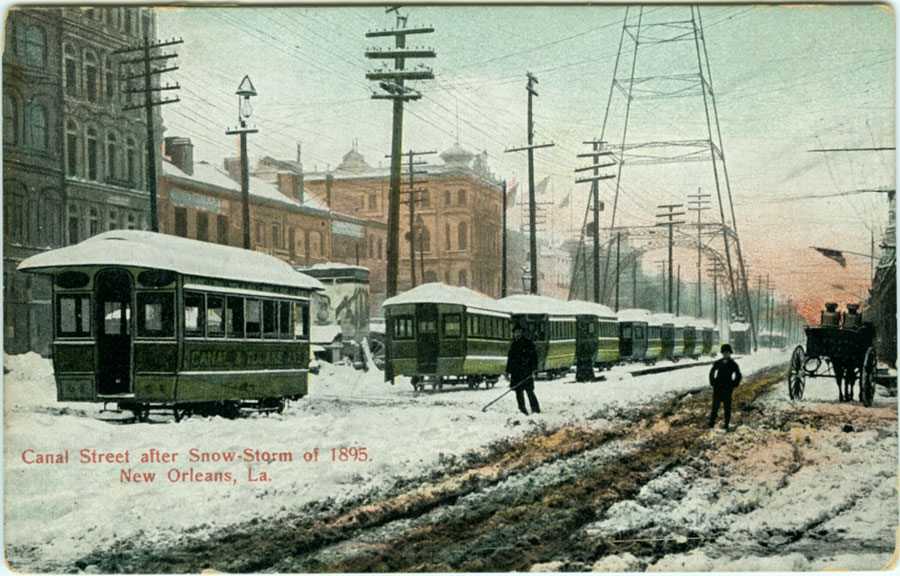
Before the digital age, records were kept in journals and newspaper accounts. Significant snowfalls were documented in 1895 and 1899, the latter of which was part of the “Great Arctic Outbreak,” one of the coldest winters on record for the United States. During the 1899 event, the temperature in New Orleans dropped to an astonishing 6 degrees Fahrenheit. Ice formed on the Mississippi River, a sight that has not been repeated in the modern era.
Life in the City When the Temperature Drops
For tourists and locals alike, the rare occurrence of snow in Louisiana offers a unique perspective on the region’s landscape. When the humidity is replaced by a biting chill, the architectural beauty of places like the Garden District becomes even more striking.
The Preservation of Heritage Architecture
Most buildings in the French Quarter were designed for heat dissipation, featuring high ceilings, wide hallways, and large windows intended for airflow. When a cold snap arrives, these structures face a genuine challenge. Unlike the insulated homes of the North, these historic homes are not built for freezing conditions. Seeing a blanket of snow against the ornate, wrought-iron balconies provides a contrast that photographers dream of capturing, emphasizing the fragility and beauty of the city’s historic preservation efforts.
Tourism During the Unlikely Cold
Travelers who happen to be in town during a rare cold snap often find that the city’s rhythm changes. Popular outdoor spots like Jackson Square become eerily quiet. The lack of infrastructure for dealing with snow—such as salt trucks or snowplows—means that life effectively pauses. For the visitor, this is an opportunity to see a side of the city that is rarely showcased in marketing materials. It is a time for warm Café Du Monde beignets, hot coffee, and the quiet camaraderie of locals hunkering down in the city’s legendary pubs and restaurants.
Preparing for the Rare Winter Phenomenon
Because snowfall is such an extreme outlier in New Orleans, the city’s preparation for such weather is minimal. This contributes to the sense of wonder and, occasionally, the temporary chaos that ensues when flakes begin to fall.
The Role of Infrastructure
Since the city is accustomed to heat and heavy rain, the sudden freezing of roads or the accumulation of ice can create significant hazards. Public transportation, such as the historic St. Charles Avenue Streetcar, may be suspended for safety. For those visiting the city, it is important to understand that the New Orleans approach to winter is one of caution and adaptation.

Embracing the Magic
Despite the inconvenience, most residents and visitors view a snowy day in the South as a festive, albeit brief, celebration. It serves as a reminder of the vast, varied climate of North America. Whether it is the light dusting of 2008 or the substantial accumulation of 2004, these events become foundational stories in the city’s history.
When you wander the narrow streets of the Marigny or sit by the Mississippi River on a crisp day, it is easy to imagine the city covered in white. While the odds of seeing snow during your trip are exceptionally low, the possibility adds a layer of mystery to every winter visit. New Orleans is a city that defies expectations at every turn; its rare, shimmering encounters with snow are simply one more chapter in its long, storied life as a destination that never ceases to surprise the world.
LifeOutOfTheBox is a participant in the Amazon Services LLC Associates Program, an affiliate advertising program designed to provide a means for sites to earn advertising fees by advertising and linking to Amazon.com. Amazon, the Amazon logo, AmazonSupply, and the AmazonSupply logo are trademarks of Amazon.com, Inc. or its affiliates. As an Amazon Associate we earn affiliate commissions from qualifying purchases.