
Oregon’s landscape is dramatically shaped by volcanic activity, a testament to the powerful geological forces that have sculpted the Pacific Northwest over millennia. From towering stratovolcanoes that punctuate the skyline to the more subtle, yet equally significant, volcanic features dotting the state, understanding the number and nature of these formations offers a profound insight into the region’s natural heritage. For the intrepid traveler and the curious explorer, these volcanic marvels are not just geological curiosities but vibrant destinations offering unique outdoor experiences and breathtaking scenery.
The Cascade Range: Oregon’s Volcanic Crown Jewels
The most prominent and awe-inspiring volcanic features in Oregon are undoubtedly part of the Cascade Range, a segment of the much larger Pacific Ring of Fire. This chain of volcanoes is formed by the subduction of the Juan de Fuca Plate beneath the North American Plate. Within Oregon, the Cascade Range hosts several iconic stratovolcanoes, each with its own distinct history and character.

The Majestic Stratovolcanoes
Oregon is home to five major stratovolcanoes that dominate the landscape and draw visitors from around the globe. These are the giants, the mountains that define the state’s dramatic silhouette and offer unparalleled opportunities for adventure and exploration.
-
Mount Hood: The highest peak in Oregon, Mount Hood is a dormant stratovolcano and a beloved destination for skiing, snowboarding, and hiking. Its permanent snowfields and glaciers make it a year-round attraction. The Timberline Lodge, a National Historic Landmark, offers stunning views and a glimpse into the past. It stands as a sentinel, visible from as far away as Portland.
-
Mount Jefferson: The second-highest peak in Oregon, Mount Jefferson is a more rugged and less accessible volcano. Its dramatic spires and steep slopes present a challenge for experienced mountaineers. The surrounding wilderness offers pristine alpine lakes and meadows, making it a prime destination for backcountry enthusiasts.
-
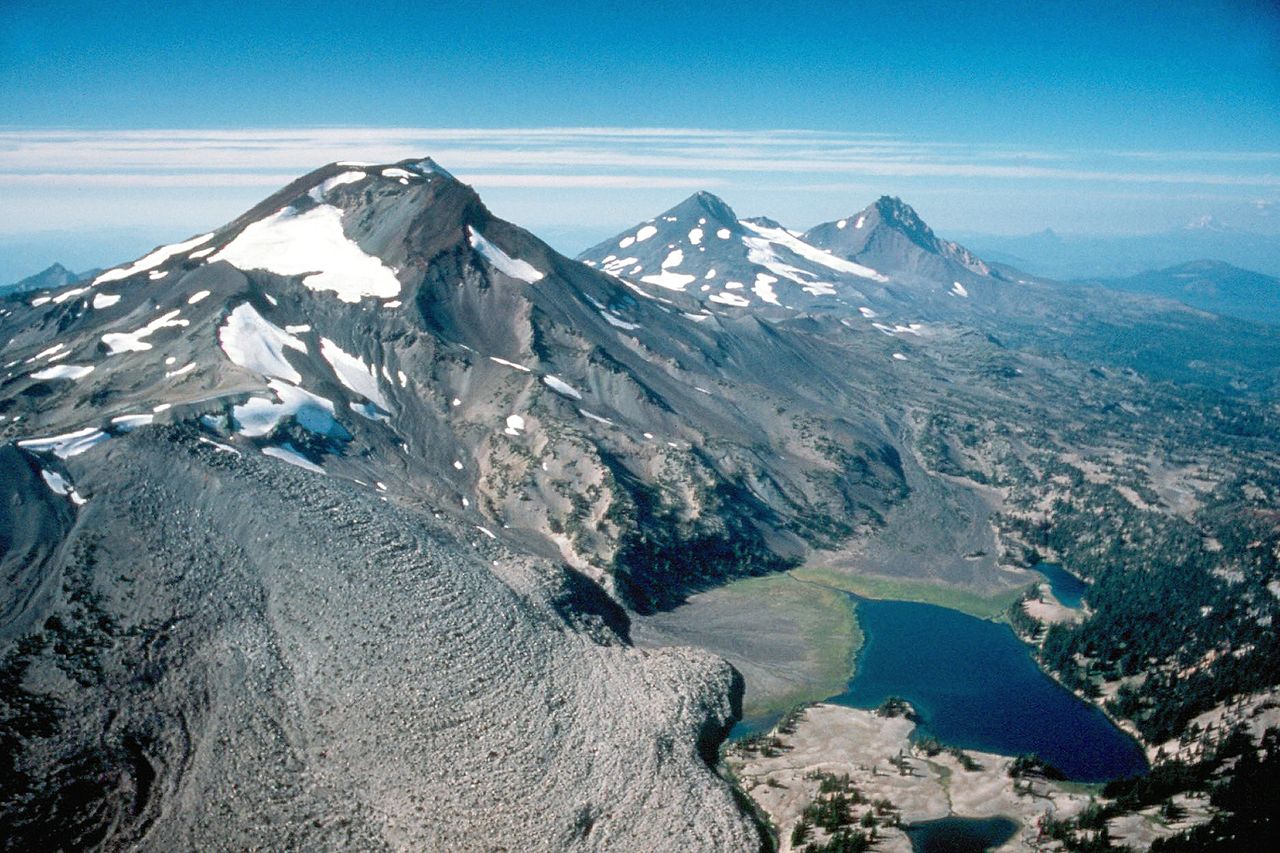
Three Sisters: This is actually a complex of three stratovolcanoes: North Sister, Middle Sister, and South Sister. South Sister is the most active and highest of the three, last erupting around 2,000 years ago. The area is a hiker’s paradise, with trails leading to stunning glacial lakes and panoramic viewpoints. Green Lakes below South Sister are particularly famous for their vibrant color.
-
Mount Bachelor: While often referred to as a volcano, Mount Bachelor is technically a shield volcano, a broader, less steep type compared to stratovolcanoes. It is Oregon’s most popular ski resort during the winter months and offers incredible hiking and sightseeing in the summer. The summit provides 360-degree views of the surrounding Cascade peaks.
-
Mount Mazama: Although Mount Mazama itself is the ancient volcano, its most famous feature is the caldera it left behind after a massive eruption. This caldera now holds the stunningly blue waters of Crater Lake, the deepest lake in the United States. Crater Lake National Park is a must-visit for anyone interested in the dramatic power of volcanic forces and natural beauty.
Beyond the Peaks: Other Volcanic Landscapes
While the major stratovolcanoes capture much of the attention, Oregon’s volcanic heritage extends to numerous other features, including cinder cones, lava fields, and geothermal areas, all of which contribute to the state’s diverse geological tapestry.
Cinder Cones and Lava Flows
Scattered throughout Oregon, particularly in the central and eastern parts of the state, are countless cinder cones. These are smaller, steep-sided cones built from volcanic cinders ejected from a single vent. They are often found in clusters or along the flanks of larger volcanoes.

-
Newberry National Volcanic Monument: Located near Bend, this area showcases a spectacular array of volcanic features. It includes Newberry Volcano, a massive shield volcano that is larger than Mount Rainier. Within the monument, visitors can explore the Lava River Cave, a lava tube, and the stunning Big Obsidian Flow.
-
Lava Butte: Another prominent feature within Newberry National Volcanic Monument, [Lava Butte](https://lifeoutofthebox.com/lava-。, Butte) is a classic cinder cone that offers panoramic views of the surrounding high desert landscape. A short hike or drive to the summit reveals a dramatic volcanic crater.
-
High Desert Volcanic Fields: Extensive lava fields, formed by past eruptions, stretch across much of eastern and central Oregon. These rugged, often stark landscapes are home to unique plant and animal life adapted to the volcanic soil and arid conditions. The Malheur National Forest and surrounding areas contain numerous examples of these formations.
Geothermal Activity and Hot Springs
The underlying volcanic heat continues to manifest in Oregon through hot springs and geothermal areas, offering opportunities for relaxation and a unique glimpse into the Earth’s internal processes.
-
Bagby Hot Springs: Located in the Mount Hood National Forest, these natural hot springs offer a rustic and immersive experience in the wilderness. The mineral-rich waters are a popular destination for those seeking natural healing and tranquility.
-
Breitenbush Hot Springs Retreat and Conference Center: This privately owned retreat utilizes the region’s geothermal energy to provide a tranquil escape with various hot pools and natural springs. It’s a place for rejuvenation and connection with nature.
-
Newberry National Volcanic Monument: As mentioned, this area not only features lava flows but also exhibits geothermal activity. The heat from the volcano influences the underground water systems, creating areas of warmth and unique geological formations.
How Many Volcanoes? A Count and Classification
Pinpointing an exact, definitive number of volcanoes in Oregon is complex, as it depends on how one defines “volcano.” Geologists typically distinguish between major volcanic centers, active or dormant volcanoes, and smaller features like cinder cones and lava flows.
-
Major Stratovolcanoes: As discussed, there are five prominent stratovolcanoes in the Cascade Range that are recognized as major volcanic edifices.
-
Other Significant Volcanic Centers: Beyond the classic five, there are numerous other volcanic centers and shield volcanoes that, while perhaps less prominent in height, are significant geological formations. Newberry Volcano is a prime example, being a massive volcanic complex.
-
Cinder Cones and Fissure Vents: Oregon is estimated to have hundreds, if not thousands, of smaller volcanic features. This includes numerous cinder cones, volcanic vents, and extensive lava flows that have erupted from fissures in the Earth’s crust. Many of these are not named and are simply part of the broader volcanic landscape.
-
Potentially Active Volcanoes: The U.S. Geological Survey (USGS) monitors volcanoes for potential activity. The major Cascade volcanoes are considered potentially active, though none are showing signs of imminent eruption.
Therefore, while the most recognizable volcanoes number five, the total count of volcanic features, from grand peaks to humble cinder cones and expansive lava fields, runs into the hundreds, making Oregon a truly volcanic state. This abundance of volcanic activity has created a landscape rich in natural beauty and adventure, offering endless exploration for those drawn to the raw power and artistry of the Earth.
LifeOutOfTheBox is a participant in the Amazon Services LLC Associates Program, an affiliate advertising program designed to provide a means for sites to earn advertising fees by advertising and linking to Amazon.com. Amazon, the Amazon logo, AmazonSupply, and the AmazonSupply logo are trademarks of Amazon.com, Inc. or its affiliates. As an Amazon Associate we earn affiliate commissions from qualifying purchases.