
Alaska, the “Last Frontier,” is a land of unparalleled natural grandeur, where towering mountains, vast glaciers, and expansive wilderness define its dramatic landscape. Yet, beneath its icy veneer and verdant forests lies a profound geological dynamism, manifest in a staggering number of volcanoes. Far from being mere static peaks, these volcanoes are living, breathing landmarks that continuously sculpt the terrain, influence ecosystems, and captivate the imagination. The question of “how many” is not just about a simple count; it delves into the very essence of Alaska’s geological identity as one of the most volcanically active regions on Earth.

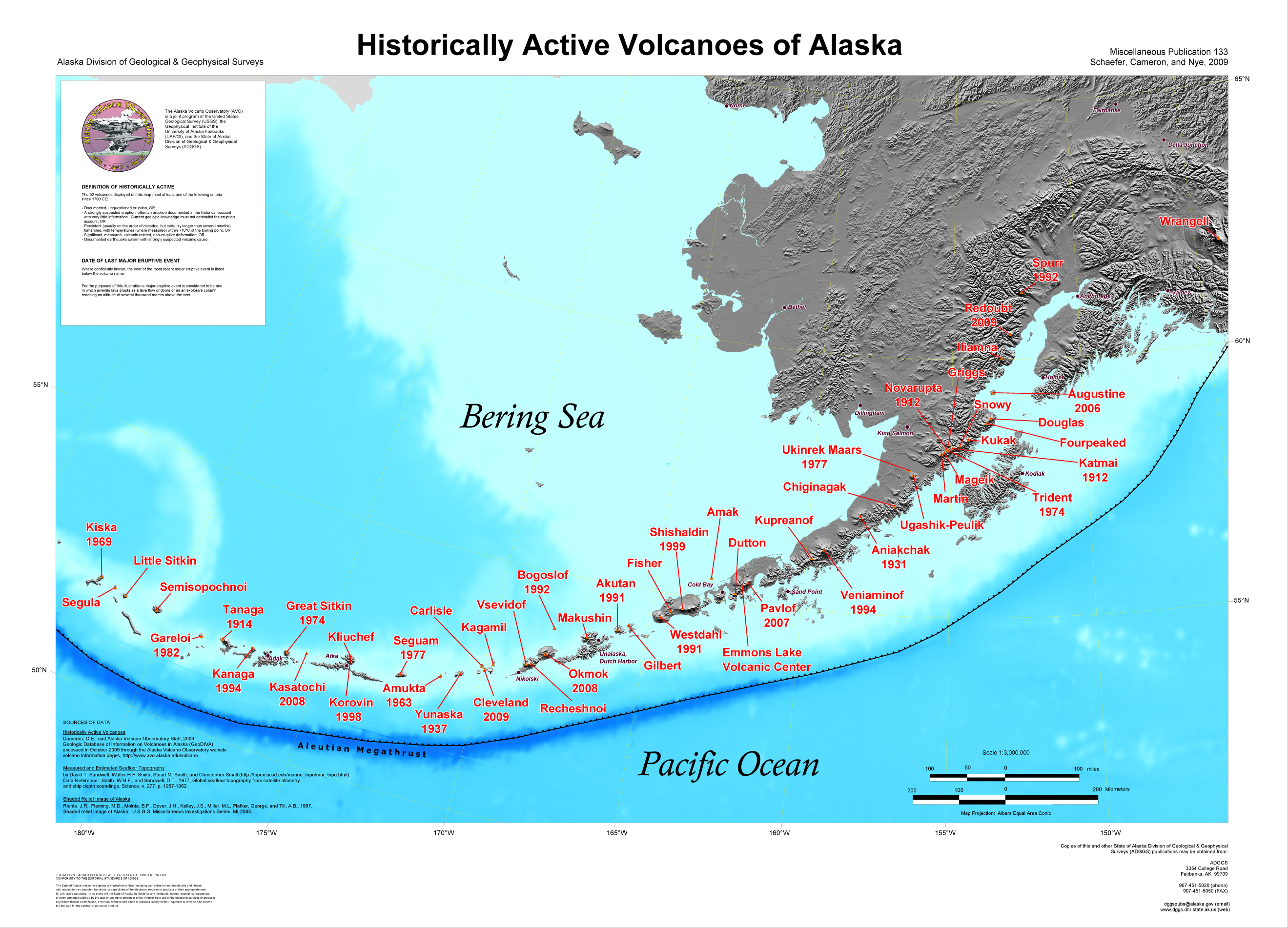
Indeed, Alaska is home to more than 130 volcanoes and volcanic fields, a remarkable figure that underscores its position as a critical segment of the Pacific Ring of Fire. Of these, approximately 50 are considered historically active, meaning they have erupted in the last 10,000 years, and many of these are under constant surveillance by scientists. These fiery peaks are not just geological curiosities; they are foundational landmarks that have shaped the state’s geography, its history, and its unique biodiversity. Understanding the sheer scale and dynamic nature of Alaska’s volcanic landmarks offers profound insight into this extraordinary part of the world.
The Alaskan Segment of the Ring of Fire: A Volcanic Hotbed
Alaska’s prominent position in the Pacific Ring of Fire makes it a crucible of geological activity. This horseshoe-shaped belt, spanning some 25,000 miles, is renowned for its intense seismic and volcanic phenomena, accounting for roughly 90% of the world’s earthquakes and over 75% of its active and dormant volcanoes. Alaska represents one of the most active segments of this colossal geological feature, a consequence of relentless tectonic forces beneath its surface.
A Geological Powerhouse
The fundamental reason for Alaska’s volcanic prolificacy lies in plate tectonics. The colossal Pacific Plate is actively subducting, or diving beneath, the North American Plate. As the oceanic crust of the Pacific Plate descends into the Earth’s mantle, it melts, and the resulting magma rises to the surface, creating chains of volcanoes. This process has given birth to the magnificent Aleutian Arc, a curving chain of islands and volcanoes that extends for nearly 1,500 miles from the Alaska Peninsula westward into the Bering Sea.
Beyond the Aleutian Arc, other volcanic fields and isolated stratovolcanoes dot the landscape, particularly around Cook Inlet and further inland. The sheer number – exceeding 130 distinct volcanoes and volcanic fields – demonstrates the pervasive influence of this geological activity across the state. These natural landmarks range from relatively small cinder cones to colossal stratovolcanoes and vast calderas, each telling a story of intense subterranean energy.
Defining “Volcano”: A Matter of Perspective
When attempting to answer “how many volcanoes are in Alaska,” precision becomes a complex endeavor, largely due to the geological definitions of what constitutes a “volcano.” Scientists often distinguish between active, dormant, and extinct volcanoes, but these classifications can be fluid. An active volcano is one that has erupted in historical times (usually within the last 10,000 years). Dormant volcanoes are those that haven’t erupted recently but are still considered capable of erupting. Extinct volcanoes are unlikely to erupt again.
Furthermore, volcanic complexes can consist of multiple vents, domes, or cones that are part of a larger system. For instance, a “volcanic field” might contain dozens of individual eruptive centers. The figure of 130+ volcanoes and volcanic fields often includes any recognized feature with evidence of volcanic origin. However, for a focus on prominent natural landmarks that actively shape the landscape and pose potential hazards, attention often narrows to the approximately 50 historically active volcanoes. These are the dynamic landmarks that continuously remind residents and visitors alike of Alaska’s fiery heart.
Iconic Alaskan Volcanic Landmarks
Among the vast array of volcanic features in Alaska, several stand out as truly iconic natural landmarks, renowned for their majesty, geological significance, or historical impact. These peaks are not just scientific curiosities but defining elements of the Alaskan wilderness, drawing awe and respect.
The Majestic Aleutian Arc
The Aleutian Arc is arguably the most impressive chain of volcanic landmarks globally. Stretching across the Aleutian Islands and the Alaska Peninsula, this majestic arc is home to a majority of Alaska’s historically active volcanoes, many of which are frequently observed erupting.
Within the Cook Inlet region, visible from Anchorage on clear days, are some of the state’s most frequently active and carefully monitored volcanoes:
- Mount Augustine: Located on an island in Cook Inlet, Mount Augustine is one of Alaska’s most active volcanoes, known for its dome-building eruptions and pyroclastic flows. Its steep, symmetrical cone is a striking landmark.
- Mount Redoubt: Another prominent stratovolcano overlooking Cook Inlet, Mount Redoubt has erupted several times in recent decades, notably in 1989-1990 and 2009, often disrupting air travel with ash plumes.
- Mount Spurr: The easternmost volcano of the Aleutian Arc and the closest active volcano to Anchorage, Mount Spurr is an imposing landmark, its eruptions, like those in 1992, capable of spreading ash across southcentral Alaska.
Further west along the Aleutian Islands, volcanoes become more remote but no less active:
- Okmok Caldera: Situated on Umnak Island, Okmok Caldera is a massive, ice-filled caldera that has produced some of the Aleutian Arc’s largest eruptions in the last 2,500 years, dramatically reshaping the island.
- Mount Cleveland: A notoriously restless and frequently active stratovolcano on Chuginadak Island, Mount Cleveland is often in a state of low-level eruption, occasionally sending ash plumes high into the atmosphere.
- Shishaldin Volcano: Located on Unimak Island, Shishaldin Volcano is almost perfectly symmetrical, making it one of the most beautiful and iconic volcanic cones in the world. It is also one of the most active in the Aleutian Arc.
- Pavlof Volcano: On the Alaska Peninsula, Pavlof Volcano is renowned as one of Alaska’s most consistently active volcanoes, with frequent, short-lived eruptions often observed by pilots and satellite.
Mainland Marvels and Lesser-Known Giants
While the Aleutian Arc dominates Alaska’s volcanic landscape, significant and fascinating volcanic landmarks also exist on the mainland, offering distinct perspectives on geological power.
- Mount Katmai and the Valley of Ten Thousand Smokes: Within Katmai National Park and Preserve on the Alaska Peninsula, this region is a monumental landmark shaped by the 1912 eruption of Novarupta, one of the 20th century’s most powerful volcanic events. The eruption created the immense Valley of Ten Thousand Smokes, a landscape covered by ash flows and once riddled with countless fumaroles, now a testament to the raw power of Earth’s internal forces.
- Wrangell Volcano: A massive, glacier-covered shield volcano located in Wrangell-St. Elias National Park and Preserve, Wrangell Volcano is one of North America’s largest active volcanoes by volume. Its ice-clad summit and ongoing geothermal activity make it a distinctive and majestic landmark.
- Aniakchak Caldera: Also on the Alaska Peninsula, Aniakchak Caldera, now designated as Aniakchak National Monument and Preserve, is a 6-mile-wide caldera formed by a massive eruption approximately 3,500 years ago. Its dramatic crater lake and remote, pristine environment offer a profound experience of volcanic grandeur.
The Dynamic Impact of Volcanic Landmarks
Alaska’s volcanoes are far more than just impressive peaks; they are active architects of the environment, continuously shaping the land and influencing life around them. Their role as dynamic natural landmarks extends to ecological, atmospheric, and even societal impacts.
Shaping the Alaskan Landscape and Ecosystems
The transformative power of volcanism is evident throughout Alaska. Eruptions, whether explosive or effusive, deposit new layers of ash and lava, creating fresh geological substrates. Volcanic ash, though initially destructive, can eventually enrich soils, providing vital nutrients for new plant growth. This process fosters unique ecosystems adapted to these ever-changing environments, often leading to distinct flora and fauna assemblages.
Over millennia, volcanic activity has been instrumental in forming new islands, extending coastlines, and creating diverse topographical features such as calderas, fumaroles, and hot springs. These features not only add to the natural beauty of the state but also serve as scientific laboratories, offering insights into geothermal energy, extremophile biology, and planetary geology. The glaciers that cap many of Alaska’s volcanoes interact with the heat from below, creating unique meltwater systems and contributing to the formation of lahars (volcanic mudflows) that further sculpt river valleys and coastal plains.
Monitoring and Preservation of These Natural Wonders
Given their dynamic and sometimes hazardous nature, Alaska’s volcanic landmarks are among the most closely monitored in the world. The Alaska Volcano Observatory (AVO), a joint program of the U.S. Geological Survey, the University of Alaska Fairbanks, and the Alaska Division of Geological and Geophysical Surveys, plays a crucial role. Using a network of seismic sensors, GPS, satellite imagery, and other instruments, AVO continuously tracks the activity of Alaska’s volcanoes, issuing warnings and alerts to protect aviation and communities.
The preservation of these volcanic landmarks is paramount, not only for public safety but also for their immense scientific, educational, and aesthetic value. Designated national parks, preserves, and monuments, such as Katmai National Park and Preserve and Aniakchak National Monument and Preserve, ensure that these dynamic landscapes remain protected for future generations to study and appreciate. They stand as enduring testaments to the Earth’s raw power and evolutionary processes.
Experiencing Alaska’s Volcanic Landmarks
Experiencing Alaska’s volcanic landmarks is an unforgettable encounter with geological power and raw natural beauty. While some are remote and challenging to access, many offer opportunities for observation and even close-up exploration, providing unique insights into these dynamic features.
Observing from Afar
For many, the first encounter with Alaska’s volcanoes comes from a distance. On clear days, the peaks of Mount Augustine, Mount Redoubt, and Mount Spurr are majestic landmarks visible from Anchorage and surrounding areas. The sight of their snow-capped cones rising above the clouds is a powerful reminder of the active geology shaping the region.
Flightseeing tours offer some of the most spectacular aerial views of the Aleutian Chain and the volcanoes of Cook Inlet. These tours provide a breathtaking perspective, allowing observers to appreciate the scale of these landmarks and their dramatic impact on the landscape. Cruising along the Alaska Peninsula or through parts of the Aleutian Islands can also bring visitors close to these fiery mountains, occasionally even witnessing minor eruptions from a safe distance.
Exploring Volcanic Regions Up Close
For the more adventurous, several volcanic landmarks offer opportunities for direct exploration, providing an immersive experience of their unique environments.
The Valley of Ten Thousand Smokes in Katmai National Park and Preserve is perhaps the most accessible example of a large-scale volcanic landscape. Visitors can take guided bus tours or embark on backcountry hikes to explore this vast, ash-filled valley, witnessing the lingering geological effects of the 1912 eruption. The park’s focus on preserving this monumental landmark allows visitors to understand the profound changes a single eruption can bring.
For those seeking true wilderness and solitude, Aniakchak National Monument and Preserve offers an unparalleled experience. Reaching the remote Aniakchak Caldera typically involves chartering a floatplane, but the reward is a pristine, dramatic volcanic landscape ripe for hiking, fishing, and kayaking within its crater lake. This remote landmark embodies the wild, untamed spirit of Alaska’s volcanic heart. Other areas around volcanoes, while not formally designated for tourism, offer backcountry hiking and climbing opportunities for experienced adventurers, provided they are well-prepared and aware of the dynamic hazards.

Conclusion
The answer to “How many volcanoes are in Alaska?” is a testament to the state’s extraordinary geological dynamism: over 130 volcanoes and volcanic fields, with approximately 50 historically active. These numbers signify more than mere statistics; they represent a collection of unparalleled natural landmarks that profoundly define the Alaskan landscape. From the majestic Aleutian Arc stretching into the Bering Sea to the powerful caldera of Katmai National Park and Preserve, each volcanic peak is a living monument to Earth’s internal forces.
These fiery landmarks are crucial to understanding Alaska’s ecological tapestry, its scientific significance, and its breathtaking beauty. They are constantly monitored, studied, and, where possible, preserved, ensuring that their awe-inspiring presence continues to shape both the physical environment and the human experience. Alaska remains a land spectacularly sculpted by fire and ice, with its volcanoes standing as enduring symbols of its wild, untamed, and ever-changing character.
LifeOutOfTheBox is a participant in the Amazon Services LLC Associates Program, an affiliate advertising program designed to provide a means for sites to earn advertising fees by advertising and linking to Amazon.com. Amazon, the Amazon logo, AmazonSupply, and the AmazonSupply logo are trademarks of Amazon.com, Inc. or its affiliates. As an Amazon Associate we earn affiliate commissions from qualifying purchases.