
Understanding the cost of lodging in New York City requires a deep dive into one of the most volatile and prestigious hospitality markets in the world. As a global hub for finance, fashion, and theater, the city offers a spectrum of accommodations that range from utilitarian capsules to palatial suites overlooking Central Park. The price of a room is rarely fixed; instead, it is a reflection of real estate prestige, seasonal demand, and the specific amenities provided by the property. Whether one is looking for a historic landmark or a glass-walled skyscraper in Hudson Yards, the financial commitment varies significantly based on the tier of service and the geographic footprint of the hotel.

The Luxury Tier: Iconic Suites and Five-Star Excellence
In Manhattan, the luxury hotel segment represents the pinnacle of urban hospitality. These properties are not merely places to sleep; they are institutions that define the skyline and the city’s social fabric. Prices in this category typically start at $700 per night for a standard king room and can easily climb into the tens of thousands for specialty suites.
Grand Dames and Historic Landmarks
Properties like The Plaza Hotel and the St. Regis New York command a premium due to their historical significance and unrivaled locations on Fifth Avenue. At the St. Regis New York, the cost reflects more than just the square footage; it includes the signature 24-hour butler service and the legacy of the Astor family. Similarly, The Pierre offers a level of old-world elegance where the room rates are a direct result of the high staff-to-guest ratio. For these “Grand Dames,” a traveler should expect to pay between $900 and $1,500 for an entry-level room during the peak autumn or holiday seasons.
Modern Ultra-Luxury and High-Design
The landscape of high-end hotels has shifted recently with the arrival of ultra-modern brands that focus on wellness and contemporary aesthetics. The Aman New York, located in the Crown Building, has set new benchmarks for pricing in New York City, with rooms often starting well above $2,000 per night. These rates are justified through expansive floor plans—rare in a dense city—and exclusive access to subterranean spas and private jazz clubs. Likewise, the Baccarat Hotel New York utilizes its heritage in crystal craftsmanship to offer a lavish environment where the nightly rate covers opulent French-inspired decor and high-touch concierge services.
The Rise of the Luxury Wellness Hotel
In Hudson Yards, the Equinox Hotel Hudson Yards has introduced a price point centered on “high-performance” living. Rooms here are designed as sleep sanctuaries, featuring total soundproofing and medical-grade air filtration. Rates generally hover between $800 and $1,200, appealing to a demographic that views the hotel room as an extension of their health and fitness regimen.
Mid-Range and Boutique Accommodations
For many visitors, the mid-range and boutique sectors offer the most balanced value proposition. These hotels typically range from $250 to $600 per night. While they may lack the 24-hour white-glove service of the Upper East Side giants, they compensate with neighborhood character, curated design, and localized amenities.
Design-Forward Boutique Hotels
SoHo and Chelsea are the primary territories for boutique properties. The Standard, High Line, located in the Meatpacking District, is a prime example of how architecture and social scene influence pricing. Rooms that straddle the High Line park can fluctuate between $350 and $550 depending on the view. In Brooklyn, particularly in Williamsburg, the Wythe Hotel and The William Vale have driven up the borough’s average daily rate. The William Vale offers balconies for every room, a rarity that allows them to charge Manhattan-level prices, often exceeding $400 per night.
Lifestyle Brands and Micro-Hotels
A newer trend impacting the average cost of a room is the “micro-hotel” or lifestyle brand, such as Arlo SoHo or CitizenM New York Times Square. These hotels optimize small room footprints (often under 200 square feet) to offer lower entry prices, sometimes as low as $200 in the off-season. They prioritize communal spaces, such as rooftop bars and designer lobbies, over large private rooms. This model has become increasingly popular in NoMad and Midtown South, providing a stylish yet more accessible price point for younger professionals and tech travelers.
Business-Class Chains
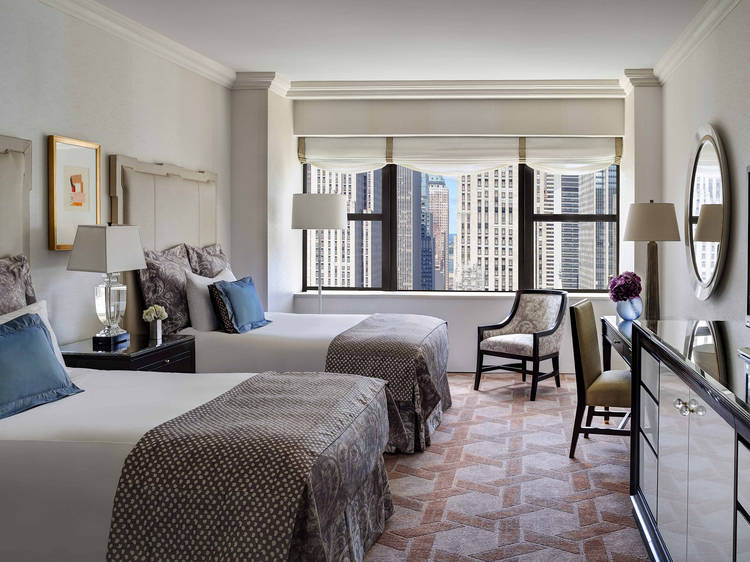
Standardized excellence is found in the various outposts of Marriott, Hilton, and Hyatt. A room at the New York Marriott Marquis in Times Square or the Park Hyatt New York near Columbus Circle provides a predictable level of comfort. These rooms are subject to high volatility; during a major conference at the Javits Center, a standard Hilton Garden Inn room that usually costs $250 might spike to $600.
Factors Influencing Nightly Rates and Hidden Costs
The sticker price of a hotel room in New York City is rarely the final amount paid. Several factors, from seasonal shifts to legislative changes and mandatory fees, play a critical role in the final bill.
Seasonal Demand and Event Spikes
Pricing in the city follows a rhythmic cycle. The lowest rates are traditionally found in January and February, following the holiday rush. During this “low season,” even luxury hotels like The Langham, New York, Fifth Avenue may offer significant discounts. Conversely, the “high season” spans from September through December. Events like the United Nations General Assembly in September or New Year’s Eve can cause prices to triple overnight. A room at the Knickerbocker Hotel overlooking the ball drop will command a massive premium compared to a Tuesday in March.
Destination and Resort Fees
A controversial but common practice in New York City hotels is the “facility fee” or “destination fee.” These mandatory charges, ranging from $25 to $50 per night, are often added on top of the advertised room rate. While hotels justify these by including perks like high-speed Wi-Fi, fitness center access, or a daily food and beverage credit, they represent a significant “hidden” cost that travelers must account for when budgeting.
Location and Neighborhood Premiums
The “Manhattan Premium” is a well-documented phenomenon. Staying in Midtown Manhattan near the Empire State Building or Rockefeller Center is almost always more expensive than staying in the outer boroughs. However, as Long Island City in Queens and Downtown Brooklyn continue to develop, the price gap is narrowing. A high-floor room at the 1 Hotel Brooklyn Bridge with a view of the Manhattan Bridge can often cost more than a room in a legacy hotel in Manhattan.
Specialty Accommodations and Long-Term Stays
Beyond the traditional hotel room, the New York City market includes specialized options like apartment-style suites and residential hotels, which cater to different financial and lifestyle needs.
Apartment-Style Suites and Villas
For families or groups, the cost of booking multiple hotel rooms often exceeds the price of a multi-bedroom suite. Properties like The Beekman in lower Manhattan offer “Turret Penthouses” that function as private residences. While these can cost upwards of $5,000 per night, they provide kitchens and multiple bathrooms, which are rare in standard hotel configurations. The Whitby Hotel in Upper Midtown also offers terrace suites that provide a residential feel with the amenities of a full-service hotel.
Corporate Housing and Extended Stay Hotels
For stays longer than a week, corporate housing brands and extended-stay hotels like AKA Central Park or Mint House at 70 Pine offer a different pricing model. These properties often provide tiered pricing—the longer you stay, the lower the nightly rate. A stay of 30 days or more in a luxury apartment-hotel can bring the nightly cost down to a range of $300 to $400, providing significant savings compared to a month at a standard hotel.

The Impact of Short-Term Rental Regulations
Recent legislative changes in New York City regarding short-term rentals (such as Airbnb) have significantly impacted hotel room prices. With many private apartments removed from the rental pool, the demand for traditional hotel rooms has increased, keeping occupancy rates high and allowing hotels to maintain higher price floors even during typically slower periods. This regulatory environment ensures that the hotel industry remains the primary provider of tourist accommodation, further solidifying the premium on Manhattan real estate.
In summary, a hotel room in New York City is a commodity whose value is dictated by its proximity to the city’s pulse and the level of service it provides. While budget-conscious travelers can find options in the $200 range by looking toward Long Island City or micro-hotels, the true New York City hotel experience—characterized by iconic views, historic architecture, and world-class amenities—typically begins at the $450 mark and ascends rapidly into the realm of luxury.
LifeOutOfTheBox is a participant in the Amazon Services LLC Associates Program, an affiliate advertising program designed to provide a means for sites to earn advertising fees by advertising and linking to Amazon.com. Amazon, the Amazon logo, AmazonSupply, and the AmazonSupply logo are trademarks of Amazon.com, Inc. or its affiliates. As an Amazon Associate we earn affiliate commissions from qualifying purchases.