
Embarking on a journey through the diverse landscapes of California promises unforgettable experiences, from the sun-drenched beaches of Southern California to the majestic redwoods of the north. However, as travelers plan their routes, a crucial consideration often arises: the presence and cost of toll roads. Understanding California’s toll system is essential for seamless travel, helping visitors budget effectively and avoid unexpected fees. This comprehensive guide delves into the Golden State’s toll road network, detailing costs, payment methods, and strategies for navigating these routes efficiently.
Navigating California’s Toll Road Landscape
California, a state renowned for its sprawling urban centers and vast natural beauty, utilizes toll roads and bridges to manage traffic congestion, fund infrastructure improvements, and offer alternative routes for motorists. Unlike some states with widespread toll plazas on major interstates, California’s toll system is more localized, primarily concentrated in specific regions and on particular facilities.
The Rationale Behind Toll Roads
Toll roads in California serve multiple vital purposes. Many are privately or semi-privately managed facilities designed to alleviate congestion on parallel free routes, particularly during peak travel times. The revenue generated from tolls directly contributes to the maintenance and expansion of these vital transportation arteries, ensuring smoother traffic flow and reducing travel times for commuters and tourists alike. Additionally, some toll express lanes operate on a dynamic pricing model, where tolls fluctuate based on real-time traffic demand, further encouraging efficient road use.
Key Toll Facilities Across the Golden State
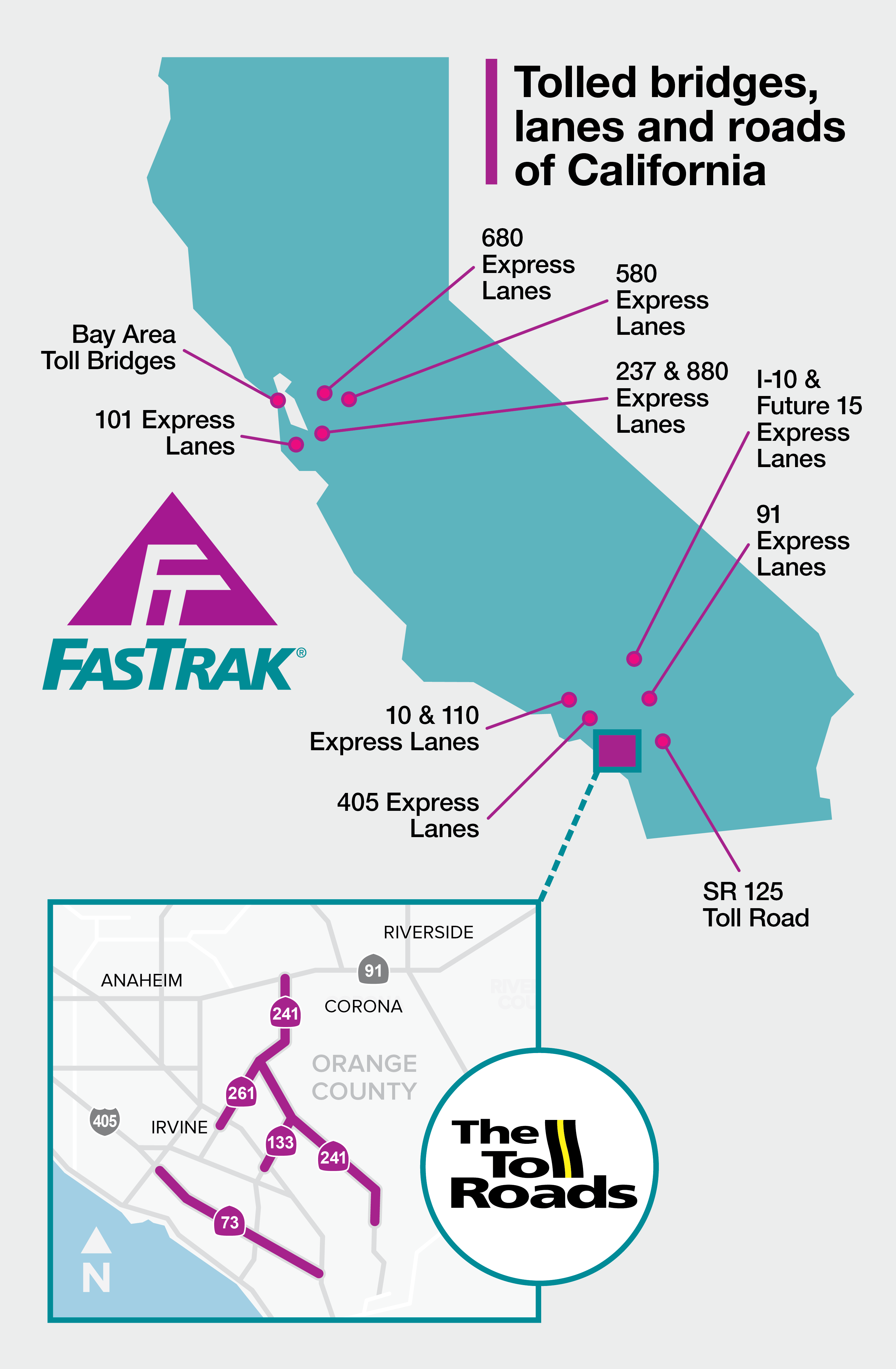
The bulk of California’s toll roads are found in Orange County and the Bay Area, though isolated toll facilities exist elsewhere. These include a network of toll expressways and a collection of iconic bridges. For travelers, identifying these segments beforehand is key to a stress-free trip. The absence of traditional toll booths at many locations means drivers must be proactive in managing payments.
Understanding Toll Collection Methods
California’s toll collection system is predominantly electronic, moving away from physical toll booths that once characterized highway travel. This cashless system requires drivers to utilize an electronic transponder or make payments online.
FasTrak: The Primary Electronic System
The most common and convenient method for paying tolls in California is through FasTrak. This electronic toll collection system utilizes a transponder device placed on a vehicle’s windshield, which communicates with overhead sensors as the vehicle passes through a toll point. When a FasTrak transponder is read, the toll amount is automatically deducted from a pre-paid account.
Benefits of using FasTrak include:
- Cost Savings: FasTrak users often receive discounted toll rates compared to other payment methods.
- Seamless Travel: No need to stop or slow down significantly, ensuring continuous travel flow.
- Convenience: A single FasTrak account can be used on all toll facilities throughout California, including toll roads, bridges, and express lanes.
Travelers can acquire a FasTrak transponder online, at select retail locations, or directly from various toll agencies. Different agencies offer slightly different types of transponders, but most are interoperable across the state.
Pay-by-Plate and One-Time Payments
For those without a FasTrak transponder, most California toll facilities offer a “Pay-by-Plate” or “One-Time Payment” option. Cameras capture the vehicle’s license plate as it passes through the toll point. The driver then has a limited window (typically within 48 hours or up to 5 days, depending on the facility) to pay the toll online using their license plate number.
It is crucial to note:
- Higher Rates: Pay-by-Plate tolls are generally higher than FasTrak rates.
- Timely Payment: Failure to pay within the specified timeframe will result in a toll invoice, often accompanied by significant penalties and late fees.
Some toll facilities also accept cash at designated toll booths or offer payment by phone, though these options are becoming increasingly rare. Always check the specific toll authority’s website for the most current payment options.
Avoiding Penalties: What You Need to Know
The electronic nature of California’s toll system means that unintentional toll violations can occur if drivers are unprepared. To avoid penalties:
- Know Your Route: Plan your journey to identify any toll roads or bridges in advance.
- Obtain FasTrak: If you anticipate frequent toll road use, a FasTrak transponder is the most economical and hassle-free solution.
- Immediate Payment: If you use a toll road without FasTrak, make a one-time payment online as soon as possible after your trip.
- Rental Cars: Understand your rental car agency’s policy regarding tolls, as they often include their own fee structures for toll management.
A Regional Breakdown of California Tolls
Toll costs vary widely depending on the facility, time of day (peak vs. off-peak), number of axles, and payment method (FasTrak vs. Pay-by-Plate).
Southern California Tolls: Orange County’s Extensive Network
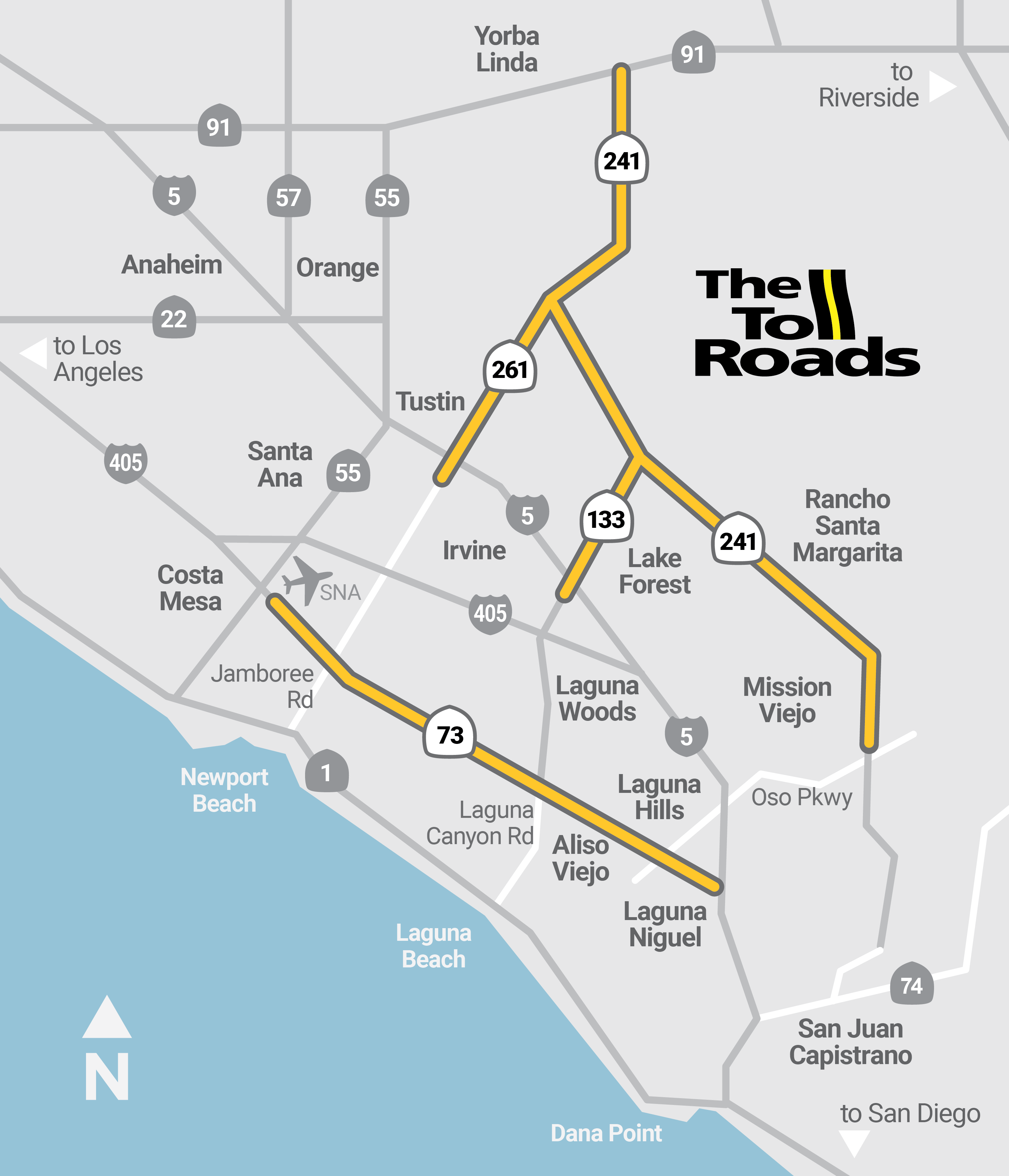
Southern California, particularly Orange County, is home to several major toll roads known collectively as The Toll Roads (TCA). These include:
- State Route 73 (San Joaquin Hills Transportation Corridor): Connects Costa Mesa to Mission Viejo. Tolls can range from approximately $3-$10 for a standard 2-axle vehicle with FasTrak, depending on distance and time of day.
- State Route 133 (Laguna Canyon Road/Foothill Transportation Corridor link): A shorter segment with lower tolls, typically under $2-$3.
- State Route 241 (Foothill Transportation Corridor): Extends from State Route 91 to State Route 5. Tolls can be $4-$10 or more.
- State Route 261 (Eastern Transportation Corridor): Connects to the 241 and 5 freeways. Similar toll ranges to the 241.
These Orange County toll roads are managed by the Transportation Corridor Agencies (TCA), and detailed pricing is available on their website.
Beyond Orange County, other notable toll facilities include:
- 91 Express Lanes (Riverside County/Orange County): These dynamically priced express lanes on State Route 91 can have highly variable tolls, from a few dollars during off-peak hours to $20 or more during extreme congestion. A FasTrak transponder is mandatory for solo drivers.
- I-15 Express Lanes (San Diego County): In San Diego, these lanes also use dynamic pricing, with tolls ranging from minimal to over $10 depending on demand. A FasTrak Flex transponder is required for HOV-2/3+ users to travel free or at a reduced rate.
- SR-125 South Bay Expressway (San Diego County): Connects SR-905 to SR-54. Tolls typically range from $1-$4 for a 2-axle vehicle.
Northern California Tolls: Bridges and Express Lanes
Northern California features a prominent network of toll bridges and an expanding system of express lanes, primarily within the Bay Area.
Bay Area Toll Bridges:
All seven state-owned toll bridges in the Bay Area collect tolls in the eastbound or northbound direction only, including:
- San Francisco-Oakland Bay Bridge (Bay Bridge): Tolls range from approximately $7 to $8 during peak hours, and $6 during off-peak hours and weekends.
- Dumbarton Bridge: Flat toll of $7.
- San Mateo-Hayward Bridge: Flat toll of $7.
- Benicia-Martinez Bridge: Flat toll of $7.
- Carquinez Bridge: Flat toll of $7.
- Antioch Bridge: Flat toll of $7.
- Richmond-San Rafael Bridge: Flat toll of $7.
The iconic Golden Gate Bridge has its own tolling authority and schedule. It collects tolls only in the southbound direction (into San Francisco). Tolls for 2-axle vehicles are around $9.75 with FasTrak and up to $10.75 for Pay-By-Plate.
Bay Area Express Lanes:
A growing number of dynamically priced express lanes operate in the Bay Area, allowing solo drivers to pay a toll for faster travel, while carpoolers with a FasTrak Flex transponder may travel for free or at a reduced rate. Tolls fluctuate based on congestion.
- I-580 Express Lanes (Alameda County): Can range from $0.50 to $15+ depending on traffic.
- I-680 Contra Costa Express Lanes: Similar dynamic pricing, often reaching $10+ during peak.
- SR-237 Express Lanes (Santa Clara County): Shorter segment, tolls typically lower.
- I-880 Express Lanes (Alameda County): Variable pricing.
Strategies for Budgeting and Efficient Travel
For travelers exploring California, having a strategy for navigating toll roads can significantly enhance the experience and manage costs.
Planning Your Route: Avoiding or Embracing Tolls
Before heading out, use navigation apps like Google Maps, Apple Maps, or Waze. These tools typically offer options to “avoid tolls,” allowing you to compare toll-free routes with those that incur charges.
- Compare Time vs. Cost: Sometimes, paying a toll can save significant time, especially during peak hours, making the cost worthwhile. For example, using the 91 Express Lanes can bypass hours of congestion.
- Off-Peak Travel: If your schedule allows, traveling during off-peak hours can result in lower dynamic toll prices on express lanes and less traffic overall.
- Familiarize Yourself: Look up the websites of the relevant toll authorities (The Toll Roads, Bay Area Toll Authority, Golden Gate Bridge, Highway and Transportation District) to see real-time toll rates and plan accordingly.
Rental Cars and Tolls: What Travelers Need to Know
Driving a rental car on California’s toll roads requires special attention. Most rental car companies offer their own toll payment programs.
- Opt-In Programs: Many agencies enroll their vehicles in programs that automatically pay tolls and bill the renter. While convenient, these programs often include daily administration fees in addition to the toll costs, even on days when no tolls are incurred.
- Declining Programs: Travelers can often decline the rental company’s toll program and instead use their own personal FasTrak transponder (if applicable and compatible) or make one-time payments online using the rental car’s license plate. Be absolutely sure the rental company’s system is deactivated, or you might be double-billed.
- Check the Fine Print: Always inquire about the rental company’s toll policy when booking or picking up your vehicle to avoid unexpected charges.

Real-Time Information and Resources
Staying informed is your best defense against unexpected toll costs.
- Mobile Apps: Many toll agencies, as well as third-party navigation apps, provide real-time toll estimates and traffic conditions.
- Official Websites: The official websites of the Transportation Corridor Agencies (The Toll Roads), Bay Area Toll Authority, and Golden Gate Bridge, Highway and Transportation District are invaluable resources for current rates, payment options, and general information.
By understanding the “how much” and “how to pay” of California’s toll roads, travelers can confidently navigate the state’s impressive infrastructure, ensuring their journey through the Golden State is as smooth and enjoyable as possible.
LifeOutOfTheBox is a participant in the Amazon Services LLC Associates Program, an affiliate advertising program designed to provide a means for sites to earn advertising fees by advertising and linking to Amazon.com. Amazon, the Amazon logo, AmazonSupply, and the AmazonSupply logo are trademarks of Amazon.com, Inc. or its affiliates. As an Amazon Associate we earn affiliate commissions from qualifying purchases.