
Navigating the vast and dynamic landscape of New York involves a complex web of transportation infrastructure, with toll roads forming a significant part of the commuter and traveler experience. Understanding the costs associated with these vital arteries is crucial for anyone planning a trip, managing a budget, or simply seeking to optimize their journey through the Empire State. From iconic bridges connecting boroughs to extensive expressways that span miles, the tolls in New York can add up, influencing travel decisions and the overall cost of experiencing all that the state has to offer. This guide delves into the various toll authorities, pricing structures, and factors that determine how much you can expect to pay when using New York‘s toll roads, bridges, and tunnels.
Understanding New York’s Toll Infrastructure
New York’s toll system is not monolithic; it is managed by several distinct authorities, each with its own set of facilities and pricing policies. The most prominent among these are the Metropolitan Transportation Authority (MTA), the New York State Thruway Authority, and the Port Authority of New York and New Jersey. Each operates a unique network of roads, bridges, and tunnels, and understanding which authority manages a particular route is the first step to deciphering the toll costs.
The Metropolitan Transportation Authority (MTA)
The MTA oversees a significant portion of the toll facilities within the five boroughs of New York City and its surrounding suburban areas. This includes iconic crossings like the Triborough Bridge (now the Robert F. Kennedy Bridge), the Queens Midtown Tunnel, the Verrazzano-Narrows Bridge, and the Henry Hudson Bridge. The pricing for these facilities is primarily determined by vehicle classification and whether a driver is using a toll payment system like E-ZPass or paying by mail (which typically incurs higher fees).
MTA Toll Rates and Payment Methods
The MTA employs a dynamic tolling system, especially on its major bridges and tunnels. As of recent updates, the toll for a standard passenger vehicle (two-axle vehicle) using E-ZPass on many MTA crossings can range from approximately $11.50 to $13.50. Those opting for the pay-by-mail option will face significantly higher rates, often exceeding $17 per crossing. It’s important to note that these rates can fluctuate due to inflation adjustments and policy changes.
Key MTA Crossings and General Toll Ranges (Passenger Vehicles, E-ZPass):
- Triborough Bridge / Robert F. Kennedy Bridge: Generally in the $11.50 – $13.50 range.
- Queens Midtown Tunnel: Similar to the Triborough Bridge, typically $11.50 – $13.50.
- Verrazzano-Narrows Bridge: This is one of the more expensive crossings, often in the $13.00 – $14.50 range for E-ZPass.
- Henry Hudson Bridge: Usually among the lower-priced MTA crossings, potentially around $10.00 – $12.00.
The MTA also offers various discount programs and commuter plans for frequent users, which can significantly reduce the per-trip cost. These plans often require enrollment and adherence to specific usage patterns.
The New York State Thruway Authority
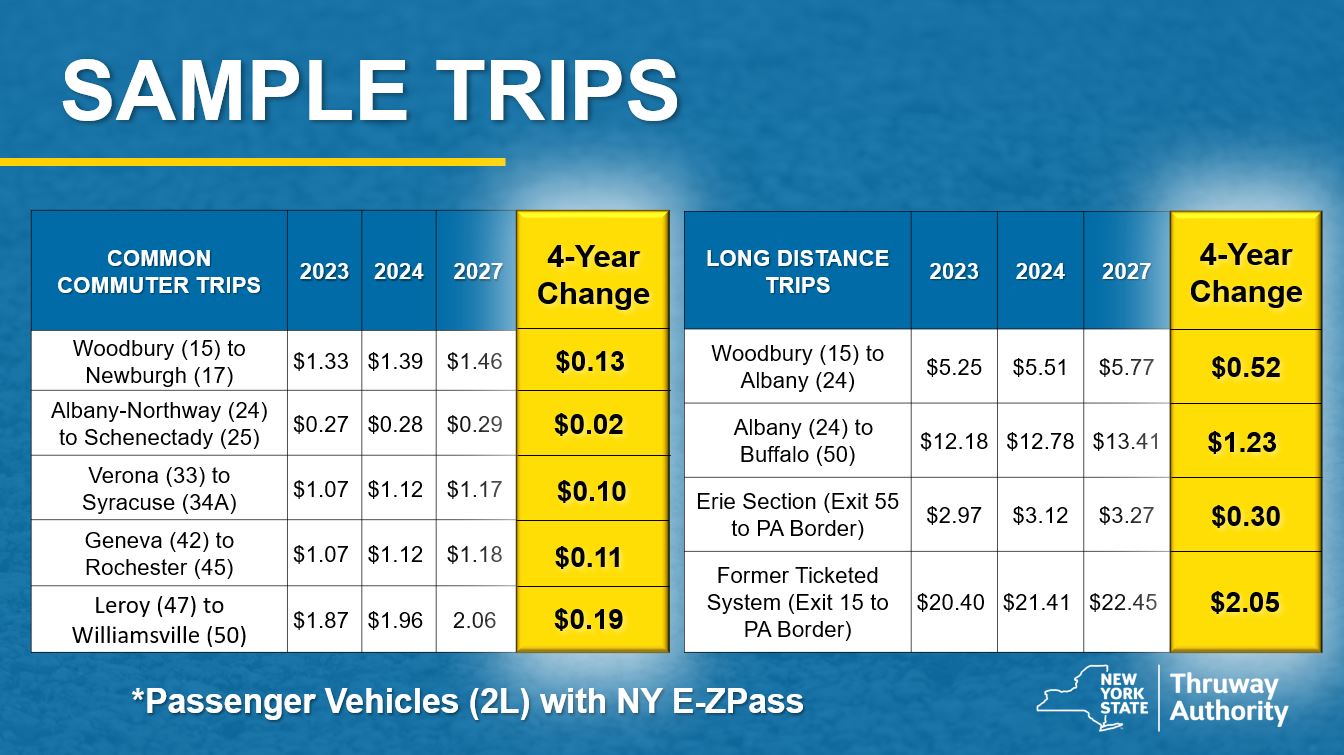
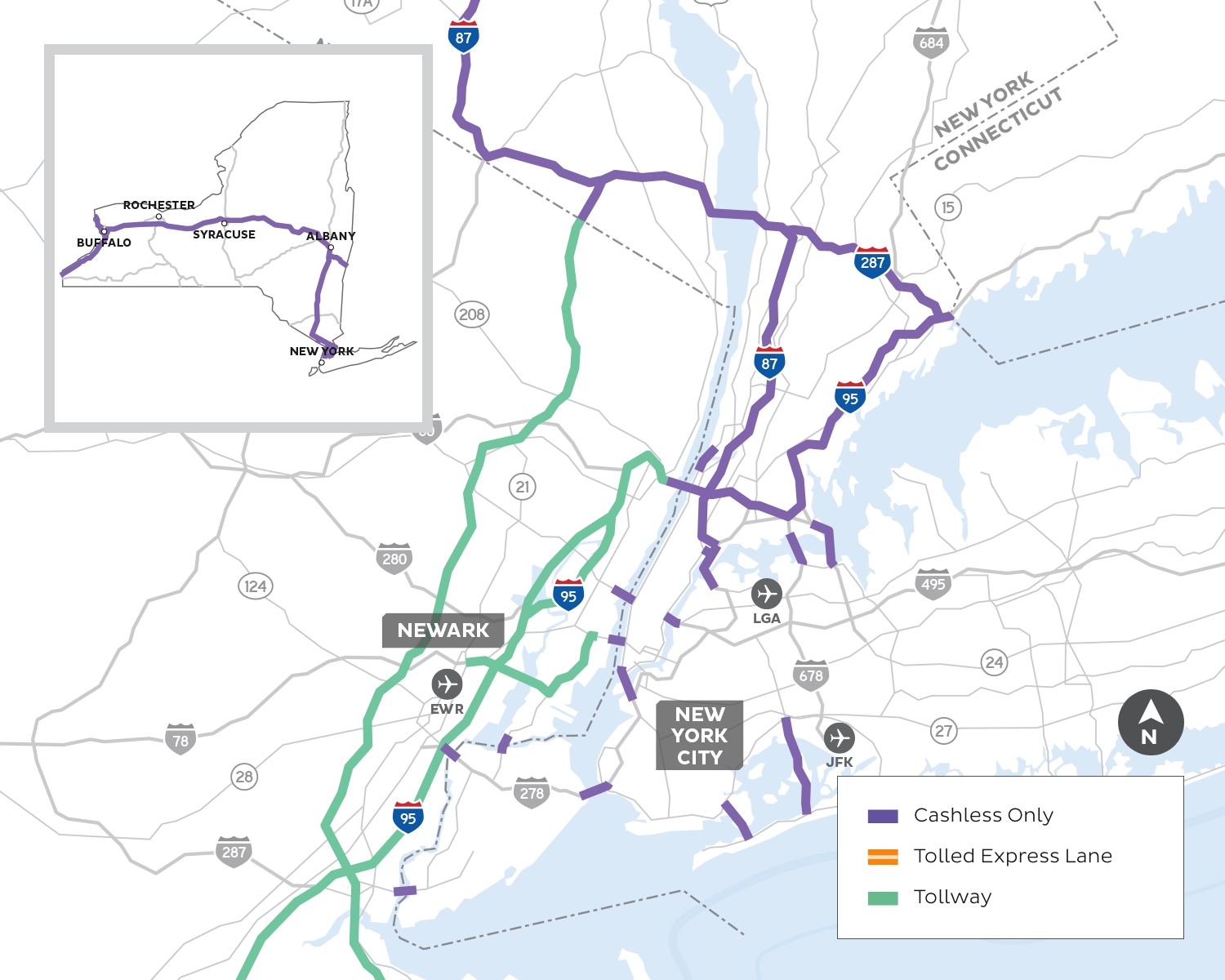
The New York State Thruway Authority manages the New York State Thruway, a vast system of high-speed highways stretching across the state, from New York City to the border with Pennsylvania and Canada. This cashless tolling system has transitioned away from traditional toll booths, with tolls collected via E-ZPass or license plate readers. The Thruway operates under a zone-based tolling system for much of its length, meaning the cost of your journey depends on how many zones you traverse.
Thruway Toll Calculation
The New York State Thruway utilizes a mileage-based tolling system, particularly for longer distances. For short trips within a single zone, the tolls are fixed. However, as drivers travel further, the toll increases incrementally. The pricing is also differentiated by vehicle classification. A standard passenger vehicle (two-axle) will pay less per mile than larger vehicles such as trucks or buses.
Example of Thruway Toll Structure (Passenger Vehicles):
- Short Trips (within one zone): Fixed rates, often in the $1.00 – $3.00 range.
- Longer Trips: Tolls are calculated based on the number of toll zones entered. A trip spanning multiple zones can easily cost upwards of $10 to $20 or more, depending on the exact distance.
- E-ZPass vs. Tolls by Mail: Similar to the MTA, E-ZPass users generally benefit from lower rates compared to those who receive a toll bill by mail, which includes an administrative surcharge.
A notable exception within the Thruway system is the “New York State Thruway Authority I-87 Northway” between Albany and the Canadian border, which operates with toll plazas at fixed locations. The tolls on this section are also based on vehicle class and the number of plazas passed.
The Port Authority of New York and New Jersey
The Port Authority of New York and New Jersey manages several critical transportation links between New York and New Jersey, including the George Washington Bridge, the Lincoln Tunnel, and the Holland Tunnel. These crossings are essential for inter-state travel and commerce.
Port Authority Tolls and Their Impact
Tolls on Port Authority facilities are also dynamic and depend on vehicle classification and the direction of travel. Notably, tolls are collected for eastbound travel into New York from New Jersey on the bridges and tunnels. Westbound travel into New Jersey from New York is generally toll-free.
Typical Port Authority Tolls (Passenger Vehicles, E-ZPass, Eastbound into NY):
- George Washington Bridge: Can range from $14.00 to $16.00 for E-ZPass users.
- Lincoln Tunnel: Similar pricing to the George Washington Bridge, often in the $14.00 – $16.00 range.
- Holland Tunnel: Also typically around $14.00 – $16.00 for E-ZPass.
Again, pay-by-mail rates are substantially higher. The Port Authority also offers various discount programs for commuters and commercial vehicles.
Factors Influencing Toll Costs
Beyond the basic rates set by each authority, several other factors can influence the total toll cost for a traveler in New York. Understanding these can help in planning and budgeting.
Vehicle Classification
The most significant factor influencing toll costs, apart from the specific road or bridge, is the vehicle’s classification. Passenger cars (typically two-axle vehicles) pay the lowest tolls. Larger vehicles with more axles, higher roofs, or heavier weights will incur substantially higher tolls. This is particularly relevant for commercial trucking and bus travel, where tolls can become a major operational expense.
Time of Day and Congestion Pricing
While not yet fully implemented across all New York toll facilities, congestion pricing is a growing trend. New York City is implementing congestion pricing for vehicles entering Manhattan’s central business district. This means that in addition to standard tolls, drivers may face an additional charge based on the time of day and traffic conditions. As this system evolves, it will become an increasingly important factor in overall travel costs.
E-ZPass vs. Pay-by-Mail
The difference between using an E-ZPass transponder and paying by mail is substantial. E-ZPass offers convenience and significant cost savings. It eliminates the need for drivers to stop at toll booths (where applicable) and provides a discounted rate compared to the invoice sent to registered vehicle owners for license plate tolling. For frequent travelers, an E-ZPass is almost always the most economical choice.
Discount Programs and Commuter Plans
For residents and frequent commuters, exploring the discount programs and commuter plans offered by the various toll authorities is highly recommended. These can significantly reduce the per-trip cost, making daily commutes more affordable. These programs often require proof of residency or a minimum number of monthly crossings.
Budgeting for Tolls on Your New York Trip
When planning a trip to or through New York, whether for leisure or business, incorporating toll costs into your budget is essential. The state’s dense population and extensive transportation network mean that many popular routes and attractions are accessible via toll roads.
Planning Your Route
Before embarking on your journey, utilize online mapping services and toll calculators to estimate your expected toll expenses. Many navigation apps and dedicated toll websites allow you to input your starting point and destination and will provide a breakdown of the tolls you will encounter, often specifying the exact amount for each crossing. This foresight can help you choose alternative routes if toll costs are a primary concern, or simply ensure you have sufficient funds or your E-ZPass is properly funded.
Visiting Iconic New York Landmarks
Many of New York’s most celebrated landmarks are accessed via toll facilities. For instance, reaching Staten Island to see the Statue of Liberty and Ellis Island involves crossing the Verrazzano-Narrows Bridge. Driving across the George Washington Bridge offers panoramic views of the New York City skyline. Even if your primary destination is a specific attraction, the journey to get there often involves tolling.

Considering Long-Term Stays and Business Travel
For those undertaking extended stays or frequent business travel, the cumulative cost of tolls can be substantial. Investing in an E-ZPass is almost a necessity, and understanding the peak and off-peak pricing (if applicable) can help optimize travel times and reduce costs. Businesses operating fleets in New York must factor these tolls into their operational budgets meticulously.
In conclusion, the cost of toll roads in New York is a multifaceted issue influenced by the managing authority, the specific route, vehicle type, and payment method. While tolls can represent a significant expense, they are integral to maintaining and operating the critical infrastructure that connects communities and facilitates movement throughout the state. By understanding the pricing structures and available programs, travelers can better navigate and budget for their journeys across the Empire State.
LifeOutOfTheBox is a participant in the Amazon Services LLC Associates Program, an affiliate advertising program designed to provide a means for sites to earn advertising fees by advertising and linking to Amazon.com. Amazon, the Amazon logo, AmazonSupply, and the AmazonSupply logo are trademarks of Amazon.com, Inc. or its affiliates. As an Amazon Associate we earn affiliate commissions from qualifying purchases.