
Embarking on a journey to the iconic state of New York is an exciting prospect, promising a tapestry of experiences from the bustling streets of New York City to the serene landscapes of the Adirondack Mountains. Whether you’re planning a family vacation, a romantic getaway, or a business trip, understanding the financial aspects of your travel, including the often-overlooked toll fees, is crucial for a smooth and enjoyable experience. This comprehensive guide will delve into the world of tolls to New York, providing you with the essential information to budget effectively and navigate your way into the Empire State with confidence.
The question of “How much are tolls to New York?” is not a simple one, as the cost can vary significantly based on several factors. These include your point of origin, the specific entry points you choose, the type of vehicle you’re driving, and the payment method you utilize. For those traveling by car, understanding these variables is paramount. Tolls are a common feature of the transportation infrastructure, particularly around major metropolitan areas like New York City, and play a vital role in funding road maintenance, construction, and public transportation projects.
Navigating the Toll Landscape: Key Considerations
Before you even set foot on the road, it’s essential to familiarize yourself with the different types of tolls you might encounter and how they are collected. New York State and its surrounding regions employ a sophisticated network of toll roads, bridges, and tunnels, each with its own pricing structure.
Types of Tolls and Payment Methods
The most common types of tolls you’ll encounter are:
- Toll Bridges: These are structures that span bodies of water, connecting different landmasses. For instance, crossing the George Washington Bridge from New Jersey into Manhattan will incur a toll.
- Toll Tunnels: Similar to bridges, tunnels also charge tolls for passage, often providing a vital link under rivers or waterways, such as the Holland Tunnel or the Lincoln Tunnel, both connecting New Jersey to New York City.
- Toll Roads/Parkways: While less common within the immediate confines of New York City, some parkways and expressways in the broader New York metropolitan area and beyond may have toll plazas.
When it comes to payment, New York heavily utilizes electronic toll collection systems. The primary system is E-ZPass, a transponder-based system that allows for seamless passage through toll plazas without the need to stop. Drivers can enroll in E-ZPass and have tolls automatically deducted from their linked account. This is often the most cost-effective method, as E-ZPass rates are typically lower than those for non-transponder users.
For those without an E-ZPass, New York utilizes Toll By Mail or PlatePass systems. In these scenarios, your license plate is captured by cameras, and a bill for the toll charges is mailed to the registered owner of the vehicle. This method usually incurs higher administrative fees, making it more expensive than using E-ZPass. It’s crucial to keep your address updated with the Department of Motor Vehicles to ensure you receive these bills promptly and avoid late fees.
Factors Influencing Toll Costs
The cost of tolls can fluctuate based on several key factors:
- Vehicle Type: The size and weight of your vehicle are significant determinants of toll costs. Larger vehicles, such as trucks and buses, will invariably pay higher tolls than standard passenger cars.
- Time of Day/Peak Hours: Some toll facilities may implement variable tolling, meaning prices can be higher during peak commuting hours and lower during off-peak times. This is a strategy to manage traffic flow and encourage travel during less congested periods.
- Direction of Travel: For some bridges and tunnels, tolls are only collected in one direction. For example, drivers entering New York City from New Jersey via certain crossings will pay a toll, while the return journey may be free.
- Specific Crossing: Each bridge, tunnel, and toll road has its own unique toll rate set by the governing authority, such as the Metropolitan Transportation Authority (MTA) or the Port Authority of New York and New Jersey.
Estimating Toll Costs to New York City
Given that New York City is a primary destination for many travelers to New York, understanding the tolls associated with entering the city is of utmost importance. The majority of these tolls are managed by the Port Authority of New York and New Jersey and the MTA.
Major Entry Points and Their Tolls
Let’s consider some of the most frequently used entry points into New York City from neighboring states:
From New Jersey
- George Washington Bridge: This iconic suspension bridge, connecting Fort Lee, New Jersey, to Washington Heights, Manhattan, is a major artery. For passenger vehicles with E-ZPass, the current toll is $16.25. Without E-ZPass, the Toll By Mail rate is $21.25. It’s important to note that this toll is collected for eastbound travel into New York City.

-
Lincoln Tunnel: This underwater tunnel, linking Weehawken, New Jersey, to Midtown Manhattan, is another crucial gateway. The E-ZPass toll for passenger vehicles is $17.50, and the Toll By Mail rate is $22.50. This toll is also collected for eastbound travel.
-
Holland Tunnel: Connecting Jersey City, New Jersey, to Lower Manhattan, the Holland Tunnel carries a similar toll structure. The E-ZPass toll for passenger cars is $17.50, with the Toll By Mail rate at $22.50. Tolls are collected for eastbound traffic.
-
Outerbridge Crossing: This bridge connects Perth Amboy, New Jersey, to Staten Island, New York. The E-ZPass toll for passenger vehicles is $17.50, and the Toll By Mail rate is $22.50. Tolls are collected for eastbound traffic.
-
Goethals Bridge: This bridge links Elizabeth, New Jersey, to Staten Island, New York. The toll structure mirrors the Outerbridge Crossing, with an E-ZPass rate of $17.50 and a Toll By Mail rate of $22.50 for passenger vehicles, collected for eastbound travel.
From Long Island (New York)
- Verrazzano-Narrows Bridge: Connecting Staten Island to Brooklyn, this majestic bridge is a toll point for travel within New York City. The E-ZPass toll for passenger vehicles is $12.75, and the Toll By Mail rate is $17.75. Tolls are collected for southbound travel from Brooklyn to Staten Island, and also for northbound travel from Staten Island to Brooklyn.
From Upstate New York and Connecticut
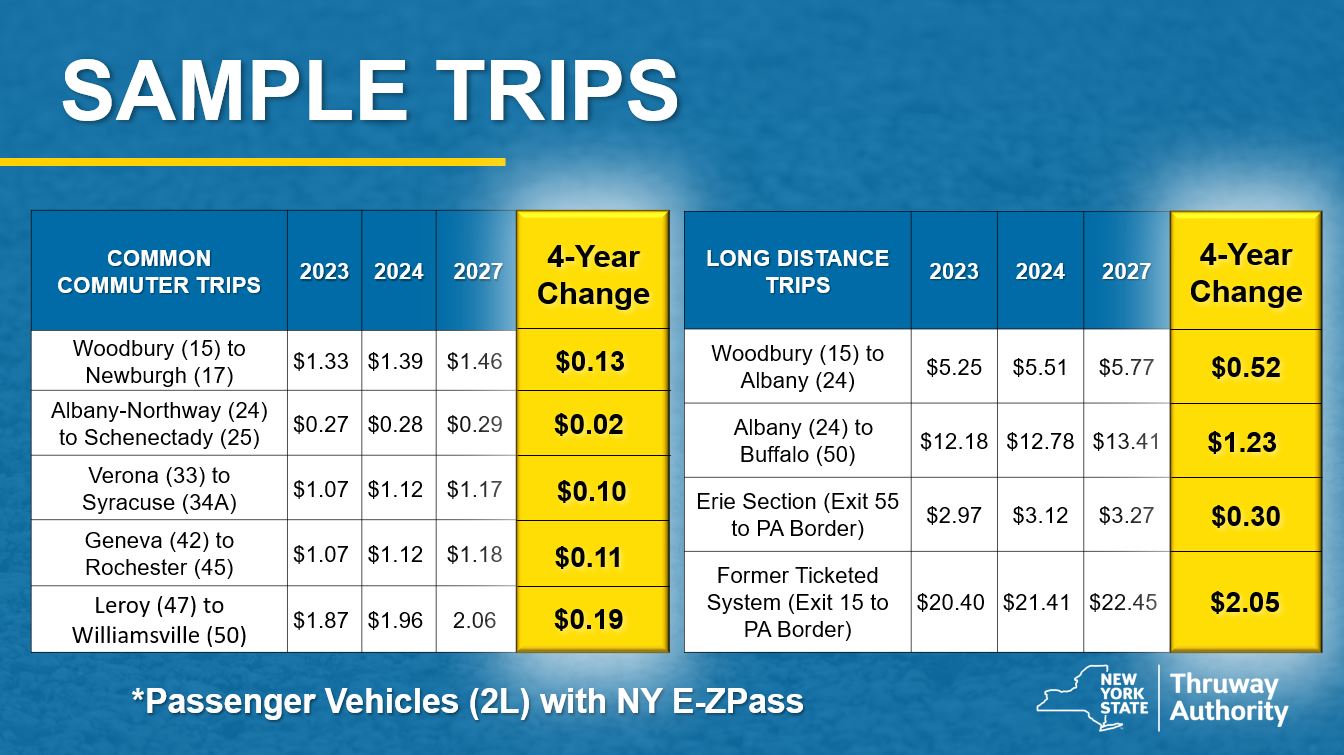
While not directly within the immediate New York City metropolitan area, travelers coming from further afield in Upstate New York or Connecticut might encounter tolls on roads like the New York State Thruway (I-87) or I-95 (New England Thruway). These tolls are generally distance-based or have a fixed rate at specific plazas. For example, a trip up the New York State Thruway could accumulate several tolls depending on the length of your journey. It’s advisable to check the New York State Thruway Authority website for specific toll rates based on your intended route.
Planning Your Trip: Budgeting and Saving on Tolls
Understanding the cost of tolls is a vital part of trip planning, allowing you to accurately budget for your New York adventure. Proactive planning can also lead to significant savings.
Strategies for Minimizing Toll Expenses
-
Utilize E-ZPass: As repeatedly mentioned, the E-ZPass system offers the most significant savings. If you plan on traveling through toll roads, bridges, or tunnels regularly, investing in an E-ZPass transponder is highly recommended. You can order one online from the official E-ZPass website for your state.
-
Consider Alternative Routes: For some journeys, particularly those not requiring entry into the heart of New York City, exploring alternative routes that avoid toll roads might be feasible. This often involves using local roads and highways. While this can increase travel time, it can lead to substantial cost savings. Online mapping services like Google Maps or Waze often provide options to “avoid tolls,” allowing you to compare routes and their associated costs.
-
Travel During Off-Peak Hours: If your schedule allows, traveling during off-peak hours can sometimes result in lower toll rates on certain facilities, as mentioned earlier with variable tolling. This also has the added benefit of encountering less traffic, making for a more pleasant journey.
-
Factor in Tolls for Accommodation and Activities: When booking your accommodation in New York City or planning your visits to attractions like the Statue of Liberty or Times Square, consider the toll costs associated with reaching these locations. If you’re staying in New Jersey to save on hotel prices, remember to factor in the round-trip tolls for each day you plan to visit the city. Similarly, if your itinerary involves visiting multiple boroughs or attractions, the cumulative toll costs can add up.
-
Factor in Parking Costs: In addition to tolls, parking in New York City can be notoriously expensive. Research parking options and their associated costs in advance, especially if you plan to drive your own vehicle into the city. Many hotels offer parking, but the fees can be significant. Public transportation, such as the extensive subway and bus system, is often a more economical and efficient way to get around the city once you’ve arrived.
Tools for Toll Estimation
Several online tools can help you estimate your toll costs:
- E-ZPass Websites: Most E-ZPass provider websites have toll calculators or route planners that can estimate costs for specific journeys.
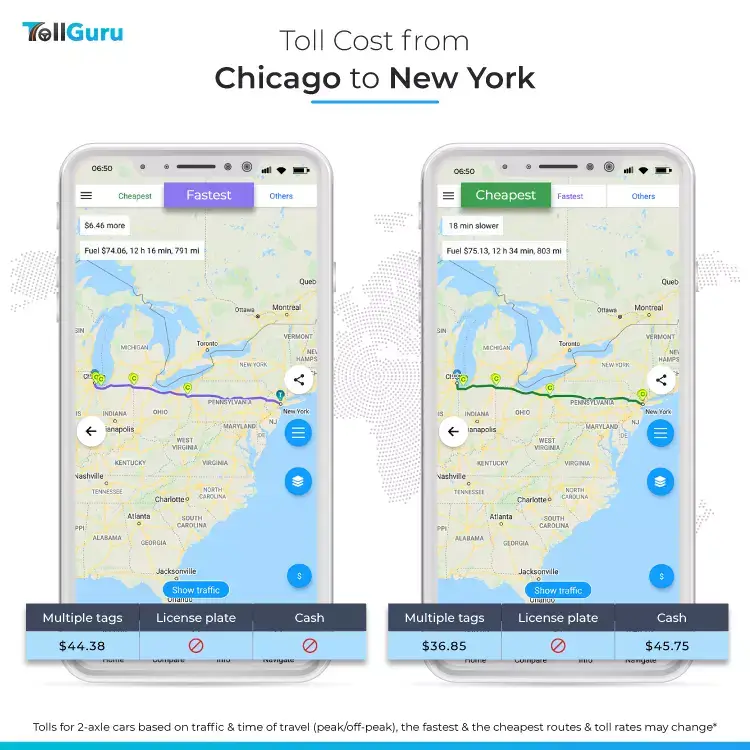
- Mapping Applications: As mentioned, Google Maps and Waze can provide estimated toll costs for your chosen routes.
- Dedicated Toll Calculators: Various third-party websites specialize in calculating toll costs for different regions and routes. A quick online search will reveal several options.
By taking the time to understand the toll system and employing smart planning strategies, you can effectively manage the cost of tolls to New York, ensuring your travel experience is both enjoyable and financially sound. Whether you’re heading to the vibrant cultural scene of Manhattan, the historical significance of Ellis Island, or the natural beauty of Niagara Falls, a little preparation goes a long way in making your trip to the Empire State a memorable one.
LifeOutOfTheBox is a participant in the Amazon Services LLC Associates Program, an affiliate advertising program designed to provide a means for sites to earn advertising fees by advertising and linking to Amazon.com. Amazon, the Amazon logo, AmazonSupply, and the AmazonSupply logo are trademarks of Amazon.com, Inc. or its affiliates. As an Amazon Associate we earn affiliate commissions from qualifying purchases.