
The field of law is a complex and ever-evolving landscape, and within its structure, paralegals play an indispensable role. They are the backbone of many legal operations, supporting attorneys in a multitude of tasks that range from legal research and document drafting to client interviews and case management. In the vast and economically diverse state of Texas, understanding the earning potential for paralegals is crucial for those entering the profession, considering a career change, or even for seasoned professionals looking to negotiate their next role. This exploration delves into the factors influencing paralegal salaries across the Lone Star State, offering insights into regional variations, experience levels, and the types of legal settings that impact compensation.
Understanding Paralegal Compensation in Texas: A Multifaceted Picture
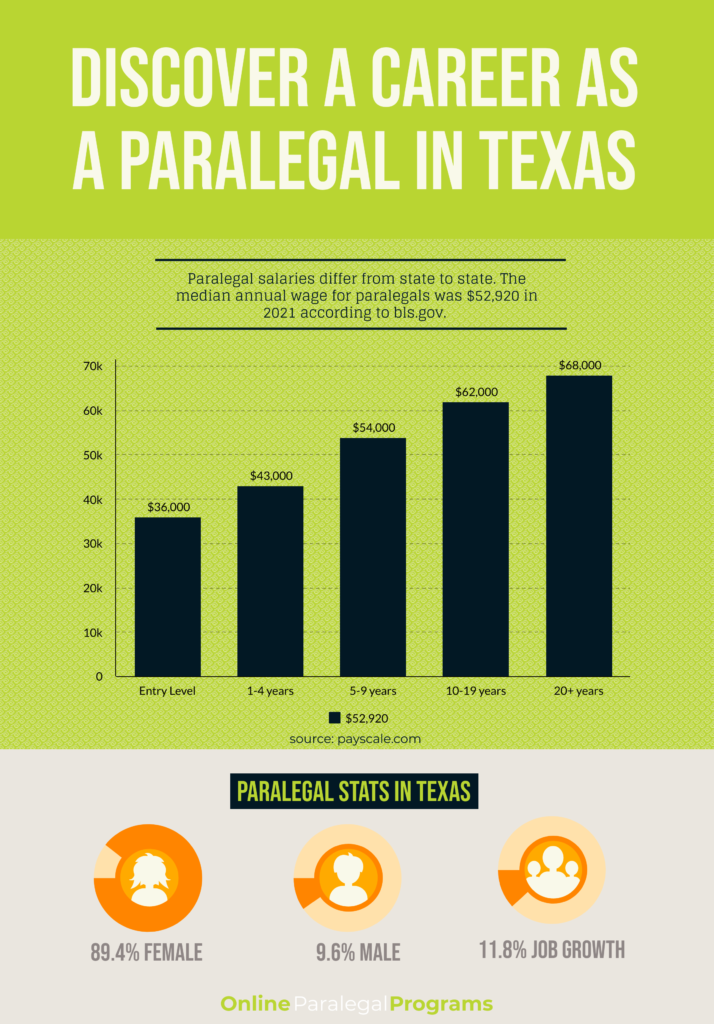
The salary of a paralegal in Texas is not a static figure but rather a dynamic range influenced by several key elements. Beyond the basic hourly wage or annual salary, a comprehensive understanding requires looking at geographical location, years of experience, educational background, specialized certifications, and the specific practice area of law.
Geographical Variations Across the Lone Star State
Texas is a sprawling state with significant economic disparities between its major metropolitan areas and its more rural regions. These differences directly translate into paralegal earning potential.
The Major Hubs: Houston, Dallas, Austin, and San Antonio
-
Houston: As the most populous city in Texas, Houston boasts a robust legal market, driven by its prominent industries such as energy, medicine, and international trade. Paralegals in Houston often command higher salaries due to the high cost of living and the sheer volume of legal work. The presence of numerous large law firms, corporate legal departments, and specialized litigation practices creates a competitive environment that benefits skilled paralegals.
-
Dallas-Fort Worth Metroplex: The Dallas–Fort Worth area, a major economic and cultural hub, also offers substantial opportunities for paralegals. The legal sectors here are diverse, encompassing corporate law, intellectual property, and finance. Similar to Houston, paralegals in Dallas and Fort Worth can expect competitive salaries, with variations often seen between firms located in the central business districts versus those in surrounding suburbs.
-
Austin: Austin‘s burgeoning tech industry has significantly reshaped its legal landscape. The demand for paralegals with expertise in areas like intellectual property, corporate law, and employment law is high. While Austin‘s cost of living has increased, so too have the salary expectations for legal professionals. The city’s dynamic growth ensures a steady stream of work for qualified paralegals.
-
San Antonio: While San Antonio may not always reach the salary peaks of Houston or Dallas, it offers a stable legal market with a strong presence in areas such as personal injury, family law, and government. The cost of living in San Antonio is generally lower than in the other major metropolises, which can influence salary ranges, but experienced paralegals in specialized fields can still achieve excellent compensation.
Smaller Cities and Rural Areas
Beyond the major cities, paralegal salaries tend to decrease. However, the cost of living is also significantly lower in these areas, potentially making the effective earning power comparable for some. In smaller communities, paralegals might find more general practice roles, often working for solo practitioners or smaller firms. Opportunities may be fewer, but dedicated professionals can still build successful careers.
The Impact of Experience and Education
A paralegal’s journey from entry-level to seasoned professional is directly reflected in their earning capacity.
Entry-Level Paralegals
For those just starting their careers, often with an associate’s degree or a paralegal certificate, salaries will be on the lower end of the spectrum. Entry-level paralegals are typically focused on learning the ropes, assisting with basic tasks, and gaining practical experience. Their hourly rates or annual salaries reflect this developmental stage.
Mid-Career Paralegals
With 3-7 years of experience, paralegals generally see a noticeable increase in their compensation. They have developed a deeper understanding of legal procedures, possess strong research and drafting skills, and can often manage caseloads with greater autonomy. At this stage, they might specialize in a particular area of law, further enhancing their marketability and earning potential.
Senior and Lead Paralegals
Paralegals with 8+ years of experience, particularly those who have taken on leadership roles, become specialists in complex areas of law, or obtained advanced certifications, can command the highest salaries. Senior paralegals might supervise junior staff, manage large litigation cases, or handle highly specialized legal documentation. Their expertise is highly valued, and their compensation reflects this significant contribution.
Educational Background and Certifications
While not always a strict requirement, a strong educational foundation can significantly boost a paralegal’s earning potential.
-
Associate’s Degree in Paralegal Studies: This is a common entry point for many paralegals, providing foundational legal knowledge.
-
Bachelor’s Degree in Paralegal Studies or a related field: A bachelor’s degree often leads to higher starting salaries and greater opportunities for advancement.
-
Paralegal Certificate Programs: These programs are ideal for individuals who already hold a bachelor’s degree in another field and wish to transition into the legal profession.
-
Certifications: Professional certifications, such as those offered by the National Association of Legal Assistants (NALA) or the National Federation of Paralegal Associations (NFPA), can demonstrate a high level of competence and dedication. Holding these credentials can lead to better job prospects and higher salaries, especially in competitive markets.
Factors Influencing Specific Salary Ranges
Beyond general experience and location, several other factors can fine-tune a paralegal’s salary in Texas.
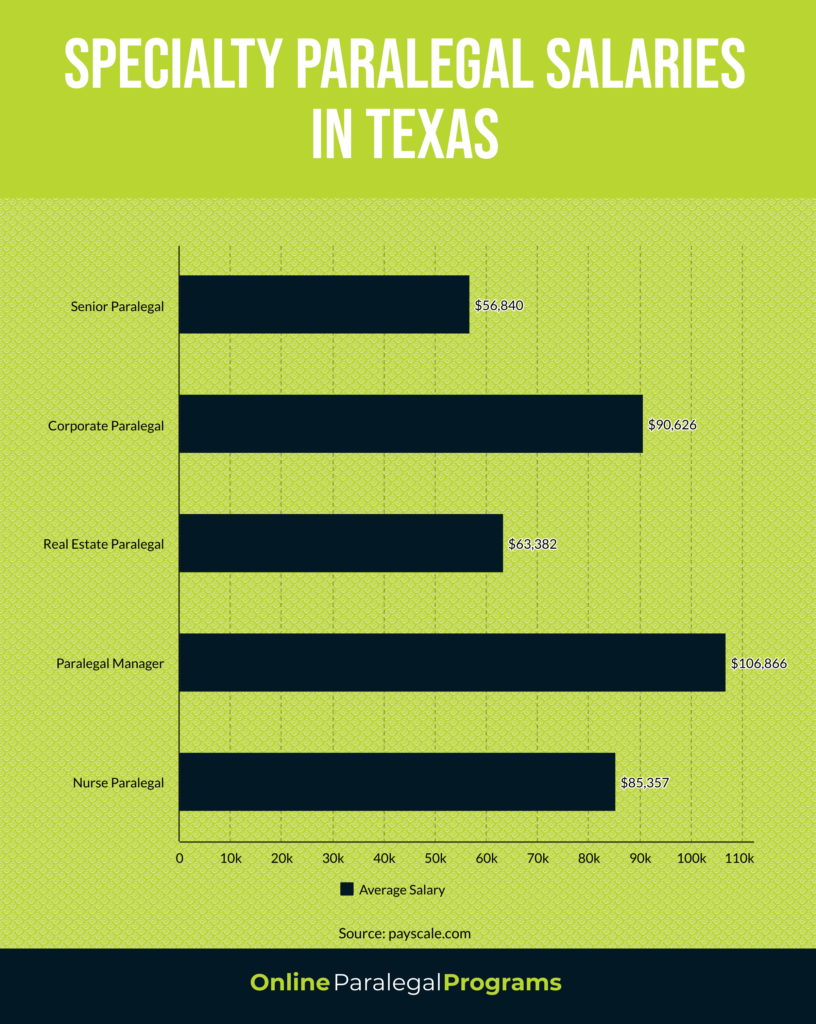
Practice Area Specialization
The legal field is incredibly diverse, and certain practice areas inherently command higher compensation due to their complexity, the stakes involved, or the specialized knowledge required.
-
Corporate Law: Paralegals working in corporate legal departments or law firms specializing in corporate law often earn well. Their work involves mergers and acquisitions, securities compliance, contract negotiation, and corporate governance, demanding precision and a deep understanding of business law.
-
Intellectual Property (IP) Law: With Texas being a growing hub for technology and innovation, IP law is a booming field. Paralegals in this area assist with patent and trademark applications, litigation, and licensing agreements, requiring a technical aptitude and legal acumen.
-
Litigation: Paralegals involved in complex litigation, whether civil or criminal, often see higher salaries. They manage discovery, prepare for trials, coordinate witnesses, and handle extensive documentation, which can be demanding and highly compensated.
-
Oil and Gas Law: Given Texas‘s historical and ongoing significance in the energy sector, paralegals with expertise in oil and gas law, including land acquisition, regulatory compliance, and contract drafting, are highly sought after and well-compensated.
-
Estate Planning and Probate: While often stable, salaries in estate planning and probate can vary. However, paralegals who can handle complex estate administration and contentious probate matters may earn more.
-
Family Law: This is a consistently busy area. While often associated with smaller firms and potentially lower salaries than corporate law, experienced paralegals managing complex divorce cases, child custody disputes, and high-net-worth asset division can achieve respectable earnings.
Type of Employer
The nature of the employer significantly impacts a paralegal’s salary.
-
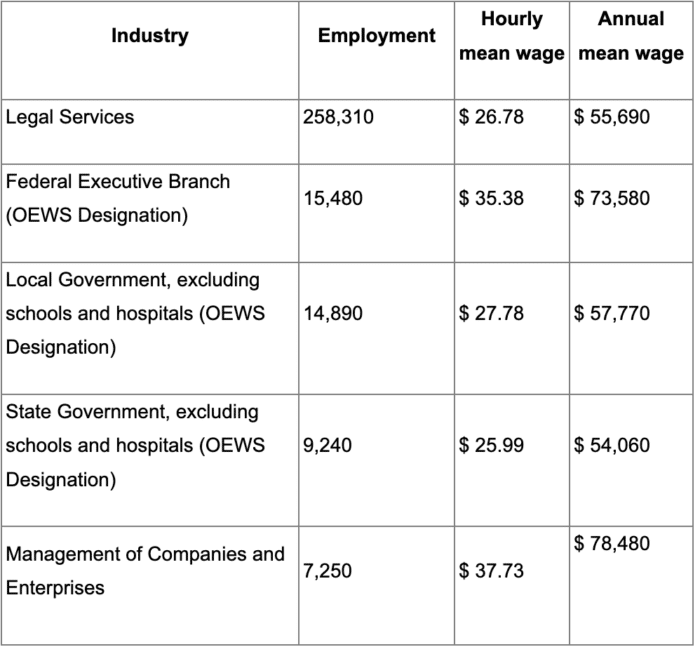
Large Law Firms: Generally, large, established law firms, particularly those in major metropolitan areas like Houston and Dallas, tend to offer the highest salaries and most comprehensive benefits packages. These firms often handle high-stakes cases and represent major corporations, requiring a highly skilled and experienced paralegal staff.
-
Corporate Legal Departments: In-house paralegals working for large corporations can also earn very competitive salaries, often comparable to those in large law firms. Their roles focus on supporting the company’s specific legal needs, which can include contract review, compliance, and litigation management.
-
Mid-Sized and Small Law Firms: Salaries in mid-sized and smaller firms are typically lower than in their larger counterparts. However, these environments can offer greater opportunities for broad experience and closer working relationships with attorneys.
-
Government Agencies and Non-Profits: Paralegals working for government entities (federal, state, or local) or non-profit organizations generally earn less than those in the private sector. However, these positions often provide excellent job stability, good benefits, and the satisfaction of contributing to public service or social causes.
The Role of Benefits and Other Compensation
While base salary is a primary consideration, a comprehensive compensation package includes other valuable benefits. These can include health insurance, dental and vision coverage, retirement plans (like 401(k)s with employer matching), paid time off, and professional development stipends. Some positions may also offer bonuses, particularly in the private sector, tied to firm or individual performance. The total compensation package can significantly enhance the overall financial and lifestyle benefits of a paralegal role.
Salary Projections and Future Outlook
The demand for paralegals in Texas is projected to remain strong, driven by the continued growth of the legal profession and the increasing reliance on skilled legal support staff. As attorneys seek to optimize their efficiency and manage costs, the role of the paralegal becomes even more critical.
Factors Driving Demand
-
Economic Growth: Texas continues to experience robust economic growth, attracting new businesses and expanding existing ones, which in turn fuels demand for legal services.
-
Increasing Complexity of Law: Legal regulations and compliance requirements are constantly evolving, necessitating the expertise of paralegals to navigate these complexities.
-
Cost-Effectiveness: Paralegals offer a more cost-effective solution for many legal tasks compared to attorneys, making them an attractive option for law firms and businesses aiming to control legal expenses.
Evolving Skillsets
To remain competitive and command higher salaries, paralegals are increasingly expected to possess advanced technological skills, including proficiency with legal research databases, case management software, e-discovery tools, and virtual collaboration platforms. Specialization in niche areas of law and the acquisition of advanced certifications will also continue to be key differentiators in the job market.
In conclusion, the earning potential for paralegals in Texas is a rewarding and varied landscape. By understanding the interplay of geographical location, experience, education, specialization, and employer type, aspiring and current paralegals can strategically position themselves for a successful and financially fulfilling career within the dynamic legal sector of the Lone Star State.
LifeOutOfTheBox is a participant in the Amazon Services LLC Associates Program, an affiliate advertising program designed to provide a means for sites to earn advertising fees by advertising and linking to Amazon.com. Amazon, the Amazon logo, AmazonSupply, and the AmazonSupply logo are trademarks of Amazon.com, Inc. or its affiliates. As an Amazon Associate we earn affiliate commissions from qualifying purchases.