
For those considering long-term accommodation in the Sunshine State, understanding the intricacies of property-related investments is paramount. While many focus on real estate prices and mortgage rates, the long-term operational costs, particularly energy expenses, can significantly impact the financial viability and sustainability of a home in Florida. Solar panels represent a compelling solution, offering both environmental benefits and substantial financial savings over time. This exploration delves into the costs associated with solar panel installation in Florida and how these investments can influence long-term accommodation decisions.
The Financial Landscape of Solar Panel Installation in Florida
The cost of installing solar panels in Florida is influenced by numerous factors, but generally falls within a competitive range compared to national averages. The initial outlay can seem substantial, yet various incentives and the promise of reduced utility bills make it an attractive prospect for long-term residents and property investors alike. Understanding these costs is crucial for anyone planning to settle or invest in a home in Florida.
Upfront Costs and System Sizing
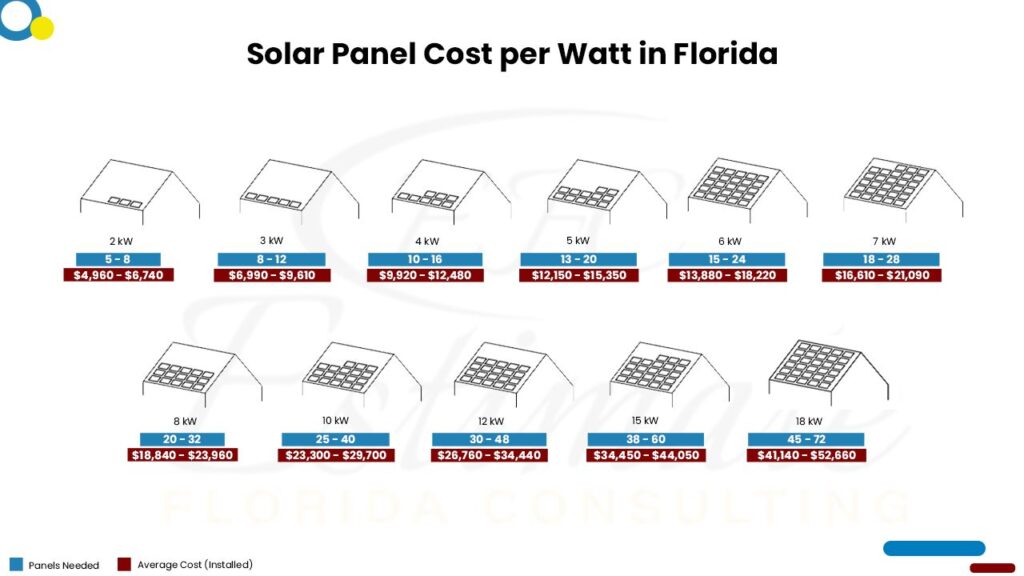
The primary determinant of solar panel cost is the size of the system, measured in kilowatts (kW). A typical residential solar system in Florida ranges from 5 kW to 10 kW, depending on the home’s energy consumption, roof size, and shading. On average, before incentives, homeowners can expect to pay anywhere from $2.50 to $3.50 per watt. This means a 6 kW system might cost between $15,000 and $21,000 before any financial assistance.
Factors contributing to this upfront cost include:
- Panel Type and Efficiency: High-efficiency monocrystalline panels typically cost more but produce more electricity in smaller spaces.
- Inverter Technology: String inverters, microinverters, or power optimizers each come with different price points and performance characteristics.
- Installation Labor: The complexity of the roof, the installer’s experience, and local labor rates in areas like Miami, Orlando, or Tampa can affect pricing.
- Permitting and Inspection Fees: Local regulations and requirements in various Florida municipalities add to the overall cost.
- Additional Equipment: Battery storage systems, while optional, can significantly increase the initial investment but offer greater energy independence and resilience.
Federal and State Incentives
Florida’s strong solar market is bolstered by key incentives that reduce the net cost of installation. These programs are vital for making solar power a more accessible and appealing long-term accommodation solution.
Federal Solar Investment Tax Credit (ITC)
The most significant incentive is the Federal Solar Investment Tax Credit (ITC), which allows homeowners to deduct a percentage of the cost of installing a solar energy system from their federal taxes. As of late 2023, the ITC offers a 30% tax credit for systems installed by 2032. For a $20,000 solar system, this equates to a $6,000 reduction in federal tax liability, drastically lowering the effective cost of the system. This credit is a direct dollar-for-dollar reduction, not just a deduction from taxable income, making it incredibly powerful for homeowners.
Florida’s Net Metering Policy
Florida has a robust net metering policy that allows homeowners to sell excess electricity generated by their solar panels back to the grid. When solar panels produce more electricity than the home consumes, the utility company credits the homeowner’s account. These credits can then offset future electricity bills when the panels are producing less (e.g., at night or on cloudy days). This policy is crucial for maximizing savings and accelerating the payback period of a solar investment, directly impacting the long-term operational costs of accommodation.
Property Assessed Clean Energy (PACE) Program
While not available in all Florida counties, the Property Assessed Clean Energy (PACE) program offers another financing option. PACE allows homeowners to finance solar panel installations (and other energy-efficient upgrades) through an assessment on their property tax bill. This means the cost is spread out over many years, often 10-20 years, and can even transfer with the property if it is sold. While it makes solar accessible without a large upfront payment, it’s important to understand the interest rates and terms associated with PACE loans.
Long-Term Benefits for Accommodation in Florida
Beyond the initial investment, the long-term benefits of solar panels for accommodation in Florida are substantial, impacting everything from monthly budgets to property valuation.
Reduced Energy Bills
The most immediate and tangible benefit is the significant reduction, and often elimination, of monthly electricity bills. Given Florida’s hot climate, air conditioning is a major energy consumer. Solar panels directly address this, providing a predictable energy cost that insulates homeowners from fluctuating utility rates. Over a 25-30 year lifespan of a solar system, these savings can amount to tens of thousands of dollars, making a solar-equipped home a much more cost-effective long-term accommodation.
Increased Property Value
Installing solar panels can significantly increase a home’s resale value. Studies consistently show that homes with solar energy systems sell faster and for more money than comparable homes without them. In a competitive real estate market like Florida, a solar-powered home is an attractive feature for environmentally conscious buyers and those looking to save on operating costs. This added value makes solar an excellent long-term investment for property owners.
Environmental Impact and Sustainability
For many choosing long-term accommodation, the environmental aspect is increasingly important. Solar panels produce clean, renewable energy, reducing a home’s carbon footprint and dependence on fossil fuels. This commitment to sustainability aligns with a modern lifestyle and contributes to a greener Florida, which is appealing to a growing segment of the population.
Financing Options for Solar Panels
Understanding how to finance a solar panel system is just as important as knowing its cost. Various options cater to different financial situations, making solar power attainable for a wide range of Florida homeowners.
Cash Purchase
The most straightforward way to acquire solar panels is through a cash purchase. This option offers the highest return on investment and the shortest payback period, as homeowners immediately own the system and reap all the financial benefits, including the full ITC.
Solar Loans
For those who prefer not to pay the full upfront cost, solar loans are a popular option. These are typically unsecured loans specifically designed for solar installations, often with competitive interest rates. Homeowners make monthly payments on the loan and own the system, benefiting from the ITC and energy savings from day one. The goal is often for the monthly energy savings to offset or even exceed the loan payment.
Power Purchase Agreements (PPAs) and Solar Leases
While less common in Florida due to strong ownership incentives, some companies offer Power Purchase Agreements (PPAs) or solar leases. In these arrangements, a third-party company owns, installs, and maintains the solar system on the homeowner’s roof. The homeowner then pays a fixed monthly fee for a solar lease or purchases the electricity produced at a predetermined rate (PPA). While these options require no upfront cost from the homeowner, they typically offer fewer long-term savings and the homeowner does not claim the ITC. These are more suited for those seeking immediate energy savings without property ownership benefits.
Factors to Consider When Going Solar in Florida
Before committing to solar panels for long-term accommodation, several Florida-specific considerations should be evaluated.
Roof Condition and Orientation
The age and condition of a home’s roof are critical. Solar panels are a long-term investment, so ensuring the roof can last for the system’s 25+ year lifespan is essential. Replacing a roof after solar panels are installed adds significant cost and complexity. Additionally, a south-facing roof with minimal shading is ideal for maximizing energy production in Florida’s sunny climate.
Home Energy Consumption
Understanding your household’s energy usage is crucial for sizing the solar system correctly. A professional solar installer can analyze past utility bills to determine the optimal system size that balances energy needs with budget. Over-sizing can lead to unnecessary costs, while under-sizing may not provide sufficient savings.
Local Regulations and Homeowners Associations (HOAs)
Florida law generally protects a homeowner’s right to install solar panels, often overriding restrictive Homeowners Associations (HOAs) covenants. However, HOAs can still impose reasonable restrictions on the placement and aesthetics of solar panels, so it’s always wise to consult with them and local permitting offices in cities like Jacksonville or Cape Coral early in the process.
Conclusion
The decision to install solar panels in Florida for long-term accommodation is a strategic one, offering significant financial, environmental, and property value benefits. While the upfront costs require careful consideration, the combination of federal tax credits, net metering policies, and various financing options make solar power an increasingly accessible and smart investment. For those establishing roots or investing in property within the state, understanding “How Much Do Solar Panels Cost In Florida?” extends beyond a simple price tag, encompassing a holistic view of long-term savings, energy independence, and sustainable living.
LifeOutOfTheBox is a participant in the Amazon Services LLC Associates Program, an affiliate advertising program designed to provide a means for sites to earn advertising fees by advertising and linking to Amazon.com. Amazon, the Amazon logo, AmazonSupply, and the AmazonSupply logo are trademarks of Amazon.com, Inc. or its affiliates. As an Amazon Associate we earn affiliate commissions from qualifying purchases.