
While the allure of Florida often conjures images of sun-drenched beaches, vibrant theme parks like Walt Disney World and Universal Orlando Resort, and the historic charm of cities like St. Augustine, there’s a robust and often overlooked economic engine driving this Sunshine State: skilled trades, particularly welding. For those considering a career in this essential field, or perhaps planning a move to Florida for such opportunities, understanding the earning potential is paramount. This article delves into the financial landscape for welders in Florida, exploring factors that influence their income and providing insights for aspiring and established professionals alike.
The demand for skilled welders in Florida is consistently strong, fueled by a diverse range of industries. From the booming construction sector, erecting everything from residential complexes to towering skyscrapers in cities like Miami and Tampa, to the vital marine industry along its extensive coastline, and the ever-present need for maintenance and fabrication in manufacturing and infrastructure, welders are indispensable. This high demand naturally translates into competitive compensation, making Florida an attractive destination for those with welding expertise.
Factors Influencing Welder Salaries in Florida
Several key elements contribute to the overall earning potential of a welder in Florida. These can range from the fundamental aspects of the trade itself to the specific economic conditions of the region where they are employed. Understanding these variables is crucial for anyone seeking to maximize their income in this profession.
Experience and Skill Level
As with most professions, a welder’s experience is a significant determinant of their salary. Entry-level welders, often those fresh out of trade school or with limited on-the-job training, can expect to start at the lower end of the pay scale. However, as they accumulate hours, refine their techniques, and gain proficiency in various welding processes, their earning potential increases substantially.
Entry-Level Welders: These individuals typically possess basic welding skills and may be working under the supervision of more experienced welders. Their responsibilities often include assisting with material preparation, performing simpler welds, and learning safety protocols. Starting salaries for entry-level positions can range from approximately $30,000 to $40,000 annually.
Mid-Level Welders: With 3-7 years of experience, welders move into the mid-level category. They are capable of independent work, can tackle more complex welding projects, and may have developed specialized skills. At this stage, salaries can range from $40,000 to $55,000 per year.
Senior and Master Welders: Welders with over 7 years of experience, particularly those who have acquired specialized certifications or expertise in advanced welding techniques like TIG (Tungsten Inert Gas) or specialized alloy welding, can command the highest salaries. These professionals often take on supervisory roles, work on critical infrastructure projects, or specialize in high-demand niche areas. Their annual earnings can easily exceed $60,000 and potentially reach $70,000 or more, especially with overtime.
Specialization and Certifications
The welding world is diverse, with various processes and materials requiring specialized knowledge. Welders who obtain certifications in specific areas often see a significant boost in their earning potential. These certifications demonstrate a mastery of particular techniques and an understanding of industry standards, making them more valuable to employers.
- Certified Welder (CW): General certifications that validate foundational welding skills.
- Certified Pipe Welder: Essential for work in plumbing, oil and gas, and industrial facilities, often commanding higher pay due to the critical nature of these welds.
- Certified Structural Welder: Crucial for the construction industry, ensuring the integrity of buildings and bridges.
- Underwater Welder: One of the most specialized and dangerous forms of welding, underwater welders are highly sought after and can earn exceptionally high salaries, often exceeding $100,000 annually, due to the inherent risks and specialized training required.
- Aerospace Welder: Working with advanced materials and strict quality controls in the aerospace industry, these welders also benefit from premium pay.
In Florida, industries like shipbuilding, aerospace (with facilities near Cape Canaveral for example), and specialized manufacturing often require welders with advanced certifications, driving up demand and compensation for those who possess them.
Industry and Work Environment
The sector in which a welder is employed plays a significant role in their salary. Different industries have varying demands, profit margins, and safety considerations, all of which impact wage rates.
- Construction: The booming construction industry in Florida, from residential developments to large-scale commercial projects, offers numerous welding opportunities. While generally offering good pay, it can be project-based and subject to economic fluctuations.
- Manufacturing: This sector includes everything from heavy machinery to intricate components. Welders in manufacturing might work in established plants with stable hours and benefits, or in smaller fabrication shops.
- Marine Industry: With its extensive coastline, Florida has a thriving maritime sector. Welders are needed for shipbuilding, repair of vessels, and fabrication of marine equipment. This industry can offer competitive wages, especially for specialized skills.
- Oil and Gas: While perhaps not as prominent as in some other states, there are still opportunities for welders in Florida within the oil and gas sector, particularly in related infrastructure and maintenance.
- Government/Military: Projects for military bases or government infrastructure can offer stable employment and competitive benefits.
The work environment also influences pay. Welders working in hazardous conditions, such as at heights, in confined spaces, or with extreme temperatures, often receive hazard pay or higher base salaries. Overtime is also common, particularly in industries with tight deadlines, further increasing overall earnings. For instance, working on a major hotel renovation in Orlando or a new resort development near Naples might involve significant overtime.
Geographic Location within Florida
While Florida is a large state, salary expectations can vary from one metropolitan area to another. Major economic hubs typically offer higher wages due to a greater concentration of industries and a higher cost of living.
- South Florida (e.g., Miami-Dade County, Broward County): These areas are characterized by extensive construction, a strong marine industry, and a generally higher cost of living, leading to potentially higher welding salaries.
- Central Florida (e.g., Orlando, Tampa Bay Area): With a significant tourism infrastructure, a growing population, and expanding industrial sectors, these regions offer robust opportunities for welders.
- North Florida (e.g., Jacksonville, Tallahassee): While perhaps not as consistently high as South Florida, these areas still provide solid earning potential, particularly in construction and manufacturing.
It’s important to note that while salaries may be higher in these urban centers, the cost of living, including housing and daily expenses, also tends to be higher. Therefore, a direct salary comparison needs to consider the overall financial picture.
Average Welder Salaries and Salary Ranges
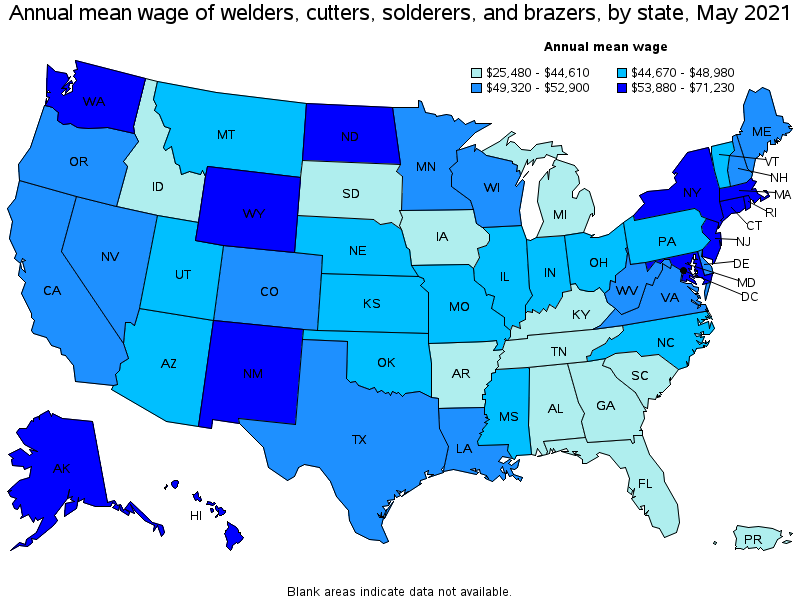
Pinpointing an exact average salary for welders in Florida can be challenging due to the multitude of influencing factors. However, industry data and job market analyses provide a useful range.
On average, a welder in Florida can expect to earn between $40,000 and $60,000 per year. This broad range reflects the significant differences in experience, specialization, and industry.
- Entry-level welders might start around $30,000 – $40,000 annually.
- Experienced welders with a few years under their belt often fall into the $45,000 – $55,000 bracket.
- Highly skilled, certified, and specialized welders can easily surpass $60,000 and, in some niche fields like underwater welding, can command salaries well over $100,000.
Hourly wages typically range from $18 to $30 per hour for general welders. However, specialized roles and overtime can push hourly rates considerably higher. For instance, overtime pay, often time-and-a-half, can significantly boost a welder’s take-home pay, especially during peak project seasons in sectors like construction or marine repair.
Understanding Salary Variations and Potential
To further illustrate the salary potential, consider these scenarios:
- A welder working on structural steel for a new high-rise building in Miami might earn $50,000 – $65,000 annually, with potential for overtime.
- A pipe welder employed by a large industrial plant in Central Florida could see a salary of $55,000 – $70,000, with consistent hours.
- A welder specializing in aluminum fabrication for the marine industry in Fort Lauderdale might earn $48,000 – $62,000, depending on their specific skills and the employer.
- An underwater welder working on offshore platforms or ship repairs could command a salary well over $100,000 annually, factoring in the inherent risks and specialized nature of the job.
It’s also worth noting that benefits packages, such as health insurance, retirement plans, and paid time off, can add substantial value to a welder’s overall compensation, even if not directly reflected in the base salary. Employers in industries with a higher demand for specialized skills are often more competitive with their benefits.
Career Advancement and Earning Potential
The career path for a welder in Florida offers numerous avenues for growth and increased earning potential. Beyond simply gaining more years of experience, welders can strategically advance their careers through continuous learning, skill development, and specialization.
Skill Diversification and Advanced Training
Investing in further training and acquiring new certifications is one of the most effective ways for a welder to enhance their earning potential. As industries evolve and new technologies emerge, so do the demands on welders. Staying current with these changes is key.
- Learning new welding processes: Mastering techniques beyond basic Stick welding (SMAW), such as MIG (GMAW – Gas Metal Arc Welding) and TIG (GTAW – Gas Tungsten Arc Welding), opens up a wider range of job opportunities and often commands higher pay.
- Specializing in materials: Developing expertise in welding exotic alloys, aluminum, stainless steel, or titanium can make a welder highly valuable in specific industries like aerospace, medical equipment manufacturing, or high-end fabrication.
- Non-Destructive Testing (NDT) certifications: Welders who also hold certifications in NDT methods like visual inspection (VT), ultrasonic testing (UT), or radiography (RT) are often sought after for quality control roles and can command higher salaries.
Many community colleges, technical schools, and private training centers across Florida offer specialized welding programs and certification courses. These educational investments are often quickly recouped through increased earning potential.
Moving into Supervisory or Management Roles
Experienced and highly skilled welders may have opportunities to transition into supervisory or management positions. These roles typically involve leading teams of welders, overseeing projects, ensuring quality control, managing safety protocols, and sometimes interacting with clients.
- Welding Foreman/Supervisor: Responsible for managing a crew of welders on a job site, ensuring tasks are completed efficiently and safely.
- Quality Control Inspector: Ensuring that welds meet industry standards and project specifications.
- Shop Manager: Overseeing the operations of a fabrication shop, including staffing, production, and client relations.
These leadership positions naturally come with higher salaries, reflecting the added responsibilities and management skills required. The salary for such roles can range from $60,000 to $80,000 or more, depending on the size of the operation and the scope of responsibility.

Entrepreneurship and Self-Employment
For some ambitious welders, starting their own welding business is the ultimate path to maximizing earning potential. This can range from a small, mobile welding service catering to local needs to a larger fabrication shop.
- Mobile Welding Services: Many welders operate independently, traveling to client sites for repairs, custom fabrication, or on-site welding projects. This offers flexibility and the potential for high per-job earnings.
- Custom Fabrication Shops: Establishing a shop allows for larger-scale projects, custom metalwork for businesses or individuals, and a broader service offering.
- Specialized Niche Businesses: Focusing on a particular area, such as decorative metalwork, welding for the automotive industry, or specialized industrial repairs, can carve out a profitable market.
While entrepreneurship involves higher risks and requires business acumen, the potential for financial reward can be significantly greater than in traditional employment. Successful welding business owners in Florida can achieve incomes well beyond that of an employed welder, though it requires dedication, marketing skills, and sound business management.
In conclusion, the question of “How Much Do Welders Make In Florida?” yields a dynamic answer. It’s a profession with solid earning potential, offering a stable career for those with the right skills and dedication. From the essential infrastructure projects that shape the state’s landscape to the intricate needs of its diverse industries, welders are vital. By understanding the factors that influence salary, pursuing continuous skill development, and exploring career advancement opportunities, welders in Florida can build a prosperous and rewarding career. Whether drawn by the warmth of the climate or the economic opportunities, Florida’s welding industry provides a strong foundation for skilled trades professionals.