
The allure of teaching in the Big Apple is undeniable. New York City, a global epicenter of culture, opportunity, and relentless energy, draws countless individuals to its vibrant streets. For those considering a career in education within this iconic metropolis, a crucial question arises: “How much does a New York City teacher make?” This inquiry is not just about salary; it’s about understanding the financial landscape of a profession that shapes the future, within a city known for its high cost of living.
Teaching in New York City offers a unique blend of professional fulfillment and the chance to live in one of the world’s most dynamic cities. The New York City Department of Education (NYCDOE) is one of the largest public school systems in the United States, employing tens of thousands of educators across its five boroughs: Manhattan, Brooklyn, Queens, the Bronx, and Staten Island. The compensation for these dedicated professionals is determined by a complex system that factors in experience, education level, and the specific agreements negotiated between the United Federation of Teachers (UFT) and the NYCDOE. While the romantic notion of shaping young minds is a powerful motivator, financial stability is an essential consideration for anyone planning a life and career in New York City. Understanding the salary structure, benefits, and potential for growth is key to making an informed decision. This article delves into the intricacies of New York City teacher salaries, providing a comprehensive overview for aspiring and current educators.

Understanding Teacher Compensation in New York City
The salary of a New York City teacher is not a static figure. Instead, it’s a dynamic reflection of an individual’s journey through the education system and their tenure within the NYCDOE. The foundational element dictating a teacher’s pay is the collectively bargained salary schedule, often referred to as the “career ladder” or “steps and lanes.” This schedule is a meticulously designed framework that rewards teachers for their commitment, professional development, and academic achievements.
The Salary Schedule: Steps and Lanes Explained
The salary schedule is structured around two primary components: steps and lanes.
-
Steps represent years of service and experience. As a teacher progresses through their career, they move up the steps, with each step typically corresponding to an annual salary increase. This recognition of longevity acknowledges the accumulated knowledge and refined pedagogical skills that come with years in the classroom. For instance, a first-year teacher will be on Step 1, and as they complete each subsequent school year, they advance to the next step, up to a maximum number of steps defined by the contract.
-
Lanes are determined by a teacher’s level of education and professional certifications. Generally, there are different lanes for those holding a bachelor’s degree, a master’s degree, and advanced post-master’s credits or specific professional certifications. Moving to a higher lane typically occurs when a teacher earns an advanced degree or completes a certain number of post-master’s credits. This system incentivizes ongoing learning and specialization, recognizing that further academic pursuits enhance a teacher’s ability to serve their students. For example, a teacher with a master’s degree will earn more than a teacher with only a bachelor’s degree, assuming they are on the same step.
The interplay between steps and lanes creates a comprehensive salary grid. A teacher’s annual salary is found by locating their current step on the vertical axis and their current lane on the horizontal axis. This system ensures a degree of transparency and predictability in earnings, allowing teachers to plan their financial futures. The exact figures for each step and lane are periodically updated through negotiations between the UFT and the NYCDOE, reflecting changes in the cost of living and the value placed on the teaching profession.
The NYCDOE provides resources that outline these salary schedules, which are publicly accessible. These schedules are crucial for new teachers to estimate their starting salaries and for experienced educators to project their future earnings potential. The progression through steps and lanes is a significant aspect of a New York City teacher’s career, providing a clear path for salary growth and professional advancement.
Factors Influencing Salary Beyond the Schedule
While the step and lane system is the primary driver of a New York City teacher’s salary, several other factors can influence their overall compensation. These additional elements can lead to variations in take-home pay and opportunities for supplemental income.
One significant factor is additional pay for specialized roles or responsibilities. Teachers who take on leadership roles, such as department heads, mentor teachers, or union chapter leaders, often receive stipends in addition to their base salary. These stipends are compensation for the extra duties and responsibilities associated with these positions. Similarly, teachers who coach extracurricular activities, such as sports teams or debate clubs, also earn stipends. These roles allow teachers to contribute more broadly to the school community and to supplement their income.
Another consideration is location within the city, although this is less about a direct salary adjustment and more about the cost of living. While the base salary is uniform across the NYCDOE system, the economic realities of living in areas like Manhattan or parts of Brooklyn can present different financial challenges compared to less expensive neighborhoods. This often means that while teachers earn a standardized wage, their actual financial well-being can vary significantly based on their personal living expenses.
Furthermore, performance incentives are becoming increasingly discussed in education, though their implementation and impact on base salary for New York City teachers are nuanced. While the traditional step and lane model is firmly established, certain programs or grants might offer bonuses for achieving specific professional development goals or for working in high-needs schools. However, these are generally supplemental and do not alter the core salary structure.
Finally, longevity bonuses or retention incentives can sometimes be implemented by the NYCDOE or the UFT to encourage experienced teachers to remain in the profession, particularly in hard-to-staff schools or subject areas. These are often part of specific contract negotiations and can provide a financial boost to veteran educators, acknowledging their long-term commitment to New York City students. These additional avenues for compensation highlight that while the salary schedule provides a solid foundation, a New York City teacher’s total earnings can be influenced by a variety of factors beyond their years of experience and educational qualifications.
Salary Ranges and Potential Earnings
Understanding the theoretical salary schedule is one thing, but grasping the practical salary ranges for New York City teachers provides a more concrete picture of potential earnings. These ranges are broad, reflecting the diversity of experience levels and educational backgrounds within the NYCDOE.
Entry-Level and Experienced Teacher Salaries
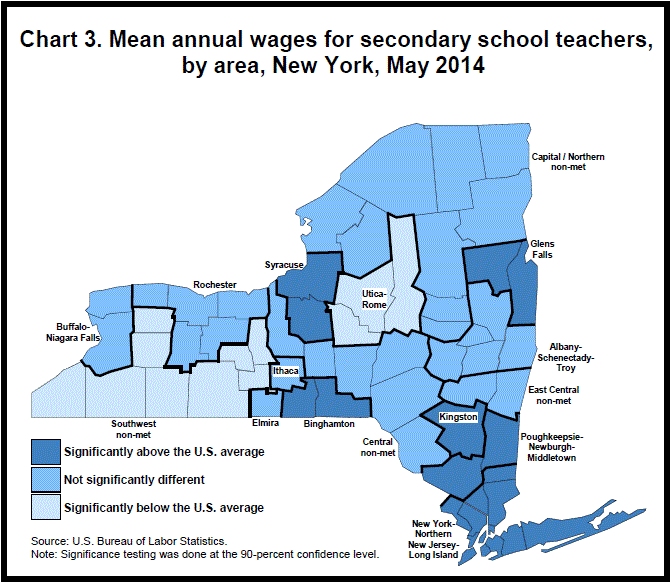
A newly qualified teacher, typically holding a bachelor’s degree and entering the NYCDOE system, will find themselves at the beginning of the salary schedule. Their starting salary will be on Step 1 of the lowest lane, often labeled “Bachelor’s Degree.” This entry-level compensation is designed to be competitive within the public sector but needs to be weighed against the realities of New York City‘s high cost of living. For instance, a starting teacher might earn in the range of $60,000 to $70,000 annually, depending on the exact terms of the current contract.
As a teacher gains experience and moves up the steps, their salary increases significantly. By the time a teacher reaches the higher steps of the salary schedule, often after 10 to 15 years of service, their earnings can be considerably higher. A teacher on an advanced step and in a higher lane (e.g., Master’s + 60 credits) could see their annual salary reach well into the six figures, potentially between $100,000 and $120,000 or even more. The maximum salary on the schedule represents the culmination of decades of service and ongoing professional development, acknowledging the substantial contribution these educators make.
It is important to note that these figures are base salaries. When considering total compensation, benefits such as health insurance, retirement plans, and paid time off become crucial components. These benefits can significantly enhance the overall value of a teacher’s employment package, making the New York City teaching profession a viable and attractive career choice, despite the initial financial considerations.
The Impact of Advanced Degrees and Certifications
The “lanes” on the NYCDOE salary schedule are a powerful testament to the value placed on continuous learning and specialization. Earning an advanced degree, such as a Master’s or even a Doctorate, can lead to a substantial salary increase. Teachers who have completed a Master’s degree typically move into a higher lane, immediately boosting their annual income. Further academic work, such as accumulating credits beyond a Master’s degree (often referred to as Master’s + 30 or Master’s + 60), can place teachers in even higher-paying lanes. This incentive structure encourages educators to deepen their knowledge, refine their pedagogical approaches, and become experts in their respective fields.
Beyond formal degrees, specific professional certifications can also impact a teacher’s earnings. These might include certifications in special education, English as a Second Language (ESL), or particular subject areas requiring specialized training. Holding these certifications can qualify a teacher for higher lanes or specialized roles that come with additional compensation. For example, a teacher with a bilingual extension certification might earn more or be in higher demand, leading to better placement and potential salary advantages.
The NYCDOE and the UFT actively support teachers in pursuing these advanced degrees and certifications. They may offer professional development programs, tuition reimbursement assistance, or simply provide clear pathways for how these credentials translate into salary increases. This focus on advanced education ensures that New York City teachers are not only experienced but also highly qualified and equipped with the latest knowledge and skills, which directly translates into better pay and a more rewarding career. The investment in advanced education is, therefore, a direct investment in a teacher’s earning potential and their effectiveness in the classroom.
Lifestyle and Financial Considerations in New York City
The salary earned by a New York City teacher, while structured and potentially substantial over time, must be viewed through the lens of the city’s unique lifestyle and formidable cost of living. This juxtaposition is perhaps the most critical factor for anyone contemplating a teaching career in the metropolis. New York City is renowned for its vibrant culture, unparalleled career opportunities across diverse industries, and iconic landmarks like the Empire State Building and Times Square. However, it is also consistently ranked among the most expensive cities globally.
The Cost of Living and its Impact on Teachers
The sheer expense of everyday life in New York City can significantly impact a teacher’s disposable income. Housing, in particular, is a major financial consideration. Rent for even a modest apartment in a desirable neighborhood can consume a large portion of a teacher’s salary, especially for those just starting their careers. This often leads teachers to explore various housing options, including living further from their schools, seeking roommates, or opting for more compact living spaces. The dream of owning a home in New York City is often a long-term goal that requires years of consistent saving and salary progression.
Beyond housing, the cost of groceries, transportation, utilities, and entertainment also adds up. While public transportation, like the MTA subway and bus system, offers a relatively affordable way to get around, other daily expenses can be surprisingly high. Dining out, cultural events, and even basic necessities can strain a budget if not managed carefully.
For teachers, this means that financial planning and budgeting are not just advisable; they are essential. Understanding one’s net income after taxes and deductions, carefully tracking expenses, and making conscious spending choices are crucial for maintaining financial stability and enjoying life in New York City. Many teachers find that their salary, combined with benefits, is sufficient for a comfortable life, but it often requires a disciplined approach to personal finance. The allure of living and working in such a dynamic city is strong, but it is best pursued with a clear understanding of the financial landscape.

Beyond the Salary: Benefits and Career Growth
While the base salary is a primary concern, the comprehensive benefits package offered to New York City teachers often significantly enhances their overall compensation and quality of life. The NYCDOE typically provides robust health insurance coverage for teachers and their families, which can represent substantial savings compared to purchasing private insurance. Dental and vision coverage are also usually included, contributing to overall well-being.
Retirement savings are another critical component. New York City teachers are generally part of a pension system, offering a defined benefit plan that provides a reliable income stream in retirement. This long-term financial security is a significant advantage of public sector employment. Additionally, many teachers have access to 403(b) retirement savings plans, allowing for further voluntary contributions and investment growth.
Paid time off, including sick leave, personal days, and extended summer vacations, is another valuable benefit. The extended summer break provides opportunities for rest, rejuvenation, travel, and professional development, which can be particularly appealing. Teachers might use this time to pursue further education, take on summer school assignments for additional income, or explore destinations like Europe or the Caribbean.
Furthermore, the NYCDOE offers numerous opportunities for career growth and professional development. Teachers can move into administrative roles, become curriculum specialists, or pursue leadership positions within their schools or the district. The possibility of becoming a principal, assistant principal, or even working in the NYCDOE central office presents pathways for significant salary increases and career advancement. The UFT also plays a vital role in supporting teachers, offering professional development workshops, advocacy, and resources that contribute to their ongoing success and career satisfaction. These benefits and growth opportunities, when combined with the base salary, paint a picture of a profession that, while demanding, offers considerable rewards and a stable career path in one of the world’s most exciting cities.
LifeOutOfTheBox is a participant in the Amazon Services LLC Associates Program, an affiliate advertising program designed to provide a means for sites to earn advertising fees by advertising and linking to Amazon.com. Amazon, the Amazon logo, AmazonSupply, and the AmazonSupply logo are trademarks of Amazon.com, Inc. or its affiliates. As an Amazon Associate we earn affiliate commissions from qualifying purchases.