
Navigating the Sunshine State often brings to mind images of pristine beaches, vibrant theme parks, and sun-drenched highways. For those planning to drive in [Florida], understanding the costs associated with vehicle registration, commonly referred to as “tags,” is an essential part of the equation. Whether you’re a new resident or a visitor planning an extended stay, knowing the expenses involved in obtaining and renewing your Florida vehicle tag can significantly impact your budget and travel plans. This article delves into the intricacies of Florida tag costs, outlining the factors that influence pricing and the procedures involved.
Understanding the Components of Florida Tag Costs
The cost of a vehicle tag in [Florida] is not a single, fixed fee. Instead, it’s a composite of several charges levied by the state and county governments. These charges are designed to cover various aspects of vehicle ownership and road usage, from registration and title processing to contributing to infrastructure and safety initiatives.
Base Registration Fee
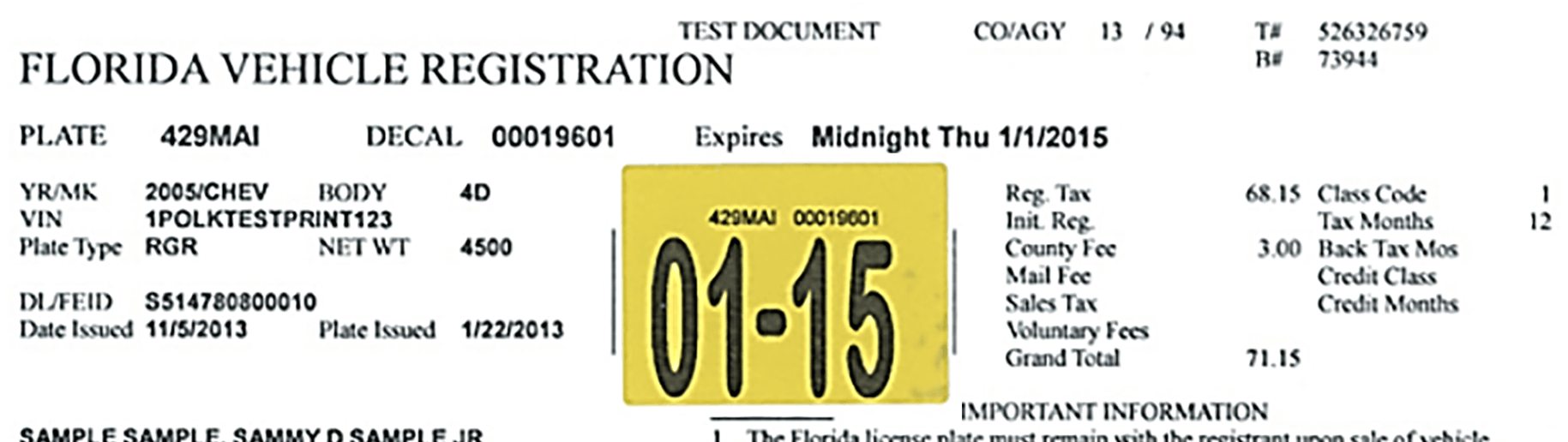
The foundation of your tag cost is the base registration fee. This fee varies depending on the type of vehicle you own. Passenger cars, for instance, have a different base rate than motorcycles, trucks, or recreational vehicles. The [Florida] Department of Highway Safety and Motor Vehicles (FLHSMV) sets these base rates. For a standard passenger car, the initial registration fee is typically around $225. However, this figure can fluctuate slightly based on legislative changes and administrative updates. It’s crucial to remember that this is just the starting point for calculating the total cost.
Title Fees
When you register a vehicle in [Florida], you are also required to obtain a title for it, proving ownership. The title fee is a one-time charge when you first register a vehicle in your name in the state. This fee is generally around $75.25 for a standard title. However, if there are complications, such as a vehicle with a lien or a transfer from another state, additional processing fees might apply. This fee is distinct from the annual registration renewal cost.
Plate Fees and Surcharges
Beyond the base registration and title fees, [Florida] utilizes a system of plate fees and various surcharges that contribute to the overall cost of your tag. These can include fees for specialized license plates, such as those supporting [Florida] State Parks or specific charitable organizations. While standard plates are generally included in the base registration, choosing an “vanity” or specialty plate often incurs an additional annual fee.
Furthermore, [Florida] levies several surcharges that are automatically added to the registration cost. These may fund initiatives like the state’s trauma centers, highway safety programs, or specific local transportation projects. For example, a portion of the registration fee often goes towards the state’s general revenue fund, which supports a wide array of public services. Understanding these surcharges is key to demystifying the final price you’ll see on your registration bill.
Local County Fees
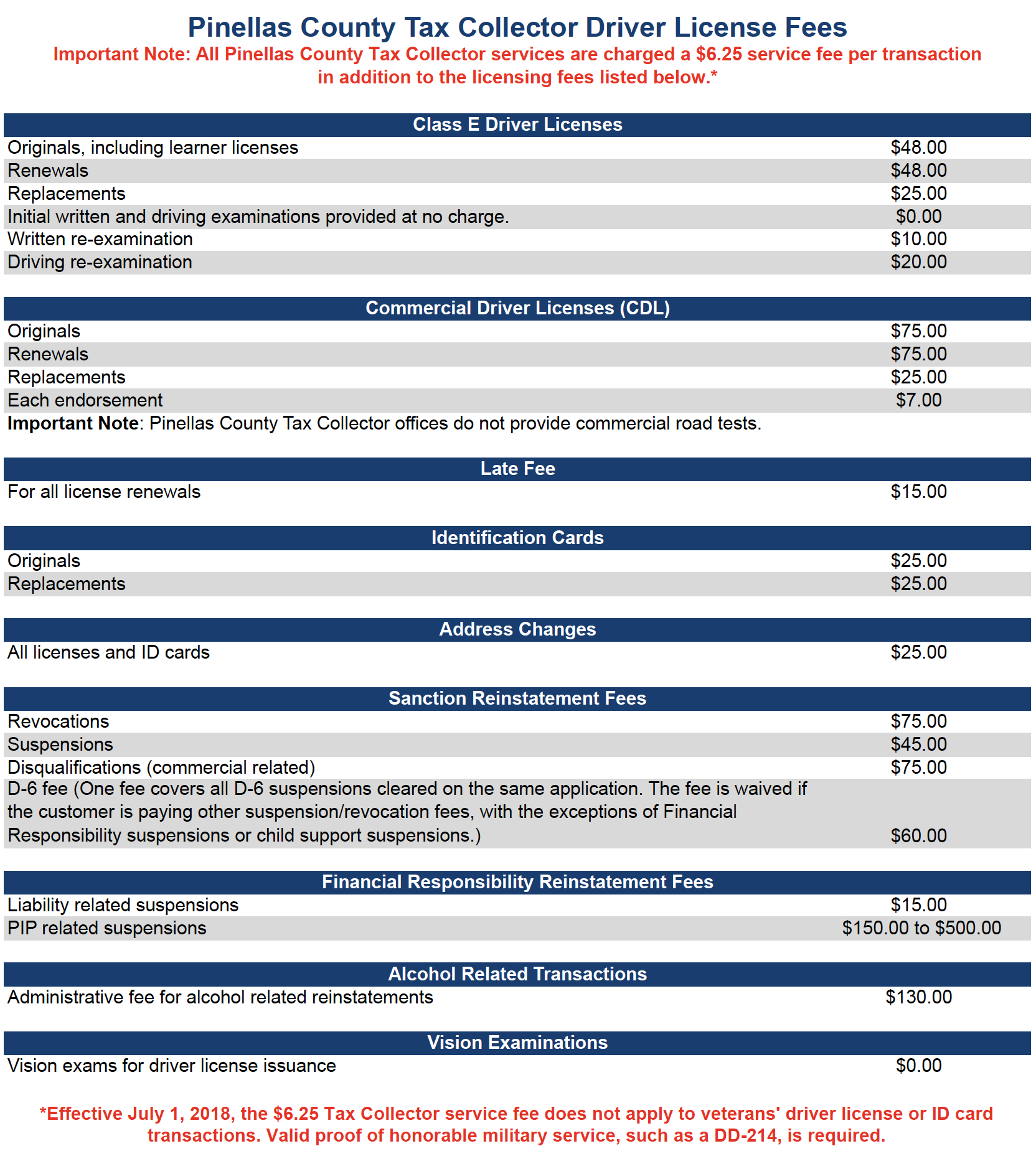
The final piece of the puzzle often lies with local county fees. Each of [Florida]’s 67 counties has the authority to impose its own surcharges on vehicle registrations. These county-specific fees can vary significantly, impacting the total cost for residents of different areas. For instance, a tag purchased in [Miami-Dade County] might have a slightly different total cost than one purchased in [Escambia County], even for the same type of vehicle. These local fees are often earmarked for county-specific road improvements, law enforcement, or other local infrastructure projects. It’s essential to be aware of the specific fees in the county where you reside or plan to register your vehicle.
Factors Influencing Florida Tag Costs
Several variables can significantly influence the final price you pay for a vehicle tag in [Florida]. These factors are designed to ensure that the cost is reflective of the vehicle’s type, usage, and the owner’s circumstances.
Vehicle Type and Weight
One of the most significant determinants of your tag cost is the type and weight of your vehicle. Larger, heavier vehicles, such as trucks and SUVs, generally incur higher registration fees than smaller passenger cars. This is often attributed to their potential impact on road infrastructure. The [Florida] statutes categorize vehicles based on weight classes, with each class having a corresponding fee structure. For example, a commercial truck will have a substantially different registration cost than a compact sedan.
Vehicle Age and Value
While [Florida] doesn’t have a direct “ad valorem” tax on vehicles for registration purposes in the same way some other states do, the age and, to some extent, the value of a vehicle can indirectly influence costs. For older vehicles, there might be specific registration options or fees associated with classic or antique plates, which can sometimes be more economical. Conversely, for newer, higher-value vehicles, certain surcharges or fees might be more substantial, though this is less common than weight-based pricing. The primary focus remains on vehicle type and weight for standard registrations.
Specialty and Vanity Plates
As mentioned earlier, choosing a specialty or vanity license plate can add to the annual cost of your tag. [Florida] offers a wide array of specialty plates that support various causes, organizations, and interests, from wildlife conservation to collegiate themes. These plates often come with an additional annual fee ranging from $25 to $50 or more, on top of the standard registration fees. Vanity plates, which allow you to personalize your license plate with a custom alphanumeric combination, also typically incur an extra annual charge, usually around $25. While these options enhance personalization and support worthy causes, they do represent an additional expense.
New Resident vs. Renewal Costs
The process and associated costs for new residents registering a vehicle in [Florida] differ slightly from the renewal process for existing residents. New residents must typically pay the title fee and any applicable fees for transferring a title from another state. The initial registration for a new resident will include all the standard fees. For renewals, the primary cost is the annual registration fee, the cost of the license plate itself if it’s time for replacement, and any applicable county surcharges. The renewal process is generally more straightforward and less expensive than the initial registration for a new resident.
The Registration and Renewal Process in Florida
Understanding the steps involved in obtaining and renewing your Florida vehicle tag is crucial for a smooth and hassle-free experience. The [Florida] Department of Highway Safety and Motor Vehicles (FLHSMV) oversees this process, working in conjunction with county tax collector offices.
Initial Registration for New Residents
For new residents, the first step is to transfer their out-of-state title and obtain [Florida] license plates. This typically involves visiting a local county tax collector’s office. You will need to provide proof of identity, residency, [Florida] insurance, and your current out-of-state title. The process includes paying the title fee, the initial registration fee, and any applicable surcharges. It’s advisable to check the specific requirements for your county, as minor variations may exist. You will also need to have your vehicle identification number (VIN) inspected.
Annual Renewal of Registration
Once your vehicle is registered in [Florida], you will receive a renewal notice by mail or email approximately 45 days before your current registration expires. The expiration date is typically tied to your birthday. You can renew your registration online through the FLHSMV website, by mail, or in person at your local county tax collector’s office. Online renewal is often the most convenient option, allowing you to pay fees using a credit card or electronic check. Renewal costs will include the base registration fee, any applicable surcharges, and potentially fees for new license plates if they are due for replacement.
Where to Register and Renew
[Florida] vehicle registration and renewal services are primarily handled by county tax collector offices across the state. Many counties offer online services through their own websites, which often link directly to the FLHSMV portal for registration renewals. Additionally, private tag and title agencies can assist with these processes, though they typically charge an additional service fee. For the most accurate and up-to-date information regarding fees and required documentation, it is always best to consult the official website of the [Florida] Department of Highway Safety and Motor Vehicles or your local county tax collector’s office.Estimating Your Total Florida Tag Cost
While a precise universal figure for a Florida tag cost is impossible to provide due to the myriad influencing factors, a clear understanding of the components allows for a reasonable estimation.
Calculating a Sample Passenger Car Tag Cost
Let’s consider a hypothetical example for a standard passenger car for a new resident registering their vehicle for the first time in [Florida]. The base registration fee might be around $225. Add to this the title fee of approximately $75.25. Now, factor in potential county surcharges, which can range from $5 to $20 or more, depending on the county. If we assume a $10 county surcharge, the total initial registration cost would be roughly $225 + $75.25 + $10 = $310.25. This figure does not include any specialty plate fees.
For an annual renewal of this same passenger car, the cost would be significantly less. The title fee is a one-time charge. The renewal would primarily consist of the base registration fee ($225) plus county surcharges (e.g., $10), bringing the annual renewal cost to approximately $235. This again excludes any specialty plate fees. If a specialty plate costing an additional $25 annually is chosen, the renewal cost would increase to $260.
Hidden Fees and Additional Considerations
It’s important to be aware of potential “hidden fees” or additional considerations that might not be immediately apparent. For example, if you are transferring a vehicle title from another state, there might be additional processing fees associated with that transfer. If your vehicle is financed and has a lien, the title transfer process might involve additional paperwork and fees related to lienholder notation. Furthermore, if you are registering a vehicle that was previously titled out-of-state, you will need to have it inspected, and there may be a small fee associated with that inspection. Always ask for a detailed breakdown of all fees at the county tax collector’s office to ensure you understand the complete cost.
Resources for Accurate Cost Information
To obtain the most accurate and up-to-date cost information for your specific vehicle and county, the best resources are official government channels. The [Florida] Department of Highway Safety and Motor Vehicles (FLHSMV) website (https://www.flhsmv.gov/) provides extensive information on registration fees, titling, and renewal procedures. Additionally, each county’s tax collector’s office maintains its own website, which often includes fee calculators or detailed fee schedules specific to their jurisdiction. Many of these county websites also offer online renewal portals, allowing you to see the exact cost of your renewal before submitting payment. By utilizing these resources, you can confidently budget for your Florida vehicle tag costs.
LifeOutOfTheBox is a participant in the Amazon Services LLC Associates Program, an affiliate advertising program designed to provide a means for sites to earn advertising fees by advertising and linking to Amazon.com. Amazon, the Amazon logo, AmazonSupply, and the AmazonSupply logo are trademarks of Amazon.com, Inc. or its affiliates. As an Amazon Associate we earn affiliate commissions from qualifying purchases.