
The economic landscape for educators is a critical component of any region’s appeal for both prospective residents and those considering a career change. In the diverse and historically rich state of Alabama, understanding teacher salaries is paramount for individuals contemplating a career in education, for parents considering their children’s future, and for policymakers shaping the educational future of the state. This exploration delves into the intricacies of teacher compensation in Alabama, examining average salaries, factors influencing pay, and how these figures compare within the national context.
Understanding Teacher Salary Averages in Alabama
Pinpointing an exact figure for teacher salaries in Alabama is challenging due to a variety of influencing factors, but general trends and averages provide a valuable benchmark. On average, teachers in Alabama can expect to earn a salary that reflects the state’s overall economic conditions and its investment in public education.
Average Salary Figures
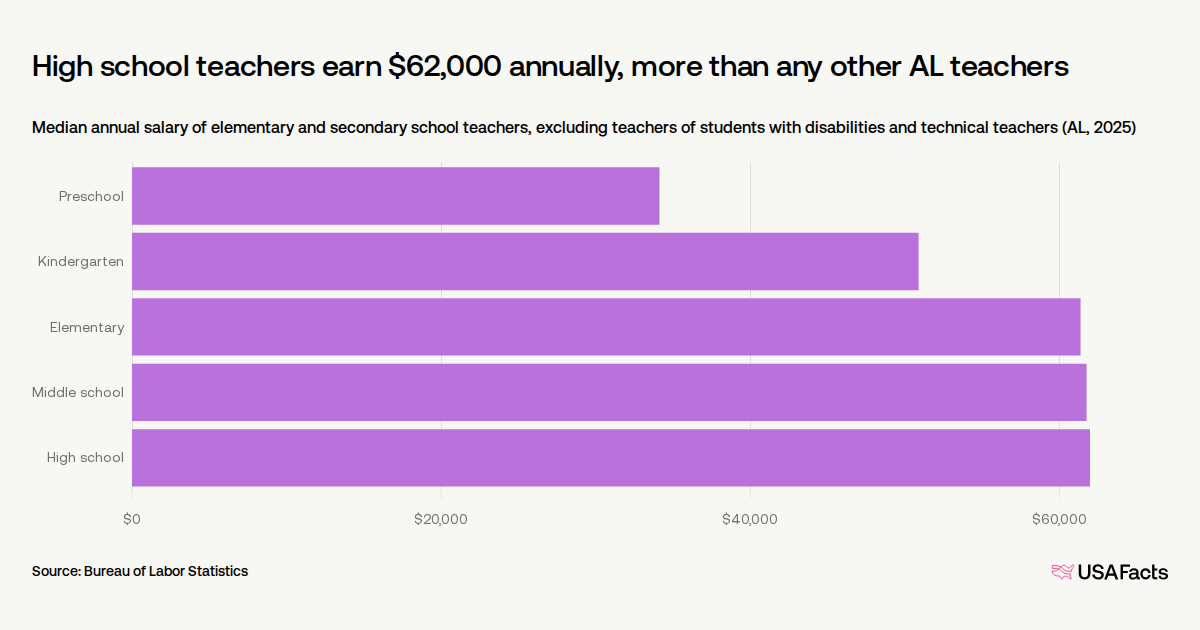
According to various educational data aggregators and state reports, the average annual salary for a K-12 teacher in Alabama typically falls within the range of $50,000 to $55,000. This figure represents a broad average across all grade levels, subject areas, and experience levels. It’s important to note that this is a snapshot, and actual salaries can vary significantly. For instance, some sources might indicate slightly higher or lower averages depending on the specific data set and the year of the report. The Bureau of Labor Statistics, a reliable source for occupational data, often provides comprehensive salary information that can be cross-referenced for a more robust understanding. For example, their data might place the median annual wage for elementary school teachers in Alabama around $52,000, while secondary school teachers might see a slightly higher median around $54,000.
Breakdown by Experience Level
Teacher salaries are rarely static and often increase with accrued experience. Entry-level teachers, those with only a few years of experience, will generally earn less than seasoned educators who have dedicated decades to the profession.
- Entry-Level Teachers (0-5 years): New teachers in Alabama might begin their careers with salaries in the low to mid-$40,000s. This initial compensation often reflects a starting salary that is competitive enough to attract new talent while acknowledging the need for professional development and growth.
- Mid-Career Teachers (6-15 years): As educators gain experience, their salaries see a steady increase. Teachers in this bracket could expect to earn between $50,000 and $60,000 annually. This phase of a teacher’s career is often when they take on more responsibilities, such as mentoring new teachers or leading curriculum development.
- Senior Teachers (16+ years): Highly experienced teachers, particularly those with advanced degrees and a long history of service, can command salaries that reach into the $60,000s and sometimes even approach or exceed $70,000. These educators often hold leadership positions, such as department heads or master teachers, and are invaluable assets to their school districts.
Impact of Education Level
The educational attainment of a teacher also plays a significant role in their earning potential in Alabama.
- Bachelor’s Degree: The foundational requirement for most teaching positions is a bachelor’s degree. Teachers holding only a bachelor’s degree will typically be compensated based on the standard salary schedule for their experience level.
- Master’s Degree: Earning a master’s degree can lead to a noticeable increase in salary. Many school districts in Alabama offer salary increments for teachers who pursue further graduate studies, recognizing the advanced knowledge and skills they bring to the classroom. This increment might add several thousand dollars to an annual salary.
- Doctorate or Educational Specialist Degree: While less common, teachers who hold a doctorate (Ed.D. or Ph.D. in education) or an educational specialist degree may qualify for even higher salary scales, although the direct financial incentive for these advanced degrees can be less pronounced than for a master’s.
Factors Influencing Teacher Salaries in Alabama
Beyond experience and education, several other crucial factors shape the compensation package for teachers in Alabama. These variables can create significant disparities in earnings, even within the same school district.
School District and Location
One of the most significant drivers of teacher salary differences is the specific school district by which a teacher is employed. Alabama is comprised of numerous independent school districts, each with its own budget, funding sources, and salary schedules.
- Larger vs. Smaller Districts: Larger, more urbanized districts, such as those in the vicinity of Birmingham or Mobile, often have access to larger tax bases and potentially more state and federal funding. This can translate into higher teacher salaries and more comprehensive benefits packages compared to smaller, rural districts with more limited resources.
- Cost of Living: While teacher salaries in Alabama might generally be lower than in some other states, the cost of living also tends to be more affordable. This is a crucial consideration when evaluating the purchasing power of a teacher’s salary. For example, housing costs in areas like Huntsville might be higher than in more remote parts of the state, and some districts may adjust their salary scales to reflect these regional economic differences.
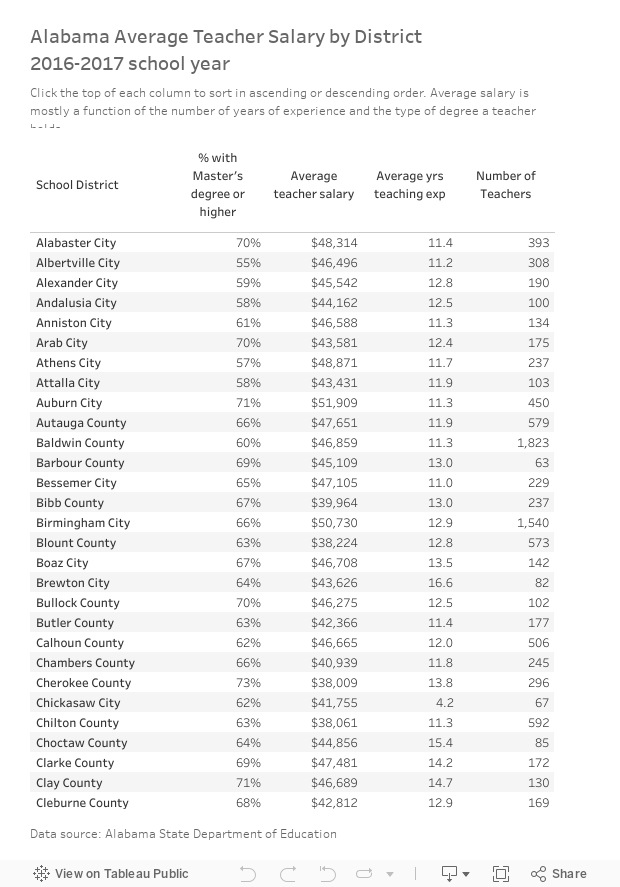
- Specific City/County Data: It is often beneficial to research salary data for specific cities or counties of interest. For instance, teachers in Madison County Schools might earn a different average than those in Jefferson County Schools, even though both are major districts.
Subject Area and Demand
The demand for teachers in specific subject areas can also influence their earning potential.
- High-Demand Subjects: Subjects like STEM (Science, Technology, Engineering, and Mathematics), special education, and foreign languages often experience higher demand due to a shortage of qualified instructors. In an effort to attract and retain talent in these critical areas, some districts may offer specialized stipends or higher starting salaries for teachers in these fields.
- Specialized Certifications: Teachers holding certifications in specialized or advanced areas may also command higher salaries. For example, an educator with National Board Certification or credentials in advanced placement (AP) courses could see their compensation reflect this specialized expertise.
Additional Duties and Extracurriculars
Beyond the core classroom responsibilities, teachers often take on additional duties that can supplement their income or enhance their overall compensation package.
- Coaching Sports: Many teachers serve as coaches for school sports teams, such as football, basketball, or track and field. These roles typically come with an additional stipend that can add several thousand dollars to their annual earnings.
- Club Sponsorship: Sponsoring student clubs, such as debate, drama, or academic clubs, can also come with a modest stipend.
- Summer Programs and Tutoring: Some teachers may work in summer school programs or offer private tutoring services, generating additional income during their time off.
- Leadership Roles: As mentioned earlier, taking on leadership roles within a school, such as department head, grade-level chair, or curriculum lead, often comes with a salary increase or additional compensation.
Teacher Salaries in Alabama: A National Perspective
To fully appreciate the salary landscape for teachers in Alabama, it’s helpful to compare it to national averages and neighboring states. This comparison provides context and highlights potential areas for improvement or consideration.
National Comparison
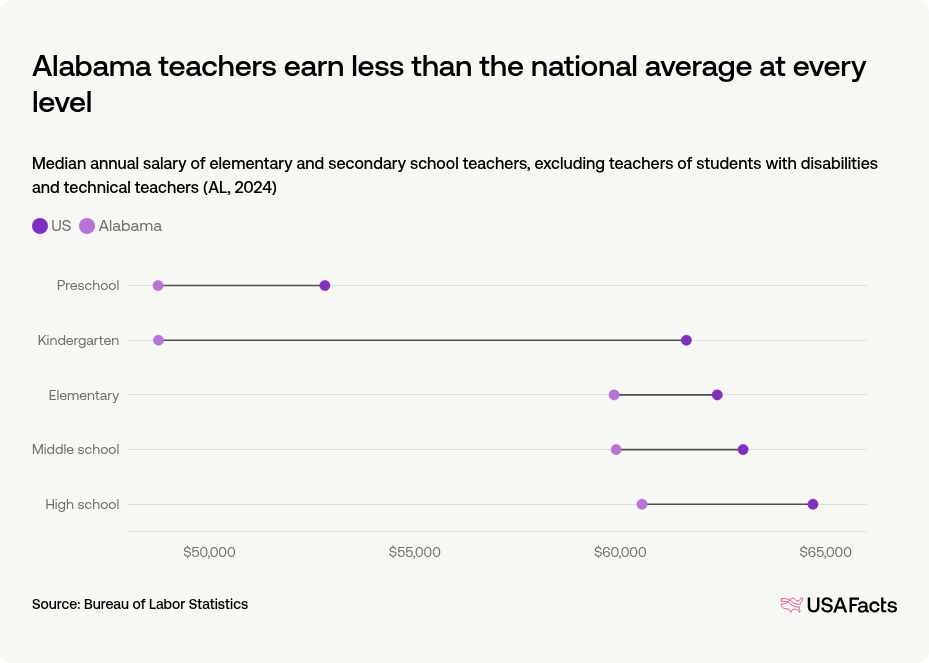
Nationally, the average annual salary for K-12 teachers varies widely, but it is generally higher than the average in Alabama. Data from the National Education Association (NEA) and other educational organizations often show the national average salary for teachers to be in the range of $60,000 to $65,000. This suggests that Alabama falls below the national average, which is a common trend for states in the Southeast region.
States with Higher Average Teacher Salaries (Examples):
- New York: Often leads the nation with average teacher salaries exceeding $85,000.
- California: Consistently ranks high with average salaries in the $70,000s and $80,000s.
- Massachusetts: Another state with a strong commitment to education, showing average salaries in the $70,000s.
States with Comparable Average Teacher Salaries to Alabama (Examples):
- Mississippi: Frequently has average teacher salaries that are among the lowest in the nation, often similar to or slightly below Alabama.
- West Virginia: While experiencing fluctuations, often finds itself in a similar salary bracket.
- Oklahoma: Can also fall into a comparable range, though specific data points vary.
Neighboring States Comparison
Comparing Alabama to its immediate neighbors offers a more localized perspective on teacher compensation.
- Georgia: Teachers in Georgia generally earn slightly more than their counterparts in Alabama, with average salaries often falling in the mid-$50,000s to low-$60,000s, particularly in the Atlanta metropolitan area.
- Florida: Salaries in Florida can be quite varied, with some districts offering competitive pay, especially in major metropolitan areas. However, the statewide average often hovers around the low to mid-$50,000s, making it comparable to or slightly lower than Alabama in some regions.
- Mississippi: As previously mentioned, Mississippi often ranks very low nationally, with average teacher salaries frequently below those in Alabama.
- Tennessee: Salaries in Tennessee tend to be slightly higher than in Alabama, with averages often in the low to mid-$50,000s, and potentially higher in the Nashville area.
This comparison underscores that while Alabama teachers’ salaries are not among the highest in the nation, they are not an outlier within its immediate regional context, though there is room for improvement to meet national averages and attract a broader pool of talent.
The Broader Picture: Benefits and Teacher Retention
While salary is a primary consideration, a comprehensive understanding of a teacher’s compensation package must also include benefits and factors influencing job satisfaction and retention.
Benefits Packages
Most school districts in Alabama offer a benefits package that typically includes:
- Health Insurance: Comprehensive health insurance plans are a standard offering, covering medical, dental, and vision care for teachers and their dependents. The quality and cost-sharing of these plans can vary by district.
- Retirement Plans: Teachers in Alabama are generally part of the Teachers’ Retirement System of Alabama (TRS), a defined benefit pension plan. This provides a secure retirement income based on years of service and final average salary, which is a significant draw for the profession.
- Paid Time Off: This usually includes paid sick leave, personal days, and the standard school holidays and summer breaks.
- Life Insurance and Disability: Many districts also provide life insurance and short-term/long-term disability coverage.
The value of these benefits, particularly a stable pension and comprehensive health insurance, can significantly offset a salary that might appear lower when compared to states with higher living costs and different benefit structures.
Factors Affecting Teacher Retention
While salaries and benefits are crucial, other factors significantly influence whether teachers choose to stay in Alabama and in the profession:
- Working Conditions: This includes class sizes, administrative support, access to resources, and school climate. A supportive and well-resourced environment can greatly enhance job satisfaction.
- Professional Development Opportunities: Access to quality professional development, mentoring programs, and opportunities for career advancement can keep educators engaged and motivated.
- Community Support: Strong community support for public schools and educators can foster a positive environment for teaching.
- Student Outcomes: The ability to make a meaningful impact on students’ lives is a primary motivator for many teachers. Seeing students succeed academically and personally is incredibly rewarding.
While Alabama faces challenges in attracting and retaining teachers, especially in certain high-need areas and in comparison to higher-paying states, efforts are continually being made by state and local educational bodies to improve compensation, enhance working conditions, and recognize the vital role educators play in shaping the future of the state. Understanding the nuances of teacher salaries, benefits, and the factors influencing job satisfaction is key to fostering a robust and effective educational system for all.
LifeOutOfTheBox is a participant in the Amazon Services LLC Associates Program, an affiliate advertising program designed to provide a means for sites to earn advertising fees by advertising and linking to Amazon.com. Amazon, the Amazon logo, AmazonSupply, and the AmazonSupply logo are trademarks of Amazon.com, Inc. or its affiliates. As an Amazon Associate we earn affiliate commissions from qualifying purchases.