
Navigating the requirements for official identification can often feel like a bureaucratic maze. For those visiting or temporarily residing in the Lone Star State, understanding the cost of a Texas Identification Card is a crucial piece of information. This guide will delve into the specifics of acquiring this essential document, ensuring a smooth and informed process for travelers, temporary workers, and anyone needing to establish legal identification within Texas. While often overshadowed by the driver’s license, the Texas ID card serves a vital purpose for non-drivers, offering a state-issued proof of identity recognized across various scenarios.
Understanding the Texas ID Card and Its Purpose
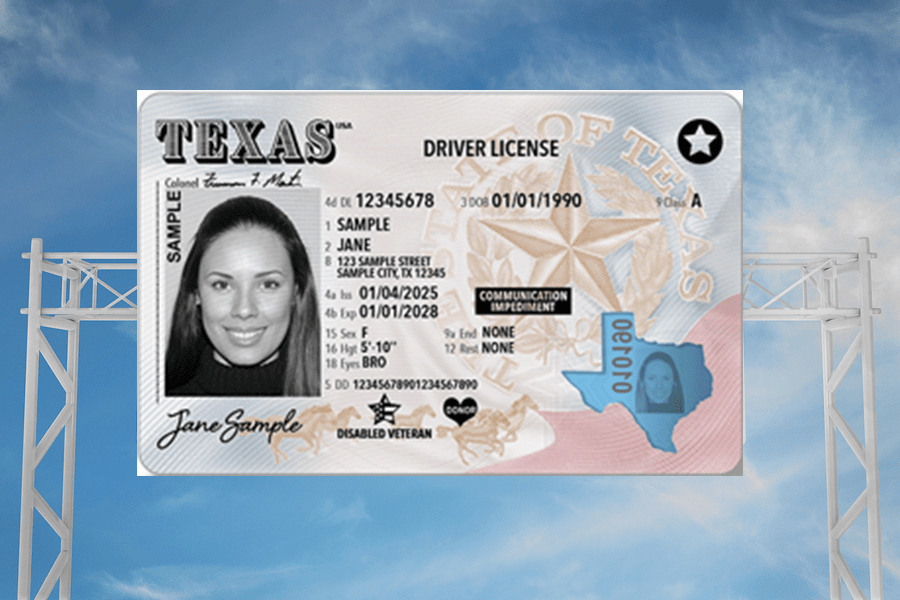
A Texas Identification Card, often referred to as a “State ID,” is a plastic card issued by the Texas Department of Public Safety (DPS) to residents who do not possess a Texas driver’s license. It serves as a primary form of identification for a multitude of purposes, ranging from accessing state services and opening bank accounts to proving age for entry into certain establishments or purchasing age-restricted items. For travelers, it can be particularly useful as a secondary form of identification when carrying a passport might be inconvenient, or for domestic travel where a driver’s license isn’t always necessary.
Who Needs a Texas ID Card?
The need for a Texas ID card typically arises for several groups:
- Non-Driver Residents: Individuals who live in Texas but do not drive or hold a driver’s license. This includes younger individuals, seniors, or those with medical conditions that prevent them from driving.
- Temporary Visitors: While not a primary requirement for short-term tourists, those staying in Texas for an extended period for work or study might find it beneficial for everyday transactions. It can be a convenient alternative to carrying a passport.
- Specific Age Groups: Minors who need a state-issued ID for school-related activities, proof of age, or travel. Seniors who may no longer drive but require a reliable form of identification.
- Individuals Establishing Residency: New residents who are in the process of obtaining a Texas driver’s license but need interim identification.
It’s important to distinguish the Texas ID card from a driver’s license. While both are issued by the DPS and serve as proof of identity, the ID card does not grant driving privileges. Its primary function is identification.
Key Functions of a Texas ID Card
- Proof of Identity: The most fundamental purpose, verifying who you are.
- Proof of Age: Essential for purchasing alcohol or tobacco, entering age-restricted venues, and for various other legal requirements.
- Accessing State Services: Many government agencies require a state-issued ID for service provision.
- Financial Transactions: Opening bank accounts, cashing checks, and other financial dealings often necessitate a valid ID.
- Travel: While not a substitute for a passport for international travel, it can be used for domestic flights in conjunction with other required documentation or as a primary ID for certain travel-related services.
- Voting: In some cases, a state ID can be used as a form of identification to vote in elections, depending on current voting laws.
The Cost Breakdown of a Texas ID Card
The cost of a Texas Identification Card is relatively straightforward and standardized, making it an affordable document to obtain. The primary fee is set by the Texas Legislature and is subject to change, though significant fluctuations are uncommon.
Standard Issuance Fee
As of the most recent information available, the standard fee for a Texas Identification Card is $32.00. This fee covers the cost of processing the application, printing the card, and verifying the applicant’s identity and documentation. This fee is paid at the time of application at a Texas Department of Public Safety driver license office.
Potential Additional Fees
While the $32.00 is the base cost, there are specific circumstances where additional fees might apply:
- Lost or Stolen Cards: If you lose your current Texas ID card and need a replacement, the fee for a duplicate ID card is also $32.00. This ensures that lost cards are replaced with the same level of scrutiny and processing as an initial application.
- Expedited Services (Not Applicable): It’s important to note that the Texas DPS does not offer expedited processing for identification cards. The standard processing time applies to all applicants. This means that the cost of $32.00 is the only fee you’ll encounter for standard issuance and replacement.
Fee Waivers and Reductions

In certain situations, the fee for a Texas ID card may be waived or reduced. These exceptions are typically for individuals facing financial hardship or specific demographic groups:
- Low-Income Individuals: The Texas Legislature has provisions for fee waivers or reductions for individuals who meet certain low-income guidelines. Applicants seeking a waiver must typically provide documentation to prove their financial status, such as proof of participation in government assistance programs.
- Active Military Personnel and Veterans: Active duty military personnel and honorably discharged veterans may be eligible for a fee waiver on state-issued identification. Specific documentation, such as military orders or a DD-214 form, is required to qualify.
- Victims of Family Violence: In some cases, victims of family violence who are seeking a Texas ID card for safety and security purposes may be eligible for fee waivers. This often requires a court order or a sworn affidavit.
It is crucial for applicants to inquire directly with the Texas Department of Public Safety about eligibility for any fee waivers or reductions and to gather the necessary supporting documentation beforehand.
How to Obtain Your Texas ID Card
The process of applying for a Texas Identification Card is managed by the Texas Department of Public Safety (DPS). It involves several steps, including gathering required documents, visiting a local office, and paying the associated fees.
Required Documentation
Before visiting a DPS office, applicants must gather specific documents to prove their identity, citizenship, and residency in Texas. The exact requirements can vary slightly, so it is always advisable to check the official DPS website for the most up-to-date list. However, common documentation includes:
- Proof of Identity and Citizenship:
- U.S. birth certificate (original or certified copy)
- U.S. passport
- Certificate of Citizenship or Naturalization
- Valid foreign passport with an approved U.S. visa and I-94 form
- Proof of Social Security Number (SSN):
- Social Security card
- W-2 form (from the last two years)
- Pay stub with SSN
- Proof of Texas Residency: (Two different documents are typically required)
- Utility bills (electricity, gas, water) dated within the last 60 days
- Lease agreement or mortgage statement
- Bank statements
- Voter registration card
- Current Texas vehicle registration or title
Important Note: All original documents must be presented. Photocopies are generally not accepted. If your name has changed due to marriage or divorce, you will need to provide legal documentation of the name change.
The Application Process
- Gather Documents: Collect all the required documentation as listed above.
- Complete Application: You can often pre-fill the application form online through the Texas DPS website to save time at the office.
- Visit a DPS Driver License Office: Locate the nearest Texas DPS driver license office. Walk-ins are accepted, but appointments are highly recommended to minimize wait times. You can schedule an appointment online.
- Submit Documents and Pay Fee: At the office, present your gathered documents to the DPS representative. You will then pay the application fee of $32.00, unless you qualify for a waiver.
- Take Photo and Fingerprints: A photograph will be taken for your ID card. For identification cards, fingerprinting may also be required.
- Receive Temporary ID: You will typically receive a temporary identification document that is valid for a specified period.
- Mail Delivery: Your permanent Texas Identification Card will be mailed to the address you provided on your application. This process usually takes a few weeks.
Maximizing Your Texas ID Experience
Understanding the cost and process is fundamental, but a few extra tips can enhance your experience in obtaining a Texas ID card. Planning ahead and being prepared will save you time and potential frustration.
Planning Your Visit
- Appointments: As mentioned, scheduling an appointment online through the Texas DPS website is the most effective way to reduce your wait time at a driver license office. Slots can fill up, especially during peak hours, so book in advance.
- Office Hours: Check the operating hours of your local DPS office. Some offices have extended hours or are open on Saturdays, which can be convenient for those with busy weekday schedules.
- Peak Times: Avoid visiting during typically busy periods, such as immediately after work hours or on weekends, if you haven’t secured an appointment.

Understanding Renewal and Replacement
- Expiration: Texas Identification Cards are typically valid for a period of six years. It is the cardholder’s responsibility to renew the ID before it expires.
- Renewal Process: Renewal can often be done online or by mail for eligible individuals, which can bypass the need for an in-person visit. However, if you need to update your photo or address, an in-person visit might be necessary. The renewal fee is generally the same as the initial issuance fee.
- Lost or Stolen Cards: If your ID card is lost or stolen, report it immediately to the Texas DPS. You will need to apply for a duplicate card, which incurs the standard fee of $32.00. You will need to provide proof of identity and residency again.
By familiarizing yourself with the cost, required documentation, application steps, and renewal procedures, obtaining a Texas Identification Card becomes a manageable task. This essential document will serve you well for various identification needs throughout your time in the Lone Star State, whether you’re a visitor exploring the vibrant culture of Austin or a resident needing to conduct daily affairs.
LifeOutOfTheBox is a participant in the Amazon Services LLC Associates Program, an affiliate advertising program designed to provide a means for sites to earn advertising fees by advertising and linking to Amazon.com. Amazon, the Amazon logo, AmazonSupply, and the AmazonSupply logo are trademarks of Amazon.com, Inc. or its affiliates. As an Amazon Associate we earn affiliate commissions from qualifying purchases.