
The Golden State, a land of innovation, diverse landscapes, and a thriving economy, also presents a compelling picture for mental health professionals. Therapists in California, from seasoned psychologists to emerging counselors, often find themselves in a region known for its high cost of living, which naturally influences compensation. Understanding the earning potential for therapists in California requires a deep dive into various factors, including specialization, experience, location within the state, and the type of practice. This exploration aims to provide a comprehensive overview for those considering a career in therapy in this dynamic environment.
Factors Influencing Therapist Salaries in California
The compensation of a therapist is rarely a one-size-fits-all figure. Several critical elements converge to shape an individual’s earning potential. Recognizing these variables is paramount for anyone looking to understand or negotiate their salary in the California market.
Experience Level and Seniority
Entry-level therapists, often fresh out of graduate programs and working towards licensure, typically command lower salaries. This initial phase is crucial for gaining supervised experience and honing clinical skills. As therapists accrue years of practice, demonstrate a successful track record, and potentially gain advanced certifications, their market value increases significantly. Senior therapists, particularly those with a decade or more of experience, are often sought after for their expertise, ability to handle complex cases, and potential leadership roles. Their ability to mentor junior staff or lead specialized programs further boosts their earning potential.
Specialization and Niche Expertise
California’s diverse population and its focus on cutting-edge research have fostered a demand for therapists specializing in specific areas. For instance, therapists focusing on trauma-informed care, child psychology, adolescent mental health, or specific disorders like obsessive-compulsive disorder (OCD) or eating disorders can often command higher rates. The burgeoning field of neurofeedback, for example, or specialized approaches like dialectical behavior therapy (DBT) or acceptance and commitment therapy (ACT), can also lead to increased earning potential due to specialized training and high demand. Therapists who are bilingual or culturally competent in serving specific communities within California, such as the large Hispanic or Asian populations, may also find themselves in higher demand and better compensated.
Geographic Location Within California
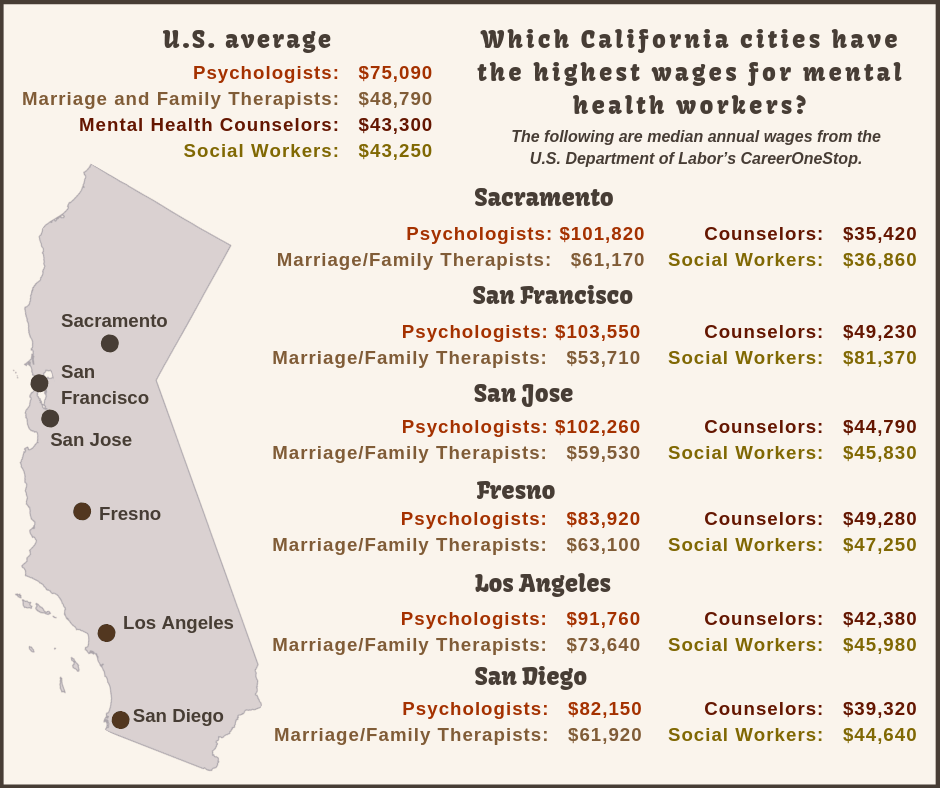
California is a vast state with significant economic disparities. Major metropolitan areas like Los Angeles and San Francisco boast higher average salaries for therapists, reflecting the elevated cost of living and greater demand for mental health services. Conversely, therapists working in more rural or less densely populated areas might see lower average salaries, though the cost of living may also be reduced. It’s not just about the major cities, though. Even within a metropolitan area, working in a affluent neighborhood or a high-demand district can influence compensation.
Type of Practice Setting
The setting in which a therapist practices plays a pivotal role in their income.
Private Practice
Owning and operating a private practice offers the highest potential for earnings. Therapists in private practice control their caseloads, set their own rates, and benefit directly from their billable hours. However, this also comes with significant overhead costs, including rent, insurance, marketing, and administrative expenses. The success of a private practice is heavily reliant on building a strong client base, effective marketing, and sound business management. Experienced therapists who have established a reputation and a consistent referral network often thrive in this model.
Group Practices
Joining an established group practice can offer a balance between autonomy and support. Therapists in group practices typically receive a percentage of their billable hours, with the group handling administrative tasks, billing, and sometimes marketing. This model provides a more predictable income stream compared to private practice, with less individual business risk. Compensation structures can vary, with some offering a base salary plus a percentage, while others operate on a pure commission model.
Community Mental Health Centers
Working for community mental health centers often means serving underserved populations and accepting a wider range of insurance plans, including Medi-Cal. While these roles are incredibly vital and often offer a strong sense of purpose, the salaries tend to be lower than in private practice or some group settings. However, these positions often come with robust benefits packages, opportunities for professional development, and a stable work environment.
Hospitals and Healthcare Systems
Hospitals and integrated healthcare systems employ therapists in various capacities, from inpatient psychiatric units to outpatient clinics. Salaries in these settings can be competitive, often falling between those of community mental health centers and private practice. Therapists in these roles may benefit from working within a multidisciplinary team, access to advanced resources, and opportunities for specialized training. The demand for therapists within larger healthcare networks, especially in areas like Palo Alto and San Diego, is consistently high.
Academic Institutions
Therapists involved in teaching, research, or providing clinical services within universities or colleges often have salaries that are influenced by academic pay scales. These positions may offer a blend of clinical work, teaching, and research, with compensation reflecting the responsibilities and the institution’s budget.
Average Salaries and Salary Ranges
Pinpointing an exact average salary for therapists in California is challenging due to the multitude of variables. However, salary aggregators and industry reports provide valuable insights into general earning potential.
General Salary Data

Reports from sources like the U.S. Bureau of Labor Statistics (BLS) and various salary websites indicate that therapists in California generally earn more than the national average. For example, while the national average for mental health counselors might hover around $50,000-$60,000, California figures can easily range from $60,000 to over $100,000, depending heavily on the factors previously discussed.
Salary Ranges by Licensure Type
The type of license a therapist holds also influences their earning potential.
Licensed Marriage and Family Therapists (LMFT)
LMFTs in California are highly sought after. Their average salaries can range broadly, from approximately $60,000 for those early in their careers to $100,000 or more for experienced professionals in high-demand areas or private practice. The ability to conduct individual, couples, and family therapy makes them versatile.
Licensed Clinical Social Workers (LCSW)
LCSWs in California often work in diverse settings, including hospitals, schools, and community agencies, as well as private practice. Their earning potential is similar to LMFTs, with an average range of $60,000 to $110,000 annually. LCSWs often have strong skills in case management and advocacy, which can be valuable assets.
Licensed Professional Clinical Counselors (LPCC)
LPCCs are a growing profession in California, offering specialized counseling services. Their salaries generally align with LMFTs and LCSWs, typically ranging from $55,000 to $95,000, with potential for higher earnings in specialized roles or private practice.
Psychologists (Licensed)
Licensed psychologists, especially those with doctoral degrees (Ph.D. or Psy.D.), generally command the highest salaries. Their expertise in assessment, diagnosis, and treatment of complex mental health conditions allows them to earn significantly more. Average salaries can start from $80,000 for those with a master’s degree working under supervision or in entry-level roles, but can climb well into the $120,000-$150,000 range, and even exceed $200,000 for highly experienced psychologists in private practice, specialized forensic work, or leadership positions in major healthcare systems in cities like San Jose.
Maximizing Earning Potential as a Therapist in California
For therapists looking to optimize their income in California, strategic career planning is key.
Pursuing Advanced Certifications and Specializations
Investing in specialized training and obtaining certifications in high-demand areas, such as trauma therapy, EMDR (Eye Movement Desensitization and Reprocessing), or perinatal mental health, can significantly increase a therapist’s marketability and earning power. These specialized skills allow therapists to attract clients seeking particular expertise and often command higher hourly rates.
Building a Strong Referral Network
In California, like anywhere else, strong professional relationships are invaluable. Cultivating relationships with physicians, psychiatrists, other therapists, and community organizations can lead to a steady stream of client referrals. A robust referral network is particularly crucial for those in private practice.
Strategic Location Choices
While major cities offer higher potential earnings, therapists should also consider the cost of living and the competitive landscape. Sometimes, establishing a practice in a mid-sized city or a growing suburban area within commuting distance of a major hub can offer a good balance of earning potential and a more manageable cost of living. For instance, areas around Sacramento or the Orange County region might present unique opportunities.
Developing Business Acumen for Private Practice
For those aspiring to private practice, developing business and marketing skills is as important as clinical skills. Understanding practice management software, effective client acquisition strategies, and financial planning can directly impact profitability. Networking at events in cities like Oakland or Long Beach can also be beneficial.
Negotiating Salary and Contracts
Therapists should be informed about the prevailing salary ranges for their experience level, specialization, and location when negotiating job offers or contracts with group practices or employers. Understanding the value of their skills and experience is crucial for securing fair compensation.

Conclusion
The financial landscape for therapists in California is dynamic and offers substantial earning potential for dedicated and skilled professionals. While the high cost of living in the state is a factor, the robust demand for mental health services, coupled with the diverse opportunities across various practice settings, allows therapists to build fulfilling and financially rewarding careers. By understanding the influencing factors—experience, specialization, location, and practice type—and by strategically planning their career development, therapists can confidently navigate the California market and achieve their professional and financial goals. The investment in specialized training, professional networking, and potentially entrepreneurial ventures can lead to significant returns, both personally and financially, within this vibrant and growing state.
LifeOutOfTheBox is a participant in the Amazon Services LLC Associates Program, an affiliate advertising program designed to provide a means for sites to earn advertising fees by advertising and linking to Amazon.com. Amazon, the Amazon logo, AmazonSupply, and the AmazonSupply logo are trademarks of Amazon.com, Inc. or its affiliates. As an Amazon Associate we earn affiliate commissions from qualifying purchases.