
For many, the allure of California is undeniable. From the sun-kissed beaches of San Diego to the majestic redwoods of the north, and the vibrant cultural hubs of Los Angeles and San Francisco, the Golden State offers an unparalleled tapestry of experiences. Yet, life in this picturesque landscape often comes with a significant cost. For those navigating a period of unemployment, understanding the financial support available through the California Employment Development Department (EDD) becomes paramount, not just for daily living, but also for maintaining a semblance of the lifestyle one has grown accustomed to, or perhaps even reimagining it. This article delves into the specifics of unemployment benefits in California, exploring how these benefits can factor into budgeting for essentials, and critically, how they might – or might not – support the pursuit of travel, tourism, and unique lifestyle experiences in one of the world’s most desired destinations.
Whether you’re pondering a staycation in your own city, dreaming of an affordable weekend getaway to a state park, or simply trying to comprehend how a temporary financial setback might impact your future travel plans, grasping the nuances of unemployment compensation is the first step. While benefits are primarily designed to provide a safety net during job searching, they inherently influence an individual’s financial capacity for everything from dining out to booking accommodation for a much-needed retreat.
Understanding California’s Unemployment Benefits: The Basics
Navigating unemployment can be a complex and often stressful period. In California, the EDD administers the state’s unemployment insurance (UI) program, which provides temporary financial assistance to eligible workers who have lost their jobs through no fault of their own. Understanding the fundamental aspects of this program – from eligibility to benefit calculations and duration – is crucial for anyone relying on this support system. For residents of a state renowned for its diverse landmarks and vibrant tourism industry, this financial foundation plays a critical role in shaping immediate lifestyle choices and longer-term aspirations, including travel.
Eligibility and Application: Your First Steps
To qualify for UI benefits in California, applicants must meet specific criteria. Generally, you must have earned sufficient wages during a base period, be unemployed through no fault of your own (e.g., laid off, not fired for misconduct), be able and available for work, and be actively seeking new employment. The application process typically begins online through the EDD’s website, requiring detailed information about your work history, earnings, and the circumstances of your job separation. It’s a straightforward but comprehensive process designed to ensure that benefits are distributed fairly to those who truly need them. Once approved, claimants must certify for benefits every two weeks, confirming their continued eligibility and job search efforts. This initial phase sets the stage for understanding the financial landscape you’ll be operating within, influencing how you might approach everything from grocery shopping in Oakland to planning a budget-friendly visit to Disneyland in Anaheim.
Calculating Your Weekly Benefit Amount (WBA): What to Expect
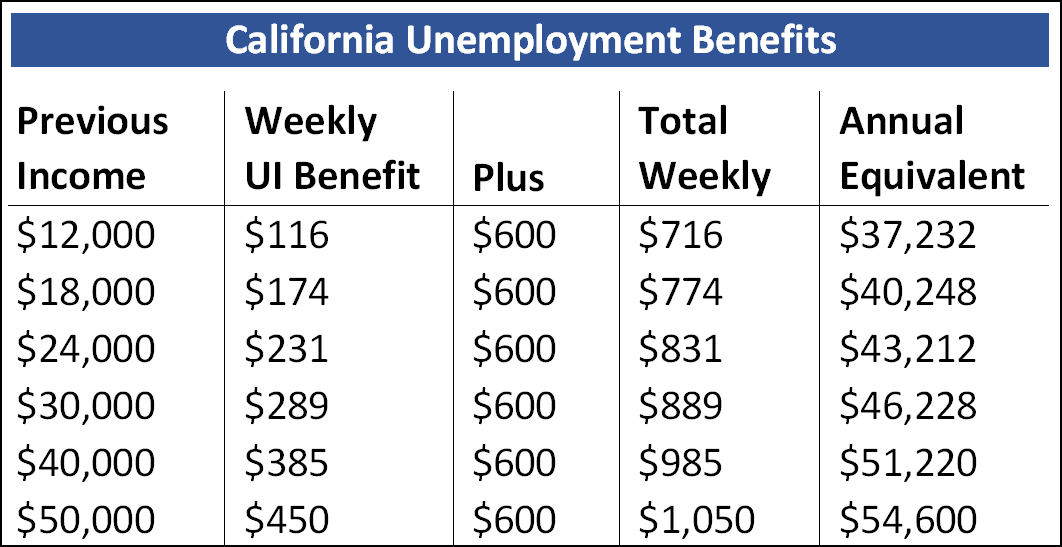
The most pressing question for many is, “How much will I receive?” In California, your Weekly Benefit Amount (WBA) is determined by your earnings during a specific 12-month “base period” – typically the first four of the last five completed calendar quarters before your claim began. The EDD calculates your WBA based on your highest-earning quarter within this period. While there are minimum and maximum benefit amounts, the general range for most claimants falls between $40 and $450 per week. This means that a significant portion of the population will receive a maximum of $450 weekly, which translates to approximately $1,800 per month before taxes. For context, this amount is vital when considering the cost of living in popular California cities like Santa Monica or Palo Alto, and how it might impact even the most modest travel plans, such as a road trip along Highway 1 to Big Sur.
Benefit Duration and Extensions: Planning Ahead
Standard unemployment benefits in California are generally available for up to 26 weeks within a 12-month benefit year. However, during periods of high unemployment, federal and state programs may introduce extensions, prolonging the duration of benefits for eligible individuals. These extensions are not guaranteed and depend on economic conditions and legislative action. Understanding the potential duration of your benefits is critical for long-term financial planning, especially when considering any larger lifestyle expenses or future travel investments. Knowing your benefit timeline allows you to strategize not just for job searching, but also for how to manage your resources effectively, potentially saving for a post-unemployment adventure or even a highly localized exploration of California’s many natural wonders, like Yosemite National Park.
Navigating the Golden State: Budgeting for Life and Leisure During Unemployment
Living in California often means balancing a desire for quality of life with the reality of high expenses. When unemployment benefits become the primary income source, this balancing act becomes even more pronounced. The monthly WBA, while providing a necessary safety net, may feel considerably different in a bustling metropolis compared to a quieter, more affordable town. This section explores the practicalities of budgeting in California while receiving unemployment, emphasizing how to stretch dollars for essentials and still find ways to enjoy the state’s unique offerings, even if it means rethinking traditional tourism and accommodation.
Cost of Living vs. Benefits: A California Perspective
The stark reality for many California residents is that the maximum weekly unemployment benefit of $450 (or roughly $1,800 per month) often falls significantly short of covering basic living expenses in major metropolitan areas. Rent for a modest apartment in San Francisco, Los Angeles, or San Jose can easily exceed this amount, let alone factoring in utilities, food, transportation, and healthcare. This disparity highlights the critical need for rigorous budgeting and often, making difficult choices. While EDD benefits are crucial, they are rarely sufficient to maintain a pre-unemployment lifestyle, especially one that might have included frequent travel or luxury accommodation experiences. This financial constraint naturally steers individuals towards more frugal choices, impacting everything from dining habits to considering budget-friendly local attractions over far-flung destinations like Paris or Tokyo.
Smart Budgeting for Essentials and Experiences
Effective budgeting is non-negotiable during unemployment. This involves meticulously tracking income and expenses, prioritizing necessities like housing, food, and utilities, and drastically cutting discretionary spending. For those passionate about travel and experiences, this means rethinking what leisure looks like. Instead of lavish resorts, one might explore camping in a California State Park or visiting free museums and galleries. Cooking at home becomes a necessity, perhaps exploring local farmers’ markets in Santa Barbara for fresh, affordable ingredients, which can itself be a cultural experience. Every dollar saved on daily expenses directly translates to potential for a small, local adventure, like a day trip to the Golden Gate Bridge or a hike in the Santa Monica Mountains. The focus shifts from grand tours to intimate, accessible explorations of nearby landmarks and hidden gems.
Exploring Local Gems: Affordable California Adventures
Despite financial limitations, California remains a treasure trove of affordable experiences. Unemployment can paradoxically offer the gift of time, allowing for deeper exploration of one’s immediate surroundings. Many cities offer free walking tours, public art installations, and accessible parks. The state’s vast network of regional and state parks, such as those near Sacramento or the Central Valley, provide opportunities for hiking, picnicking, and nature appreciation at minimal cost. Instead of booking a luxury suite, consider a scenic drive through the Napa Valley without the expense of wine tastings, or enjoying a sunset from a public beach in Orange County. These local explorations foster a different kind of tourism, one focused on discovery, natural beauty, and cultural immersion that doesn’t break the bank.
From Staycations to Strategic Escapes: Travel Considerations on a Reduced Income
When income is limited by unemployment benefits, the concept of “travel” often undergoes a significant transformation. Far from the luxury resorts and international flights often associated with vacation, travel on a reduced income becomes about strategic choices, leveraging local opportunities, and finding joy in more modest adventures. California, with its incredible diversity, is uniquely positioned to offer a spectrum of such experiences.
The Allure of the California Staycation: Discovering Your Backyard
A staycation is arguably the most financially prudent form of “travel” during unemployment. It involves exploring attractions and activities within your immediate city or region as if you were a tourist, but without the costs of travel or accommodation. For someone living in Los Angeles, this could mean visiting museums like the Getty Center (which often offers free admission), exploring historic neighborhoods, or spending a day at Venice Beach. In San Francisco, a staycation might involve walking across the Golden Gate Bridge, exploring Golden Gate Park, or taking a ferry to Tiburon. These local adventures allow individuals to reconnect with their surroundings, discover new facets of their hometown, and enjoy a sense of escape without depleting their limited funds. It embodies the spirit of local tourism, supporting local businesses while providing entertainment and a change of scenery.
Day Trips and Weekend Getaways: Maximizing Your Budget
For those who can manage a slightly larger budget, day trips and short weekend getaways offer a compelling option. California’s diverse geography means that many world-class destinations are just a few hours’ drive away. A resident of Southern California might consider a day trip to the beaches of Malibu, the historic missions near San Luis Obispo, or a scenic drive through Joshua Tree National Park. Northern California residents have easy access to the wine regions of Sonoma, the rugged coastlines of Mendocino, or the tranquility of Lake Tahoe. The key is to minimize accommodation costs by opting for day trips or choosing budget-friendly lodging, such as camping in a state campground or staying with friends or family. Such strategic escapes provide a much-needed mental break and a taste of travel without the financial strain of extended vacations or high-end hotels.
Accommodation Alternatives: From Budget Hotels to Nature Retreats
When considering an overnight stay, traditional hotel bookings can quickly consume a significant portion of a weekly benefit. This necessitates exploring alternative accommodation options. Hostels, once primarily for backpackers, now offer clean, affordable private rooms in many California cities. Camping in one of California’s many national or state parks offers an immersive nature experience at a fraction of the cost of a resort. Websites like Airbnb or VRBO can sometimes yield affordable guesthouses or room rentals, especially if booked during off-peak seasons. For a true nature retreat, a cabin in a national forest or a yurt in a glamping site might be more accessible than a luxury suite at the Ritz-Carlton, Laguna Niguel. These alternatives not only save money but also open up unique travel experiences, fostering a different kind of connection with California’s diverse landscapes and local cultures.
Rebuilding and Reimagining: Planning for Future Adventures
While unemployment benefits provide crucial short-term relief, they also present an opportunity for introspection and long-term planning. This period, though challenging, can be a catalyst for redefining lifestyle priorities and meticulously planning for future travel and experiences. It’s about leveraging the present to build a stronger financial foundation for the adventures yet to come, even considering new career paths that integrate travel, such as becoming a digital nomad in scenic locales like Monterey.
Financial Planning Post-Unemployment: Investing in Your Travel Dreams
Once re-employed, the lessons learned during unemployment can be invaluable for smarter financial planning. The discipline of budgeting and the understanding of what constitutes true value can significantly influence how one saves and spends. Establishing an emergency fund becomes a top priority, but equally important is consciously setting aside funds for future travel. This might involve creating a dedicated “travel savings account” and setting realistic goals, whether it’s for a dream trip to Europe or a series of weekend excursions to explore more of California’s hidden gems, such as the deserts of Death Valley. This proactive approach ensures that travel remains an attainable and enjoyable aspect of life, rather than a financial strain, allowing you to book that charming boutique hotel in Carmel-by-the-Sea with confidence.
The Digital Nomad Path: Balancing Work and Wanderlust in California
For some, the period of unemployment might spark a reevaluation of traditional career paths, leading towards more flexible models like remote work or becoming a digital nomad. California, with its strong tech industry and breathtaking natural beauty, is an ideal hub for this lifestyle. Imagine working remotely from a cozy cabin near Lake Tahoe or a beachfront apartment in San Clemente. While receiving unemployment benefits typically requires active job searching within the state and strict reporting, this transitional period can inspire a shift towards careers that offer the freedom to live and work from anywhere. This convergence of work and wanderlust embodies a modern lifestyle trend, where the boundaries between professional life and travel experiences blur, allowing for continuous exploration of destinations like the stunning Redwood National Park or even international locales once financially feasible.

Future-Proofing Your Adventures: Savings Strategies for the Long Haul
Ultimately, understanding “how much for unemployment in California” is more than just knowing a number; it’s about comprehending its impact on your entire lifestyle, including your capacity for travel and leisure. By developing robust savings strategies, diversifying income streams, and making conscious spending choices, individuals can future-proof their ability to embark on adventures. This could involve exploring investment opportunities, developing passive income streams, or simply maintaining a disciplined approach to discretionary spending. The goal is to build a financial resilience that ensures that periods of unemployment, should they arise again, do not completely derail one’s passion for exploring the world, from the vibrant streets of Hollywood to serene escapes in the Sierra Nevada mountains. By learning to manage resources wisely during leaner times, future travel dreams, whether they involve luxury cruises or budget-friendly hostels, remain firmly within reach.
LifeOutOfTheBox is a participant in the Amazon Services LLC Associates Program, an affiliate advertising program designed to provide a means for sites to earn advertising fees by advertising and linking to Amazon.com. Amazon, the Amazon logo, AmazonSupply, and the AmazonSupply logo are trademarks of Amazon.com, Inc. or its affiliates. As an Amazon Associate we earn affiliate commissions from qualifying purchases.