
The allure of sports memorabilia transcends the athletic feats themselves, delving into the realm of tangible history and investment. For collectors and enthusiasts alike, a Joe Montana rookie card represents a significant piece of American football lore. Its value is not merely a static figure but a dynamic reflection of market trends, card condition, rarity, and the enduring legacy of the player himself. Understanding these elements is crucial for anyone looking to appraise, acquire, or simply appreciate the worth of this iconic collectible.
The Genesis of a Legend: Joe Montana’s Early Career and Rookie Cards
Joseph Clifford Montana Jr., often hailed as “Joe Cool,” carved his name into NFL history as one of the greatest quarterbacks of all time. His unparalleled success with the San Francisco 49ers, marked by four Super Bowl victories and three Super Bowl MVP awards, cemented his status as a legend. His career, which spanned from 1979 to 1994, captivated a generation of football fans and continues to inspire many.
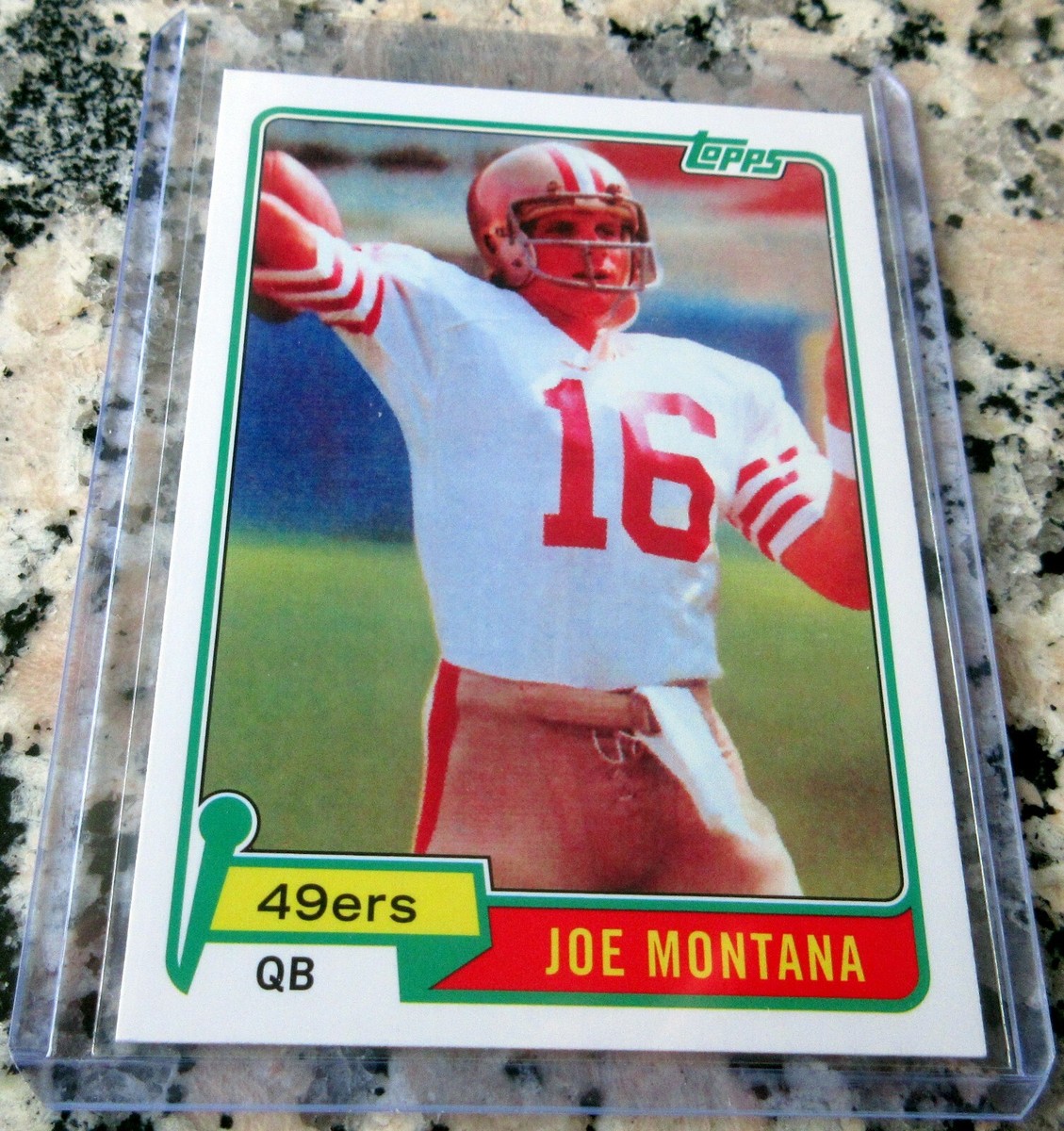
The concept of a “rookie card” in American professional sports officially gained traction in the mid-20th century. For a player’s rookie card to be recognized, it typically needs to be issued by a mainstream trading card manufacturer during their inaugural professional season or in the year immediately preceding it. In Joe Montana’s case, his rookie card era falls within the early stages of modern sports card collecting.
Identifying Joe Montana’s True Rookie Card
The primary challenge in valuing any rookie card lies in its definitive identification. For Joe Montana, the consensus among seasoned collectors points to two main contenders for his “true” rookie card:
- 1981 Topps Joe Montana: This card is widely considered the definitive rookie card for Joe Montana. Issued by Topps, a long-standing giant in the sports card industry, it features a classic design of the era. The card showcases a dynamic action shot of Montana in his San Francisco 49ers uniform, with his name prominently displayed. The reverse side typically includes his career statistics up to that point and biographical information. The 1981 set itself is highly sought after, and Montana’s card within it is a cornerstone for any serious NFL collector.
- 1981 Sportscaster Joe Montana: While less widely recognized than the Topps issue, the 1981 Sportscaster card also features Joe Montana as a rookie. Sportscaster was a smaller, less prolific company compared to Topps, making their cards generally rarer. This rarity can sometimes translate to higher demand and value, though the Topps card generally holds a stronger market presence due to brand recognition and wider distribution.
The distinction is important because the market often places a premium on the most widely distributed and officially recognized rookie card from a major manufacturer. Therefore, when discussing the value of Joe Montana’s rookie card, the 1981 Topps card is typically the primary focus.
Factors Influencing a Joe Montana Rookie Card’s Value
The worth of a Joe Montana rookie card is a complex equation, influenced by several critical factors that collectors and investors meticulously evaluate. These elements work in concert to determine the final price a card commands in the market.
Condition and Grading
The single most impactful factor in a card’s value is its condition. Sports card grading services, such as Professional Sports Authenticator (PSA) and Beckett Grading Services (BGS), provide a standardized assessment of a card’s physical state. They assign a numerical grade from 1 to 10, with 10 being “Gem Mint” and representing a virtually flawless card.
Key aspects of condition include:
- Centering: The alignment of the image within the borders of the card. A perfectly centered card is highly desirable.
- Corners: The sharpness and integrity of the card’s four corners. Any notching, fraying, or rounding will detract from the grade.
- Edges: The smoothness and absence of chipping or wear along the card’s perimeter.
- Surface: The overall condition of the card’s front and back, looking for scratches, print defects, creases, or discoloration.
A PSA 10 or BGS 9.5 (or higher) graded 1981 Topps Joe Montana rookie card can be worth exponentially more than a card in lesser condition. For example, a PSA 10 might command tens of thousands of dollars, while a PSA 7 or 8 might be worth only a few hundred, and lower-graded cards even less. The grading scale acts as a universal language for collectors, ensuring consistency and transparency in valuation.
Rarity and Population Reports
While the 1981 Topps card was produced in substantial quantities, the number of cards that have survived in high-grade condition is far more limited. Grading companies regularly publish “population reports,” which detail the total number of cards of a specific issue and grade that they have encapsulated. A low population count for a high grade (e.g., only a few dozen PSA 10s of Montana’s rookie) indicates extreme rarity and significantly boosts its value. Conversely, a high population count for a PSA 10 suggests less scarcity.
Market Demand and Player Popularity
Joe Montana’s enduring popularity is a testament to his impact on the game. He remains a beloved figure among football fans, and this sustained interest fuels demand for his memorabilia. The market for sports cards is also influenced by broader economic trends and collector sentiment.
- Nostalgia: Many collectors who grew up watching Montana play now have the disposable income to invest in the cards they admired as children.
- Investment Potential: Savvy investors recognize the long-term appreciation potential of iconic rookie cards, particularly those of Hall of Fame athletes.
- Media Attention: Major sporting events, anniversaries of significant games, or the release of biographical content about Montana can sometimes spur increased interest and demand for his cards.
Set Popularity and Manufacturer
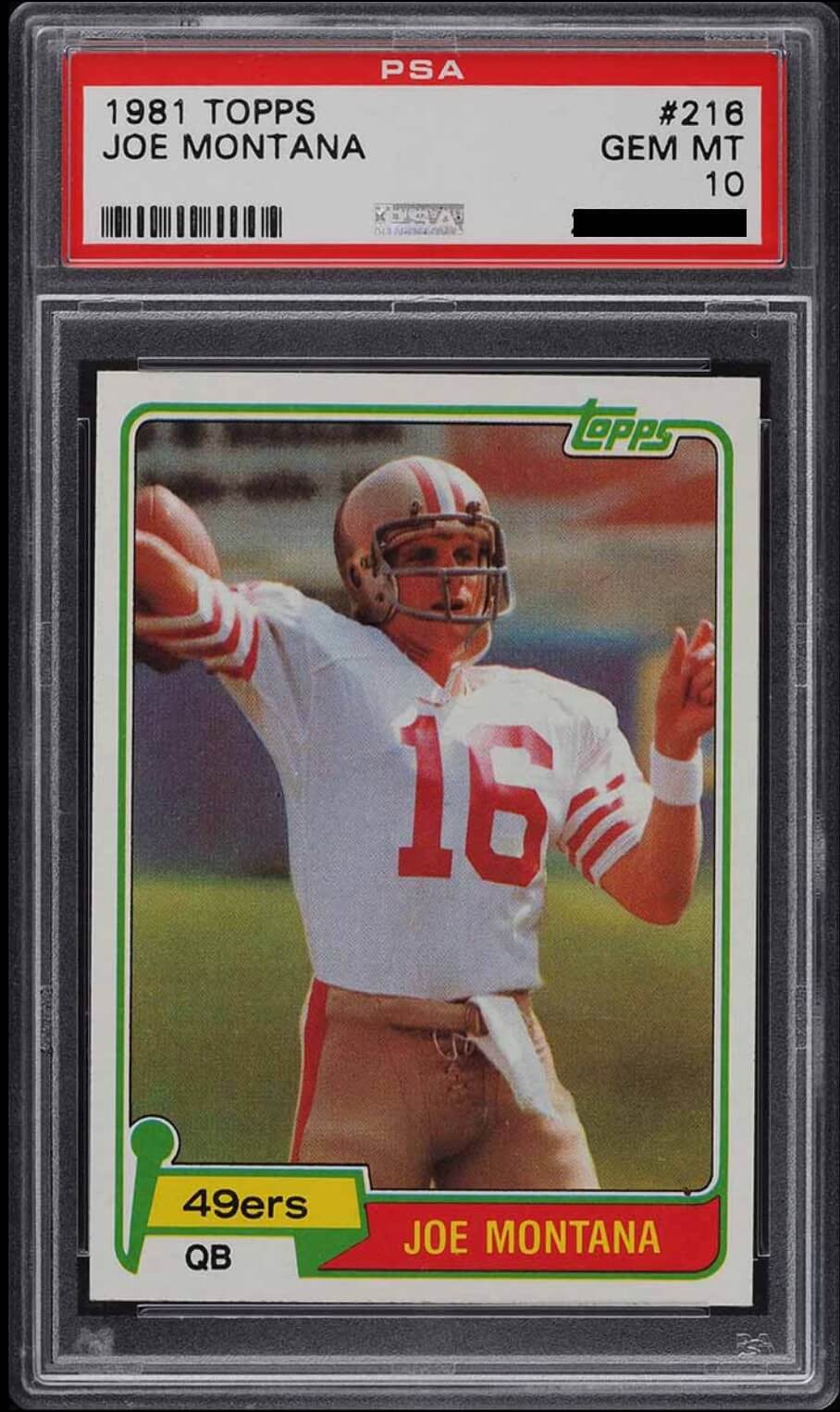
The popularity of the 1981 Topps set itself plays a role. While not as universally celebrated as some other vintage sets, it still holds significance as the era where many iconic cards, including Montana’s, were introduced. The reputation of Topps as a leading manufacturer also lends credibility and desirability to its releases.
Estimating the Value: A Range of Possibilities
Given the myriad factors influencing value, providing a precise dollar amount for a Joe Montana rookie card is challenging without a specific card to appraise. However, we can establish a general range based on grading and market conditions.
High-End Valuations: Gem Mint Conditions
For a 1981 Topps Joe Montana rookie card graded PSA 10 or BGS 9.5/10, the values can be substantial. These cards represent the pinnacle of condition and rarity. In recent years, such cards have commanded prices ranging from $30,000 to over $60,000, and in exceptional cases, or during periods of peak market activity, they could potentially reach even higher figures. These are the cards that are the focus of major collectors and investment funds.
Mid-Range Valuations: Excellent to Near Mint
Cards in excellent condition, typically graded PSA 8 or 9, or BGS 8.5 or 9, represent a more accessible entry point for collectors. These cards are still in superb shape, with only minor imperfections visible upon close inspection. The value for these cards generally falls within the range of $500 to $5,000, depending on the specific grade and current market demand. A PSA 8 might be on the lower end of this spectrum, while a PSA 9 could approach the higher end.
Entry-Level Valuations: Good to Very Good
Cards in lower grades, such as PSA 5, 6, or 7, or BGS 6, 7, or 8, are still considered collectible but show more noticeable signs of wear. These imperfections might include minor creasing, significant corner wear, or edge damage. For these cards, the valuation typically ranges from $100 to $500. While they may not offer the same investment potential as their higher-graded counterparts, they still allow fans to own a piece of history. Cards in even lower grades (PSA 4 or below) would be valued significantly less, often in the tens of dollars.
The 1981 Sportscaster Variant
The 1981 Sportscaster card, due to its lesser print run and distribution, can sometimes command a premium even in lower grades, particularly if it is authenticated and graded. However, without the same level of market recognition as the Topps version, its value can be more volatile and dependent on niche collector interest. A graded Sportscaster card in good condition might range from $50 to $300, but rare high-grade examples could potentially fetch more.
Where to Buy and Sell: Navigating the Market
The market for sports memorabilia, especially high-value items like a Joe Montana rookie card, is diverse. Collectors have several avenues through which to buy and sell.
Online Auction Platforms
Websites like eBay are the most popular platforms for buying and selling sports cards. They offer a vast selection and the ability to bid on or purchase items outright. However, buyers must exercise caution, paying close attention to seller ratings, item descriptions, and detailed photographs. For sellers, eBay provides broad reach but also comes with fees.
Dedicated Sports Card Marketplaces
Specialized online marketplaces, such as CardLadder or 130point.com, are invaluable resources. These platforms often aggregate sales data from various sources, providing real-time market trends, pricing history, and population reports, which are crucial for making informed decisions.
Professional Sports Card Dealers and Shops
Brick-and-mortar sports card shops and reputable online dealers offer a more curated buying experience. These professionals often have extensive knowledge and can authenticate cards. While prices might be slightly higher than on auction sites, buyers often benefit from a sense of security and expertise. Many dealers also offer consignment services for selling cards.
Sports Card Conventions and Shows
Attending national or regional sports card conventions provides an opportunity to interact directly with dealers, collectors, and graders. These events are excellent for discovering rare items, negotiating deals in person, and getting a feel for the pulse of the market.

The Enduring Legacy: Beyond the Monetary Value
While the monetary value of a Joe Montana rookie card can be significant, its true worth extends far beyond financial metrics. For many, these cards are tangible connections to a golden era of football, embodying the excitement, skill, and legendary status of one of the game’s greatest icons. The thrill of owning a piece of history, a card that represents the dawn of a legend’s career, is a sentiment that resonates deeply within the collecting community. Whether viewed as an investment, a historical artifact, or a personal memento, a Joe Montana rookie card remains a prized possession, a testament to an enduring legacy etched in cardboard and football lore.
LifeOutOfTheBox is a participant in the Amazon Services LLC Associates Program, an affiliate advertising program designed to provide a means for sites to earn advertising fees by advertising and linking to Amazon.com. Amazon, the Amazon logo, AmazonSupply, and the AmazonSupply logo are trademarks of Amazon.com, Inc. or its affiliates. As an Amazon Associate we earn affiliate commissions from qualifying purchases.