
Navigating the labyrinthine world of alcoholic beverage sales in New York can seem daunting, especially when it comes to understanding the financial implications of acquiring a liquor license. The cost of a liquor license in New York is not a fixed sum; rather, it’s a dynamic figure influenced by a multitude of factors, including the type of license, the specific location within the state, and the nuances of the application process. This article delves into the various components that contribute to the overall expense, offering a comprehensive overview for prospective business owners aiming to serve alcohol legally within the Empire State.
Understanding the Core Components of Liquor License Costs
The price of a New York liquor license is a multifaceted equation, with several key variables that significantly impact the final outlay. Beyond the initial application fees, there are costs associated with legal counsel, potential license surcharges, and the ongoing annual renewal fees. Understanding these elements is crucial for accurate financial planning and avoiding unexpected expenditures.
Application and Filing Fees
The most straightforward cost is the application fee itself, levied by the New York State Liquor Authority (SLA). These fees vary based on the specific license type sought. For instance, an on-premises liquor license, which allows a business to sell alcohol for consumption on the premises (like a restaurant or bar), will have a different application fee than an off-premises beer and wine license, suitable for a retail store.
- On-Premises Liquor License: These are typically the most expensive to apply for, reflecting the broader scope of sales and consumption.
- Off-Premises Liquor License: Generally less costly, these are for businesses selling alcohol to be consumed elsewhere, such as liquor stores.
- Other License Types: The SLA offers various other licenses, including those for manufacturers, wholesalers, and temporary events, each with its own associated application fee.
These fees are non-refundable, meaning they are paid upfront and are not contingent on the approval of the license. It’s essential to consult the official SLA fee schedule for the most current and precise figures.
Annual License Fees and Surcharges
Once a license is approved, an annual fee is required to maintain its validity. This fee also varies by license type and can be influenced by factors such as the volume of business or the specific location. In addition to the base annual fee, New York also imposes surcharges on certain types of licenses, particularly in high-population density areas. These surcharges are designed to generate additional revenue for the state and help manage the regulatory oversight of a booming industry.
The Importance of Legal Representation
While not a mandatory requirement by the SLA, engaging experienced legal counsel specializing in liquor license applications is highly recommended, and in practice, almost universally undertaken by applicants. The legal landscape surrounding liquor licensing is complex, with stringent regulations and detailed application procedures. Attorneys can help ensure that applications are completed accurately and efficiently, significantly increasing the chances of approval and minimizing the risk of delays or rejections.
- Application Preparation: Lawyers will assist in gathering all necessary documentation, which can include business plans, financial statements, and zoning compliance proofs.
- Navigating Regulations: They are well-versed in local ordinances, zoning laws, and SLA policies that can affect license eligibility.
- Appearing Before the Board: In cases where hearings are required, legal representation is invaluable.
- Negotiation and Appeals: If any objections arise during the application process, an attorney can represent the applicant’s interests.
The cost of legal services can vary significantly based on the attorney’s experience, the complexity of the application, and the geographic location within New York. Fees can range from a few thousand dollars for simpler applications to tens of thousands for more complex situations, particularly in competitive markets like New York City.
Other Potential Costs to Consider
Beyond the direct fees and legal expenses, several other costs can contribute to the overall financial commitment of obtaining a liquor license:
- Bonding Requirements: Some license types may require a surety bond, which acts as a guarantee to the state that the licensee will comply with all laws and regulations. The cost of a bond is typically a small percentage of the bond amount.
- Training and Certification: Depending on the type of license and the roles of the employees, specific training programs and certifications (such as ServSafe alcohol awareness training) may be necessary.
- Building and Zoning Compliance: Ensuring that the business premises meet all health, safety, and zoning regulations can incur costs for renovations, inspections, or permits. This is particularly relevant in historic districts or areas with specific land-use restrictions.
- Background Checks: Applicants and key personnel may be subject to background checks, which involve associated fees.
- Surveys and Appraisals: In some cases, particularly for licenses associated with real estate transactions, surveys or appraisals of the property might be required.
These ancillary costs, while sometimes overlooked, can add up and should be factored into the total budget.
Factors Influencing Liquor License Costs in New York
The price of a liquor license in New York is not a monolithic figure. Several external and internal factors conspire to create a wide spectrum of potential costs. Understanding these influences is paramount for anyone contemplating entering the alcohol retail or service industry in the state.
License Type: The Primary Determinant
As previously touched upon, the type of liquor license is the single most significant determinant of cost. The New York State Liquor Authority categorizes licenses based on the nature of the business and the products sold.
- Liquor Licenses (Full Liquor): These allow for the sale of both beer, wine, and spirits. They are typically required for establishments like restaurants, bars, and nightclubs. The application fees and annual renewal fees for these are generally the highest due to the comprehensive nature of the privilege.
- Beer and Wine Licenses: These are more restrictive, permitting the sale of only beer and wine. They are common for establishments like pizzerias, cafes, or grocery stores that do not intend to sell spirits. Their associated fees are lower than full liquor licenses.
- Special Licenses: This category encompasses a broad range of permits, such as those for wineries, breweries, distilleries, catering establishments, and temporary events. Each has a unique fee structure based on its specific operational scope and regulatory requirements. For example, a brewery might face different costs than a vineyard.
Geographic Location: Boroughs, Counties, and Cities
The adage “location, location, location” holds true even for liquor license costs in New York. Different geographic areas within the state have varying fee structures and regulatory environments.
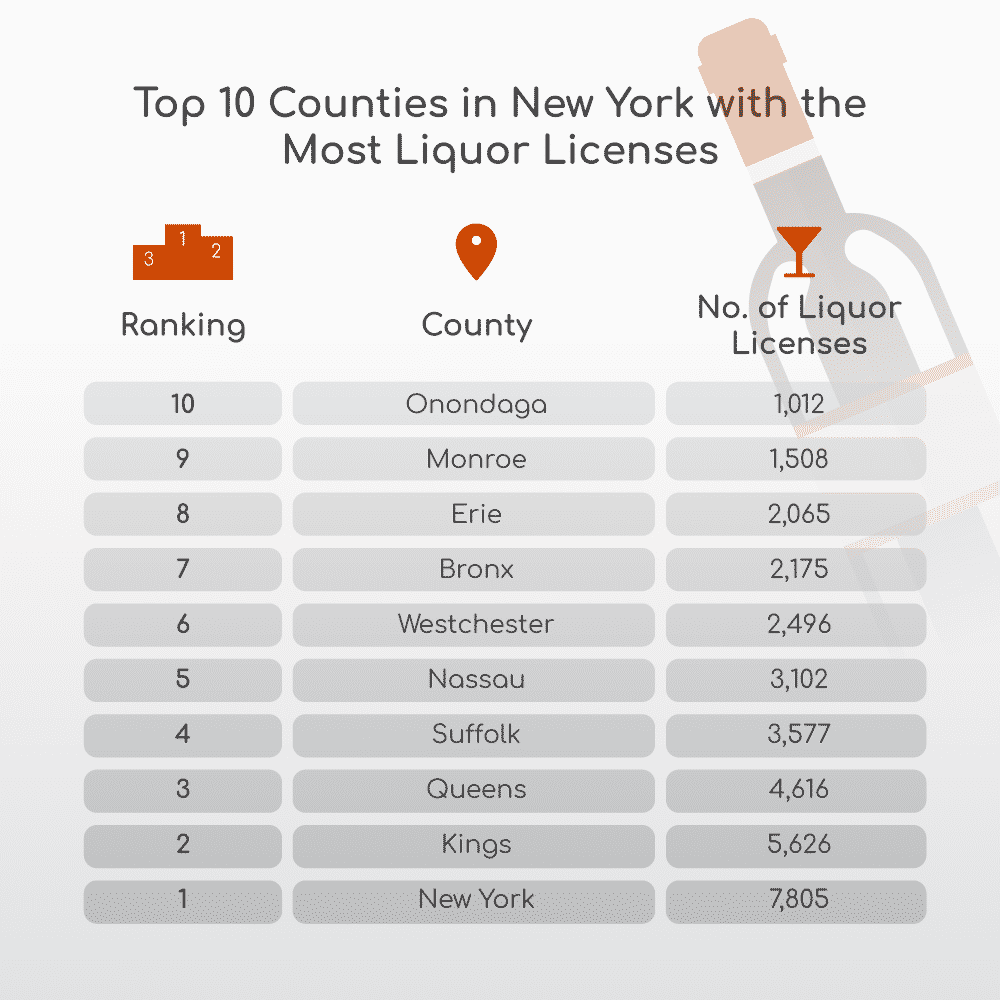
- New York City (Manhattan, Brooklyn, Queens, The Bronx, Staten Island): Due to high population density, intense competition, and generally higher operating costs, liquor license fees, particularly for on-premises licenses, tend to be at the upper end of the spectrum. The market for existing licenses here is also highly active, influencing secondary market prices if a business is being purchased with an existing license.
- Suburban and Upstate Areas: While application fees might be similar across the state, the cost of acquiring an existing license through purchase can be significantly lower in less densely populated areas. However, local zoning laws and community boards in these regions can also present unique challenges.
- Specific Zoning Restrictions: Certain neighborhoods or towns may have moratoriums on new liquor licenses or have very specific zoning requirements that can increase the difficulty and cost of obtaining one. For instance, proximity to schools, places of worship, or residential areas can trigger special review processes.
The Secondary Market for Licenses
In many cases, especially in densely populated areas, it is more practical and sometimes more cost-effective to purchase an existing liquor license from a business that is closing or relocating. This process involves transferring the existing license to the new owner. The price of a license on the secondary market is determined by supply and demand, the type of license, its location, and its historical compliance record.
- Market Value Fluctuations: The cost of a transferable license can range from tens of thousands to hundreds of thousands of dollars, depending heavily on the desirability of the location and the current market conditions. A license in a prime Manhattan neighborhood will command a far higher price than one in a rural upstate county.
- Transfer Fees: In addition to the purchase price of the license itself, there are transfer fees payable to the SLA, as well as legal fees associated with the transfer process.
- Due Diligence: It is critical for buyers to conduct thorough due diligence when acquiring a license on the secondary market, including verifying its current status, ensuring there are no outstanding violations, and confirming its transferability.
Application Complexity and Processing Time
The complexity of the application itself can indirectly influence costs. Applications that are incomplete, poorly prepared, or face significant community objections may require more legal work, extended processing times, and potentially more hearings, all of which translate to higher professional fees.
- Community Board Review: Many applications require review and input from local community boards, whose recommendations can carry significant weight with the SLA. Navigating this process effectively often requires skilled advocacy.
- Objections and Hearings: If neighbors, community groups, or other stakeholders raise objections, the application may be subject to formal hearings, which necessitate legal representation and can prolong the process, increasing costs.
The Process of Obtaining a Liquor License in New York: Cost Implications
The journey from aspiring restaurateur or retailer to licensed alcohol vendor in New York involves a structured process, and each step carries potential financial implications. Understanding this progression is key to anticipating and managing expenses.
Initial Consultation and Planning
Before even submitting an application, prospective licensees typically engage in initial consultations. This might involve speaking with attorneys, business consultants, or real estate agents specializing in the hospitality industry.
- Legal Consultation: Discussing the feasibility of obtaining a license for a specific location and business model, understanding potential challenges, and getting an initial estimate of legal fees.
- Business Plan Development: Creating a robust business plan, which may require market research and financial projections, can incur costs if external expertise is sought.
- Location Scouting: If a physical space hasn’t been secured, the process of finding a suitable location that meets zoning and licensing requirements can involve real estate agent fees or lease negotiation costs.
Application Submission and Documentation
The core of the application process involves gathering extensive documentation and submitting it to the New York State Liquor Authority.
- Application Forms and Fees: The direct cost of the application forms and the associated filing fees, which vary by license type.
- Supporting Documents: Costs associated with obtaining necessary documents such as business registration, tax clearances, leases, floor plans, and proof of financial responsibility. This can include fees for certifications, zoning permits, and building inspections.
- Background Checks: Fees for fingerprinting and background checks for all principals involved in the business.
Review and Approval Process
Once submitted, the application enters a review phase. This is where the costs associated with legal representation become most critical.
- Legal Review and Representation: Attorneys will meticulously review the application for completeness and compliance, respond to any inquiries from the SLA, and represent the applicant during any required meetings or hearings.
- Community Board Engagement: If the application requires presentation to or review by a local community board, the applicant or their legal counsel will need to attend meetings and address concerns. This can involve preparation time and potential negotiation.
- SLA Hearings: In instances where objections are raised or specific issues need clarification, the SLA may schedule formal hearings. The cost of preparing for and attending these hearings, including legal fees, can be substantial.
Post-Approval and Operational Readiness
Upon approval, there are still costs to manage before the business can legally serve alcohol.
- License Issuance Fees: The final fee for the issuance of the license itself, which is distinct from the initial application fee.
- Bonding Costs: If a surety bond is required, the cost of securing and maintaining it.
- Responsible Beverage Service Training: Ensuring that all staff involved in serving alcohol have completed the required training and certification programs.
- Insurance: Securing appropriate liability insurance, which is often a prerequisite for licensing and can be influenced by the type of establishment and its location.

Ongoing Costs: Renewal and Compliance
Maintaining a liquor license is not a one-time expense. Annual renewal fees are mandatory, and ongoing compliance with SLA regulations is essential.
- Annual Renewal Fees: The recurring cost of renewing the license each year. These fees can be adjusted by the state legislature.
- Compliance Monitoring: While not a direct fee, ensuring continuous compliance with all regulations requires ongoing attention and potentially periodic legal or consulting advice.
- Potential Fines and Penalties: Failure to comply with regulations can result in significant fines, license suspension, or revocation, incurring substantial financial and operational costs.
By understanding these distinct stages and their associated costs, individuals and businesses can better prepare for the financial commitment involved in obtaining and operating with a liquor license in New York.
LifeOutOfTheBox is a participant in the Amazon Services LLC Associates Program, an affiliate advertising program designed to provide a means for sites to earn advertising fees by advertising and linking to Amazon.com. Amazon, the Amazon logo, AmazonSupply, and the AmazonSupply logo are trademarks of Amazon.com, Inc. or its affiliates. As an Amazon Associate we earn affiliate commissions from qualifying purchases.