Planning a wedding in the picturesque landscapes of California is a dream for many couples. From the sun-kissed beaches of San Diego to the majestic redwoods of the north, and the vibrant cityscapes of Los Angeles and San Francisco, the Golden State offers an unparalleled backdrop for saying “I Do.” However, before you delve into venue tours, catering tastings, and floral arrangements, one crucial first step is to understand the administrative requirements, most notably, the cost and process of obtaining a marriage license.
While the emotional and celebratory aspects of a wedding often take center stage, the practicalities are equally important for a smooth journey to matrimony. For couples embarking on this exciting adventure in California, knowing the financial implications and legal steps for a marriage license is paramount. This comprehensive guide will not only detail the costs involved but also navigate the various requirements, application procedures, and offer insights into planning your perfect California wedding experience, making it a valuable resource for both residents and those dreaming of a destination wedding.
Navigating the Golden State: Understanding California Marriage License Costs
The question “How much is a marriage license in California?” isn’t as straightforward as it might seem. Unlike a fixed state-wide fee, the cost of a marriage license in California varies significantly from county to county. This localized fee structure means that the price you pay will depend on where you apply within the state.
Unveiling the Fees: A County-by-County Breakdown
Generally, couples can expect to pay anywhere from $35 to $120 for a marriage license in California. This range reflects the discretion each county has in setting its own administrative fees. For instance, obtaining a license in a bustling metropolis like Los Angeles County might be on the higher end, while a less populated county could offer a more modest fee. It’s crucial for couples to research the specific fees in the county where they plan to apply, even if their wedding ceremony will take place elsewhere in the state. A California marriage license is valid anywhere within California, regardless of the issuing county.
To determine the exact cost, the best approach is to visit the official website of the specific County Clerk‘s office where you intend to apply. Most counties provide clear fee schedules online, often alongside details on payment methods accepted (which typically include cash, credit/debit cards, or money orders). Budget-conscious couples might even consider traveling to a neighboring county with a lower fee, though the travel costs and time commitment should also be factored into such a decision. This variation in pricing is a key consideration for overall wedding budget planning, especially for couples embracing budget travel strategies.

Beyond the Basics: Additional Costs and Considerations
While the marriage license fee is a primary administrative cost, it’s wise to consider other potential expenses that, while not directly part of the license fee, are often associated with the legal aspects of getting married:
- Certified Copies of the Marriage Certificate: After your marriage is solemnized and registered, you’ll likely need certified copies of your Marriage Certificate for various legal purposes, such as changing your name on identification, bank accounts, and other official documents. These copies usually incur a separate fee, typically around $15-$25 per copy. It’s highly recommended to order several copies upfront to avoid future hassle and potential expedited shipping costs.
- Officiant Fees: Unless a friend or family member becomes deputized for your ceremony (which may involve a small fee for temporary deputization in some counties), you will likely hire a professional officiant. Their fees can range widely based on experience, services provided (e.g., custom ceremony writing, rehearsals), and travel.
- Ceremony Location Fees: If you plan a civil ceremony at the County Clerk’s office, there might be a nominal ceremony fee in addition to the license fee. This is often a very affordable option for couples looking for a simple, no-frills legal union.
Understanding these costs upfront allows for better financial planning, ensuring that the legal foundation of your marriage is laid without any unexpected surprises. This aligns with a thoughtful lifestyle approach to significant life events, prioritizing informed decisions.
The Journey to ‘I Do’: Requirements and Application Process
Beyond the financial aspect, comprehending the legal requirements and application procedures for a California marriage license is crucial. The process is generally straightforward, but attention to detail will ensure a smooth experience.
Essential Documentation and Eligibility
To obtain a marriage license in California, both parties must meet specific eligibility criteria and provide certain documentation:
- Age Requirement: Both applicants must be at least 18 years old. Minors under 18 can marry with parental consent and a court order.
- Identification: Valid government-issued photo identification (such as a driver’s license, state ID card, passport, or military ID) is required for both individuals. Some counties may also ask for proof of age if the photo ID doesn’t clearly show the birth date.
- Previous Marriages: If either applicant has been previously married, they must provide the date their last marriage ended (by death, dissolution, or annulment). Some counties may request proof of the termination of the last marriage if it occurred very recently. Unlike some other states, California does not require a blood test to obtain a marriage license.
- Appearance in Person: Both applicants must appear together in person before the County Clerk to apply for and receive the license. While many counties offer online pre-application services to expedite the in-person visit, the final step always requires both parties to be present.
The license is valid for 90 days from the date it is issued, meaning the marriage ceremony must take place within this three-month window. If you don’t marry within 90 days, the license expires, and you’ll need to apply and pay for a new one. This offers flexibility but also requires timely planning for your ceremony.
Public vs. Confidential Licenses: Choosing Your Path
California offers two types of marriage licenses: public and confidential. Understanding the differences is important for couples to choose the option that best suits their circumstances.
- Public Marriage License: This is the most common type. A public marriage license requires one witness (over the age of 18) to sign the Marriage Certificate after the ceremony. Once registered, the marriage record becomes public information and can be accessed by anyone. This means the record is available for public inspection, and certified copies can be requested by various parties.
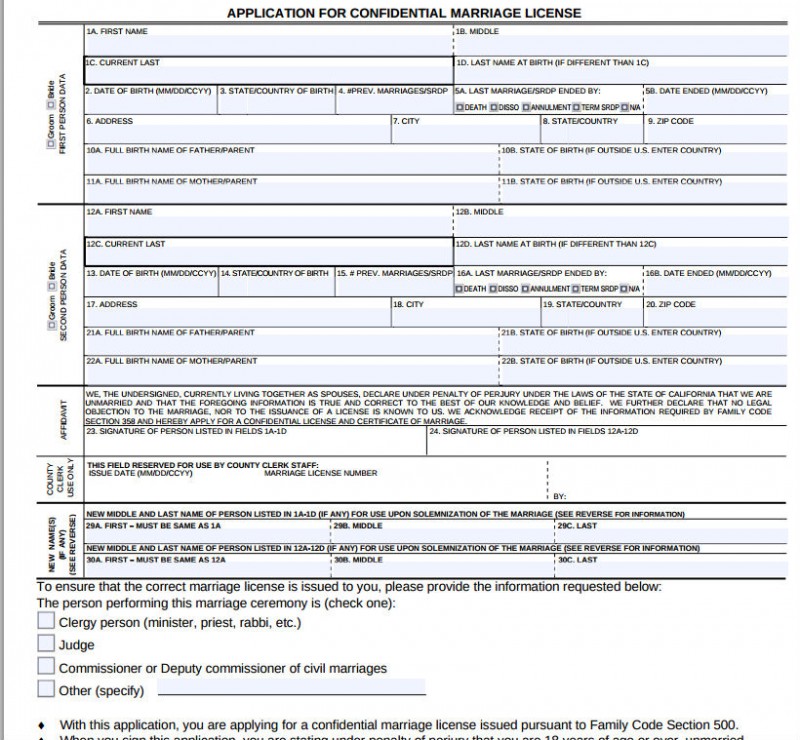
- Confidential Marriage License: This option is available to couples who are already living together as spouses. It does not require a witness to sign the certificate, and the marriage record is not available for public inspection. Only the parties to the marriage (and certain legal entities) can obtain certified copies of a confidential Marriage Certificate. The cost for a confidential license is generally the same as a public one, or sometimes slightly higher in some counties. This option provides a layer of privacy for couples who prefer their marital status to remain undisclosed to the general public.
Both types of licenses are legally binding and offer the same marital rights and responsibilities. The choice between them often comes down to personal preference regarding privacy and whether the couple meets the cohabitation requirement for a confidential license.
Where to Apply: Exploring Your Options
The process of obtaining your marriage license typically involves a visit to the County Clerk’s office in any California county. Most offices operate during standard business hours and may require appointments, especially in larger counties or during peak wedding seasons.
Many counties now offer the convenience of online pre-application forms. Couples can fill out the necessary information digitally before their in-person visit, which significantly reduces the time spent at the County Clerk’s office. After completing the online form, you’ll typically receive an application number or confirmation to bring with you. When you arrive, the clerk will verify your information, review your identification, collect the fee, and issue the license. It’s advisable to check the specific county’s website for their current procedures, including whether appointments are required or walk-ins are permitted.
Planning Your California Wedding: Beyond the License
Once the practicalities of the marriage license are understood, the exciting part of planning your California wedding truly begins. California is not just a place to get married; it’s a destination brimming with diverse experiences, luxury accommodations, and stunning natural beauty, making it an ideal choice for both local celebrations and destination weddings. This truly aligns with the core themes of travel, hotels, tourism, and lifestyle.
Iconic Wedding Destinations and Venues
California’s appeal as a wedding destination lies in its incredible geographic diversity. Whether you dream of a grand celebration or an intimate elopement, there’s a perfect spot for every couple.
- Coastal Charms: Imagine exchanging vows with the sound of waves crashing in the background. Popular coastal destinations include Santa Barbara, known for its Spanish-Mediterranean architecture and beautiful beaches, or the dramatic cliffs of Big Sur for a truly breathtaking, intimate ceremony. San Diego offers relaxed beach vibes and stunning waterfront venues, while Orange County presents upscale coastal resorts.
- Wine Country Elegance: For wine connoisseurs and romantics, Napa Valley and Sonoma Valley offer exquisite vineyard settings, gourmet cuisine, and luxurious estates perfect for a sophisticated wedding. Rolling hills, lush vineyards, and charming towns provide an idyllic backdrop.
- Urban Sophistication: If a city wedding is more your style, San Francisco boasts iconic landmarks like the Golden Gate Bridge and historic venues, while Los Angeles offers everything from glamorous Hollywood estates to chic downtown lofts.
- Mountain and Lake Serenity: For couples seeking a more rustic or adventurous setting, Lake Tahoe provides stunning alpine scenery year-round, with options for lakeside ceremonies in summer or snowy wonderland weddings in winter.
- Desert Oasis: Palm Springs and the surrounding desert regions offer a unique, mid-century modern aesthetic with vibrant sunsets and luxurious resorts, perfect for a chic, intimate affair.
Each of these destinations offers unique experiences, from exploring local culture and cuisine to enjoying outdoor activities.
Accommodation for Your Big Day
With such diverse wedding locales, California also provides an extensive range of accommodation options for you and your guests, catering to every preference and budget.
- Luxury Resorts: For an opulent experience, California is home to world-class luxury resorts in areas like Beverly Hills, Laguna Beach, Napa Valley, and Santa Barbara. These resorts often provide comprehensive wedding packages, exquisite amenities (spas, fine dining), and stunning views, making them ideal for a lavish celebration or a relaxing honeymoon.
- Boutique Hotels: For a more intimate and personalized stay, boutique hotels in charming towns or city neighborhoods offer unique character and often exceptional service. These can be found in San Francisco’s Union Square or the historic districts of many California cities.
- Vacation Rentals and Villas: For larger families or groups of guests, vacation rentals, apartments, or villas booked through platforms offer privacy, more space, and often kitchen facilities. This can be a cost-effective and comfortable option for extended stays, particularly around popular tourist attractions or national parks.
- Budget-Friendly Stays: California also caters to budget travelers, with numerous hotels and motels offering clean, comfortable, and affordable accommodation options. Many major hotel chains provide reliable choices across the state, ensuring that guests can find a suitable place to stay without breaking the bank.
- Unique Stays: For an unforgettable experience, consider glamping in Yosemite National Park or a cozy cabin retreat near Lake Tahoe for your honeymoon, blending the joy of your wedding with adventurous travel.
Booking accommodation well in advance, especially during peak seasons or for popular destination wedding locations, is always recommended. Comparison websites and reviews can help you find the best deals and ensure a comfortable stay for everyone.
Crafting the Perfect Experience: Tourism and Lifestyle Tips
Beyond the ceremony itself, a California wedding offers an incredible opportunity to embrace the local culture, explore famous landmarks, and indulge in a variety of activities, enriching your overall experience.
- Pre-Wedding Adventures: Before the big day, treat your guests to unique California experiences. This could be a wine-tasting tour in Napa Valley, a scenic drive along the Pacific Coast Highway, an exploration of the vibrant arts scene in Los Angeles, or a visit to Disneyland for some nostalgic fun. These activities not only entertain but also create lasting memories for everyone involved.
- Culinary Delights: California is a global culinary hub, from farm-to-table restaurants in wine country to fresh seafood in coastal towns and diverse ethnic cuisines in its major cities. Incorporate local flavors into your wedding menu or plan special dining experiences for your guests.
- Honeymoon Hotspots: California itself can be your honeymoon destination. After the wedding, escape to a romantic retreat in Carmel-by-the-Sea, hike through the majestic Yosemite National Park, relax on the beaches of Malibu, or explore the otherworldly landscapes of Death Valley National Park.
- Budget Travel and Luxury: California supports both luxury travel and budget travel lifestyles. While it’s possible to splurge on five-star resorts and exclusive experiences, you can also find incredible value through clever accommodation bookings, exploring free attractions like parks and beaches, and enjoying local eateries. Planning a wedding is a significant lifestyle event, and California offers the flexibility to tailor it to your personal preferences and financial comfort.
Incorporating these tourism and lifestyle elements into your wedding planning transforms it from merely an event into an unforgettable journey, celebrating not just your union but also the beauty and diversity of the Golden State.
Post-Ceremony Essentials: What Comes Next?
The ceremony is over, the vows exchanged, and the rings are on. Congratulations! But the legal process isn’t quite finished yet. There are a few crucial steps to ensure your marriage is officially registered and recognized.
Registering Your Marriage: The Final Steps
After your ceremony, the officiant who solemnized your marriage is responsible for completing the Marriage Certificate and returning it to the County Clerk’s office that issued the license. This must be done within 10 days of the ceremony. It’s important to confirm with your officiant that they understand this responsibility and will submit the document promptly.
Once the County Clerk’s office receives and processes the completed Marriage Certificate, your marriage is officially recorded in the public records of California. This step is vital, as it’s the legal proof of your marital status.
Obtaining Certified Copies: Why and How
As mentioned earlier, obtaining certified copies of your Marriage Certificate is a critical post-wedding task. These copies are required for various official purposes and serve as irrefutable proof of your marriage.
- Why You Need Them:
- Name Change: If either spouse is changing their last name, a certified copy is necessary for updating identification (driver’s license, passport, Social Security card), bank accounts, credit cards, and other personal records.
- Insurance: For adding a spouse to health, auto, or life insurance policies.
- Benefits: For spousal benefits related to employment, military service, or government programs.
- Estate Planning: For legal and estate planning documents.
- Travel: Some international travel may require proof of marriage for visas or other immigration purposes, especially if traveling as a couple with different surnames.
- How to Obtain Them:
- From the County Clerk: You can typically request certified copies directly from the County Clerk’s office that issued your license and where your marriage was recorded. This can usually be done in person, by mail, or sometimes online.
- From the Department of Public Health: For statewide records, especially if you need older certificates or are unsure which county to contact, the California Department of Public Health – Vital Records may be another avenue, though specific procedures apply.
- Application Requirements: You will need to fill out an application form for certified copies, provide identification, and pay the per-copy fee. For confidential marriage licenses, only the parties to the marriage or specific authorized individuals can request copies.
It’s advisable to order several certified copies (at least 2-3) immediately after your marriage is registered. This foresight saves time and effort later, ensuring you have the necessary documentation for all your legal and administrative needs as a married couple in the United States.
In conclusion, while the cost of a marriage license in California is a small fraction of the overall wedding budget, understanding its nuances is an essential first step. From navigating county-specific fees and documentation to choosing between public and confidential licenses, being informed ensures a smooth legal process. Beyond the paperwork, California unfolds as an incredible canvas for your wedding and honeymoon, offering a tapestry of landscapes, accommodations, and experiences that cater to every dream and lifestyle. By planning carefully and embracing the journey, your California wedding will not just be an event, but a truly unforgettable chapter in your life’s adventure.