
The allure of the New York City yellow cab is undeniable. For decades, these iconic vehicles have served as mobile landmarks, whisking millions of visitors and residents through the bustling streets of the Big Apple. But the true value of operating one of these legendary vehicles isn’t just in its ability to navigate the urban maze; it lies in the New York City taxi medallion. Once considered a golden ticket to a stable and lucrative livelihood, the medallion has undergone a dramatic transformation in recent years, shifting from a highly prized asset to a subject of intense financial scrutiny and public debate. Understanding the fluctuating value of a New York City taxi medallion requires delving into a complex interplay of market forces, regulatory changes, technological disruption, and the very essence of urban transportation.

The Historical Ascent of the Medallion
For much of the 20th century and into the early 21st, acquiring a New York City taxi medallion was akin to buying a small piece of the city’s economic infrastructure. The number of medallions was, and remains, artificially capped by the city’s Taxi and Limousine Commission (TLC). This scarcity, coupled with consistent demand for yellow cab rides, created a robust market where medallions traded hands for astronomical sums. Drivers and investors alike saw medallions as a secure investment, anticipating steady returns driven by the city’s unyielding need for taxi services.
The Era of Unprecedented Value
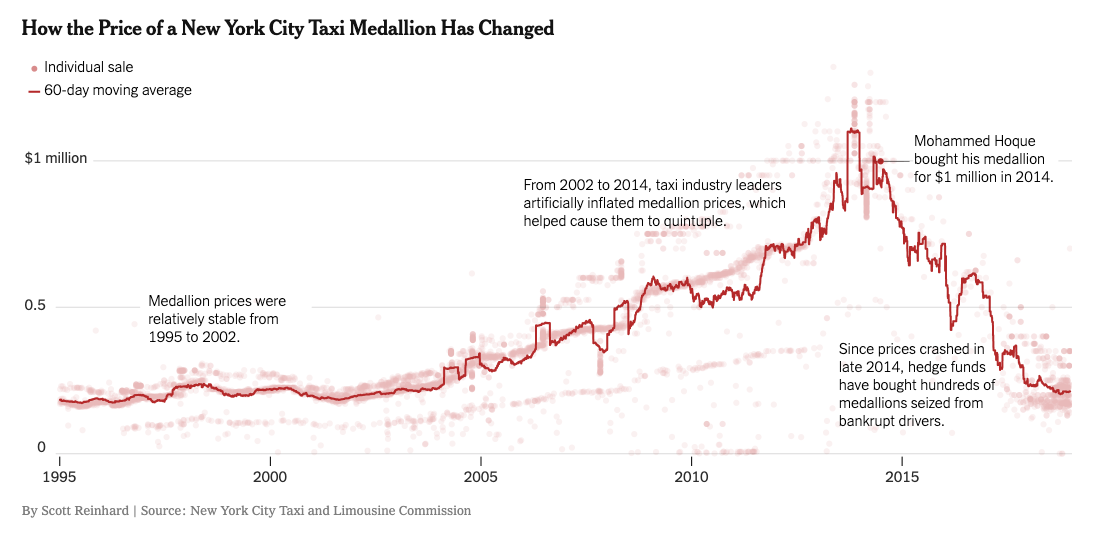
During the peak of the medallion market, from the early 2000s to around 2013-2014, prices soared to extraordinary heights. Medallions routinely sold for figures exceeding $1 million, and in some instances, even approached $1.3 million. This period was characterized by a strong belief in the perpetual demand for traditional taxi services, unaffected by nascent ride-sharing technologies. The $1.3 million price tag became a widely cited benchmark, representing the apex of this market bubble. For many, the investment was seen as a guaranteed path to financial independence, allowing them to own and operate a taxi, or to lease their medallion to drivers for a substantial daily or weekly fee. The dream of owning a piece of this seemingly invincible industry fueled the speculative frenzy.
Factors Driving the Bubble
Several key factors contributed to this unprecedented appreciation:
- Limited Supply: The city’s deliberate cap on the number of medallions created an inherent scarcity. New medallions were rarely issued, ensuring that the existing pool remained a finite and thus valuable commodity.
- Strong Demand: New York City is a global hub for tourism and business. Millions of people need transportation daily, and for a long time, the yellow cab was the primary, most accessible option for many.
- Perceived Stability: The regulated nature of the taxi industry, with its set fares and operational rules, was perceived as offering a level of stability and predictability that other investments might not.
- Financing Availability: Lenders were readily available to finance medallion purchases, often with terms that seemed manageable given the projected income. This access to credit further inflated demand.
The Downward Spiral: Disruption and Devaluation
The landscape of urban transportation began to shift dramatically in the late 2000s and early 2010s with the advent of mobile-enabled ride-sharing services. Companies like Uber and Lyft introduced a new paradigm: on-demand rides booked via smartphone apps, often with dynamic pricing and a wider fleet of privately owned vehicles. This disruption had a seismic impact on the traditional taxi industry and, consequently, on the value of its most prized asset.
The Rise of Ride-Sharing
Ride-sharing platforms offered several advantages that appealed to consumers:
- Convenience: Easy booking through intuitive apps, real-time tracking of vehicle arrival, and seamless payment processing.
- Availability: A significantly larger pool of vehicles compared to the capped medallion system, often leading to shorter wait times.
- Competitive Pricing: While dynamic pricing could sometimes lead to higher fares, introductory offers and competitive rates often made ride-sharing a more attractive option, especially during off-peak hours.
- Variety of Options: Users could choose from different vehicle types and service levels, catering to various needs and budgets.
The sheer volume of ride-sharing vehicles flooding the streets directly competed with yellow cabs for passengers, eroding market share and reducing revenue for medallion owners and drivers.
The Financial Fallout for Medallion Owners

The impact of ride-sharing on medallion values was swift and brutal. As demand for traditional taxi rides diminished, so did the income potential of a medallion. This led to a precipitous decline in their market value.
- From Million-Dollar Assets to Significant Debt: Many drivers and small investors who had taken out substantial loans to purchase medallions found themselves in dire financial straits. Their assets, once worth over $1 million, plummeted in value, often falling to a fraction of their purchase price. This created a crisis of underwater debt, with owners owing far more on their loans than their medallions were worth.
- Foreclosures and Bankruptcies: The inability to service their loans led to widespread foreclosures and bankruptcies among medallion owners. This had a devastating impact on individual families and the broader community of taxi drivers and owners.
- Regulatory Inaction: Critics argued that the New York City Taxi and Limousine Commission was slow to recognize the disruptive threat and implement policies that could have mitigated the impact on medallion owners.
Understanding the Current Market Value
Pinpointing an exact, current market value for a New York City taxi medallion is challenging due to its highly volatile and opaque nature. Unlike publicly traded stocks, medallion sales are not constantly reported, and transactions occur privately. However, trends and reported sales offer a glimpse into the current financial reality.
A Dramatically Lowered Landscape
Following the peak in the mid-2010s, medallion prices have seen a dramatic decline. While specific figures fluctuate based on individual sales and market sentiment, reported sales in recent years have often been in the range of $200,000 to $300,000, and sometimes even lower. This represents a staggering decrease from the $1 million+ highs, leaving many original investors with significant losses.
Factors Influencing Present Value
Several factors continue to shape the value of New York City taxi medallions today:
- Lingering Debt Burden: The legacy of high-priced loans continues to affect the market. Many owners are still trying to sell their medallions to pay off debts, even if it means accepting a significant loss.
- Continued Competition: Ride-sharing services remain a dominant force in urban transportation, continuing to exert pressure on traditional taxi revenues.
- Regulatory Environment: Ongoing discussions and potential changes in regulations by the TLC can influence investor confidence and market activity.
- Economic Conditions: General economic health in New York City and the broader national economy can impact tourism and business travel, indirectly affecting taxi demand.
- Limited New Entrants: The high cost of entry, even at current prices, and the perceived risks associated with the industry deter new investors.
The Role of the City and the TLC
The New York City Taxi and Limousine Commission has grappled with the medallion crisis for years. In response to the widespread financial hardship, the city has explored various relief measures for medallion owners, including debt restructuring programs and financial assistance initiatives. However, finding a sustainable solution that addresses the deep financial distress and the evolving transportation landscape remains an ongoing challenge. The commission’s role is crucial in balancing the needs of drivers, owners, and the riding public while navigating technological advancements and market shifts.
The Future of Medallions in New York City
The question of whether a New York City taxi medallion will ever regain its former glory is a subject of much debate. The market dynamics have fundamentally changed, and the dominance of ride-sharing services suggests that the era of the $1 million medallion is likely in the past.
Potential Scenarios
- Niche Market Asset: Medallions may settle into a more stable, albeit significantly lower, valuation as a niche asset within the transportation sector. They could represent a more traditional, regulated form of urban transport, appealing to a smaller subset of investors or owner-operators.
- Further Regulatory Intervention: The city might implement further regulations or support programs to stabilize the market or assist struggling owners. This could involve cap adjustments, new licensing models, or partnerships that integrate yellow cabs with other mobility services.
- Integration with Technology: There’s a possibility for yellow cabs to adapt and integrate more seamlessly with modern technology, perhaps through unified booking platforms or partnerships with ride-sharing companies, to broaden their appeal and reach.
- Decline and Obsolescence: In a more pessimistic scenario, the medallion system could continue to decline in relevance and value as technological advancements and consumer preferences further shift away from traditional taxi services.
The Enduring Symbolism
Despite the financial turmoil, the New York City yellow cab, and by extension its medallion, remains an enduring symbol of the city. While its economic value has been drastically recalibrated, the cultural and historical significance of this iconic mode of transportation continues to resonate. The debate over medallion values highlights the complex relationship between regulation, innovation, and the economic realities of providing essential services in a dynamic urban environment. For those who invested heavily in the past, the story of the New York City taxi medallion serves as a stark reminder of the unpredictable nature of markets and the profound impact of technological disruption on established industries. The future of the medallion remains uncertain, but its past trajectory offers a compelling case study in the evolution of urban mobility.
LifeOutOfTheBox is a participant in the Amazon Services LLC Associates Program, an affiliate advertising program designed to provide a means for sites to earn advertising fees by advertising and linking to Amazon.com. Amazon, the Amazon logo, AmazonSupply, and the AmazonSupply logo are trademarks of Amazon.com, Inc. or its affiliates. As an Amazon Associate we earn affiliate commissions from qualifying purchases.