
Embarking on a journey through the breathtaking landscapes of Arizona promises an unforgettable experience, from the vibrant cityscape of Phoenix to the awe-inspiring vistas of the Grand Canyon National Park. Travelers from around the globe flock to the Grand Canyon State to explore its unique blend of natural wonders, rich cultural heritage, and a diverse range of activities. Whether you’re planning a luxurious stay at a Paradise Valley resort, a family adventure exploring the Sonoran Desert, or a budget-friendly road trip through charming towns like Sedona and Flagstaff, understanding local regulations is paramount for a smooth and enjoyable trip. Among the crucial aspects for any driver, especially those unfamiliar with the region, is knowing the traffic laws, particularly regarding speed limits, and the potential costs associated with a speeding ticket.
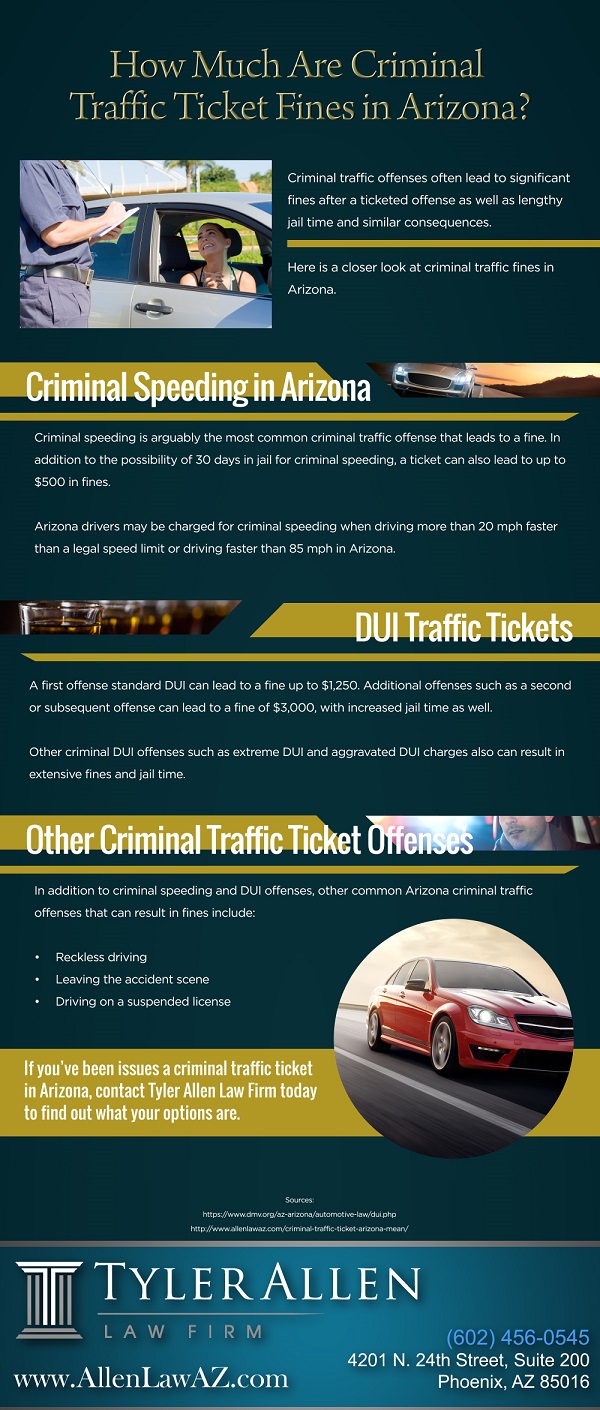
Getting pulled over for speeding can quickly put a damper on your vacation budget and itinerary, transforming a pleasant drive into an unexpected hassle. This comprehensive guide aims to illuminate the intricacies of speeding ticket costs in Arizona, detailing not just the base fines but also the various surcharges, long-term implications, and what travelers need to know to avoid such a predicament. We’ll delve into how fines are calculated, the impact on your driving record and insurance, and the options available for out-of-state drivers, ensuring you can navigate Arizona’s scenic roads with confidence and peace of mind.
Understanding Arizona’s Traffic Laws and Speed Limits
Arizona offers an incredibly diverse driving experience, from multi-lane urban highways to winding scenic routes. To fully enjoy the state’s beauty without encountering legal troubles, it’s essential to grasp the fundamental traffic laws and how speed limits are enforced. Ignorance of the law is never an excuse, and for travelers, understanding these rules is a critical part of responsible tourism.
General Speed Limit Guidelines
Speed limits in Arizona are generally clearly posted, but they can vary significantly depending on the type of road and the specific area you’re traveling through. Common speed limits you’ll encounter include:
- Urban Freeways and Interstates: On major highways like Interstate 10 or Interstate 17, the speed limit is typically 65 mph in metropolitan areas and can increase to 75 mph in rural stretches. Some specific sections might even allow 85 mph.
- Business and Residential Districts: These areas typically have a speed limit of 25 mph. It’s crucial to slow down significantly when entering towns or populated areas, as these limits are strictly enforced, particularly in smaller communities that might rely on traffic fines for revenue.
- School Zones: When children are present or during specific school hours, speed limits in school zones are typically reduced to 15 mph. Flashing lights or specific signage will indicate when these limits are active.
- Construction Zones: Always be alert for construction zones, where speed limits are often reduced for the safety of workers. Fines for speeding in these areas are frequently doubled.
- Unmarked Roads: If no speed limit is posted, the general rule of thumb in Arizona is 15 mph in school crossing zones, 25 mph in business or residential districts, and 65 mph on state highways. However, the overarching principle is the “reasonable and prudent” rule, meaning you must drive at a speed that is safe for the current conditions, regardless of the posted limit. This implies considering weather, traffic, road surface, and visibility.
Specific Arizona Statutes and Enforcement
Traffic laws in Arizona are primarily governed by the Arizona Revised Statutes (ARS). These statutes define various traffic offenses, including speeding, and outline the penalties. For instance, ARS §28-701 details the basic speed law, while other sections specify limits for different road types and conditions. Enforcement is carried out by state troopers (e.g., Arizona Department of Public Safety), county sheriffs (e.g., Maricopa County Sheriff’s Office, Pima County Sheriff’s Department), and local police departments (e.g., Phoenix Police Department, Scottsdale Police Department).
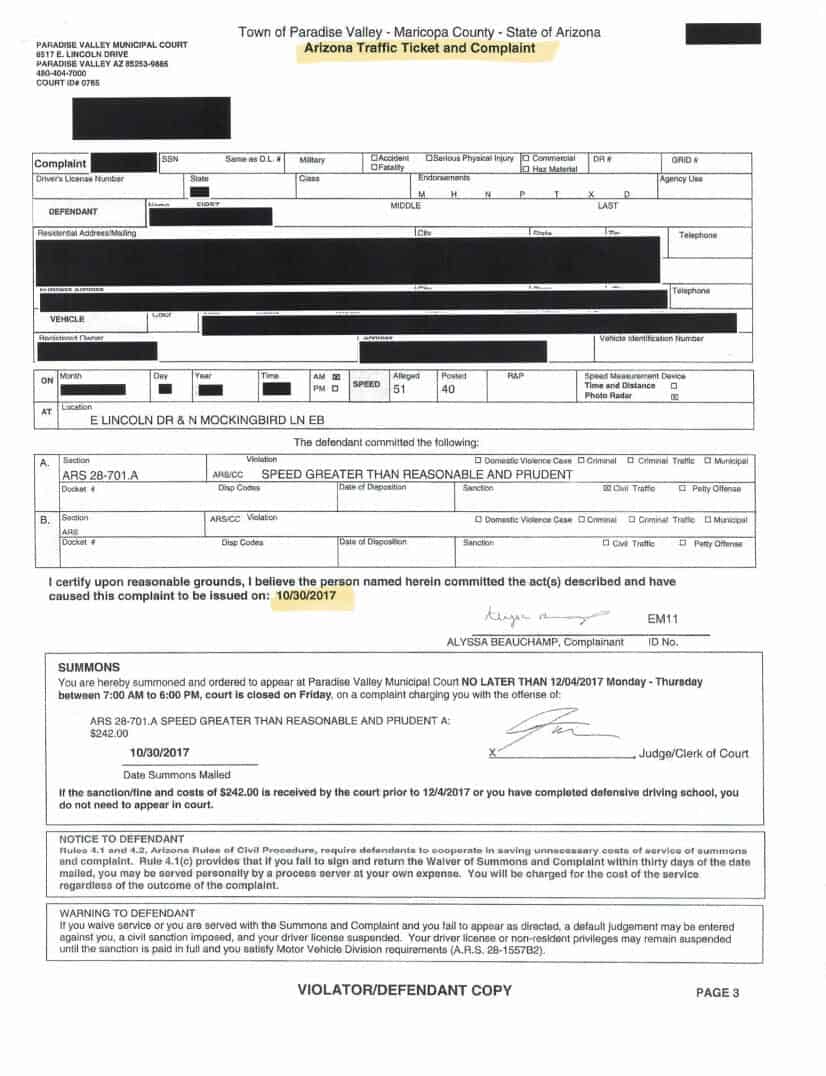
Beyond traditional officer-issued tickets, Arizona also utilizes photo enforcement in some municipalities. Photo radar systems, often found on major roadways and intersections, automatically detect speeding vehicles and red light violations, mailing citations to the registered owner. While controversial, these systems are still operational in certain areas, and travelers should be aware of their presence. The fines for photo enforcement tickets can be substantial and often carry specific procedures for response.
The Financial Impact: Calculating Your Arizona Speeding Ticket
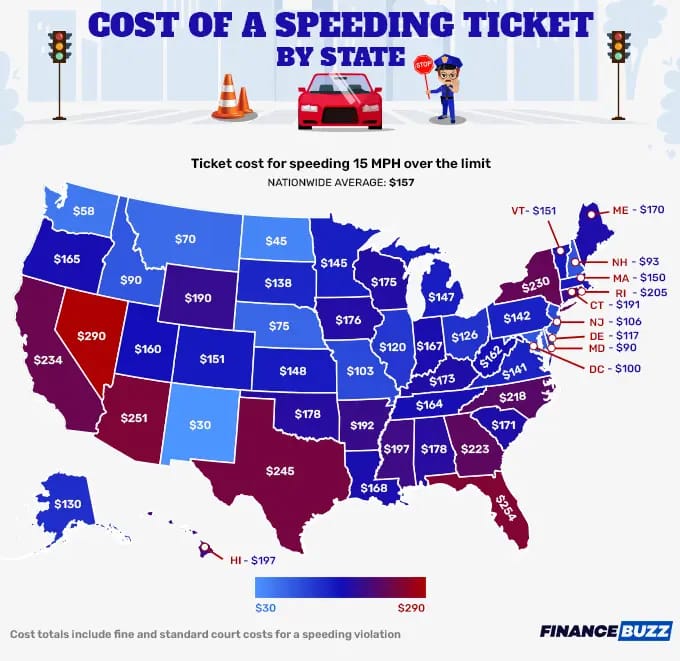
The cost of a speeding ticket in Arizona is not a simple fixed number; it’s a dynamic calculation influenced by several factors, including how fast you were going, where you were cited, and which county or city issued the ticket. For travelers, this unpredictability can be particularly frustrating, making accurate budgeting for potential unforeseen expenses difficult.
Base Fines and Surcharges
The base fine for speeding in Arizona is just the starting point. Various additional surcharges, fees, and assessments are piled on top, often doubling or tripling the initial amount. Here’s a breakdown of what contributes to the total cost:
- Speed Increment: The faster you were going over the posted limit, the higher the base fine. Generally, fines escalate significantly for every 10 mph over the limit. For example:
- 1-10 mph over: Often around $150-$200 total.
- 11-20 mph over: Can range from $200-$300 total.
- 21-30 mph over: Typically $300-$450 total.
- 31+ mph over (or 20+ mph over in a business/residential district): This can lead to “criminal speeding,” with fines easily exceeding $500, plus court costs and potential jail time.
- Location-Specific Penalties: Speeding in certain zones incurs higher penalties:
- Construction Zones: Fines are typically doubled.
- School Zones: Fines are also significantly increased due to the heightened risk to children.
- County and City Variations: While state law sets minimums, individual municipal and county courts (e.g., in Maricopa County, Pima County, Coconino County) have some discretion in setting their specific fine schedules. This means a ticket for the same speed infraction might cost slightly more or less depending on where you were pulled over (e.g., Phoenix vs. Tucson vs. a smaller town).
- Mandatory Surcharges: The state levies several mandatory surcharges that are added to almost every traffic violation fine. These can include:
- State Surcharge: Often a percentage (e.g., 83%) of the base fine.
- Judicial Enhancement Fee.
- Traffic Education Fund Assessment.
- Court Costs and Fees.
Due to these numerous additions, a ticket that initially appears to have a base fine of $50 can easily balloon into a total payment exceeding $200-$300. It’s crucial for travelers to budget for these potential costs, especially if planning an extensive Arizona road trip.
Point System and Insurance Implications
Beyond the immediate financial hit of the fine, a speeding ticket in Arizona also impacts your driving record through a point system administered by the Arizona Department of Transportation (ADOT) Motor Vehicle Division (MVD).
- MVD Points: Most moving violations, including speeding, result in points being assessed against your driving record. For speeding, this typically ranges from 3 points for a standard violation to 8 points for reckless driving or criminal speeding.
- License Suspension: Accumulating too many points within a specific period can lead to license suspension. For example, 8 points in 12 months, 12 points in 24 months, or 18 points in 36 months can trigger a mandatory suspension or require attendance at a Traffic Survival School. For out-of-state drivers, this can mean losing driving privileges within Arizona and potential reciprocal actions by their home state’s DMV.
- Insurance Premium Increases: This is often the most significant long-term financial consequence. Auto insurance companies review your driving record, and even a single speeding ticket can cause your premiums to increase substantially, sometimes for several years. The exact increase depends on your insurance provider, your driving history, and the severity of the violation. For travelers renting vehicles, while the immediate impact might not be on their personal insurance, repeated violations could affect their ability to rent in the future or lead to higher rental insurance costs.
Beyond the Fine: Additional Consequences for Travelers
While the immediate monetary fine and potential insurance hikes are significant, travelers need to be aware of other consequences that can arise from an Arizona speeding ticket, particularly for those visiting from out of state or even from another country.
Defensive Driving School Eligibility
One of the most appealing options for many drivers cited for speeding in Arizona is attending defensive driving school. This allows eligible individuals to have the violation dismissed from their record, thereby avoiding points and preventing insurance premium increases.
- Eligibility Criteria: To qualify for defensive driving school, you typically must meet several conditions:
- You must not have attended a defensive driving course for a prior violation within the last 12 months.
- The violation must not be for criminal speeding or a serious traffic offense.
- You cannot hold a Commercial Driver’s License (CDL) if the violation occurred in a commercial vehicle.
- The ticket cannot be for speeding in a construction zone where workers were present.
- Benefits for Travelers: For tourists, taking a defensive driving course is an excellent way to mitigate the long-term impact of a ticket. It means no points on your record, no reported violation to your home state’s DMV, and no insurance premium hikes. Many courses are offered online, making it convenient for out-of-state visitors to complete the requirement after returning home. Local schools are also available in major cities like Phoenix, Tucson, and Flagstaff. While there is a fee for the school, it is often a worthwhile investment compared to the combined costs of the fine, surcharges, and increased insurance rates.
Court Appearances and Out-of-State Drivers
While many minor speeding tickets can be resolved by simply paying the fine or attending defensive driving school, more serious infractions may necessitate a court appearance. This can be particularly burdensome for out-of-state travelers.
- Mandatory Court Dates: Certain violations, especially those involving excessive speed or criminal speeding, may require a mandatory court appearance before a judge in the county where the citation was issued (e.g., Maricopa County Justice Court or Pima County Municipal Court). Missing a mandatory court date can result in a warrant for your arrest, which would severely complicate any future travel to Arizona or even other states.
- The Driver License Compact: Most U.S. states are members of the Driver License Compact (DLC), an interstate agreement that allows member states to exchange information about traffic violations. This means that a speeding ticket received in Arizona will likely be reported to your home state’s Department of Motor Vehicles (DMV). Your home state may then assess points on your license, levy fines, or even suspend your license based on its own laws and reciprocity agreements. This can turn an Arizona ticket into a problem that follows you home, impacting your ability to drive in your own state.
- International Travelers: For international visitors, the implications can be even more complex, potentially affecting future visa applications or entry into the U.S. While minor traffic infractions usually don’t lead to such severe consequences, it’s always best to resolve any legal issues promptly and thoroughly.
Criminal Speeding (Extreme Cases)
It’s crucial to understand that not all speeding tickets are mere infractions. Arizona has a specific classification for “criminal speeding,” which is a much more severe offense with significantly harsher penalties. This is particularly important for tourists to be aware of, as unfamiliarity with the area or pushing the limits can inadvertently lead to serious legal trouble.
- Definition of Criminal Speeding: In Arizona, criminal speeding is defined as:
- Driving at a speed of 35 mph or more over the posted speed limit.
- Driving at a speed exceeding 85 mph in any location.
- Driving at a speed of 20 mph or more over the posted speed limit in a business or residential district.
- Severe Consequences: Unlike a civil traffic violation, criminal speeding is classified as a Class 3 misdemeanor. This carries potential penalties that can severely disrupt a vacation and have lasting repercussions:
- Jail Time: Up to 30 days in jail.
- Fines: Fines can exceed $500, not including surcharges and court costs.
- License Suspension: Mandatory license suspension of up to one year.
- Criminal Record: A misdemeanor conviction will go on your criminal record, which can impact future employment, travel, and other aspects of your life.
- High Insurance Premiums: Expect significant and prolonged increases in auto insurance rates.
Understanding these distinctions is vital. While a minor speeding ticket is an inconvenience, criminal speeding can turn a dream vacation into a legal nightmare, especially for those who need to travel long distances for court dates or deal with a suspended license far from home.
Tips for a Smooth and Law-Abiding Arizona Road Trip
Preventing a speeding ticket is always the best approach, not just for your wallet but also for your safety and peace of mind during your travels through Arizona. By taking a few proactive steps and adopting responsible driving habits, you can significantly reduce your risk of an unwelcome encounter with law enforcement.
Preparation is Key
- Plan Your Route and Time: When planning your itinerary, factor in realistic travel times, especially for scenic drives through areas like Sedona or the approach to the Grand Canyon National Park. Rushing to make a reservation at a resort or an attraction is a common reason for speeding. Allow extra time for unexpected delays, photo stops, or simply to enjoy the journey.
- Renting a Car: If you’re renting a car, familiarize yourself with its features, especially the cruise control settings, before hitting the highway. Understand the rental company’s insurance policies and your responsibilities in case of a citation. Ensure the vehicle is in good working order.
- GPS and Speed Limit Awareness: Utilize GPS navigation systems that display the current speed limit. Many modern apps and car systems offer this feature. However, always prioritize posted signs, as GPS data can occasionally be outdated or inaccurate.
- Check Vehicle Condition: Before a long drive, especially in Arizona’s heat, ensure your tires are properly inflated, and your vehicle is in good mechanical condition. A vehicle malfunction can impair your ability to maintain safe speeds.
On the Road Best Practices
- Always Observe Posted Speed Limits: This is the golden rule. Pay close attention to speed limit signs, especially when transitioning between different types of roads (e.g., from an Interstate 10 rural stretch to an urban area, or approaching a small town).
- Be Aware of Surroundings: Arizona’s diverse terrain means speed limits can change quickly. Be particularly vigilant in construction zones, school zones, and residential areas. Look for enforcement vehicles or photo enforcement cameras, especially in cities like Phoenix and Scottsdale.
- Maintain a Safe Following Distance: This not only improves safety but also gives you more time to react to changes in traffic flow or speed limits, reducing the temptation to speed up.
- Use Cruise Control: On long stretches of highway, cruise control can be an excellent tool to maintain a consistent, legal speed and prevent unintentional speeding.
- Avoid Distractions: Put away your phone and focus solely on driving. Distracted driving impairs your ability to react to changing conditions and observe speed limits.
What to Do if Pulled Over
Despite your best efforts, sometimes you might still find yourself pulled over. Knowing how to react can make a difference.
- Stay Calm and Pull Over Safely: Activate your turn signal, find a safe spot to pull over, and stop the vehicle.
- Cooperate and Be Polite: Keep your hands visible, typically on the steering wheel. When the officer approaches, remain polite and respectful.
- Provide Requested Documents: Have your driver’s license, vehicle registration, and proof of insurance readily available.
- Do Not Admit Guilt: While you should cooperate, you are not obligated to admit guilt. You can politely state, “Officer, I was unaware I was speeding” or “I believe I was observing the posted limit,” rather than directly admitting to the offense.
- Understand Your Rights: You have the right to remain silent and to decline roadside searches. If you feel your rights are being violated, make a note of it without being confrontational.
- Ask for Details: You can ask the officer for the specific speed you were accused of and the posted limit.
Conclusion
Exploring the magnificent landscapes and vibrant culture of Arizona is an incredible adventure, offering everything from luxurious resorts in Paradise Valley to rugged outdoor experiences in the Sonoran Desert. To ensure your travel experiences remain positive and memorable, understanding and adhering to local traffic laws is absolutely essential. While the initial question “How much is a speeding ticket in Arizona?” might seem straightforward, the answer reveals a complex structure of base fines, mandatory surcharges, points on your driving record, and the significant potential for increased insurance premiums.
For the savvy traveler, avoiding a speeding ticket altogether is the ultimate strategy. By meticulously planning your routes, being mindful of changing speed limits—especially in specific zones like construction or school areas—and maintaining safe driving practices, you can navigate Arizona’s roads without incident. However, should you receive a citation, knowing your options, such as defensive driving school, and understanding the implications for out-of-state drivers under the Driver License Compact can help mitigate the impact. Remember that criminal speeding carries severe penalties, including potential jail time and a criminal record, which can overshadow any vacation plans.
Ultimately, responsible tourism extends beyond respecting natural sites and local customs; it encompasses respecting the laws of the places you visit. By prioritizing safety and legal compliance, you ensure that your journey through the Grand Canyon State is not only exhilarating but also hassle-free, allowing you to fully immerse yourself in all the wonders Arizona has to offer. Safe travels, and enjoy every moment of your adventure in this spectacular corner of the world.
LifeOutOfTheBox is a participant in the Amazon Services LLC Associates Program, an affiliate advertising program designed to provide a means for sites to earn advertising fees by advertising and linking to Amazon.com. Amazon, the Amazon logo, AmazonSupply, and the AmazonSupply logo are trademarks of Amazon.com, Inc. or its affiliates. As an Amazon Associate we earn affiliate commissions from qualifying purchases.