
Understanding the cost of a surety bond in Texas is a crucial step for many businesses and individuals operating within the Lone Star State. Whether you’re a contractor bidding on a public works project, a business owner needing a specific license, or an individual involved in legal proceedings, surety bonds offer financial guarantees that protect third parties from potential losses. The price you’ll ultimately pay, however, is not a one-size-fits-all figure. It’s a dynamic calculation influenced by a variety of factors, each playing a significant role in the bond premium.
Understanding Surety Bonds and Their Purpose
At its core, a surety bond is a three-party agreement. The principal is the party required to obtain the bond. The surety company is the insurer that guarantees the principal’s performance or obligation. The obligee is the party who is protected by the bond. In essence, the surety bond acts as an insurance policy for the obligee, ensuring that if the principal fails to meet their contractual or legal obligations, the obligee will be compensated for any resulting financial damages, up to the bond’s limit.
In Texas, surety bonds are mandated across a wide spectrum of industries and activities. For contractors, performance bonds and payment bonds are common requirements for public projects, ensuring that work is completed as specified and that subcontractors and suppliers are paid. Real estate professionals, auto dealers, notaries public, and even individuals involved in probate proceedings often require specific types of surety bonds to operate legally and protect consumers or interested parties.
The purpose of a surety bond is multifaceted. It fosters trust and accountability within commercial transactions and legal frameworks. By requiring a bond, the obligee gains a level of assurance that the principal is financially stable and committed to fulfilling their duties. This is particularly important in situations where significant financial investments or public safety are at stake. For the principal, obtaining a bond demonstrates their legitimacy and commitment, often opening doors to opportunities that might otherwise be inaccessible.
Key Factors Influencing Surety Bond Costs
The cost of a surety bond, often referred to as the premium, is not determined by a simple lookup table. Instead, it’s a nuanced assessment made by the surety underwriter based on several critical factors. Understanding these elements can help you anticipate potential costs and prepare the necessary information for your bond application.
1. Bond Type and Amount
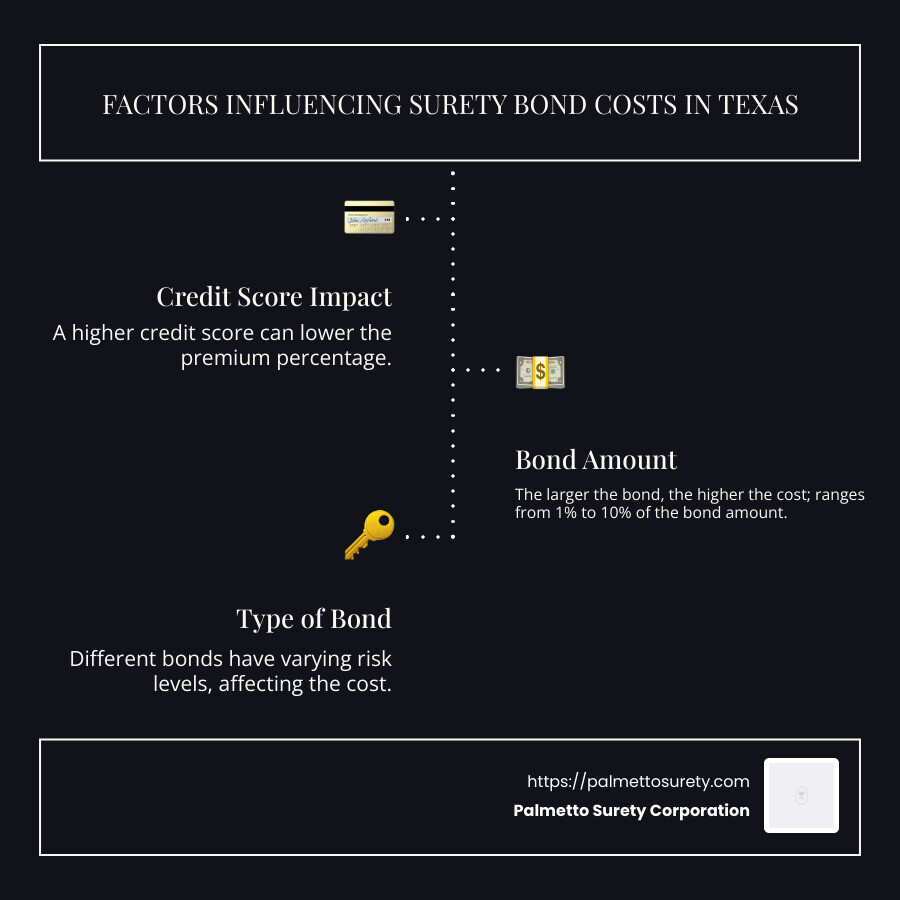
The first and most obvious factor influencing cost is the type of surety bond required and the penal sum, or face amount, of the bond. Different types of bonds carry different levels of risk for the surety company. For instance, a contract bond for a large construction project will likely have a higher premium than a notary bond, simply due to the magnitude of the financial obligation and the complexity of the undertaking.
The penal sum, which is the maximum amount the surety will be liable for in case of a default, directly impacts the premium. A higher penal sum generally translates to a higher premium because the surety’s potential exposure to financial loss is greater. For example, a $100,000 performance bond will cost more than a $10,000 one, assuming all other factors are equal.
2. Principal’s Financial Strength and Creditworthiness
This is arguably the most significant factor in determining the premium. Surety companies view bonding as an extension of credit. Therefore, they meticulously assess the financial health and credit history of the principal.
- Credit Score: A strong personal and business credit score is essential. Individuals with excellent credit will typically qualify for lower premiums. Conversely, a poor credit history can lead to higher rates or even denial of the bond.
- Financial Statements: For larger or more complex bonds, surety companies will require detailed financial statements, including balance sheets, income statements, and cash flow statements. They look for profitability, liquidity, and a healthy debt-to-equity ratio. A strong balance sheet demonstrates the principal’s ability to withstand financial challenges and fulfill their obligations.
- Industry Experience and Track Record: A proven history of success in the relevant industry is also a key consideration. Principals with extensive experience and a positive track record of completing projects on time and within budget are seen as lower risk, which can result in a reduced premium.
3. Risk Assessment of the Obligation
The inherent risk associated with the specific obligation the bond guarantees also plays a crucial role. This involves evaluating the nature of the work, the complexity of the project, the terms of the contract, and the potential for unforeseen issues.
- Project Complexity: A straightforward, well-defined project will generally be viewed as less risky than a complex one with multiple stakeholders and intricate technical requirements.
- Contract Terms: The specific terms and conditions of the contract underlying the bond are scrutinized. Favorable terms for the principal, such as clear specifications and reasonable timelines, can reduce perceived risk.
- Economic Conditions: Broader economic factors can also influence risk assessment. During economic downturns, certain industries might be seen as higher risk, potentially leading to higher bond premiums.
4. Underwriting Requirements and Guarantees
Surety companies may have specific underwriting requirements beyond financial assessments. They might require collateral, personal guarantees, or indemnification agreements.
- Collateral: In cases of higher risk or for principals with less established financial histories, a surety company may require collateral. This is an asset pledged by the principal to the surety that can be seized and sold if the principal defaults on their obligations. The amount of collateral required will impact the overall cost structure, though it’s not directly part of the premium.
- Personal Guarantees: Business owners, especially in smaller companies, may be asked to provide a personal guarantee. This means the individual owner is personally liable for the bond’s obligations if the business cannot meet them.
- Indemnification Agreements: These are common and essentially mean the principal agrees to reimburse the surety for any losses incurred due to a claim on the bond.
Estimating Surety Bond Costs in Texas
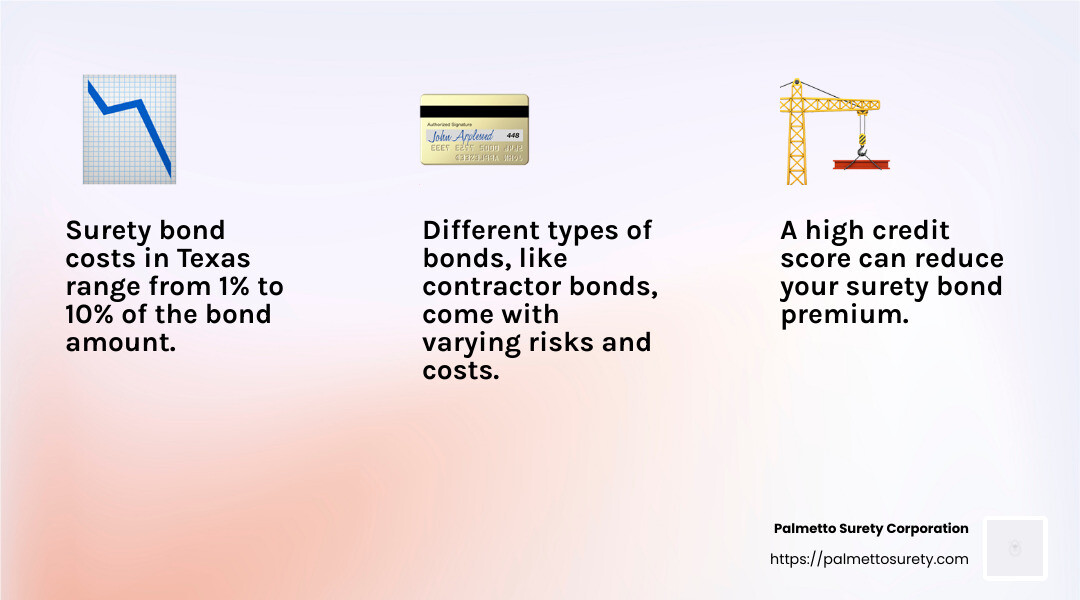
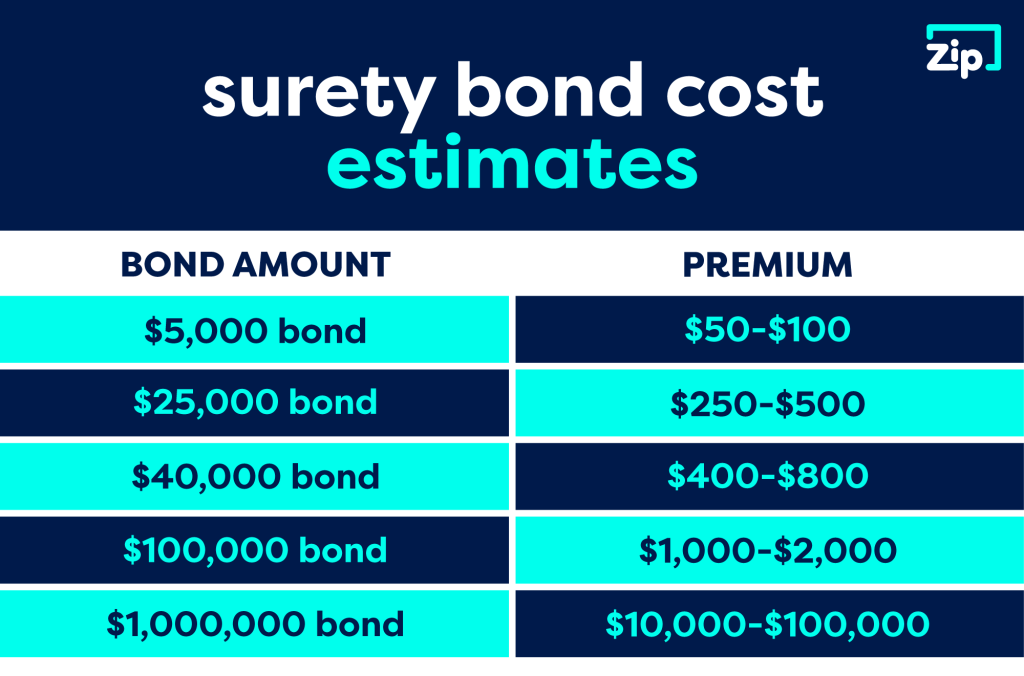
While providing an exact dollar figure for a surety bond without a specific application is impossible, we can offer general estimates based on common bond types and the factors discussed. The premium is typically a small percentage of the bond’s penal sum. This percentage varies significantly, but it often ranges from 0.5% to 5% annually, and in some cases, can be higher for very high-risk bonds or principals with poor credit.
Typical Premium Ranges for Common Bond Types
- Contract Bonds (Performance, Payment Bonds): These are often calculated as a percentage of the contract price. For a financially sound contractor with a good track record, the premium might range from 1% to 3% of the contract value for larger projects. Smaller projects or those with higher perceived risk could see this percentage increase.
- License and Permit Bonds: These are generally less expensive due to lower penal sums and perceived lower risk. For many common license and permit bonds, the annual premium can be anywhere from $100 to $500, depending on the specific requirement and the applicant’s profile. Some specialized license bonds, like those for motor vehicle dealers or certain financial services, might have higher premiums.
- Notary Bonds: In Texas, a notary bond is relatively inexpensive. The annual premium is typically around $50 to $150.
- Court Bonds (Probate, Appeal Bonds): The cost of court bonds varies widely based on the bond amount and the complexity of the legal proceedings. Premiums can range from 1% to 5% of the bond amount annually.
The Application Process and Getting a Quote
To get an accurate quote for a surety bond in Texas, you will need to complete an application form provided by a surety bond agency or directly by a surety company. This application will typically ask for:
- Personal information: Name, address, date of birth, Social Security number (for individuals).
- Business information: Business name, address, entity type (sole proprietorship, LLC, corporation), years in business.
- Financial information: Personal and business financial statements, credit history authorization.
- Bond details: The type of bond needed, the penal sum, the obligee, and the purpose of the bond.
- Project details (for contract bonds): Contract amount, scope of work, timeline, and information about the project owner.
Once the application is submitted, a surety underwriter will review it. They will assess all the factors mentioned above to determine the risk and calculate the premium. The time it takes to receive a quote can vary from a few hours for simple bonds to several days or even weeks for complex contract bonds requiring extensive due diligence.
Factors That Can Increase Bond Costs
Certain situations or characteristics of the applicant can lead to higher surety bond premiums. Being aware of these can help you understand why your quote might be higher than expected and what steps, if any, can be taken to mitigate them.
Poor Credit History
As previously mentioned, a low credit score is a significant red flag for surety companies. They view it as an indicator of a higher likelihood of default. If your credit score is below a certain threshold, you may face substantially higher premiums, or you might be required to provide substantial collateral to secure the bond.
Limited Business Experience or Track Record
New businesses or individuals with little or no prior experience in the industry for which they are seeking a bond are considered higher risk. Surety companies rely on historical performance to gauge future reliability. If this history is absent or unproven, the premium will likely reflect this increased uncertainty.
High-Risk Industries or Projects
Some industries are inherently riskier than others. Construction, for example, involves numerous variables and potential for unforeseen issues. Certain types of construction, such as those involving hazardous materials or complex engineering, will carry higher premiums than more straightforward ventures. Similarly, if the project itself is unusually complex or has a history of problems, the bond cost may be elevated.
Incomplete or Inaccurate Application Information
Providing incomplete or inaccurate information on your bond application can lead to delays, increased scrutiny, and potentially higher premiums. It can also be grounds for denial. It’s crucial to be thorough and honest when filling out the application.
Significant Debt Load or Low Net Worth
A business or individual with a high debt-to-income ratio or low net worth may be perceived as financially vulnerable. This can make it harder to secure a bond at a favorable rate, as the surety company will be concerned about the principal’s ability to absorb any unexpected financial shocks.
The Value Proposition of Surety Bonds
Despite the cost, surety bonds are an indispensable tool for many businesses and individuals in Texas. They are not merely an expense but an investment that facilitates business, ensures compliance, and provides essential financial protection.
For contractors, surety bonds are often a prerequisite for bidding on lucrative public and private projects. They demonstrate to project owners that the contractor is financially sound and committed to completing the work. This can differentiate them from competitors and open doors to significant opportunities.
For businesses requiring licenses and permits, surety bonds ensure adherence to regulatory requirements. This compliance is vital for maintaining operational legitimacy and avoiding penalties.
In legal contexts, court bonds provide a guarantee that parties will fulfill their legal obligations, such as appearing in court or satisfying judgments. This upholds the integrity of the judicial process.
Ultimately, the cost of a surety bond in Texas is a reflection of the risk the surety company assumes. By understanding the factors that influence this cost and preparing thoroughly for the application process, businesses and individuals can navigate the bonding requirements effectively and secure the necessary guarantees to operate and thrive.
LifeOutOfTheBox is a participant in the Amazon Services LLC Associates Program, an affiliate advertising program designed to provide a means for sites to earn advertising fees by advertising and linking to Amazon.com. Amazon, the Amazon logo, AmazonSupply, and the AmazonSupply logo are trademarks of Amazon.com, Inc. or its affiliates. As an Amazon Associate we earn affiliate commissions from qualifying purchases.