
The purchase of property in Texas is a significant undertaking, and understanding the associated costs is paramount for any prospective homeowner or investor. Among these costs, the title policy often raises questions. A title policy is a form of title insurance that protects both the lender and the buyer from financial loss due to defects in the title of a property. In Texas, the cost of this policy is regulated, offering a degree of predictability, though nuances exist based on the property’s value and the specific underwriter.
Understanding Title Insurance in Texas
Title insurance is not an optional expense in most real estate transactions in Texas. It serves as a crucial safeguard against potential claims that could challenge ownership rights. Unlike other forms of insurance that protect against future events, title insurance protects against past occurrences that may have created title defects. These defects can arise from a multitude of sources, including errors in public records, undisclosed liens, fraud, forgery, or even an unknown heir claiming ownership.
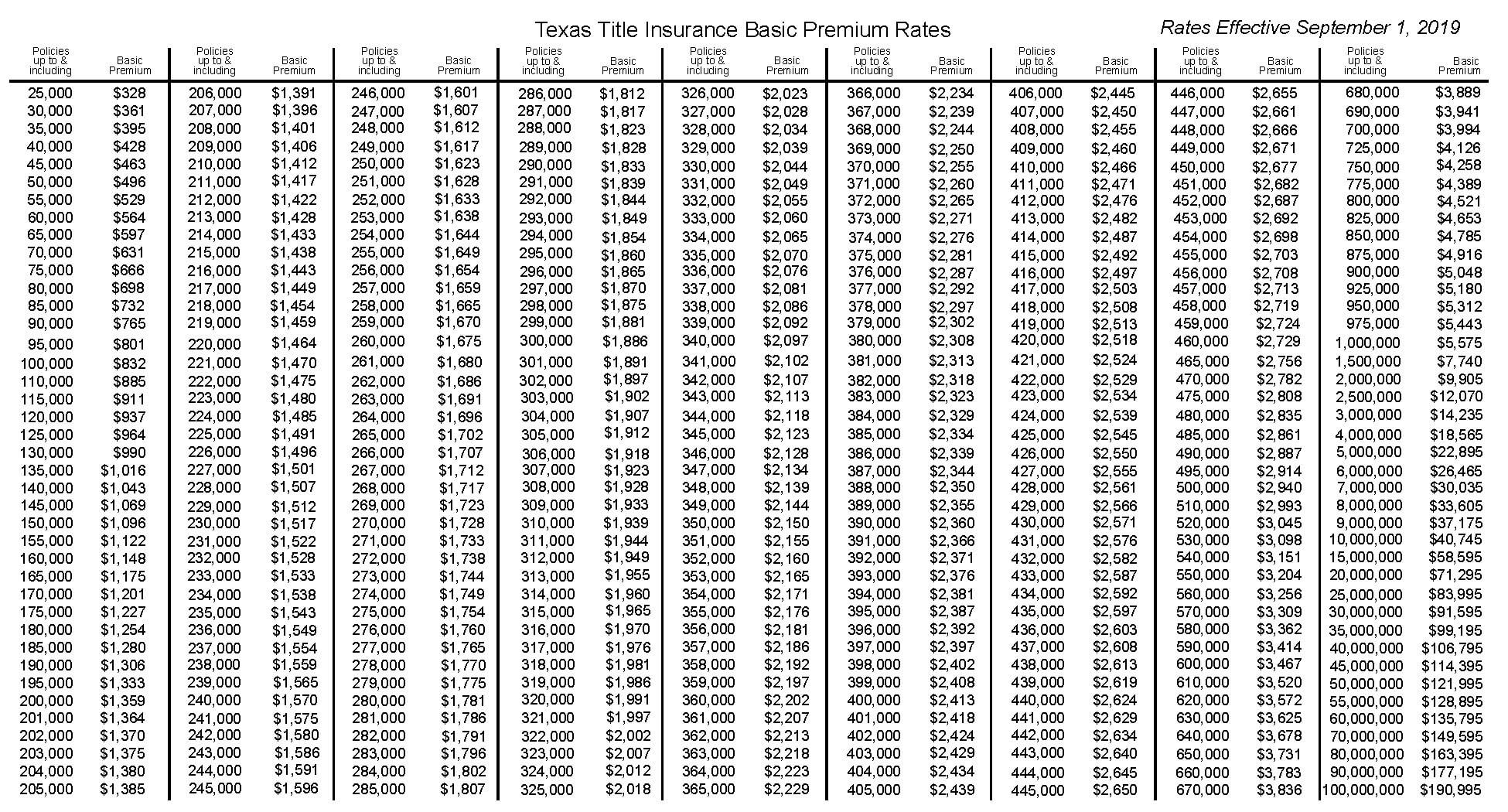
In Texas, the price of a title insurance policy is set by the Texas Department of Insurance. This means that for a given property value, the base premium will be the same regardless of which title company you choose. The premium is typically a one-time fee paid at closing.
The Owner’s Policy vs. Lender’s Policy
It’s important to distinguish between two types of title policies: the Lender’s Policy and the Owner’s Policy.
Lender’s Policy
When you secure a mortgage to purchase a property, the lender will almost always require you to purchase a Lender’s Policy. This policy protects the lender’s interest in the property, ensuring that their loan is secured by a clear title. The coverage amount for the Lender’s Policy is equal to the loan amount. If a title issue arises that jeopardizes the lender’s security, the Lender’s Policy will cover the costs of defending the title and any financial loss incurred by the lender. The premium for the Lender’s Policy is usually paid by the buyer at closing.
Owner’s Policy
The Owner’s Policy is designed to protect the buyer’s equity in the property. It covers the purchase price of the home and remains in effect for as long as you or your heirs own the property. This policy protects against title defects that may not have been discovered during the title search. Without an Owner’s Policy, a buyer could potentially lose their home or be forced to pay off unexpected liens if a title issue surfaces after the sale. While often optional from a lender’s perspective, it is highly recommended for all property buyers. The premium for the Owner’s Policy is a one-time payment made at closing.
Calculating the Title Policy Cost in Texas
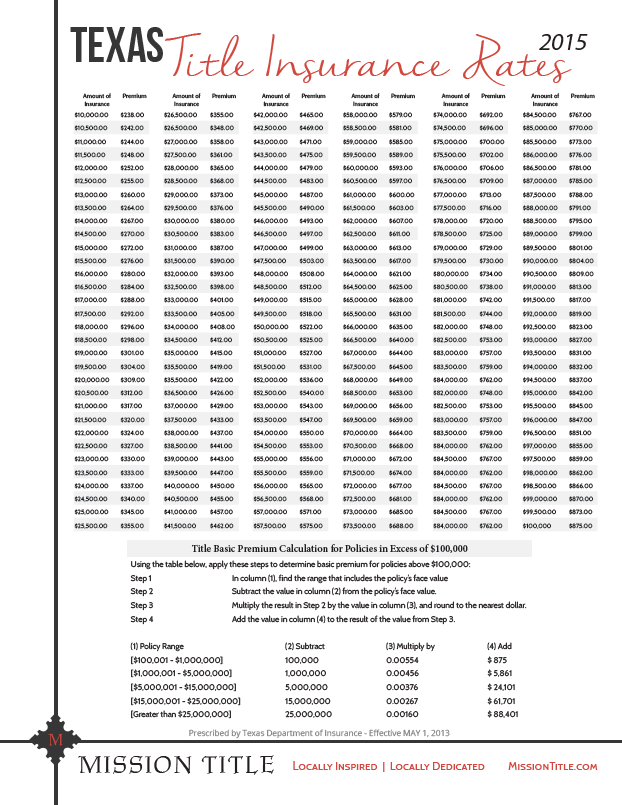
The cost of a title policy in Texas is determined by a rate structure established by the Texas Department of Insurance. This structure is based on the “value” of the property, which is typically the sales price. The premium is calculated on a per-thousand-dollar basis.
Texas Title Insurance Rate Manual
The Texas Department of Insurance provides a detailed rate manual that outlines these charges. This manual is the governing document for title insurance premiums in the state. The structure is generally as follows:
- First $10,000 of Value: A specific rate applies.
- Next $90,000 of Value: A different, lower rate applies per thousand dollars.
- For the Remainder of the Value: An even lower rate is applied per thousand dollars.
This tiered system means that the cost per thousand dollars decreases as the property value increases.
Example Calculation
Let’s consider an example to illustrate the calculation. Suppose you are purchasing a home in Austin for $300,000. The Texas Department of Insurance rate manual would be used to calculate the premium. While the exact figures can fluctuate slightly with updates to the manual, the principle remains consistent.
For the first $10,000 of value, there’s a base rate.
For the next $90,000 (up to $100,000 total), a lower rate per thousand applies.
For the remaining $200,000 (from $100,001 to $300,000), an even lower rate per thousand applies.
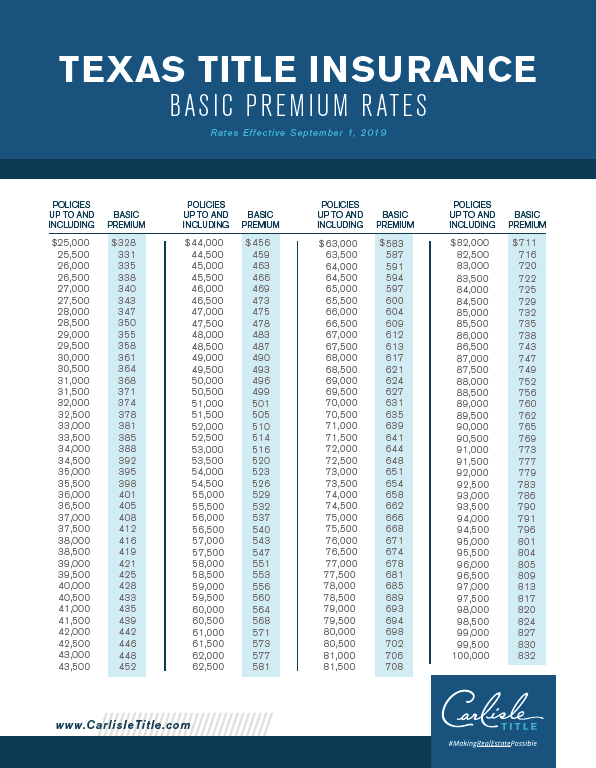
A simplified illustration of the structure might look like this:
- First $10,000: $3.75 per $1,000 = $37.50
- Next $90,000: $3.50 per $1,000 = $315.00
- Remaining $200,000: $3.25 per $1,000 = $650.00
Adding these up gives a base premium. However, this is a simplified illustration, and the actual rates and calculations are more granular according to the official manual. The total premium would then be the sum of these calculated amounts. For a $300,000 property, you might expect the base premium for either an Owner’s or Lender’s policy to be in the range of $1,000 to $1,500, depending on the specific rates in effect.
It’s important to note that the premium for the Owner’s Policy and the Lender’s Policy are calculated separately, although they are often issued together by the same title company. The Lender’s Policy will be for the amount of the mortgage, and the Owner’s Policy will be for the purchase price.
Reissue Rate
A significant factor that can reduce the cost of a title policy is the “reissue rate.” If the property has been insured by a title policy within a certain period (often within the last 5-10 years), and the new policy is being issued by the same or a related title company, a reduced “reissue rate” can often be applied. This discount acknowledges that much of the title work has already been performed. This is particularly beneficial for those purchasing a property that has been recently sold or refinanced.
Additional Fees and Considerations
While the base premium for the title policy is regulated, there are other fees associated with the closing process that can influence the total amount paid. These typically include:
- Title Examination Fee: This is the fee charged by the title company for searching public records to identify any liens, encumbrances, or other defects affecting the title.
- Closing Fee/Settlement Fee: This fee is charged by the title company or closing attorney for conducting the closing, preparing closing documents, and handling the disbursement of funds.
- Documentary Stamp Taxes (State & County): These are taxes levied by the state and county on the transfer of real property. In Texas, these are often referred to as “transfer taxes” and are based on the property’s value. The buyer and seller may agree to split these costs, or one party may agree to pay the entirety.
- Recording Fees: Fees charged by the county clerk’s office to record the deed and mortgage in public records.
- Abstract Fees (if applicable): In some cases, an abstract of title may be required, which is a summary of all recorded documents affecting the title.
Who Pays for the Title Policy?
In Texas, the customary practice regarding who pays for the title policies can vary.
- Lender’s Policy: This is almost always paid for by the buyer.
- Owner’s Policy: While buyers are strongly encouraged to purchase an Owner’s Policy, the cost is negotiable between the buyer and seller. In many parts of Texas, it is customary for the seller to pay for the Owner’s Policy. However, in other areas, or in competitive markets, the buyer may be expected to cover this cost. The terms of the purchase agreement will specify who is responsible for this expense.
Finding a Title Company in Texas
While the rates are regulated, the choice of title company can still be important. Different companies may offer varying levels of customer service, efficiency, and expertise. It is advisable to research and compare a few reputable title companies. Your real estate agent or lender can often provide recommendations.
When selecting a title company, consider factors such as:
- Reputation and Experience: Look for companies with a long-standing presence and positive reviews.
- Customer Service: A responsive and helpful team can make the closing process smoother.
- Technological Capabilities: Some companies may offer online portals for document tracking and communication.
- Underwriting Partners: Title companies work with various title insurance underwriters. While the rates are set, the strength and service of the underwriter are important.
The Closing Process
The title company plays a central role in the closing process. They will conduct a thorough title search, examine all relevant documents, and prepare the closing statement (also known as the HUD-1 or Closing Disclosure) which itemizes all the financial aspects of the transaction. On closing day, they will oversee the signing of all necessary paperwork and ensure that all funds are properly disbursed to the seller, lender, and any other parties involved. They will then ensure that the deed and mortgage are recorded in the county’s public records.
Conclusion
The cost of a title policy in Texas is a predictable expense due to state regulations. While the premium is directly tied to the property’s value, understanding the rate structure, potential for reissue rates, and associated closing fees provides clarity for buyers and sellers. Investing in an Owner’s Policy is a crucial step in protecting your real estate investment, ensuring peace of mind as you enjoy your new property in the Lone Star State. Always review your closing documents carefully and consult with your real estate professional or title company representative to ensure a comprehensive understanding of all costs involved in your Texas property purchase.
LifeOutOfTheBox is a participant in the Amazon Services LLC Associates Program, an affiliate advertising program designed to provide a means for sites to earn advertising fees by advertising and linking to Amazon.com. Amazon, the Amazon logo, AmazonSupply, and the AmazonSupply logo are trademarks of Amazon.com, Inc. or its affiliates. As an Amazon Associate we earn affiliate commissions from qualifying purchases.