
For those looking to trade the urban grind for the expansive horizons of the American Midwest, few places offer the raw potential of Oklahoma. Whether you are an aspiring homesteader, a savvy real estate investor, or someone seeking a quiet retreat amidst the rolling plains, understanding the cost of land in this state is the first step toward turning a vision into reality. Land prices in Oklahoma are as diverse as the state’s geography, ranging from the lush, forested hills of the east to the high, arid plains of the panhandle.

The Factors Influencing Land Values Across the Sooner State
Determining a single price per acre for an entire state is impossible, as property valuation is hyper-local. When looking for land in Oklahoma, your budget will be driven by several key variables that shift the market value significantly.
Agricultural Productivity and Soil Quality
The most significant factor in land pricing is, historically, its utility for agriculture. In regions like Enid or Alva, where the soil is rich and conducive to wheat production and cattle grazing, you can expect to pay a premium. Prime farmland with established irrigation rights or proximity to critical infrastructure commands a higher price per acre than raw, unimproved land in more rugged terrain.
Proximity to Urban Centers
As in any state, the closer you get to a major metropolitan area, the higher the land cost. Properties surrounding Oklahoma City or Tulsa often carry a “development premium.” Buyers looking for proximity to the amenities, healthcare, and job markets of these cities must be prepared to pay prices that reflect potential future residential or commercial expansion rather than just raw agricultural value.
Infrastructure and Utilities
Raw land that lacks basic utility hookups—such as electricity, municipal water, or high-speed internet—is significantly cheaper on paper. However, buyers must perform a cost-benefit analysis. While an acre in the remote corners of Cimarron County might be inexpensive, the cost to extend power lines or drill a private well can easily double your total investment. Conversely, purchasing “turnkey” land that already has driveway access and utility connections is a more expensive entry point but offers immediate usability.
Regional Price Variations and Market Trends
The state is divided into distinct regions, each with its own micro-economy when it comes to real estate. Understanding these regions helps you narrow your search based on both your lifestyle goals and your financial parameters.
The Rolling Hills of Eastern Oklahoma
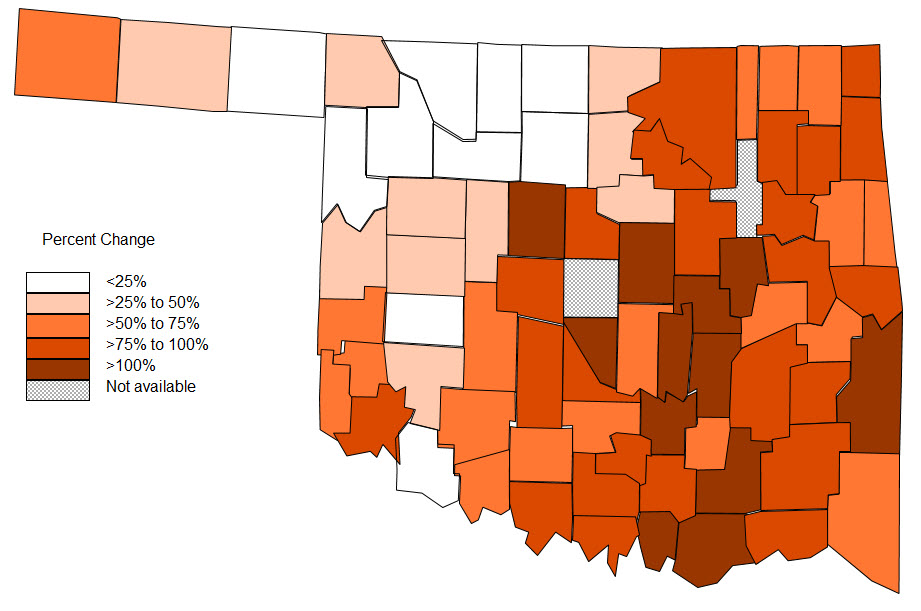
The eastern portion of the state, including areas near Broken Bow and the Ouachita National Forest, is defined by heavy timber, lakes, and rolling topography. This area is highly sought after for recreational use, vacation rentals, and cabin getaways. Because of the aesthetic appeal and the tourism industry surrounding lakes like Broken Bow Lake, land prices here have seen significant appreciation over the last decade. It is not uncommon to see smaller, recreational-sized plots selling for a higher price-per-acre rate than massive tracts of open prairie in the west.
The Central Plains and the Urban Corridor
The corridor running from Lawton up through Norman and Edmond serves as the heart of the state’s economic activity. Land here is primarily bought by developers or individuals looking to build primary residences within commuting distance of professional hubs. Prices are influenced more by the residential real estate market than by crop yields.
The Vast Landscapes of Western Oklahoma
If your goal is large-scale land ownership, the western reaches of the state offer the most competitive entry prices. In counties like Roger Mills County or Ellis County, you will find some of the most affordable acreage in the country. This is primarily open, rolling grassland suited for cattle ranching. While the price per acre is low, these parcels are often sold in large blocks of hundreds of acres, requiring a larger upfront capital commitment even if the individual acre price is modest.
Navigating the Purchase: What Should You Expect to Pay?
While market fluctuations make fixed pricing elusive, most buyers can categorize their search into three distinct tiers of pricing based on current market data and land use classifications.
Tier 1: Recreational and Hobby Land ($2,500 – $6,000 per acre)
This tier typically involves smaller parcels (5 to 40 acres) that are attractive to individuals looking for a “weekend getaway” or a site for a custom home. These plots are often located within a two-hour drive of Oklahoma City or Tulsa. These parcels usually feature some cleared land, some trees, and at least basic road access.
Tier 2: Productive Agricultural Land ($1,500 – $4,000 per acre)
These parcels are usually larger, often exceeding 80 acres, and are priced based on their ability to generate income. Buyers in this category are often local farmers or investors looking to add to their holdings. The price variation here depends heavily on the quality of the soil and the presence of improvements like cattle pens, barns, or irrigation systems.
Tier 3: Remote or Non-Arable Land ($800 – $2,000 per acre)
At the bottom of the price spectrum, you will find land that is either extremely remote, exceptionally rugged, or lacking in essential resources like water or road access. This land is often best suited for conservation, long-term speculative investment, or extreme off-grid lifestyles. It requires the most due diligence, as the “cheap” price tag often hides significant logistical hurdles for development.
The Importance of Due Diligence Before You Buy
Purchasing land in Oklahoma is a complex transaction. Unlike buying a home in Midwest City, where you can easily look up comparable sales, land deals are often private, and the nuances of the property itself carry more weight than the neighborhood.
Understanding Mineral Rights
In the energy-rich landscapes of the state, it is vital to understand the status of mineral rights. In many cases, the surface rights and the mineral rights (the rights to the oil, gas, or minerals beneath the ground) are split. As a property owner, you may own the surface but not the minerals. This can lead to unexpected activity on your property if a mineral rights holder decides to lease the land for extraction. Always check the deed carefully to see if mineral rights are included in the purchase.
Zoning and Easements
Never assume that you can use a piece of land exactly as you wish. Even in rural areas, there may be zoning restrictions or county ordinances regarding building codes, septic permits, or the number of dwellings allowed per acre. Furthermore, check for easements—legal rights that allow others, such as utility companies or neighbors, to access or cross specific portions of your land. An easement could significantly restrict your ability to build a fence or a home in your desired location.

Environmental Assessments
If you are buying land with a history of agricultural use, consider a basic environmental assessment. This ensures that the soil is not contaminated by past use of pesticides or fertilizers. Additionally, if the property is located near a flood zone or in an area with high erosion risk, these environmental factors can dictate both the feasibility of building and the cost of property insurance.
By taking the time to research the local market conditions and performing thorough inspections, you can ensure that your investment in the land of Oklahoma serves as a foundation for years of prosperity and enjoyment. Whether you seek the quiet hills of the east or the expansive horizons of the west, the state remains one of the most accessible places in the nation to plant your roots and claim your own piece of the landscape.
LifeOutOfTheBox is a participant in the Amazon Services LLC Associates Program, an affiliate advertising program designed to provide a means for sites to earn advertising fees by advertising and linking to Amazon.com. Amazon, the Amazon logo, AmazonSupply, and the AmazonSupply logo are trademarks of Amazon.com, Inc. or its affiliates. As an Amazon Associate we earn affiliate commissions from qualifying purchases.