
Navigating the intricacies of child support in Texas can be a complex undertaking, particularly when factoring in the needs of two children. This guide aims to demystify the process, outlining the key considerations, statutory guidelines, and practical implications for parents in the Lone Star State. Understanding these elements is crucial for ensuring financial stability for children and fostering a fair and equitable child support arrangement.
Understanding the Basics of Texas Child Support
In Texas, child support is a legal obligation for a non-custodial parent to financially support their child or children. The primary goal is to ensure that children receive a similar standard of living as they would if both parents were living together. The calculations are primarily governed by the Texas Family Code, specifically the Texas Child Support Guidelines. These guidelines are designed to be a predictable and fair method for determining support obligations.
Key Factors Influencing Child Support
While the Texas Child Support Guidelines provide a framework, several factors can influence the final child support order. These are not exhaustive, but represent the most common considerations:
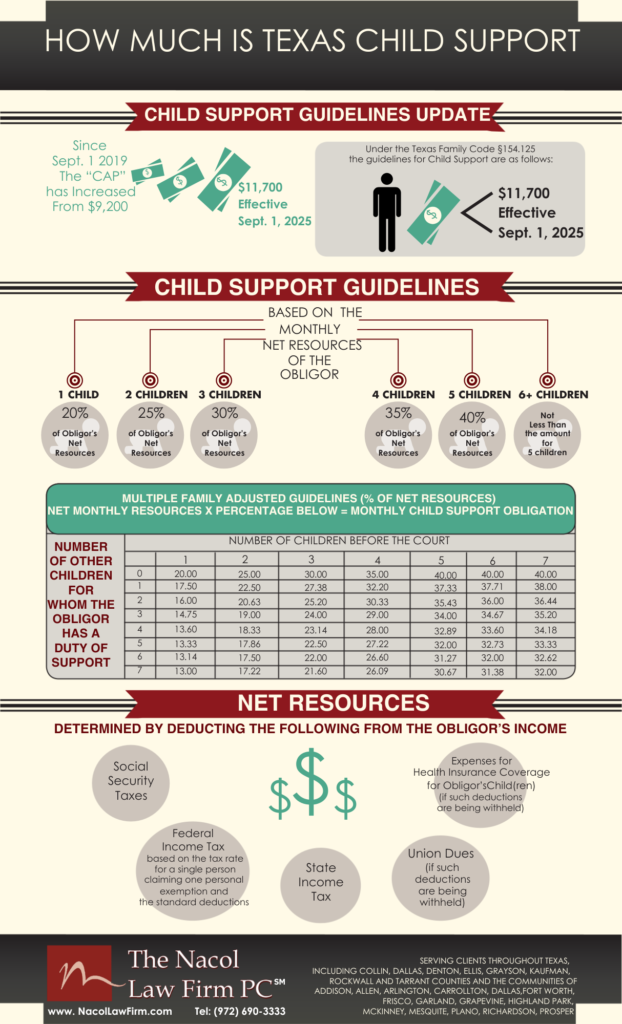
- Net Monthly Income of the Obligor: This is the cornerstone of the calculation. The obligor, typically the non-custodial parent, is the one ordered to pay child support. Their net monthly income is determined by taking their gross income (wages, salary, overtime, tips, self-employment income, etc.) and deducting federal income tax, state income tax, Social Security taxes, and Medicare taxes. Health insurance premiums for the child are also deducted. It’s important to note that the guidelines have a cap on the amount of net monthly income that is considered. Currently, this cap is adjusted periodically, so it’s essential to consult the most up-to-date figures from the Texas Attorney General’s Child Support Division.
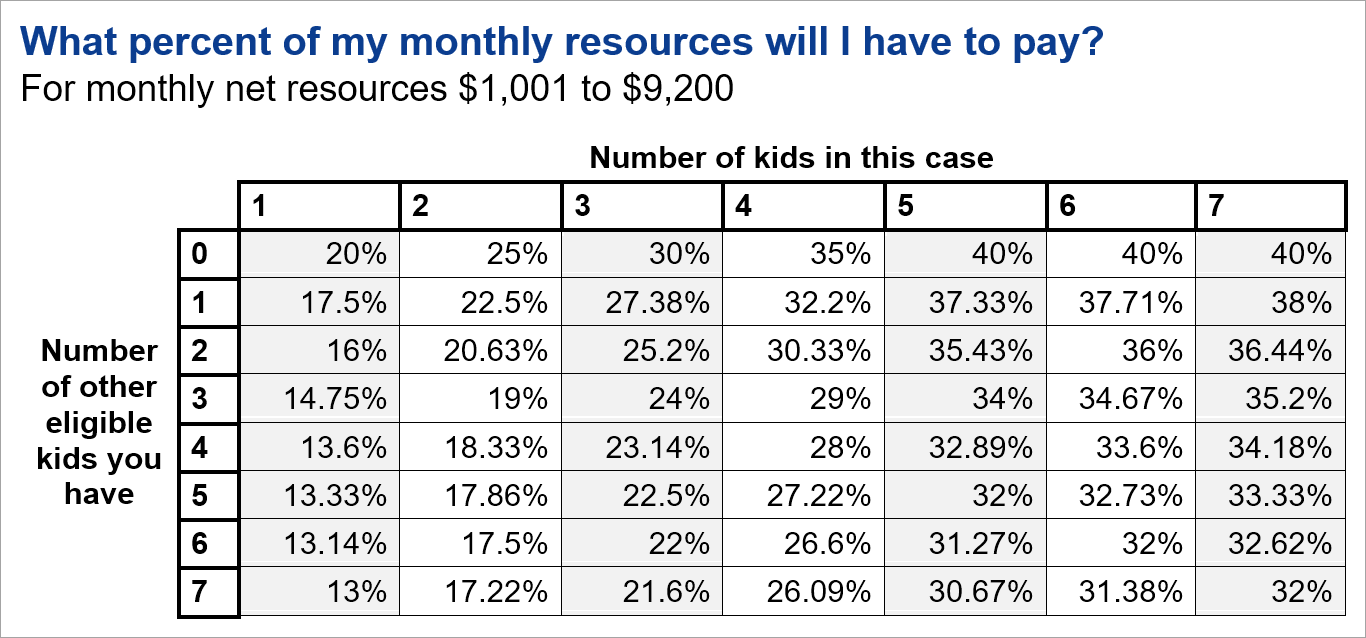
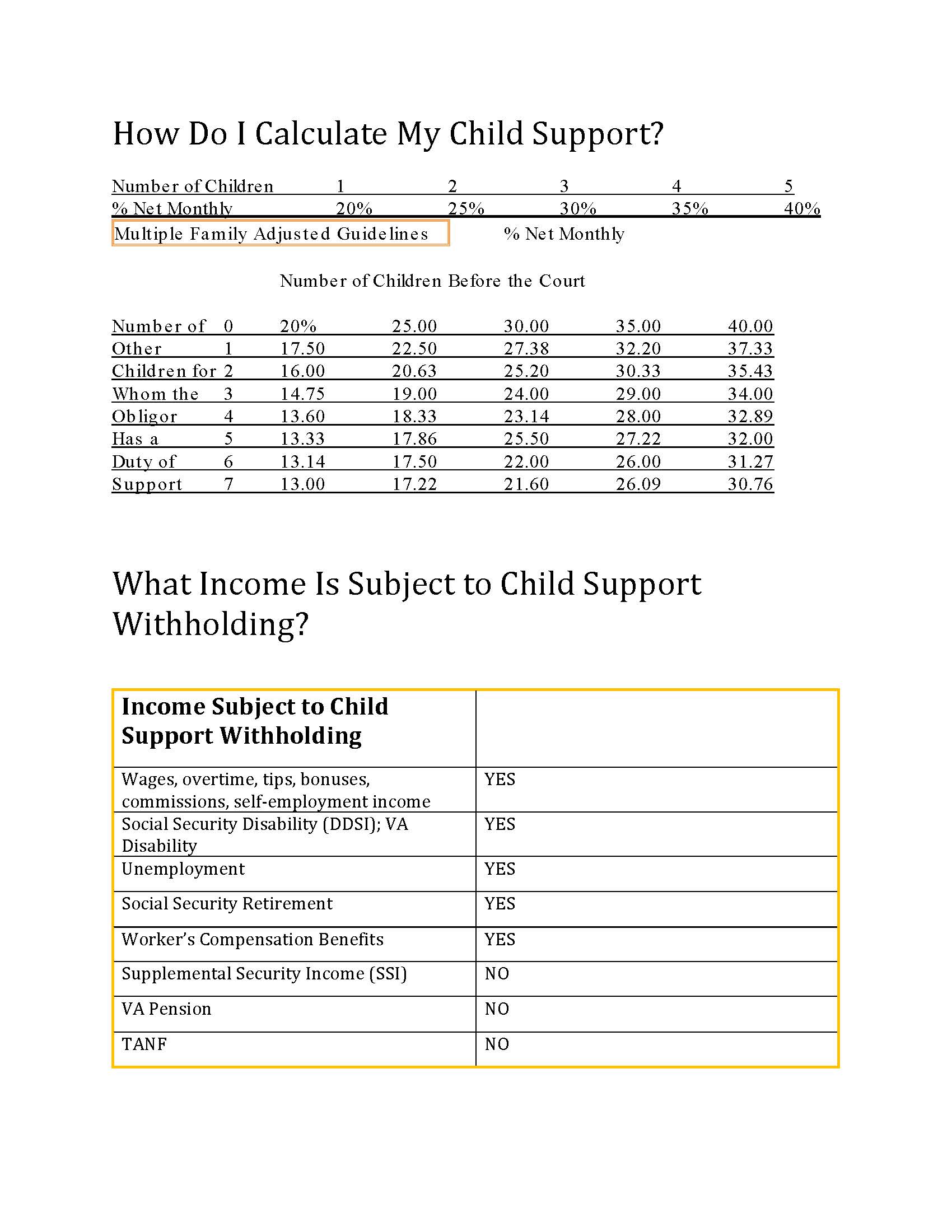
- Number of Children: The percentage of the obligor’s net monthly income allocated to child support directly correlates with the number of children. For two children before the court, the guideline percentage is generally 20% of the obligor’s net monthly income. This percentage can increase if the obligor has other children from different relationships whom they are legally obligated to support.
- Custodial Arrangement: The guidelines are based on the assumption of a standard possession order. If the parents share physical custody in a way that deviates significantly from the standard, the court may adjust the support amount.
- Health Insurance: The cost of health insurance premiums for the children is factored into the calculation. Typically, the obligor will be ordered to provide health insurance, and the cost is then credited against their child support obligation. The obligor may also be ordered to contribute to the children’s dental insurance.
- Other Support Obligations: If the obligor is already paying court-ordered child support for children from another relationship, this will be taken into account and may reduce the support obligation for the children in the current case.
The Role of the Texas Attorney General’s Child Support Division
The Texas Attorney General’s Child Support Division plays a vital role in establishing and enforcing child support orders across the state. They offer services that can assist parents in navigating the legal process, including locating non-custodial parents, establishing paternity, and setting up child support and medical support orders. Their resources and expertise are invaluable for parents seeking to understand their rights and responsibilities.
Calculating Child Support for 2 Children in Texas
The Texas Child Support Guidelines provide a straightforward method for calculating the presumptive amount of child support. This presumption means that the amount calculated based on the guidelines is considered in the best interest of the child, unless evidence is presented to rebut this.
The Guideline Calculation Process
- Determine Net Monthly Income of the Obligor: As mentioned, this involves taking gross income and subtracting statutory deductions. For self-employed individuals, determining net income can be more complex and may involve analyzing business expenses.
- Apply the Percentage for Two Children: For two children, the guideline percentage is 20% of the obligor’s net monthly income.
- Consider the Income Cap: If the obligor’s net monthly income exceeds the statutory cap, the percentage applied is still based on that cap. For example, if the cap is $9,200 and the obligor earns $15,000 net per month, child support would be calculated based on $9,200.
- Account for Other Children: If the obligor has other children they are legally obligated to support, the percentage is adjusted. For example, if the obligor has one child from another relationship, the percentage for the two children in the current case would be reduced. The guidelines provide specific percentages for situations where the obligor has children from other relationships.
Example Scenario
Let’s consider a hypothetical scenario:
- Parent A (Obligor) has a net monthly income of $5,000.
- Parent A has two children with Parent B (Custodial Parent).
- Parent A pays $200 per month for the children’s health insurance.
Calculation:
- Net Monthly Income: $5,000
- Guideline Percentage for Two Children: 20%
- Presumptive Child Support: $5,000 * 0.20 = $1,000 per month.
- Deduct Health Insurance Cost: $1,000 – $200 (health insurance premium) = $800.
In this simplified example, the presumptive monthly child support payment would be $800. This amount would then be divided between the parents for the cost of health insurance premiums and any unreimbursed medical expenses, as determined by the court.
Deviations from the Guidelines
While the guidelines are presumptive, courts can deviate from them if it’s in the best interest of the child. This might occur in situations where:
- The obligor’s income is disproportionately high or low.
- The child has special medical, educational, or other needs that require additional financial support.
- The standard possession order is not being followed, leading to significantly different costs for each parent.
- The obligor is intentionally unemployed or underemployed to avoid paying child support.
Factors Affecting Child Support Payments
Beyond the initial calculation, several ongoing factors can influence how child support payments are made and potentially modified. It is crucial for parents to understand these dynamics to ensure continued compliance and address any changes in circumstances.
Modification of Child Support Orders
Child support orders are not set in stone and can be modified under certain circumstances. A significant material change in circumstances for either the obligor or the child is typically required for a modification to be granted. This can include:
- A substantial increase or decrease in the obligor’s income: If the obligor experiences a significant job loss or a substantial raise, either parent can petition the court to modify the child support order.
- A change in the needs of the child: If the child develops a serious medical condition requiring expensive treatment, or if their educational needs increase, a modification may be warranted.
- A change in the custody arrangement: If the primary custodial parent changes, or if the children spend significantly more time with the obligor, a modification might be appropriate.
- The child reaching the age of 18 or graduating from high school: In Texas, child support typically terminates when a child turns 18 or graduates from high school, whichever occurs later, unless the child is disabled.
Enforcement of Child Support Orders
When a parent fails to meet their child support obligations, the court has various enforcement mechanisms available. These can include:
- Income Withholding Orders: This is the most common method, where a portion of the obligor’s wages is directly withheld by their employer and sent to the custodial parent or the Texas Child Support State Disbursement Unit.
- Contempt of Court: Failure to comply with a child support order can result in the obligor being held in contempt of court, which can lead to fines or even jail time.
- License Suspension: Professional and driver’s licenses can be suspended for non-payment of child support.
- Tax Refund Interception: Federal and state tax refunds can be intercepted to satisfy past-due child support.
The Role of Paternity
Establishing legal paternity is a fundamental step in securing child support. If the parents were not married at the time of the child’s birth, or if the father’s name is not on the birth certificate, paternity may need to be legally established through a court order or an Acknowledgment of Paternity. This ensures that the legal father is identified and therefore obligated to provide financial support.
Beyond the Guidelines: Ensuring Best Interests of the Child
While the Texas Child Support Guidelines provide a solid foundation, the ultimate aim of child support is to ensure the best interests of the children. This means that the court has the discretion to consider factors that may lead to an amount different from the guideline calculation.
Considerations for Special Needs Children
Children with significant medical needs, disabilities, or exceptional educational requirements may necessitate higher child support payments than what the standard guidelines would provide. The court can order additional support to cover the costs of therapy, specialized schooling, medical equipment, or ongoing care. Evidence from medical professionals, educators, and therapists is often presented in these cases.
Parental Agreements and Court Approval
Parents can, in some instances, agree to a child support arrangement that differs from the guidelines. However, such agreements must still be reviewed and approved by the court to ensure they are in the best interest of the children. The court will scrutinize agreements that appear to be unfair or designed to circumvent statutory obligations.
The Importance of Legal Counsel
Given the complexities of Texas child support law, seeking legal counsel from an experienced family law attorney is highly recommended. An attorney can:
- Accurately calculate potential child support obligations based on specific income figures and circumstances.
- Advise on whether a deviation from the guidelines is appropriate and how to argue for or against it.
- Assist with the filing of necessary court documents for establishing, modifying, or enforcing child support orders.
- Represent your interests throughout the legal process, ensuring your voice is heard and your rights are protected.
Understanding the nuances of child support in Texas for two children is a vital step in safeguarding a child’s financial well-being. By familiarizing yourself with the Texas Child Support Guidelines, the factors influencing calculations, and the mechanisms for modification and enforcement, parents can navigate this process with greater clarity and confidence.
LifeOutOfTheBox is a participant in the Amazon Services LLC Associates Program, an affiliate advertising program designed to provide a means for sites to earn advertising fees by advertising and linking to Amazon.com. Amazon, the Amazon logo, AmazonSupply, and the AmazonSupply logo are trademarks of Amazon.com, Inc. or its affiliates. As an Amazon Associate we earn affiliate commissions from qualifying purchases.