
Navigating the complexities of estate taxes is a crucial aspect of financial planning, particularly for residents of states with their own legacy taxation systems. While California does not currently impose a state-level estate tax, understanding federal estate tax implications and other related financial considerations remains paramount for individuals and families planning their estates. This guide aims to demystify the concept of estate taxes in California, focusing on what individuals need to know for comprehensive financial stewardship.
Understanding Estate Tax Fundamentals
Estate tax is a tax levied on the transfer of a deceased person’s assets to their heirs. This is distinct from inheritance tax, which is a tax on the heirs for receiving inherited property. In the United States, both federal and state governments have the potential to levy estate taxes.
Federal Estate Tax
The United States federal government imposes an estate tax on the value of a decedent’s estate that exceeds a certain exemption amount. This exemption amount is substantial and is adjusted annually for inflation. For 2024, the federal estate tax exemption stands at $13.61 million per individual. This means that an estate valued below this threshold is generally not subject to federal estate tax.
The tax rates for estates exceeding this exemption are progressive, with the top rate currently set at 40%. These rates are applied to the taxable portion of the estate. For married couples, the exemption can be “portable,” meaning that if one spouse dies and does not use their full exemption, the surviving spouse can utilize the unused portion of the deceased spouse’s exemption in addition to their own. This allows a married couple to potentially shield twice the individual exemption amount from federal estate tax.
State Estate Taxes
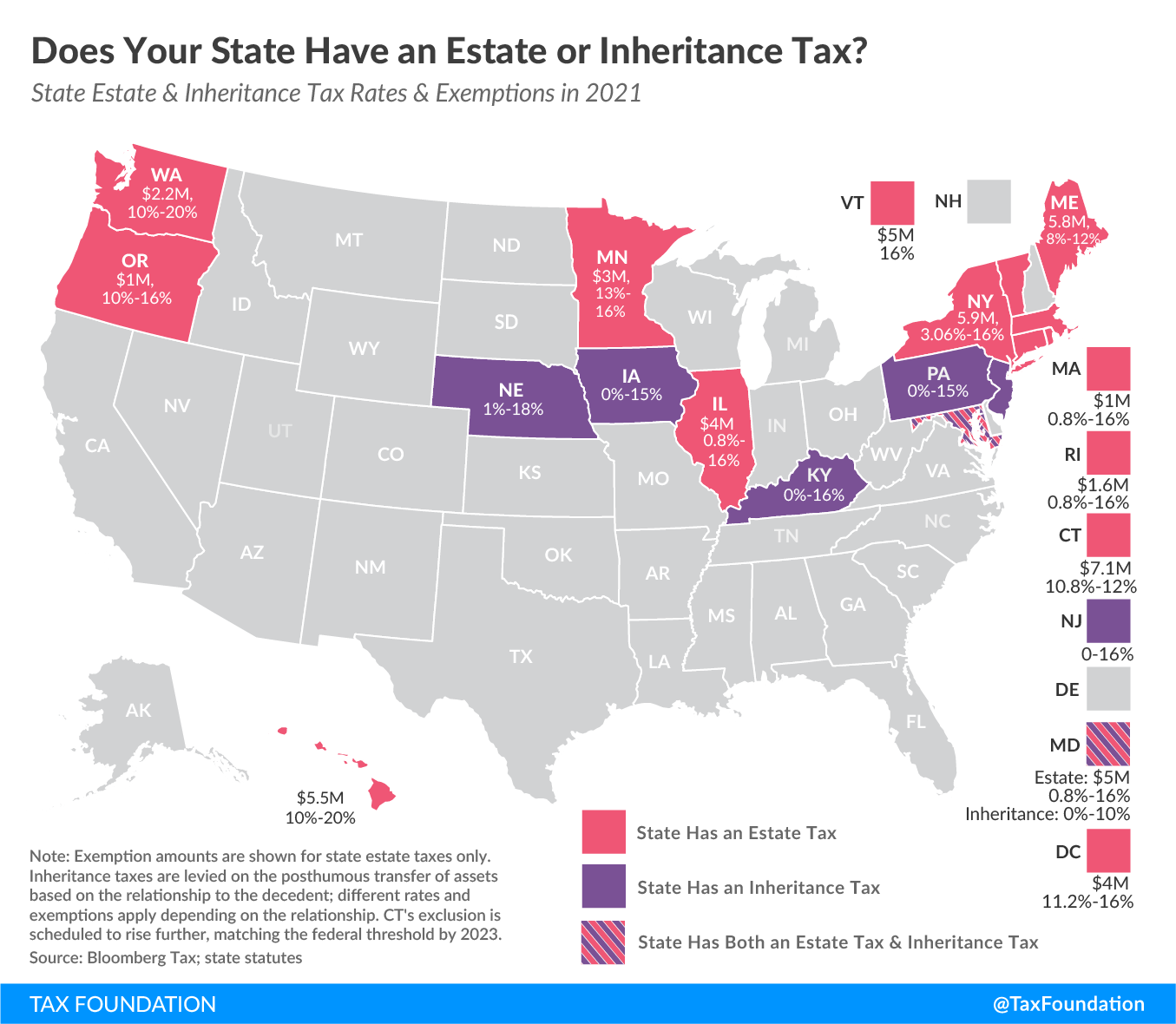
Currently, California is not one of the states that impose its own separate estate tax. This means that residents of California are not subject to an additional layer of taxation on their estates at the state level, beyond what might be applicable if they owned property in a state with an estate tax. This can be a significant financial advantage for estate planning within the state.
However, it’s essential to note that estate tax laws are subject to change. While California currently has no state estate tax, future legislative actions could alter this landscape. Therefore, staying informed about potential changes is always advisable.
Inheritance Tax
It is also important to distinguish estate tax from inheritance tax. An inheritance tax is levied on the beneficiaries who receive assets from an estate, rather than on the estate itself. As of now, California also does not impose an inheritance tax. Only a handful of states in the United States have an inheritance tax.
Estate Planning Considerations in California
Even without a state estate tax, effective estate planning in California is crucial for minimizing tax liabilities and ensuring assets are distributed according to one’s wishes.
Wills and Trusts
A well-drafted will is the cornerstone of any estate plan. It outlines how assets should be distributed, names an executor to manage the estate, and can appoint guardians for minor children. For larger estates or those with specific distribution goals, a trust may offer additional benefits.
Revocable living trusts, for example, can help avoid the probate process, which can be time-consuming and costly. Assets held in a trust can often be transferred to beneficiaries more quickly and privately. While trusts do not inherently avoid federal estate tax, they can be structured to incorporate tax-efficient strategies.
Gifting Strategies
One common strategy to reduce the size of an estate for estate tax purposes is through gifting. The federal Internal Revenue Service (IRS) allows individuals to gift a certain amount each year to any individual without incurring gift tax or using up their lifetime estate tax exemption. For 2024, this annual exclusion is $18,000 per recipient.
Gifting can be a powerful tool for reducing the taxable value of an estate over time, especially for individuals with significant wealth. However, it is crucial to adhere to IRS regulations regarding gift tax. Exceeding the annual exclusion without proper reporting can have tax implications.
Charitable Giving
For individuals with philanthropic interests, making charitable donations can be an effective estate planning strategy. Gifts made to qualified charities during one’s lifetime or designated in a will can reduce the taxable value of an estate. This can also provide significant tax deductions.
Life Insurance
Life insurance policies can play a vital role in estate planning, particularly in providing liquidity to pay estate taxes or to replace assets transferred to heirs. If a life insurance policy is owned by the deceased and the death benefit is payable to their estate, the policy proceeds are included in the taxable estate.
To avoid this, individuals might consider an irrevocable life insurance trust (ILIT). In an ILIT, an independent trustee owns the life insurance policy. The premiums are paid by the grantor (the policy owner), but the policy is not included in the grantor’s taxable estate, and the death benefit passes tax-free to the beneficiaries.
Federal Estate Tax Thresholds and Calculations
While California does not levy an estate tax, understanding the federal thresholds is paramount for California residents with substantial assets.
The Federal Estate Tax Exemption
As previously mentioned, the federal estate tax exemption is a significant figure. For 2024, it is $13.61 million per individual. This means that an estate valued below this amount will not owe federal estate tax. For a married couple, this effectively means up to $27.22 million can be passed to heirs without federal estate tax, assuming proper planning and portability elections.
Taxable Estate Calculation
To determine if an estate is subject to federal estate tax, the first step is to calculate the “gross estate.” This includes the value of all property the decedent owned or had an interest in at the time of death. This can encompass real estate, bank accounts, stocks, bonds, retirement accounts, life insurance proceeds where the decedent had incidents of ownership, and any other assets.
Next, certain deductions are subtracted from the gross estate to arrive at the “taxable estate.” These deductions include:
- Debts and Expenses: Mortgages, credit card debt, funeral expenses, and administrative costs associated with settling the estate (such as legal and accounting fees).
- Marital Deduction: Unlimited deduction for assets passing to a surviving spouse who is a U.S. citizen. This is a powerful tool for deferring estate tax until the death of the surviving spouse.
- Charitable Deduction: Unlimited deduction for assets passing to qualified charitable organizations.
Estate Tax Rates
If the taxable estate exceeds the applicable exemption amount, federal estate tax will be due on the excess. The tax rates are progressive, with the highest rate being 40%.
Example Calculation (Simplified):
Let’s assume a single individual residing in California with a gross estate of $15 million.
- Assume total deductions (debts, administrative expenses) are $500,000.
- The taxable estate would be: $15,000,000 – $500,000 = $14,500,000.
For 2024, the federal exemption is $13.61 million.
- The amount subject to federal estate tax is: $14,500,000 – $13,610,000 = $890,000.
The tax on this $890,000 would be calculated based on the federal estate tax brackets. While the top rate is 40%, the actual tax liability would depend on the specific tax tables for the portion of the estate above the exemption.
Planning for High-Net-Worth Individuals
For high-net-worth individuals residing in California, proactive estate planning is not merely a recommendation but a necessity to manage potential federal estate tax liabilities and ensure efficient wealth transfer.
Advanced Trust Strategies
Beyond the basic revocable living trust, more sophisticated trust structures can be employed. These include:
- Irrevocable Trusts: Once established, these trusts generally cannot be altered or revoked. They are often used to remove assets from the grantor’s taxable estate. Examples include irrevocable life insurance trusts (ILITs), grantor retained annuity trusts (GRATs), and qualified personal residence trusts (QPRTs).
- Dynasty Trusts: These are long-term trusts designed to pass wealth across multiple generations while minimizing estate and generation-skipping transfer (GST) taxes.
- Spousal Lifetime Access Trusts (SLATs): Often used by married couples, SLATs can allow one spouse to benefit from assets transferred into an irrevocable trust for the benefit of the other spouse, while potentially removing those assets from the grantor spouse’s taxable estate.
Minimizing Capital Gains Tax
While not directly an estate tax, capital gains tax is a significant consideration when transferring appreciated assets. Assets that have appreciated significantly in value can trigger substantial capital gains tax if sold by beneficiaries.
However, under current U.S. tax law, beneficiaries who inherit appreciated assets receive a “step-up in basis.” This means their cost basis for the inherited asset is adjusted to its fair market value at the date of the decedent’s death. If the beneficiary then sells the asset shortly after inheriting it, there would be little to no capital gains tax to pay. This makes strategically holding highly appreciated assets until death a viable estate planning tactic for minimizing capital gains tax for heirs.
Business Succession Planning
For business owners in California, succession planning is a critical component of estate planning. This involves determining how the business will be transferred to the next generation or sold. Strategies might include gifting portions of the business during one’s lifetime, establishing employee stock ownership plans (ESOPs), or arranging for a buy-sell agreement. The valuation of a business for estate tax purposes can be complex and often requires specialized expertise.

Conclusion: Proactive Planning for Peace of Mind
While California residents can be thankful for the absence of a state estate tax, the federal estate tax remains a significant consideration for those with estates valued above the substantial exemption threshold. Effective estate planning is about more than just tax mitigation; it’s about ensuring your legacy is preserved and distributed according to your wishes, providing peace of mind for both yourself and your loved ones.
Engaging with experienced estate planning attorneys and financial advisors is essential. They can help you understand your specific situation, explore various tax-efficient strategies, and draft the necessary legal documents to protect your assets and beneficiaries. By taking a proactive and informed approach, California residents can navigate the intricacies of estate planning with confidence, ensuring their financial future and that of their families is secure.
LifeOutOfTheBox is a participant in the Amazon Services LLC Associates Program, an affiliate advertising program designed to provide a means for sites to earn advertising fees by advertising and linking to Amazon.com. Amazon, the Amazon logo, AmazonSupply, and the AmazonSupply logo are trademarks of Amazon.com, Inc. or its affiliates. As an Amazon Associate we earn affiliate commissions from qualifying purchases.