
Navigating the vibrant landscapes and bustling cities of Florida, often dubbed the Sunshine State, is an unforgettable experience for millions of travelers each year. From the pristine beaches of the Gulf Coast to the thrilling theme parks of Orlando and the vibrant culture of Miami, Florida offers an endless array of attractions. However, a smooth journey across this popular destination often involves traversing its extensive network of toll roads. For first-time visitors and even seasoned travelers, understanding how much tolls are and, more importantly, how to efficiently pay them, is crucial for a hassle-free and enjoyable trip.
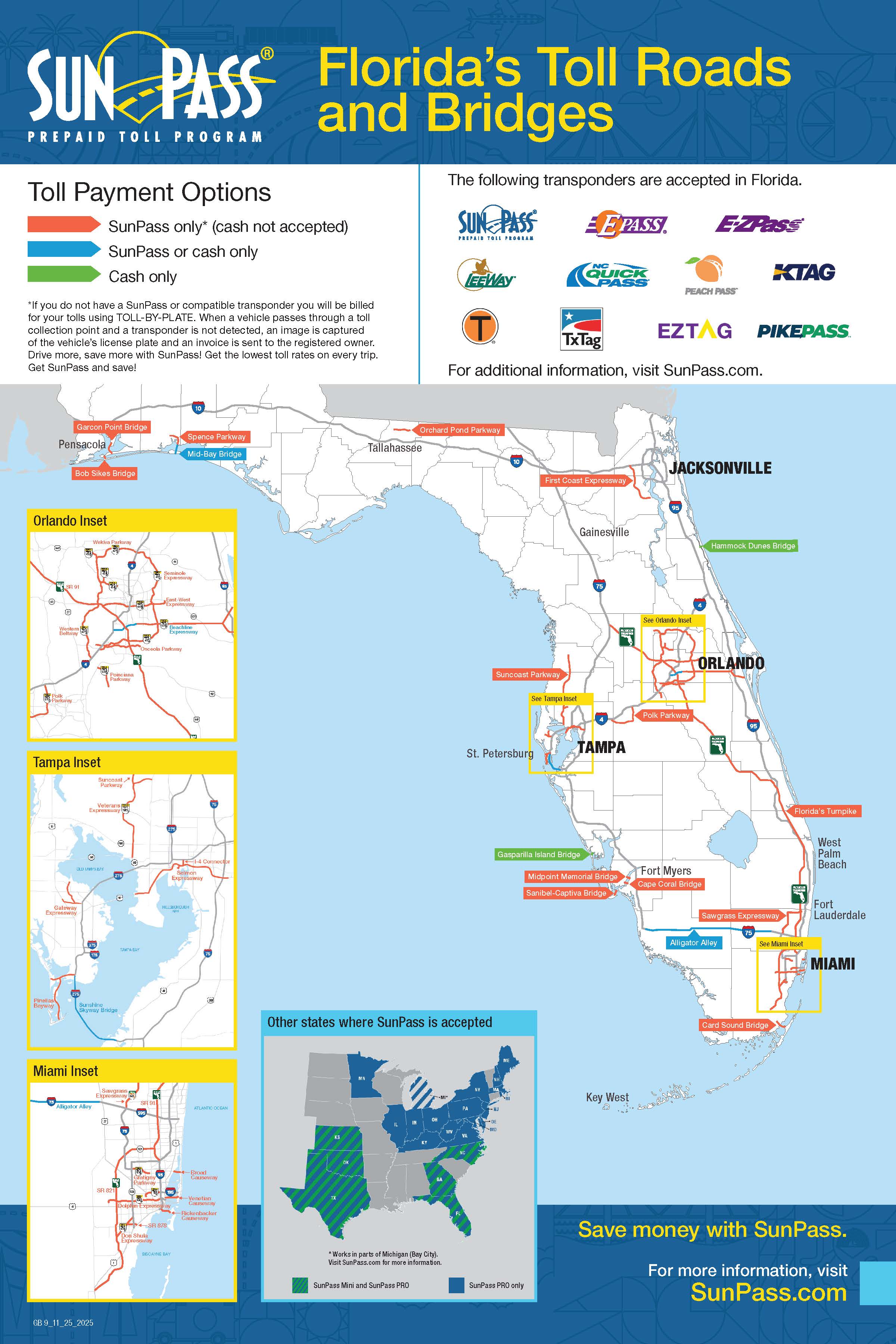
The thought of encountering tolls can sometimes be a source of anxiety, adding an unexpected layer of complexity and cost to your travel plans. Yet, these toll roads are an integral part of Florida’s impressive infrastructure, designed to get you to your desired destination faster and more safely. This comprehensive guide aims to demystify the intricacies of Florida toll roads, covering everything from the reasons behind their existence to the varying costs, major routes, and the most convenient payment methods. By the end of this article, you’ll be equipped with all the necessary knowledge to budget effectively, choose the right payment strategy, and navigate Florida’s roads with confidence, ensuring your focus remains on enjoying your Florida adventure, whether it’s a family vacation, a luxury getaway, or a budget-conscious exploration.
Understanding Florida’s Toll Road Network
Florida’s continuous growth, fueled by both a booming resident population and a staggering influx of tourists, places immense demands on its transportation infrastructure. The state’s strategic use of toll roads is a direct response to this need, providing a self-sustaining mechanism for funding critical transportation projects.
Why Tolls Are Essential in the Sunshine State
The primary reason for Florida’s extensive toll road system is straightforward: funding. Tolls are not simply an added expense; they are an investment in the state’s future and a facilitator of efficient travel today. They directly finance the construction, ongoing maintenance, and vital expansion of highways, bridges, and tunnels across the state. This funding model ensures that these crucial arteries remain in top condition, capable of handling the ever-increasing traffic volumes. Without tolls, the burden of these costs would fall entirely on taxpayers, potentially leading to underfunded projects or increased general taxes.
By dedicating revenue streams to specific road projects, Florida can deliver high-quality infrastructure that reduces congestion, improves travel times, and enhances safety for everyone on the road. For instance, major routes like Florida’s Turnpike, State Road 417 (the Central Florida GreeneWay), and the Beachline Expressway (State Road 528) are prime examples of infrastructure that provides faster, more reliable travel options, especially for those heading to popular tourist destinations or connecting between major urban centers. These roads are designed to offer a premium travel experience, often bypassing congested local routes.
How Florida Toll Costs Are Calculated
The cost of tolls in Florida is not a fixed amount but rather a dynamic figure influenced by several key factors. Understanding these variables is essential for accurate budgeting and avoiding any surprises.
- Road Segment and Distance: Unsurprisingly, the length of the toll road segment you travel directly impacts the cost. A short hop between two exits might set you back as little as $0.50 to $2.00. However, embarking on a longer journey, such as driving the full length of Florida’s Turnpike from Miami to Wildwood or its extensions towards Orlando, can incur costs ranging from $5 to $10 or even upwards of $30 for a passenger car equipped with an electronic transponder. Planning your route and checking estimated toll costs beforehand can significantly help in managing your travel budget.
- Vehicle Type and Axles: The base toll rate applies to standard two-axle passenger cars. However, if you’re traveling in a larger vehicle like a truck, an RV, or a car towing a trailer, you can expect to pay higher rates. This is because tolls are often calculated based on the number of axles a vehicle has, reflecting the increased wear and tear on the road surface. This is a crucial consideration for families on extended road trips with larger vehicles or those exploring Florida’s many campgrounds and RV resorts.
- Payment Method: This is perhaps the most significant factor influencing your toll cost. Florida strongly incentivizes electronic payment methods. Systems like SunPass, E-PASS, and even nationwide E-ZPass transponders almost always offer the lowest toll rates. Conversely, using “Pay-by-Plate” (toll-by-mail) – where cameras photograph your license plate and a bill is mailed to the registered owner – is the most expensive option. These bills typically include administrative fees on top of the actual toll amount, making them considerably higher. Cash payment lanes are rapidly disappearing across Florida and should not be relied upon.
- Time of Day (Dynamic Pricing): Certain express lanes, notably those found on I-95 in South Florida or the I-4 Express in Orlando, utilize dynamic pricing. This means the toll cost fluctuates based on real-time traffic congestion. During peak hours, when traffic is heaviest, tolls will be higher to encourage fewer vehicles to use these lanes, thus maintaining faster travel times for those willing to pay the premium. Travelers focused on budget-friendly travel might opt for non-express lanes during these times, even if it means a slightly longer journey.
Navigating Florida’s Major Toll Routes
Florida’s toll road system is expansive, connecting major metropolitan areas, tourist hubs, and coastal regions. Familiarizing yourself with the key arteries will enhance your travel planning, whether you’re heading to a luxury resort or a charming boutique hotel.
Key North-South and Central Florida Expressways
The backbone of Florida’s toll system is undoubtedly Florida’s Turnpike. This crucial highway runs north-south, stretching from Miami in the south to Wildwood in the north, with significant extensions that reach into the heart of Orlando and beyond. It serves as a vital corridor for residents and tourists alike, providing a faster alternative to parallel, often congested, free interstates. A full journey on the Turnpike for a passenger car with a SunPass transponder can range from $20-$30, a cost that many find worthwhile for the significant time savings and reduced stress, especially during peak travel seasons or when rushing to catch a flight at Orlando International Airport.
In the bustling Orlando corridor, several toll roads managed by the Central Florida Expressway Authority (CFX) are indispensable. The newer I-4 Express lanes aim specifically to reduce congestion on the notoriously busy I-4 corridor, which is central to accessing attractions like Walt Disney World Resort, Universal Orlando Resort, and SeaWorld Orlando. These lanes employ dynamic pricing, so tolls will be higher during peak traffic times, but they offer a valuable option for business travelers or families who prioritize time efficiency. Other key CFX roads include State Road 417 (Central Florida GreeneWay) and State Road 408 (East-West Expressway), which are crucial for navigating around Orlando’s vast array of attractions and connecting to different parts of the city without enduring local street traffic. These expressways are particularly beneficial for guests staying in hotels slightly outside the immediate theme park area, providing quick access to their chosen adventures.
Connecting Orlando International Airport to the Space Coast, including popular destinations like Cocoa Beach and Port Canaveral (a major cruise port), is the Beachline Expressway (State Road 528). This toll road is often the first or last stretch for many international and domestic travelers, offering a direct and efficient route from the airport to coastal accommodations or the awe-inspiring Kennedy Space Center Visitor Complex.
Critical Toll Roads in Miami-Dade and the Everglades
In South Florida, the Miami-Dade Expressway Authority (MDX) manages several vital toll roads that crisscross the bustling Miami metropolitan area. These include SR 112 (the Airport Expressway), which is a gateway from Miami International Airport to downtown and South Beach; SR 836 (the Dolphin Expressway), connecting the airport to the western suburbs and vice versa; SR 874 (the Don Shula Expressway); SR 878 (the Snapper Creek Expressway); and SR 924 (the Gratigny Parkway). These roads are indispensable for navigating Miami’s sprawling urban landscape, providing efficient access to various neighborhoods, business districts, and tourist attractions like the Art Deco Historic District or Vizcaya Museum & Gardens. For business travelers staying in downtown Miami hotels, these expressways ensure timely arrivals for meetings, while luxury travelers can quickly access exclusive dining experiences or upscale shopping areas.
Further west, connecting the Gulf Coast city of Naples to the Atlantic Coast city of Fort Lauderdale is a unique toll road known as Alligator Alley. This section of I-75 crosses the vast and ecologically significant Everglades. Unlike other toll roads with variable pricing, Alligator Alley typically applies a flat rate, making it simpler to budget for this particular segment of your journey. It’s an iconic stretch of highway, offering glimpses of Florida’s wild heart, and is a must-know for anyone traveling between the state’s two coasts.

Seamlessly Paying Florida Tolls
The method you choose to pay for tolls can significantly impact both the cost and convenience of your trip. Florida has largely moved away from cash payments, strongly favoring electronic systems.
Electronic Toll Collection Systems: SunPass, E-PASS, and E-ZPass
For optimal savings and convenience, acquiring an electronic transponder is highly recommended. These systems offer the lowest toll rates and allow for non-stop travel through toll plazas.
- SunPass: This is the official electronic toll collection system for Florida. Drivers can purchase either a SunPass Mini (a sticker transponder that adheres to your windshield) or a SunPass PRO (a portable transponder that can be moved between vehicles). The SunPass PRO is particularly versatile as it is interoperable with E-ZPass states, making it an excellent choice for visitors from the Northeast and Midwest who already use E-ZPass back home. SunPass transponders can be easily purchased at various retail locations across Florida, including major supermarkets like Publix and pharmacies such as CVS and Walgreens, as well as online. Activating and loading funds onto your account is a simple process, ensuring you’re ready to hit the road without delay.
- E-PASS: Operated by the Central Florida Expressway Authority (CFX), E-PASS functions very similarly to SunPass. It is fully compatible with all Florida toll roads and is also interoperable with E-ZPass states. A significant convenience for many travelers, E-PASS transponders are often available for purchase directly at Orlando International Airport, making it easy to acquire one immediately upon arrival. This is especially useful for tourists whose primary destination is Orlando’s theme parks and resorts.
- E-ZPass: If you’re visiting Florida from a state in the Northeast or Midwest that uses E-ZPass, you’re in luck! E-ZPass transponders are now widely accepted on all Florida toll roads, thanks to interoperability agreements with SunPass and E-PASS. This means you might not need to purchase a separate Florida transponder, simplifying your travel preparations.
What to Know About Pay-by-Plate and Cash Payments
While electronic transponders are the preferred method, other options exist, though they come with drawbacks.
- Pay-by-Plate (Toll-by-Mail): If you drive on a Florida toll road without a compatible transponder, cameras will record your license plate, and a bill will be mailed to the registered owner of the vehicle. While this ensures you don’t miss a toll, it is invariably the most expensive option. Pay-by-Plate bills typically include additional administrative fees on top of the base toll amount, making your journey significantly pricier. For rental cars, this system becomes even more complicated and expensive, as rental companies often impose their own substantial administrative fees for processing these tolls, sometimes adding $10-$20 per toll event or per day of use, even if you only use a toll road once.
- Cash: Cash lanes are increasingly rare on Florida toll roads. Many newer toll gantries are completely cashless, and older ones are gradually being converted. Relying on cash for tolls is a risky strategy that can lead to missed tolls, violations, and unnecessary stress. It’s highly advisable to have an electronic payment method or be prepared for Pay-by-Plate if you cannot obtain a transponder.
Essential Tips for Travelers: Budgeting and Planning
A well-planned trip includes factoring in toll costs, regardless of whether you’re embarking on a luxurious Florida escape or a budget-friendly adventure. Strategic planning can save you both money and headaches.
Maximizing Savings and Convenience
- Get a Transponder: This cannot be stressed enough. Whether it’s SunPass or E-PASS, having a transponder will provide you with the lowest toll rates and the smoothest travel experience. For those frequently traveling out of state, the SunPass PRO’s E-ZPass interoperability is a significant advantage. Purchasing one at a local supermarket (Publix), pharmacy (CVS, Walgreens), or online before your trip can be a smart move.
- Budget for Tolls: Integrate estimated toll costs into your overall travel budget. Use online toll calculators provided by SunPass or CFX to estimate costs for your planned routes, especially for long trips or frequent use of toll roads around major cities like Orlando or Miami. This foresight allows budget travelers to allocate funds appropriately and helps luxury travelers confirm their cost expectations.
- Understand Dynamic Pricing: If your route includes express lanes with dynamic pricing (e.g., I-4 Express), be aware that tolls will be higher during peak congestion. If you’re not in a hurry, consider using the general-purpose lanes or planning your travel during off-peak hours to save money.
Rental Cars and Navigation Strategies
- Check Rental Car Toll Policies: This is a critical step. Rental car companies offer various toll programs, which, while convenient, can be notoriously expensive. They might charge a daily fee (even if you don’t use a toll road every day), a per-toll-event fee, or a combination. Read the fine print carefully. In many cases, opting out of their program and using your own transponder (if portable) or a prepaid toll account is significantly cheaper. Some rental companies also offer unlimited toll usage plans for a flat daily fee, which can be cost-effective if you plan extensive toll road use.
- Use Navigation Apps Wisely: Modern navigation apps like Google Maps, Waze, and Apple Maps are invaluable tools. They can display estimated toll costs for your route and, crucially, offer options to “avoid tolls.” While choosing to avoid tolls might increase your travel time, it’s an excellent strategy for budget travelers or those who prefer scenic, less-traveled routes. For example, staying at a hotel slightly off the main toll roads might be cheaper, and using navigation to avoid tolls could make the commute negligible.
- Avoid Cash Lanes: Given their rapid disappearance, do not plan on paying tolls with cash. Attempting to use a cashless lane without an electronic transponder or proper registration can lead to violations and fines, adding unnecessary stress and expense to your trip.
The Broader Impact on Florida Travel and Tourism
Florida’s toll roads are more than just financial mechanisms; they are arteries that pump life into the state’s vibrant tourism and travel industries, directly influencing the experiences of millions of visitors.

Efficiency for Different Travel Styles
The existence of a robust toll road network significantly enhances the overall travel experience by facilitating quicker access to Florida’s world-renowned destinations. Iconic landmarks and attractions such as Walt Disney World Resort, Universal Orlando Resort, SeaWorld Orlando, and the Kennedy Space Center Visitor Complex are all made more accessible. Similarly, the diverse beaches of the Gulf Coast (like those in Clearwater and Sarasota) and the Atlantic Coast (including South Beach and Daytona Beach) are often just a convenient toll road journey away from major airports and inland cities.
While tolls undeniably add to travel costs, the trade-off is often a substantial reduction in travel times. This is particularly valuable during peak seasons, holidays, or major events when Florida’s roads can become heavily congested.
- For Business Travelers: Time is money. The efficiency offered by toll roads means less time stuck in traffic and more time for meetings, conferences, or connecting flights. This convenience aligns perfectly with the demands of business stays, allowing professionals to maximize their productivity.
- For Families: Traveling with children often means prioritizing comfort and minimizing travel stress. Less time stuck in traffic translates directly to more time enjoying attractions, swimming at hotel pools, or relaxing at family-friendly resorts. The investment in tolls can transform a potentially grueling car ride into a smoother, more pleasant part of the vacation experience.
- For Luxury Travelers: Speed, convenience, and a seamless experience are often top priorities for luxury travelers. Toll roads provide precisely that, allowing quick and comfortable transit between upscale hotels, fine dining establishments, and exclusive experiences without the hassle of navigating slower, local routes. The added cost of tolls is a small price to pay for unparalleled efficiency.
- For Budget Travelers: While budget travelers are typically more conscious of every expense, even they can benefit from strategically using toll roads. While avoiding tolls altogether might be an option for some routes and preferences, understanding when a small toll payment can save significant time or prevent getting lost can be a wise decision. Apps like Waze can help them balance cost and time. Accommodation choices might also influence this; choosing a slightly more affordable hotel that requires a toll road commute could still be a net saving if the tolls are managed wisely.
In essence, Florida’s toll roads are a foundational element of its tourism infrastructure. They streamline the journey from airport to hotel, from hotel to attraction, and across the state, ensuring that the vibrancy and allure of the Sunshine State remain accessible and enjoyable for every type of traveler. By taking a proactive approach to understanding and managing toll payments, visitors can ensure their Florida adventure is as smooth and stress-free as possible, leaving more time and energy to create lasting memories.
LifeOutOfTheBox is a participant in the Amazon Services LLC Associates Program, an affiliate advertising program designed to provide a means for sites to earn advertising fees by advertising and linking to Amazon.com. Amazon, the Amazon logo, AmazonSupply, and the AmazonSupply logo are trademarks of Amazon.com, Inc. or its affiliates. As an Amazon Associate we earn affiliate commissions from qualifying purchases.