
Changing your name is a significant personal decision, a lifestyle choice that can mark a new chapter, signify a fresh identity, or simply streamline personal affairs. For residents of Florida, understanding the financial and procedural aspects of this process is crucial. Far from a mere formality, it involves a series of steps, fees, and administrative considerations that can impact various facets of one’s daily life. Navigating this journey requires careful planning, whether you’re seeking to adopt a new surname, correct a misspelling, or fully redefine your given identity. This guide will illuminate the costs involved, the necessary steps, and the broader lifestyle adjustments you can expect when undertaking a legal name change in the Sunshine State.

Understanding the Landscape of Name Changes in Florida
The decision to change one’s name is deeply personal, often driven by profound life events or a desire for self-redefinition. For some, it’s a matter of reclaiming identity after a divorce, while for others, it’s about aligning with cultural heritage, personal preference, or gender identity. Whatever the motivation, Florida’s legal system provides a clear, albeit detailed, pathway for individuals to formalize this change.
It’s important to distinguish between different types of name changes. Marriage and divorce often facilitate a simpler administrative process for changing a surname, typically handled within the marriage license application or divorce decree. This article, however, primarily focuses on the more common scenario: changing one’s name by petitioning the court, which is necessary for most other circumstances, including changing a first name, a full name for personal reasons, or a minor’s name. This process, while empowering, requires careful adherence to legal protocols and involves specific costs.
The journey generally begins with filing a Petition for Name Change with the local Circuit Court in the county where you reside. This initiates a judicial review of your request, ensuring that the change is not for fraudulent purposes and is in the public interest. The process can vary slightly from county to county, but the core requirements and most significant costs remain consistent across Florida.
Deconstructing the Costs: Court Fees and Beyond
The financial outlay for a name change in Florida can be broken down into several key categories. These are typically non-negotiable and form the foundational expenses for the legal process.
Filing Fees
The most immediate cost you will encounter is the filing fee for your Petition for Name Change. This fee is paid directly to the Clerk of the Circuit Court in your respective county. While the exact amount can fluctuate slightly between counties and may be subject to periodic updates, it generally falls within a predictable range. As of recent estimates, these fees can range from approximately $400 to $450.
For instance, residents in Miami-Dade County might find the filing fees similar to those in Orange County or Hillsborough County, typically hovering around the $400-$420 mark. It’s imperative to check the specific fee schedule on your local county Clerk of Court’s website, as these can change without extensive public notice. This initial payment is crucial as your petition will not be processed until the fee is paid in full. There might also be smaller additional fees for copies of documents, summons issuance (if applicable), or service of process if you need to formally notify another party (e.g., a non-custodial parent in a minor’s name change case).
Fingerprinting and Background Checks
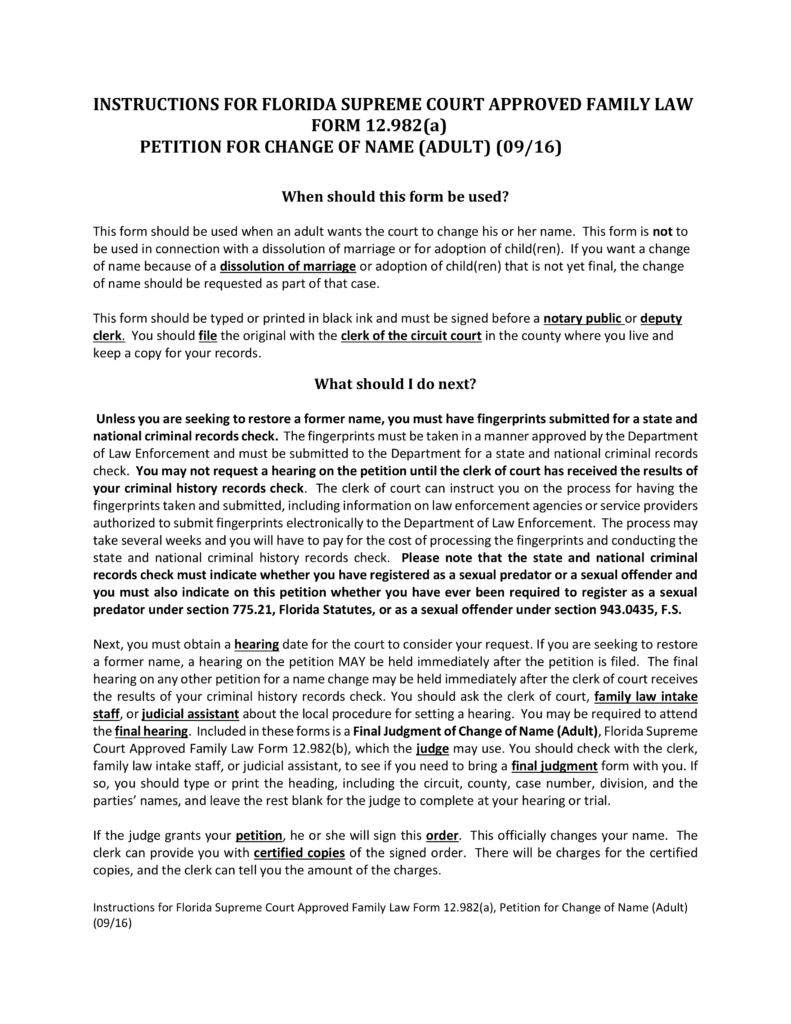
A critical requirement for most adult name changes in Florida is a background check, which involves fingerprinting. This step is mandated to ensure that the individual is not attempting to change their name to evade criminal prosecution, escape creditors, or engage in fraudulent activities. You will typically need to be fingerprinted by an authorized LiveScan provider.
The cost for fingerprinting services usually ranges from $60 to $80, depending on the provider. This fee covers the process of capturing your fingerprints electronically and submitting them to the Florida Department of Law Enforcement (FDLE) for a state and federal criminal history check. The results are then sent directly to the court. This step is a mandatory safeguard in the name change process, underscoring the legal seriousness of altering one’s identity. Minors usually do not require fingerprinting unless specifically ordered by the court for a particular reason.
Publication Requirements
In some Florida jurisdictions, particularly when changing a minor’s name, or if the court deems it necessary for an adult, there may be a requirement to publish notice of the name change petition in a local newspaper. The purpose of this publication is to provide public notice, allowing any interested parties (such as a non-custodial parent, for a minor’s name change) to raise objections if they have legitimate legal grounds.
The cost of publication can vary widely depending on the newspaper and the county, but it generally ranges from $100 to $200. While not universally required for all adult name changes, it’s a potential expense to be aware of and can significantly impact the overall budget if applicable to your case. Always confirm with your county’s Clerk of Court or a legal professional if this step is necessary for your specific situation.
Optional Yet Significant Expenses: Legal Assistance
While some individuals choose to navigate the name change process independently, the decision to hire an attorney represents a significant optional expense that can offer considerable peace of mind and expertise.
The DIY Route vs. Attorney Representation
For straightforward name changes, especially when there are no complications like a criminal history, outstanding debts, or objections from other parties, many individuals successfully complete the process themselves. This “DIY” approach can save on legal fees but requires careful attention to detail, form completion, and adherence to court procedures. The Florida court system provides self-help forms and resources that can assist in this endeavor.
However, situations quickly become more complex. If you have a prior felony conviction, are seeking to change a minor’s name without the consent of both parents, anticipate objections, or simply find the legal jargon overwhelming, hiring an attorney is highly recommended. Legal professionals are adept at navigating the nuances of the law, ensuring all forms are correctly filed, and representing your interests in court. Attorney fees can vary significantly. Some attorneys offer flat fees for name change services, which might range from $700 to $1,500, depending on the complexity of the case and the attorney’s experience. Others may charge hourly rates, which can range from $200 to $400 per hour, making the total cost dependent on the time spent on your case.
Benefits of Legal Counsel
Engaging legal counsel, though an added expense, provides several tangible benefits. An attorney can ensure that all required forms are correctly filled out and submitted, avoiding delays or rejections due to procedural errors. They can also provide invaluable advice on the specific requirements in your county, prepare you for court hearings, and represent you if unforeseen complications arise, such as an objection to your petition. For cases involving minors, especially when parental consent is contested, an attorney’s expertise in presenting arguments and navigating family law can be indispensable. The investment in legal representation can ultimately save time, reduce stress, and ensure a smooth, successful outcome, especially when the case is complex.
Post-Judgment Expenses and Lifestyle Adjustments
Obtaining a court order for your name change is a pivotal moment, but it’s just the beginning of fully integrating your new identity into your lifestyle. A series of administrative updates are required, each potentially incurring minor costs and demanding your time and attention.
Updating Official Documents
Once your name change order is signed by a judge, you will need to obtain certified copies from the Clerk of Court. These certified copies are your official proof of the name change and will be required by various agencies. You’ll typically pay a small fee per certified copy, often around $2-$5.
The immediate priorities for updating documents include:
- Social Security Card: The Social Security Administration (SSA) is usually the first agency to notify. There is no fee to update your Social Security card, but it’s essential for ensuring your employment records and tax information are consistent.
- Driver’s License or State ID: The Florida Department of Highway Safety and Motor Vehicles (FLHSMV) requires you to update your driver’s license or state ID. This typically involves a fee for a new card, similar to what you’d pay for a renewal, plus the cost of new photos if needed.
- Passport: If you have a passport, you’ll need to apply for a new one with the U.S. Department of State. The fees for a new passport or passport card can range from $30 to $130, plus any expedited service fees or photo costs.
Beyond these primary documents, you’ll need to update your name with a myriad of other entities:
- Banks, credit unions, and other financial institutions.
- Credit card companies.
- Utility companies (electricity, water, internet, etc.).
- Insurance providers (health, auto, home).
- Employment records and human resources departments.
- Educational institutions (transcripts, diplomas).
- Professional licensing boards (for doctors, lawyers, nurses, etc.).
- Voter registration.
- Property deeds, vehicle titles, and other legal documents.
While many of these updates don’t incur direct fees, they require time, effort, and potentially postage costs or new photos.
The Broader Lifestyle Impact
The lifestyle impact of a name change extends beyond administrative tasks. Emotionally and psychologically, it can be a profoundly affirming experience, solidifying a new identity or personal transition. However, it also comes with an administrative burden that can last for weeks or even months. You’ll need to meticulously update every record, account, and document to ensure consistency. Inconsistencies can lead to complications with banking, travel, employment, and even receiving mail.
Consider the time commitment required for making phone calls, filling out forms, visiting various offices in cities like Tallahassee, Tampa, Orlando, or Jacksonville, and waiting for new documents to arrive. This period requires patience and meticulous record-keeping. Embracing a new name is a holistic lifestyle adjustment, signifying a fresh start that permeates both your personal and public life.
Strategies for Managing Costs and Navigating the Process
Successfully changing your name in Florida involves not just understanding the costs but also strategic planning to manage them and streamline the process.
Research Local Clerk of Courts
The most effective first step is to thoroughly research the specific requirements and fees of your county’s Clerk of Circuit Court. While state laws establish the general framework, county courts often have their own specific forms, local rules, and fee schedules. Most counties, like Miami-Dade County or Hillsborough County, maintain comprehensive websites where you can find detailed instructions, downloadable forms, and current fee information. Some even offer self-help sections specifically for name changes. A direct call to the Clerk’s office or a visit to their self-help center can clarify any uncertainties regarding fees, required documents, and procedural steps unique to your jurisdiction.
Utilizing Available Resources
Florida offers several resources that can help individuals navigate the name change process, especially for those on a limited budget. Many courthouses have self-help centers staffed by clerks who can provide general information and guidance on completing forms, though they cannot offer legal advice. For low-income individuals, legal aid societies across the state may offer pro bono or low-cost legal assistance. Organizations focused on specific communities, such as LGBTQ+ legal services, often provide specialized support for name and gender marker changes, which can include guidance on financial assistance or reduced fees. Exploring these options can significantly reduce the financial burden of legal representation.

Budgeting for the Entire Process
A comprehensive budget is essential to avoid surprises. Create a checklist of all potential costs:
- Court filing fees.
- Fingerprinting fees.
- Publication fees (if applicable).
- Attorney fees (if retaining counsel).
- Costs for certified copies of the court order.
- Fees for new driver’s license/ID, passport, and other identification documents.
- Incidental costs like postage, notary fees, and new photos.
Beyond financial costs, allocate time in your schedule for the various appointments, court hearings, and administrative tasks required. Factor in the time it will take to update all your personal and professional documents. By meticulously planning and understanding all facets of the process, you can ensure a smoother transition into your new name and the lifestyle that comes with it. The journey to a new name in Florida is an investment in your personal identity, and with careful preparation, it can be a rewarding experience.
LifeOutOfTheBox is a participant in the Amazon Services LLC Associates Program, an affiliate advertising program designed to provide a means for sites to earn advertising fees by advertising and linking to Amazon.com. Amazon, the Amazon logo, AmazonSupply, and the AmazonSupply logo are trademarks of Amazon.com, Inc. or its affiliates. As an Amazon Associate we earn affiliate commissions from qualifying purchases.