
Planning a trip to the vast and diverse Lone Star State, contemplating a long-term stay, or even considering a permanent move to cities like Austin, Dallas, or Houston? Understanding the ins and outs of vehicle registration in Texas is more than just a bureaucratic formality; it’s a crucial piece of your financial planning puzzle. For travelers, it impacts budget considerations for extended explorations, while for new residents, it’s a fundamental step in establishing your life in this dynamic state. Given Texas’s immense size and myriad attractions, from the bustling urban centers to the serene beauty of Big Bend National Park and the coastal charm of South Padre Island, having a reliable and legally registered vehicle is often essential for truly experiencing what the state has to offer. This guide will break down the costs, processes, and implications of vehicle registration in Texas, helping you navigate the system whether you’re embarking on an epic road trip, planning a seasonal stay, or settling into your new Texas lifestyle.
Understanding Vehicle Registration in Texas
Vehicle registration in Texas is a mandatory annual requirement for all residents and those who establish residency within the state. It’s a system designed to ensure vehicles meet safety and emissions standards, contribute to road maintenance, and provide a clear record of vehicle ownership and operation. The process involves several components, each contributing to the total fee you’ll pay, and it’s important to understand these individual elements to accurately budget for your vehicle.
The Basics: What You Need to Know
At its core, vehicle registration in Texas signifies that your vehicle is legally permitted to operate on public roads. This annual renewal includes a base registration fee, but also encompasses other charges that vary slightly depending on your location and vehicle type. Before you can even register your vehicle, it must pass a state inspection, ensuring it meets specific safety and, in some counties, emissions standards. This inspection is typically handled by licensed inspection stations, and the results are electronically submitted to the state. Once your vehicle passes, you can proceed with the registration process, usually handled by your county tax assessor-collector’s office or online.
The primary entities involved in this process are the Texas Department of Motor Vehicles (TxDMV), which oversees the registration system, and the Texas Department of Public Safety (TxDPS), which regulates vehicle inspections. Understanding their roles helps streamline the process. The total cost is a combination of a fixed state fee, potential county-specific charges, and the upfront inspection fee. This structure ensures that funds are collected for various purposes, from maintaining state infrastructure to local road and bridge improvements.
Breaking Down the Costs
Let’s delve into the specific financial components that make up the total vehicle registration cost in Texas. These figures are subject to change, but they provide a solid estimate for budgeting:
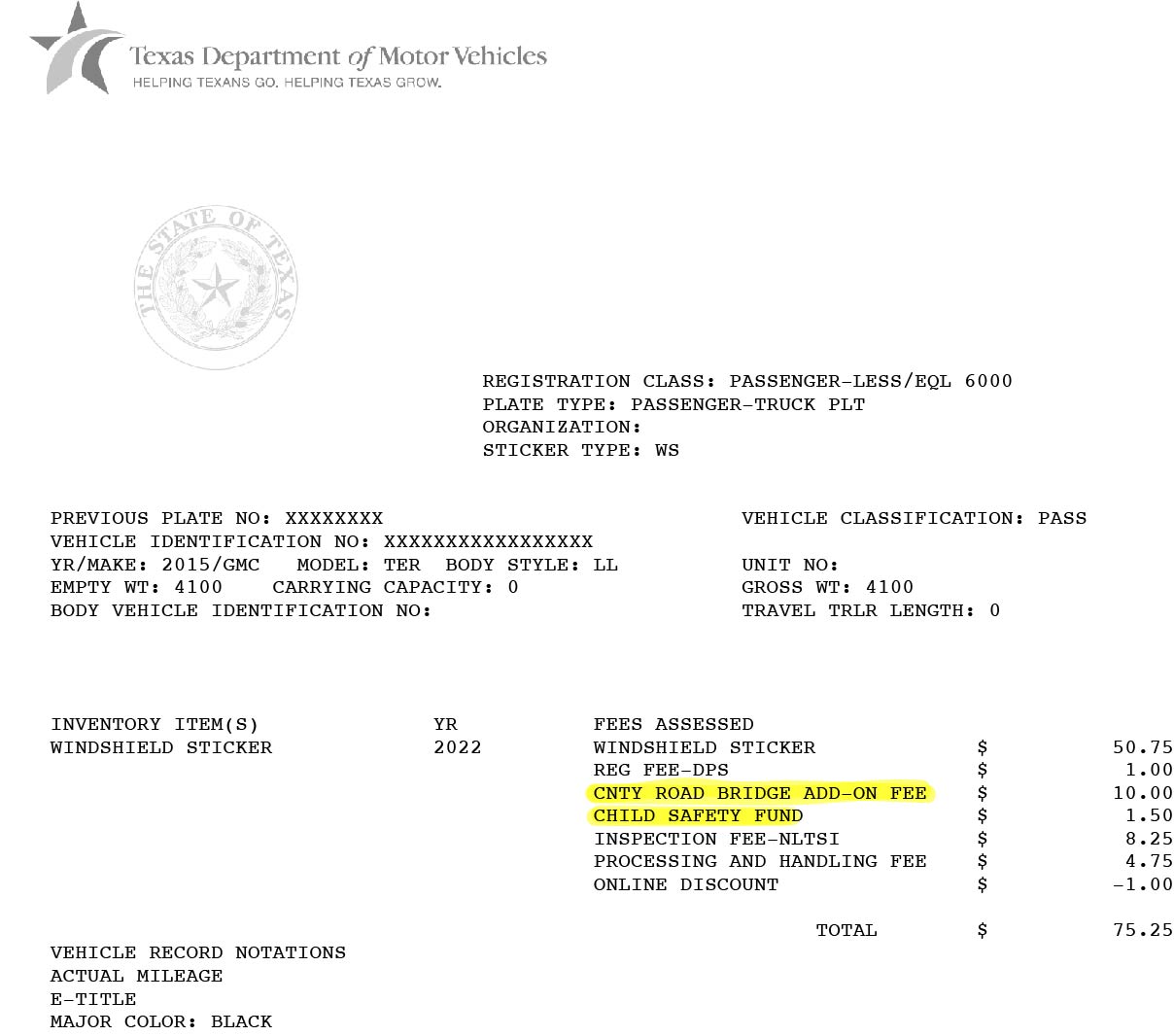
- Base Registration Fee: For most standard passenger vehicles (cars and light trucks), the state’s base registration fee is typically $50.75. This is the core charge for the privilege of operating your vehicle on Texas roadways. Certain vehicle types, such as motorcycles, commercial vehicles, or vehicles with personalized license plates, may have different base fees.
- Inspection Fee: This is a separate charge paid directly to the inspection station before you even go to register your vehicle. The inspection fee varies based on the type of inspection required:
- Safety Inspection: For vehicles requiring only a safety inspection, the fee is generally around $7.00. This applies to most parts of Texas.
- Safety and Emissions Inspection: In certain counties, primarily those with larger populations and higher traffic density like Harris County (Houston), Dallas County, Travis County (Austin), and Bexar County (San Antonio), an emissions inspection is also required. The combined safety and emissions inspection fee is typically around $18.50 to $25.50, depending on the vehicle’s model year and fuel type.
- Local and Optional County Fees: Many counties levy additional fees that contribute to local infrastructure and services. These can include:
- Road and Bridge Fee: Often around $10.00, this fee directly supports the maintenance and improvement of county roads and bridges.
- Automation Fee: A small charge, usually $1.00, to cover the costs of the automated registration system.
- Optional County Fees: Some counties may have specific fees, often around $5.00, for local services.
- Processing and Handling Fees: When renewing online, there might be a small processing or convenience fee, typically a few dollars, added to the total.
Combining these elements, the annual cost for registering a standard passenger vehicle in Texas typically ranges from $68.00 to $95.00, depending on your county’s specific requirements (especially regarding emissions inspections) and any additional local fees. This range provides a good estimate for budgeting, but it’s always wise to check with your specific county tax assessor-collector’s office for the most precise figures.
Registration for New Residents and Long-Term Stays
Texas’s growing economy, vibrant culture, and diverse landscapes attract thousands of new residents and long-term visitors each year. Understanding vehicle registration requirements is paramount for anyone planning an extended stay or a permanent relocation to the Lone Star State. The rules differ significantly for those establishing residency versus those merely passing through or visiting for a short period.
Moving to the Lone Star State
If you’re making Texas your new home, there are specific steps and timelines you need to be aware of for vehicle registration. Once you establish residency (which can be defined by actions such as obtaining a Texas driver’s license, registering to vote, or enrolling children in school), you generally have 30 days to register your out-of-state vehicle in Texas.
The process for out-of-state vehicles typically involves:
- Obtain a Texas Vehicle Inspection: Before you can register, your vehicle must pass a state inspection. Find a licensed inspection station; they will issue a Vehicle Inspection Report (VIR) electronically.
- Gather Required Documents: You’ll need your out-of-state title or current registration receipt, proof of financial responsibility (liability insurance that meets Texas minimum requirements), and your current driver’s license or other valid identification. If your vehicle has a lien, you may also need a copy of the lienholder’s information.
- Visit Your County Tax Assessor-Collector’s Office: With your VIR and all necessary documents, visit the local tax office in your county of residence. Here, you will pay the registration fees, any applicable sales tax (if you just purchased the vehicle and haven’t paid sales tax in Texas), and potentially title transfer fees. You will receive new Texas license plates and a registration sticker.
Failing to register within the 30-day window can result in fines and penalties, so it’s advisable to prioritize this task shortly after your arrival. This step is a fundamental aspect of integrating into your new Texas lifestyle, ensuring compliance with state laws.

Planning an Extended Texas Adventure
For those planning an extended stay in Texas without establishing permanent residency, the rules are generally more lenient regarding vehicle registration. If you are visiting from another state for tourism, temporary work, or education and maintain your out-of-state residency (e.g., you still have a driver’s license and vehicle registration from your home state), you typically do not need to register your vehicle in Texas.
However, “extended stay” can be a gray area. If you anticipate being in Texas for many months, perhaps living in a furnished apartment in Houston or an Airbnb in San Antonio for a significant portion of the year, it’s prudent to understand what might trigger residency requirements. Engaging in activities that signify intent to reside, such as obtaining employment, enrolling children in local schools, or leasing property for an extended period, could legally obligate you to register your vehicle.
For digital nomads, seasonal workers, or retirees spending winters in warmer climates like South Padre Island, clarity is key. If your stay is truly temporary and your primary residence remains elsewhere, you should be fine with your home state’s registration. However, if your long-term plan is ambiguous, or if you’re considering a “snowbird” lifestyle that involves many months in Texas, a quick call to the TxDMV or your county tax office can provide peace of mind and prevent future complications. This decision has implications for your overall accommodation and lifestyle planning, as potential fines could significantly impact your budget travel experience.
The Broader Impact on Your Texas Travel Budget
Understanding the cost of vehicle registration is just one piece of the puzzle when budgeting for driving in Texas. To truly grasp the financial commitment, it’s essential to consider other car-related expenses that will undoubtedly factor into your travel plans, whether you’re exploring the state’s iconic landmarks or simply commuting for a business stay. These costs collectively influence your lifestyle and travel budget, determining how freely you can explore the vast Lone Star State.
Beyond Registration: Other Car-Related Expenses
- Fuel Costs: Texas is massive. Driving from El Paso to Texarkana is roughly the same distance as driving from Chicago to New York City. This means significant fuel consumption, especially if you plan to visit multiple attractions like the historic Alamo in San Antonio, the Space Center Houston, or the sprawling Big Bend National Park. Fuel prices fluctuate, but budgeting a substantial amount for gas is crucial for any Texas road trip.
- Vehicle Insurance: Texas law mandates liability insurance for all registered vehicles. The cost of insurance can vary widely based on your driving record, vehicle type, age, and location within the state. Urban areas like Dallas and Houston often have higher premiums due to increased traffic and accident rates. This is a non-negotiable annual expense that needs to be factored in alongside registration.
- Maintenance and Repairs: While not a direct cost of driving, keeping your vehicle in good working order is essential, especially given the long distances involved in Texas travel. Unexpected repairs can derail a meticulously planned budget. Regular maintenance, such as oil changes and tire rotations, will help prevent major issues and contribute to a safer, more enjoyable journey.
- Tolls: Texas, particularly its major metropolitan areas, has an extensive network of toll roads, bridges, and express lanes. Cities like Dallas, Houston, and Austin rely heavily on these managed lanes to ease congestion. While avoiding them is often possible, using toll roads can significantly shorten travel times, especially during peak hours. Many toll roads are cashless and require a TollTag or similar electronic transponder, or you will be billed by mail at a higher rate. Ignoring these bills can lead to additional fees and even registration holds. Budgeting for occasional tolls, especially when navigating urban landscapes or trying to reach attractions efficiently, is a smart move.
- Parking Fees: While many attractions offer free parking, some popular destinations, especially in downtown areas or at major event venues, may charge for parking. For instance, staying at a premium hotel in downtown Austin or visiting the Dallas Arts District might incur daily parking fees. These seemingly small costs can add up over an extended trip, influencing your overall accommodation and travel choices.
Exploring Texas: Why a Registered Vehicle Matters
For many, exploring Texas is synonymous with hitting the open road. The sheer scale of the state means that a personal vehicle offers unparalleled freedom and flexibility, allowing you to truly immerse yourself in the diverse local culture and attractions. From the historic missions of San Antonio River Walk to the vibrant music scene of Austin, and the rugged beauty of the Chisos Mountains in Big Bend National Park, many of Texas’s most cherished experiences are best accessed by car.
Having a properly registered vehicle ensures you can explore these destinations without legal concerns, making your tourism experience smoother and more enjoyable. It allows for spontaneous detours to charming small towns, hidden gems, or roadside BBQ joints that might be inaccessible via public transport. For those planning a luxury travel experience, a reliable, registered vehicle means seamless transitions between five-star resorts and exclusive attractions. For budget travelers, it offers the flexibility to seek out more affordable accommodation options slightly outside city centers or explore free natural landmarks. Ultimately, a legally registered and well-maintained vehicle is not just a mode of transport; it’s a key enabler for a rich and authentic Texas travel and lifestyle experience, providing the freedom to chart your own course through the Lone Star State’s captivating offerings.
Streamlining the Registration Process for a Smooth Journey
Navigating administrative processes can sometimes feel daunting, especially when you’re in a new state or planning an exciting travel itinerary. However, with a little preparation, registering your vehicle in Texas can be a straightforward task, ensuring your journey through the Lone Star State is as smooth and hassle-free as possible. For new residents, it’s a foundational step to a successful relocation, and for long-term visitors, it provides peace of mind.

Tips for a Hassle-Free Experience
To make your vehicle registration experience efficient and prevent any unnecessary delays, follow these practical tips:
- Gather All Documents in Advance: Before heading to the inspection station or the county tax assessor-collector’s office, ensure you have all required paperwork in hand. This typically includes:
- Proof of Liability Insurance: Your policy must meet Texas’s minimum coverage requirements.
- Valid Photo Identification: Your driver’s license or other government-issued ID.
- Vehicle Inspection Report (VIR): This electronic report confirms your vehicle passed inspection. While it’s electronically transmitted, having a printout or digital copy can be helpful.
- Previous Registration or Title: For renewals, your current registration certificate. For new registrations (especially out-of-state vehicles), your vehicle’s title or current out-of-state registration.
- Proof of Sales Tax Payment (if applicable): If you recently purchased the vehicle and paid sales tax in Texas, have proof. If not, you’ll pay sales tax at the tax office.
- Complete Your Vehicle Inspection First: This is a crucial step. Your vehicle must pass inspection before it can be registered. Locate a certified Texas inspection station (many garages and service centers are authorized) and complete this step. The results are electronically sent to the state, making it easier for the tax office.
- Check for Online Renewal Eligibility: If you are simply renewing an existing Texas registration, you might be eligible to do so online through the TxDMV website or at designated third-party vendors. Online renewal is convenient and often quicker, requiring only your current registration information and a valid credit card. Ensure your inspection is up to date before attempting online renewal. This is particularly useful for those on business stays with limited time.
- Verify County-Specific Requirements: While most aspects of registration are statewide, some local fees and specific procedures can vary slightly from county to county. Before you go, a quick check on your specific county’s tax assessor-collector’s website can save you time and prevent surprises. For instance, Travis County (Austin) and Harris County (Houston) will have different emissions testing requirements than more rural counties.
- Plan Your Visit: County tax offices can be busy, especially at the end of the month or year. Consider visiting during off-peak hours or days if possible. Some offices allow you to schedule appointments or check wait times online, optimizing your visit for efficiency.
By following these tips, you can transform what might seem like a bureaucratic chore into a quick and easy process. A smoothly registered vehicle means you can focus on enjoying your Texas experiences, whether you’re embarking on a road trip to the historic Fort Worth Stockyards National Historic District, exploring the vibrant nightlife of Austin, or simply navigating your daily commute during a long-term business stay. It’s all part of ensuring your travel and lifestyle in the Lone Star State are as fulfilling and stress-free as possible.
In conclusion, understanding the costs and process of vehicle registration in Texas is a fundamental aspect of planning any extended stay or permanent relocation to the state. While the base registration fee and inspection costs are relatively modest, ranging typically from $68 to $95 annually, it’s crucial to factor these into your overall budget. Beyond the registration itself, consider the broader financial implications including fuel for vast Texas distances, mandatory insurance, potential toll road usage, and parking fees. Whether you’re a new resident eager to explore destinations like the San Antonio River Walk or a seasoned traveler planning a long-term visit, a properly registered vehicle ensures you can navigate the Lone Star State legally and confidently. By preparing your documents, understanding the process, and accounting for all vehicle-related expenses, you can ensure your Texas adventure is not only memorable but also financially sound, contributing to a seamless travel and lifestyle experience.
LifeOutOfTheBox is a participant in the Amazon Services LLC Associates Program, an affiliate advertising program designed to provide a means for sites to earn advertising fees by advertising and linking to Amazon.com. Amazon, the Amazon logo, AmazonSupply, and the AmazonSupply logo are trademarks of Amazon.com, Inc. or its affiliates. As an Amazon Associate we earn affiliate commissions from qualifying purchases.