
Texas, often lauded for its vast landscapes, vibrant culture, and booming economy, also offers a significant financial advantage to its homeowners: the homestead exemption. This vital protection shields a portion of a homeowner’s equity from property taxes and creditors, making homeownership in the Lone Star State even more appealing. But what exactly is the Texas homestead exemption, and how much does it amount to? This guide delves into the intricacies of this crucial benefit, exploring its impact on property taxes, its protection against debt, and who qualifies for this significant financial relief.
While the initial question might seem straightforward, understanding the Texas homestead exemption requires a closer look at its different facets and the legal framework that governs it. It’s not a one-size-fits-all answer, as the exemption’s value can be influenced by various factors. For those considering a move to Texas, planning a long-term stay, or simply aiming to optimize their lifestyle, grasping the nuances of this exemption is essential. Whether you’re dreaming of a sprawling ranch near Austin or a chic apartment in Dallas, knowing about homestead exemptions can significantly affect your financial planning and overall sense of security.
Understanding the Texas Homestead Exemption: More Than Just a Tax Break
The Texas homestead exemption is fundamentally a legal provision designed to protect a person’s primary residence from forced sale to satisfy certain debts and to reduce the burden of property taxes. It’s a cornerstone of Texas law, reflecting the state’s commitment to safeguarding its citizens’ homes. This dual purpose – protection from creditors and relief from property taxes – makes it a powerful tool for homeowners.
Protection Against Creditors
One of the most significant aspects of the Texas homestead exemption is its robust protection against creditors. In Texas, a debtor’s homestead is largely exempt from seizure and forced sale by most creditors. This means that if you default on certain debts, such as unsecured loans or credit card balances, a creditor generally cannot force the sale of your homestead to satisfy the debt. This protection extends to a substantial amount of equity. The exemption is generous, covering up to 10 acres of land for a single person or a family, and up to 20 acres for a homestead on an urban tract. This means that even with significant debt, your primary residence remains a secure haven.
However, it’s crucial to understand that this protection is not absolute. Certain debts are specifically excluded from the homestead exemption. These typically include:
- Purchase Money Mortgages: The most common exception. If you took out a loan to purchase your home, that mortgage lender can foreclose if you fail to make payments.
- Property Taxes: Delinquent property taxes are a significant threat to homesteads. If you fall behind on your property taxes, the taxing authority can place a lien on your property and eventually force a sale to recover the owed amount.
- Home Equity Loans and Refinancing: Loans taken out against the equity of your home are also typically exempt from the full protection. However, Texas law places strict limits on the amount of debt that can be secured by a homestead in this manner.
- Mechanic’s and Materialman’s Liens: If you contract for work on your home and fail to pay the contractor or subcontractors, they can file a lien on your property.
- Federal Tax Liens: Federal tax debts can supersede state homestead exemptions.
Understanding these exceptions is vital. While the exemption offers broad protection, it’s not a shield against all financial obligations. For example, if you’re planning a stay at a luxurious Resort at Dominion and accrue significant personal debt, your primary residence in Texas would likely remain protected, but not if you fail to pay for that resort stay and it results in a judgment against you.
Property Tax Relief
Beyond creditor protection, the Texas homestead exemption offers a direct benefit in the form of reduced property taxes. Texas property taxes are levied by local taxing entities such as cities, counties, school districts, and special districts. The value of a homestead exemption can significantly lower the taxable value of your home, thereby reducing your annual property tax bill.
There are several types of homestead exemptions available in Texas, each offering a different level of tax relief:
1. General Homestead Exemption
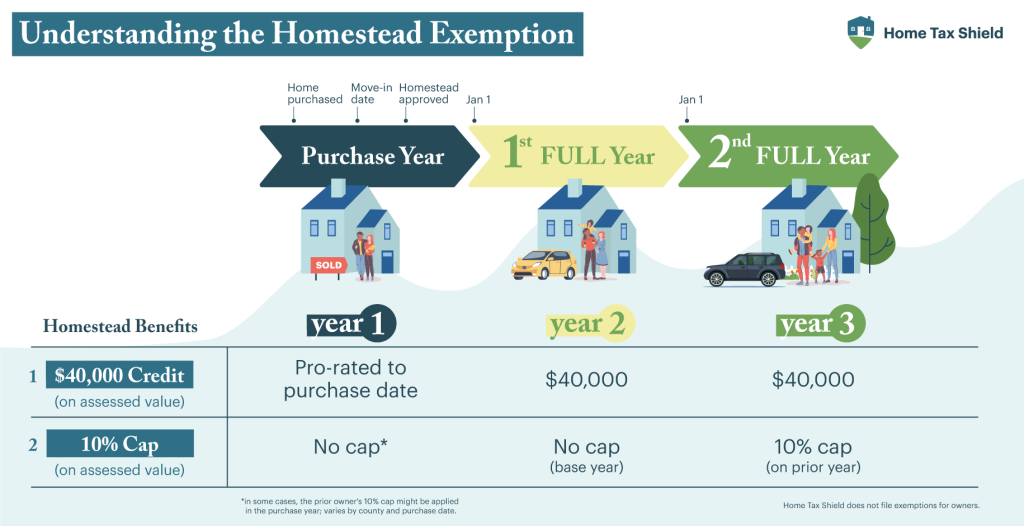
This is the most common homestead exemption and is available to all Texas homeowners who occupy their primary residence. It provides a mandatory $40,000 exemption from property taxes for school district purposes. This means that the first $40,000 of your home’s appraised value is not subject to school district taxes. This is a substantial benefit, especially for homeowners in areas with high property values.
2. Additional Homestead Exemptions (Local Option)
In addition to the mandatory $40,000 school exemption, local taxing entities can choose to offer additional homestead exemptions. These are optional and vary by jurisdiction.
- 10% School District Exemption (Optional): School districts can opt to provide an additional exemption of 10% of the home’s appraised value, with a minimum exemption of $5,000. This is on top of the $40,000 exemption.
- $5,000 Exemption for County Tax Purposes (Optional): Counties can offer a $5,000 exemption on county property taxes.
- $5,000 Exemption for Municipal or Junior College Tax Purposes (Optional): Cities and junior college districts can also offer a $5,000 exemption on their respective property taxes.
The actual amount of property tax relief you receive will depend on which of these optional exemptions your local taxing authorities have adopted. For instance, a homeowner in San Antonio might benefit from different local exemptions than someone living in a rural area in West Texas. The Texas Comptroller of Public Accounts provides resources to help taxpayers understand the specific exemptions available in their area.
3. Age 65 or Older/Disabled Homestead Exemption
For homeowners who are 65 years of age or older or are totally disabled, Texas offers an enhanced homestead exemption. This provides an additional exemption amount on top of the general exemptions.
- Mandatory $40,000 School Exemption: This applies to all homesteads.
- Additional $10,000 for 65+ or Disabled: This exemption applies to property taxes levied by the county.
- Additional 50% School District Exemption (Optional): School districts may choose to offer an additional exemption of 50% of the home’s appraised value, provided that the home’s appraised value does not exceed a certain amount set by law. This can lead to significant tax savings for seniors or disabled individuals.
Furthermore, if a homeowner qualifies for the Age 65 or Older/Disabled exemption and later moves to a different qualified homestead in Texas, they may be eligible to transfer the tax ceiling. This means their property taxes on the new homestead cannot exceed the amount they paid on their previous homestead. This provision offers invaluable stability for seniors and disabled individuals, particularly in areas with rapidly increasing property values.
4. Surviving Spouse of a Disabled Person
The surviving spouse of a person who qualified for the Age 65 or Older/Disabled homestead exemption may also be eligible for the same exemption, provided they continue to occupy the home. This ensures continued financial relief for the surviving spouse.
How Much is the Texas Homestead Exemption? A Practical Breakdown
So, to directly answer “How much is Texas homestead exemption?”, we need to consider the total value of the exemptions. The total exemption amount from property taxes is the sum of the mandatory general exemption and any applicable local option exemptions.
Let’s illustrate with an example:
Imagine a homeowner in a Texas city where:
- The school district offers the mandatory $40,000 general homestead exemption.
- The school district has also opted for the 10% homestead exemption (with a minimum of $5,000).
- The county has opted for the $5,000 homestead exemption.
- The city has opted for the $5,000 homestead exemption.
If the home’s appraised value is $300,000:
-
School Taxes:
- Mandatory Exemption: $40,000
- 10% Exemption: 10% of $300,000 = $30,000. Since this is greater than the minimum $5,000, the exemption is $30,000.
- Total School Exemption: $40,000 + $30,000 = $70,000
- Taxable Value for School District: $300,000 – $70,000 = $230,000
-
County Taxes:
- Mandatory Exemption: $40,000 (applies to all homesteads)
- Optional County Exemption: $5,000
- Total County Exemption: $40,000 + $5,000 = $45,000
- Taxable Value for County: $300,000 – $45,000 = $255,000
-
City Taxes:
- Mandatory Exemption: $40,000 (applies to all homesteads)
- Optional City Exemption: $5,000
- Total City Exemption: $40,000 + $5,000 = $45,000
- Taxable Value for City: $300,000 – $45,000 = $255,000
In this scenario, the total taxable value of the home is significantly reduced, leading to substantial savings on property tax bills compared to a non-homesteaded property. The exact dollar amount saved depends on the tax rates set by each taxing entity.
How to Qualify for the Texas Homestead Exemption
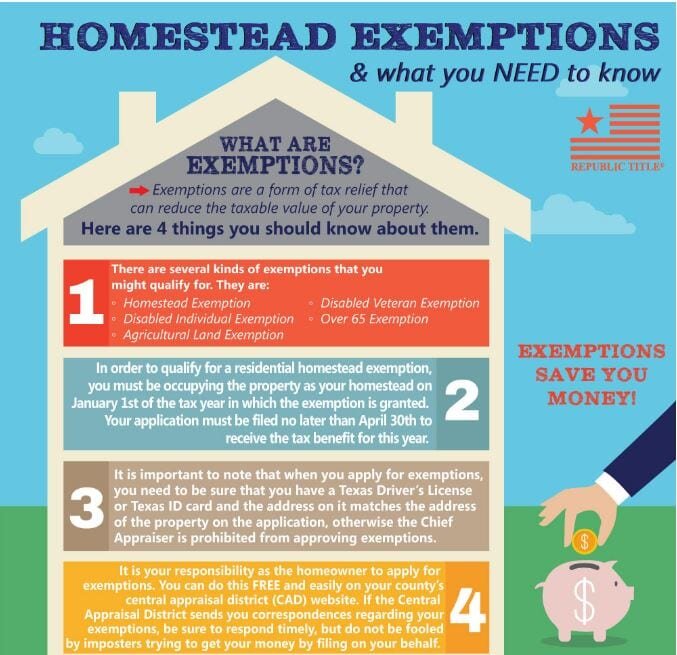
To benefit from the Texas homestead exemption, you must meet specific criteria:
- Ownership: You must own the property. This can be full ownership or partial ownership.
- Residency: The property must be your primary residence. You cannot claim a homestead exemption on multiple properties. If you own several properties, you must designate one as your homestead.
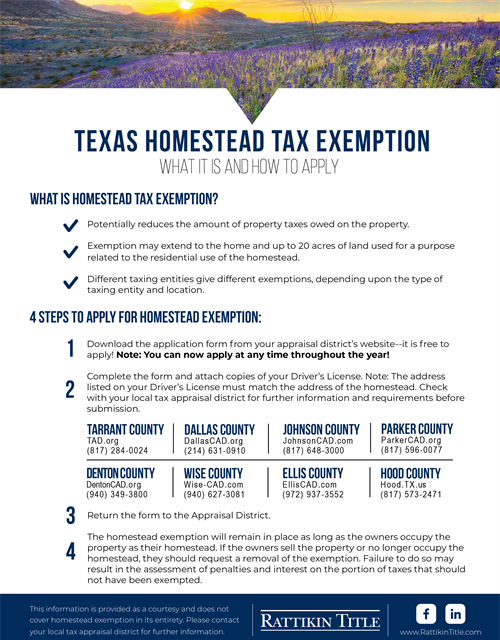
- Application: You must file an application for the homestead exemption with your local county appraisal district. This application is typically due by April 30th of the tax year for which you are claiming the exemption. You only need to file this application once. If you move and establish a new homestead, you will need to file a new application for that property.
- No Prior Claim: You cannot have claimed a homestead exemption on another property in Texas for the same tax year.
The application process is generally straightforward. You’ll need to provide proof of ownership and occupancy. This might include a Texas driver’s license or voter registration card with the homestead address, or utility bills in your name for the property.
Maximizing Your Homestead Benefits and Planning Your Texas Lifestyle
Understanding the homestead exemption is crucial for anyone looking to buy a home in Texas, particularly when considering different lifestyle choices, from luxury travel to budget-friendly living. For instance, investing in property in a desirable tourist destination like Galveston Island or near a significant landmark like the Alamo in San Antonio means that while you’re enjoying the attractions, your primary residence offers a layer of financial security.
When planning a long-term stay or considering purchasing property, researching the specific local option exemptions in the county and city you are interested in is highly recommended. The county appraisal district website is the best resource for this information. Local tourism guides or even real estate agents can also provide insights into the financial benefits associated with living in a particular area.
For those who frequently travel or have multiple properties, it’s vital to ensure you correctly designate your primary residence to claim the homestead exemption. Misunderstanding this could lead to missed tax savings or even penalties.
The Texas homestead exemption is a powerful financial tool that significantly enhances homeownership in the state. Its dual role in protecting your home from creditors and reducing your property tax burden makes it a cornerstone of Texas’s favorable tax environment. By understanding who qualifies, how to apply, and the various levels of exemption available, Texas homeowners can fully leverage this benefit, securing their financial future and enjoying the vibrant lifestyle the Lone Star State has to offer, whether that involves exploring the Big Bend National Park or enjoying the cultural offerings in cities like Houston.
LifeOutOfTheBox is a participant in the Amazon Services LLC Associates Program, an affiliate advertising program designed to provide a means for sites to earn advertising fees by advertising and linking to Amazon.com. Amazon, the Amazon logo, AmazonSupply, and the AmazonSupply logo are trademarks of Amazon.com, Inc. or its affiliates. As an Amazon Associate we earn affiliate commissions from qualifying purchases.