
Alaska, the United States’ largest state, is a land of unparalleled natural beauty, immense wilderness, and profound strategic importance. Beyond its iconic glaciers, vast tundras, and towering peaks, lies an equally formidable — albeit often unseen — natural resource: oil. The question “How much oil in Alaska?” delves deep into the heart of the state’s economic engine, its historical development, and its intricate relationship with both the national and global energy landscape. While not a typical tourist attraction in the same vein as a national park, the sheer scale and impact of Alaska’s oil reserves, and the infrastructure built to extract and transport them, represent a series of industrial and natural landmarks that have profoundly shaped the state’s identity and global standing. Understanding these reserves is to understand a fundamental aspect of Alaska’s enduring legacy.
The Strategic Significance of Alaska’s Oil Reserves
Alaska’s oil wealth is more than just a figure; it represents a cornerstone of the state’s economy, a vital component of energy security for the United States, and a significant player in the global energy market. The narrative of oil in Alaska is one of ambitious exploration, monumental engineering, and continuous debate over economic prosperity versus environmental stewardship.
A Legacy of Discovery: Early Explorations
The presence of oil in Alaska was suspected for centuries, with indigenous peoples reporting seeps in various locations. However, the modern quest for oil began in earnest in the early 20th century. The first commercial oil discovery came in 1957 in the Kenai Peninsula, in the Cook Inlet basin, leading to modest production. This initial success, while relatively small by later standards, signaled the vast potential hidden beneath Alaska’s rugged terrain. The true game-changer arrived in 1968 with the discovery of the Prudhoe Bay oil field on the North Slope. This colossal discovery catapulted Alaska into the global spotlight as a major petroleum province, fundamentally altering its economic trajectory and transforming it into an industrial landmark of energy production.
Economic Cornerstone: Fueling the Alaskan Economy
The economic impact of oil on Alaska cannot be overstated. Since the late 1970s, oil revenues have accounted for the vast majority of the state’s unrestricted general fund revenue, funding public services, infrastructure, and famously, the Alaska Permanent Fund. This unique state-owned fund, established in 1976, invests a portion of oil revenues to generate income for future generations, distributing annual dividends to eligible residents. This direct connection between natural resources and citizen benefits makes Alaska’s oil production a socio-economic landmark, illustrating how the exploitation of a natural resource can profoundly shape a society’s financial structure and quality of life. The revenue stream from oil has enabled Alaska to thrive without a state income or sales tax for decades, a testament to the immense financial power derived from its subterranean riches.
Global Energy Landscape: Alaska’s Role
At its peak, Alaska was one of the largest oil-producing regions in the United States, playing a critical role in national energy independence. While production has declined from its 1980s zenith, Alaska continues to be a significant contributor to the nation’s energy supply. Its reserves offer a strategic buffer against global supply disruptions and contribute to maintaining a diversified energy portfolio. The state’s position as an Arctic energy producer also gives it a unique geopolitical significance, influencing international discussions on resource development, climate change, and indigenous rights in the Arctic region. The oil fields of Alaska are, therefore, not just economic landmarks but also geopolitical ones, representing a critical node in the complex web of global energy security.
Unveiling Alaska’s Oil Fields: Key Landmarks of Energy Production
When considering “How much oil in Alaska?”, it is essential to look at where this oil is located and how it is brought to market. These locations and the infrastructure surrounding them are, in effect, industrial landmarks that stand as testaments to human ingenuity in harsh environments.
The Giant of the North: Prudhoe Bay
The Prudhoe Bay oil field is the largest oil field in North America, a true landmark of petroleum engineering and resource extraction. Discovered in 1968, it has produced billions of barrels of oil and continues to be a major source of production for Alaska. The field covers an area of approximately 213,000 acres on the Arctic Coastal Plain of the North Slope. Its development involved overcoming immense logistical and environmental challenges due to its remote Arctic location, permafrost, and extreme weather conditions. The facilities at Prudhoe Bay — including drilling pads, processing plants, and housing for thousands of workers — constitute a vast industrial complex, a testament to the scale required to harness such a significant natural resource. It represents a living landmark of industrial achievement and continuous operation in an extreme environment.
Other Notable Fields and Their Contributions
While Prudhoe Bay dominates the narrative, other significant oil fields contribute to Alaska’s overall production. These include the smaller but still substantial fields on the North Slope like Kuparuk River, Alpine, and Point Thomson, each with its own history of discovery and development challenges. The Cook Inlet basin, while yielding smaller quantities of oil compared to the North Slope, remains an active area of production, particularly for natural gas, serving local energy needs. Each of these fields, with their unique geological characteristics and operational histories, contributes to the cumulative figure of “how much oil in Alaska” and adds to the state’s tapestry of energy landmarks.
The Trans-Alaska Pipeline System: An Engineering Marvel
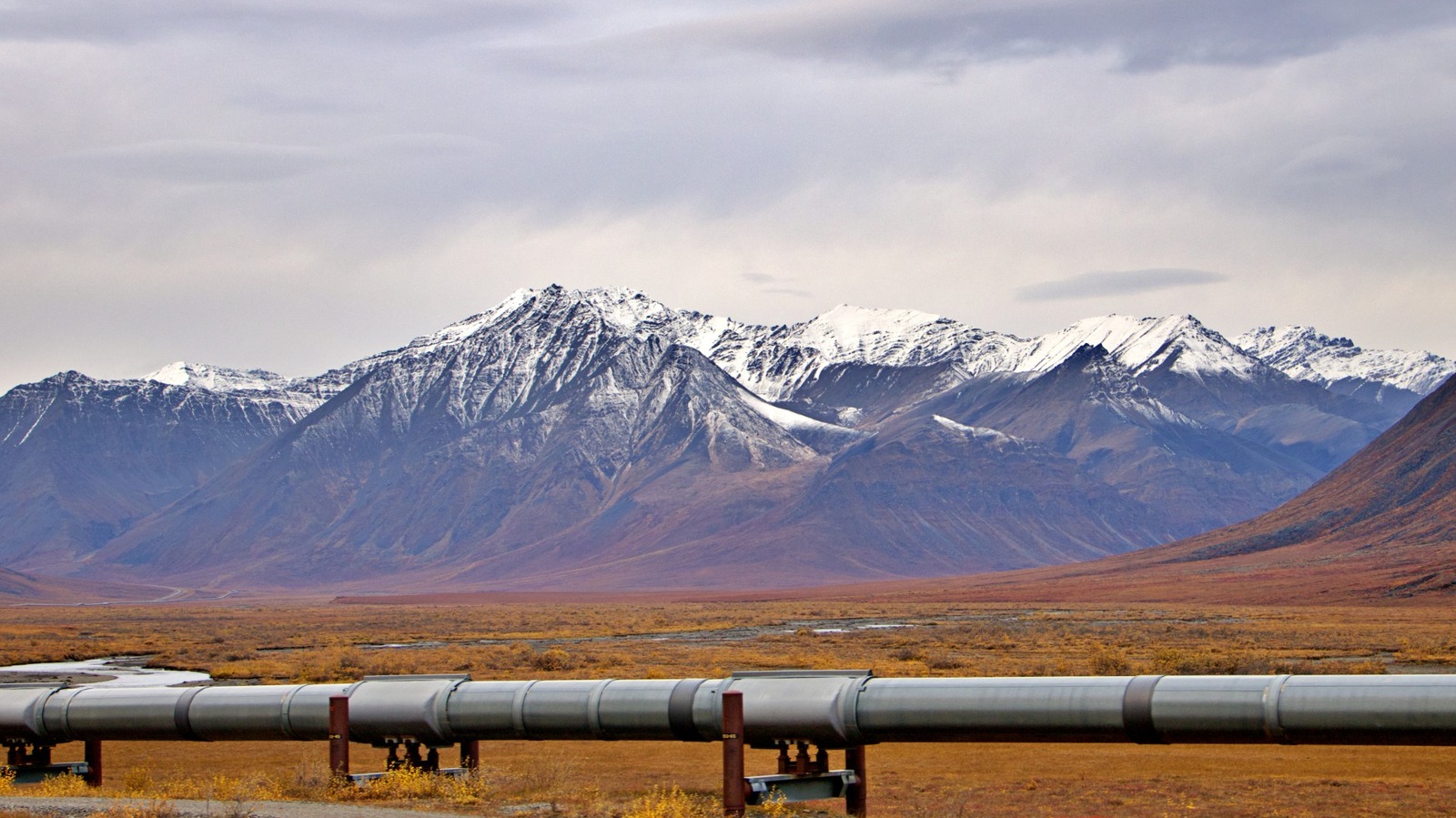
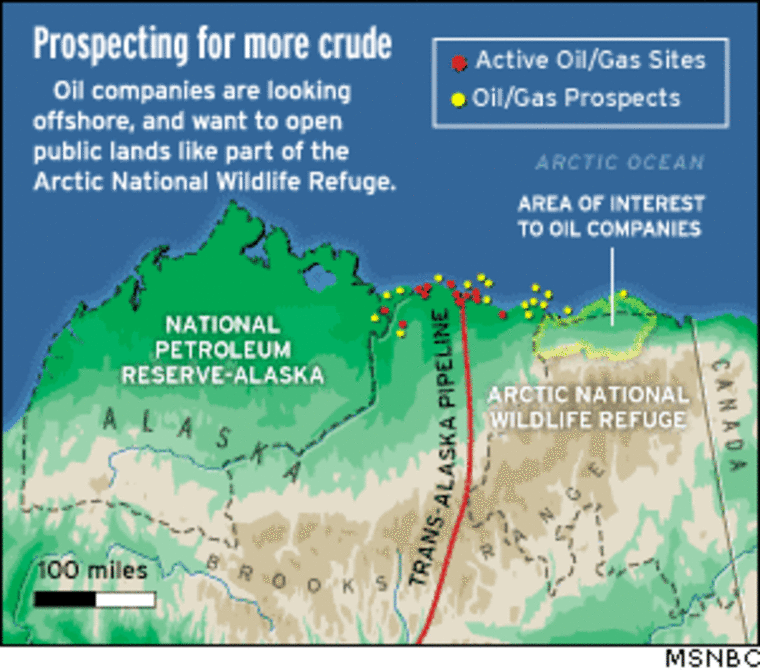
Connecting the remote oil fields of the North Slope to the ice-free port of Valdez in the south is the Trans-Alaska Pipeline System (TAPS). Completed in 1977, this 800-mile long pipeline is arguably the most significant single industrial landmark in Alaska. An engineering marvel of its time, the TAPS traverses three mountain ranges, 34 major rivers, and hundreds of streams, and crosses an active seismic zone. Approximately half of its length is elevated on vertical supports to prevent melting the permafrost, while the other half is buried. Its construction required unprecedented investment, technology, and environmental considerations. The pipeline is not merely infrastructure; it is a visible, tangible representation of Alaska’s oil story, a vital artery that allowed the state’s immense oil wealth to flow to the world, literally connecting one of the planet’s most resource-rich but isolated regions to global markets. As such, the TAPS stands as a monumental engineering landmark, symbolizing the ambition and determination that define Alaska’s petroleum industry.
Estimating the Reserves: Known, Recoverable, and Future Potential
The question of “how much oil” is complex, involving both what has been discovered and what remains to be found, alongside the economic and technological feasibility of extraction. These estimates define the current and future potential of Alaska as an energy landmark.
The Science of Reserve Estimation
Oil reserves are estimated through a combination of geological surveys, seismic imaging, and exploratory drilling. These estimates are dynamic, changing with new discoveries, advancements in extraction technology, and fluctuations in oil prices that make previously uneconomical reserves viable. The data is typically categorized into “proven reserves” (those that can be recovered with reasonable certainty under current economic and operating conditions) and “undiscovered technically recoverable resources” (estimates of oil yet to be found). These scientific endeavors and the subsequent data are crucial for understanding the true scale of Alaska’s oil wealth and its longevity as a petroleum producer.
Proven vs. Undiscovered Resources
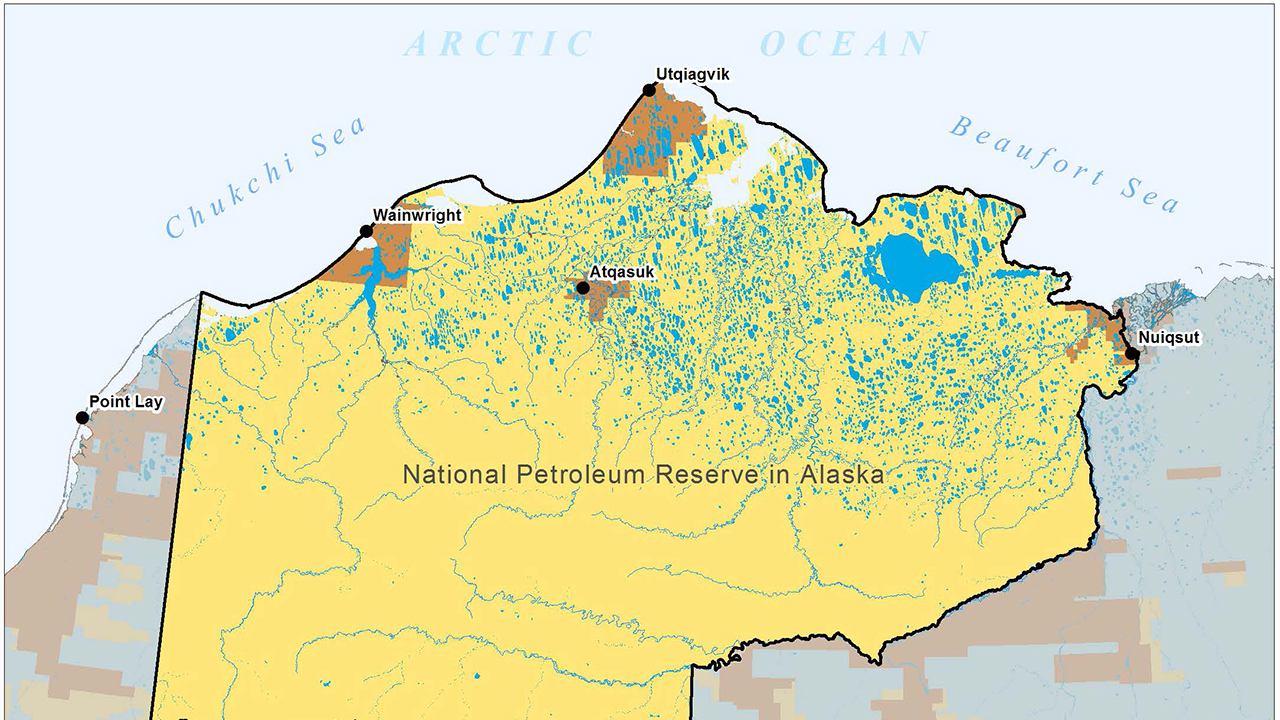
At its peak, Prudhoe Bay held an estimated 25 billion barrels of original oil in place, with recoverable reserves initially estimated at around 9.6 billion barrels. Thanks to advanced recovery techniques, much more has been extracted than initially thought. As of recent estimates, Alaska’s proven reserves are in the billions of barrels, but the more intriguing question revolves around undiscovered resources. Regions like the Arctic National Wildlife Refuge (ANWR) and the National Petroleum Reserve-Alaska (NPR-A) are believed to hold significant quantities of oil and gas. For example, the U.S. Geological Survey has estimated that the 1002 Area of ANWR alone could contain billions of barrels of technically recoverable oil. These vast, largely untouched areas represent potential future landmarks of energy extraction, though their development remains a subject of intense environmental and political debate.
Challenges and Opportunities for Future Exploration
Future exploration and production in Alaska face numerous challenges, including the high cost of operating in the Arctic, the need for advanced technologies to extract oil from complex geological formations, and stringent environmental regulations. However, opportunities also exist, particularly with rising global energy demand and technological innovations that could unlock previously inaccessible resources. The state continues to attract investment in certain areas, with new discoveries potentially extending the life of Alaska’s oil industry for decades to come, thereby cementing its status as a critical energy landmark for the foreseeable future.
The Environmental and Economic Balance: A Delicate Equilibrium
The extensive oil development in Alaska has always existed in a delicate balance with its pristine natural environment. This ongoing negotiation forms another critical aspect of Alaska’s identity as a landmark of resource management.
Conservation Efforts and Sustainable Practices
The grandeur of Alaska’s wilderness demands careful stewardship. The state and federal governments, alongside oil companies, have implemented numerous measures to mitigate the environmental impact of drilling and transportation. These include strict regulations on waste disposal, habitat protection plans for wildlife like caribou and polar bears, and rapid response capabilities for oil spills. The very design of the Trans-Alaska Pipeline System with its elevated sections and animal crossings, serves as a landmark example of attempting to integrate industrial development with environmental considerations, reflecting a societal commitment to preserving the natural heritage alongside resource extraction.
Revenue Generation and Public Services
The significant revenues generated from oil production have allowed Alaska to provide extensive public services and infrastructure in a vast and sparsely populated state. These funds have built roads, schools, hospitals, and supported essential government functions. The tension between maintaining these services, which have become integral to Alaskan life, and the imperative to diversify the economy away from a sole reliance on oil, is a continuous challenge. This dynamic interaction between resource wealth and societal well-being establishes Alaska as an economic landmark, showcasing the direct impact of natural resources on public welfare.
Navigating the Energy Transition
As the world shifts towards renewable energy sources, Alaska faces the challenge of adapting its oil-dependent economy. While oil will likely remain a critical component of its economy for the immediate future, there is increasing focus on exploring alternative energy sources and diversifying economic activities. This ongoing transition marks Alaska as a contemporary landmark in the global energy evolution, grappling with the complexities of sustaining an economy built on fossil fuels while acknowledging the imperatives of a changing climate and a future driven by cleaner energy.
Alaska’s Oil: A Defining Feature on the Global Stage
Ultimately, the question of “How much oil in Alaska?” transcends mere volumetric measurement. It encapsulates a profound story of discovery, engineering, economic development, and environmental responsibility, making Alaska a compelling landmark in the discourse of global energy and resource management.
Geopolitical Implications
Alaska’s position as a major oil producer within the United States has significant geopolitical implications. It strengthens national energy security, reduces reliance on foreign oil, and provides leverage in international energy discussions. The strategic importance of its Arctic resources also places Alaska at the forefront of discussions regarding Arctic governance, resource competition, and climate change, further solidifying its status as a geopolitical landmark.
A Legacy for Future Generations
The oil wealth of Alaska has built a unique legacy, profoundly shaping the state’s past and present. The debate over its future — how much more oil will be extracted, where, and under what conditions — will define its trajectory for future generations. The balance between tapping into its vast natural resources and preserving its pristine wilderness will continue to be a defining characteristic of this extraordinary state, ensuring that Alaska remains a natural and industrial landmark of global significance. The infrastructure of its oil industry and the policies governing its resources are as much a part of its landscape as its mountains and glaciers, each a testament to the immense power and impact of the oil hidden beneath its vast expanses.
LifeOutOfTheBox is a participant in the Amazon Services LLC Associates Program, an affiliate advertising program designed to provide a means for sites to earn advertising fees by advertising and linking to Amazon.com. Amazon, the Amazon logo, AmazonSupply, and the AmazonSupply logo are trademarks of Amazon.com, Inc. or its affiliates. As an Amazon Associate we earn affiliate commissions from qualifying purchases.