
Navigating the bustling streets of New York City by taxi is an iconic experience, a quintessential part of any visit. From the yellow cabs of Manhattan to the various car services available, understanding the etiquette of tipping is crucial for a smooth and respectful journey. While the drivers are professional and aim to provide excellent service, the question of “how much to tip” often lingers for both tourists and locals alike. This guide aims to demystify the tipping culture in New York City’s taxi services, ensuring you can express your gratitude appropriately for a job well done.
Understanding Taxi Fares and Surcharges
Before delving into tipping percentages, it’s essential to understand how taxi fares are calculated in New York City. The fare is a combination of metered charges and potential surcharges. The meter typically starts with a base fare, followed by charges based on distance and time.
The Meter’s Mechanics
The fare you see on the meter is directly influenced by:
- Base Fare: A fixed initial charge when the meter starts.
- Per-Mile Rate: A charge for each mile traveled.
- Per-Minute Rate: A charge for each minute the taxi is stopped or moving at a speed below a certain threshold (e.g., in traffic).
Common Surcharges
Beyond the metered fare, several surcharges can affect the total cost of your ride:
- Night Surcharge: A small fee applied during specific overnight hours.
- Peak Hours Surcharge: An additional charge during periods of high demand.
- New York State Tax: A mandatory tax levied on taxi rides.
- New York City Tax: Another local tax that contributes to the fare.
- Toll Charges: If your route involves toll roads, these costs are added to the meter.
- JFK or LGA Airport Surcharge: A specific fee for pickups or drop-offs at these major airports.
It’s important to note that these surcharges are usually displayed on the meter or a separate sticker within the taxi. They are not discretionary and will be added to your final bill. Understanding these components will help you better gauge the final amount before applying your tip.
The Standard Tipping Guideline
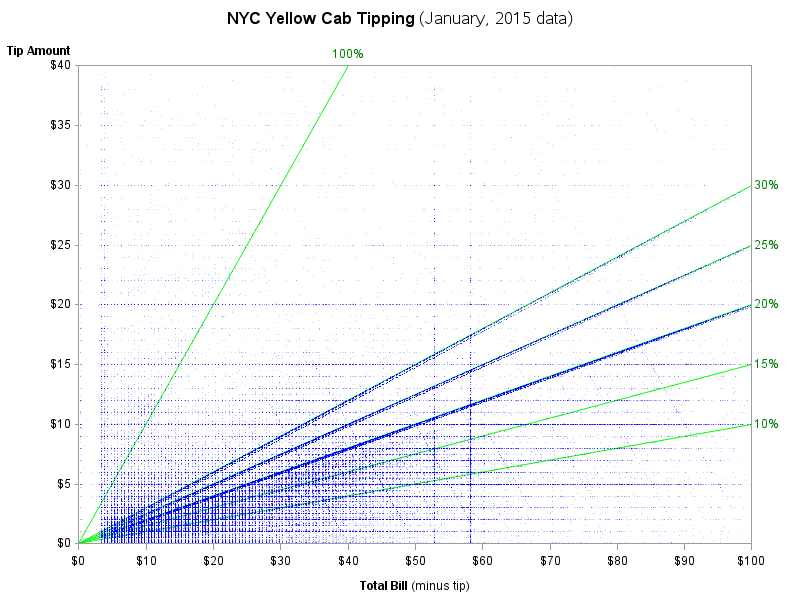
In New York City, tipping your taxi driver is customary and greatly appreciated. The general consensus and widely accepted practice is to tip 15% to 20% of the metered fare.
Calculating Your Tip
Here’s a simple breakdown of how to calculate your tip:
- Identify the Metered Fare: This is the amount displayed on the meter before any surcharges.
- Choose Your Percentage: Decide whether you want to tip 15%, 18%, or 20%. The higher end of this range is generally reserved for excellent service.
- Calculate the Tip Amount:
- 15%: Multiply the metered fare by 0.15.
- 18%: Multiply the metered fare by 0.18.
- 20%: Multiply the metered fare by 0.20.
Example:
If your metered fare is $30.00, and you decide to tip 18%:
$30.00 * 0.18 = $5.40
In this scenario, you would add approximately $5.40 to the $30.00 meter fare, plus any applicable surcharges.
Rounding Up
Many passengers find it convenient to round up their tip to the nearest dollar or even the nearest five dollars, especially for smaller fares or when exact change is not readily available. This is a common practice and is generally well-received. For instance, if your calculated tip comes to $5.40, rounding up to $6.00 is perfectly acceptable.
Tipping on Surcharges?
The standard practice is to tip based on the metered fare only, not the total fare including surcharges. However, if your driver provided exceptional service, you might consider adding a small additional amount to account for tolls or other fixed charges. This is not mandatory but can be a nice gesture.
Factors Influencing Your Tip Amount
While the 15-20% guideline is a solid baseline, several factors can influence whether you tip at the lower or higher end of this spectrum, or even slightly above it. Your tip is a reflection of the service you received.

Excellent Service
You should lean towards the higher end (20% or more) if your driver:
- Navigated traffic efficiently: Got you to your destination in a timely manner, even during busy periods.
- Was polite and courteous: Engaged in pleasant conversation or respected your desire for quiet.
- Maintained a clean vehicle: The taxi was tidy and comfortable.
- Assisted with luggage: Helped you load or unload your bags without being asked.
- Offered helpful suggestions: Provided local insights or directions when appropriate.
- Drove safely and smoothly: Operated the vehicle responsibly.
Average or Subpar Service
If the service was merely adequate or had minor issues, tipping within the 15-18% range is appropriate. If you experienced significant problems, such as an excessively long route, unsafe driving, or rudeness, you might consider tipping at the lower end of the scale or, in rare cases, even less, though this is uncommon for standard taxi services.
Special Circumstances
- Long Rides: For exceptionally long journeys, especially those that take several hours, you might consider tipping slightly more than the standard percentage to acknowledge the driver’s time and effort.
- Heavy Luggage: If you have a lot of luggage and the driver goes above and beyond to help you, a little extra can be a thoughtful gesture.
- Bad Weather: Driving in adverse weather conditions like heavy rain or snow can be more challenging. A slightly increased tip can be a sign of appreciation for their willingness to brave the elements.
Tipping in Different New York Taxi Services
The tipping culture in New York City extends across various forms of taxi and car services. While the core principle of tipping for service remains, there might be slight nuances.
Yellow Cabs
The iconic yellow cabs are the most common form of taxi service. The tipping guidelines discussed above (15-20% of the metered fare) are directly applicable to yellow cabs. Drivers of these vehicles rely on tips as a significant portion of their income.
For-Hire Vehicles (FHVs) and Ride-Sharing Apps
Services like Uber and Lyft operate under a slightly different model where tipping is integrated into the app.
- App-Based Tipping: In most cases, you can tip directly through the ride-sharing app either during or after your trip. The app often suggests tip percentages, similar to traditional taxi tipping.
- Cash Tips: While app-based tipping is prevalent, you can also tip your driver in cash if you prefer or if the app doesn’t facilitate it easily. The same 15-20% guideline applies.
- Private Car Services: For pre-booked private car services or limousines, the tipping custom can vary. It’s often included in the total booking price or a gratuity of 15-20% is added to the final bill. Always check your booking confirmation or ask the service provider for clarity on their tipping policy.
Airport Shuttles and Shared Rides
For shared shuttle services or group rides, the tipping practice might be slightly less standardized. However, if the driver provides a good service, a tip of around $1-$2 per person for a shared ride or 10-15% for a dedicated shuttle service is generally considered appropriate.
Beyond the Meter: Cultural Context and Driver Appreciation
Tipping in New York City, as in many parts of the United States, is deeply ingrained in the service economy. Taxi drivers, like many service workers, often earn a significant portion of their income through tips. Your tip is not just a transaction; it’s a form of appreciation for their work, their knowledge of the city, and their role in making your journey convenient and safe.
The Driver’s Perspective
New York City taxi drivers often work long hours, navigating challenging traffic conditions and dealing with diverse passengers. They are local experts, often knowing the quickest routes, the best places to eat, and hidden gems within the city. A generous tip acknowledges their skill, professionalism, and the often-underappreciated service they provide.
When in Doubt, Err on the Side of Generosity
If you are ever unsure about the exact amount, it is generally better to err on the side of generosity. A slightly larger tip is far more likely to be appreciated than a tip that falls short of expectations. Remember that this is a way to say “thank you” for getting you where you need to be comfortably and efficiently within the dynamic landscape of New York.

Tipping Etiquette for Tourists
For visitors, understanding local customs is part of the travel experience. In New York, tipping is not optional; it’s expected. By following the 15-20% guideline, you are participating in a fair exchange that supports the city’s service workers and ensures you contribute positively to the local economy. Whether you are headed to a Broadway show, a museum in Museum Mile, or a dinner reservation in Greenwich Village, your taxi ride is the first step, and a proper tip ensures a good start to your adventures.
LifeOutOfTheBox is a participant in the Amazon Services LLC Associates Program, an affiliate advertising program designed to provide a means for sites to earn advertising fees by advertising and linking to Amazon.com. Amazon, the Amazon logo, AmazonSupply, and the AmazonSupply logo are trademarks of Amazon.com, Inc. or its affiliates. As an Amazon Associate we earn affiliate commissions from qualifying purchases.