
When planning a trip to the Sooner State, one of the most pressing questions for many travelers, especially those venturing into the heartland during spring and early summer, revolves around the frequency and intensity of tornadoes. The image of Oklahoma as a prime location for these powerful atmospheric phenomena is well-earned, and understanding the patterns of tornado activity is crucial for any visitor seeking to experience the state’s unique charm and attractions safely.
Understanding Tornado Alley and Oklahoma’s Role
Oklahoma sits squarely within what is commonly known as Tornado Alley, a loosely defined geographical region of the United States where tornadoes are most frequent. This region stretches across parts of the Great Plains, encompassing states like Texas, Kansas, Nebraska, Missouri, and Iowa, with Oklahoma often considered one of its most active centers. The unique geographical and meteorological conditions in this area create a perfect storm for tornado formation.
The Perfect Storm: Meteorological Conditions for Tornadoes
The formation of tornadoes is a complex process driven by a confluence of atmospheric factors. In Tornado Alley, these conditions frequently align, particularly during the spring months.
Warm, Moist Air Meets Cool, Dry Air
The primary ingredient for severe thunderstorms, the parent clouds of most tornadoes, is instability in the atmosphere. This instability is generated when warm, moist air from the Gulf of Mexico surges northward. This humid air mass collides with cooler, drier air masses moving down from Canada or out of the Rocky Mountains. The contrast between these air masses creates a powerful lifting mechanism, forcing the warm, moist air to rise rapidly.
Jet Stream Dynamics
The jet stream, a fast-flowing current of air high in the atmosphere, plays a pivotal role. During spring, the jet stream often dips southward across the United States, providing the upper-level support needed for storm development. As the jet stream interacts with the surface weather patterns, it can create areas of rotation within thunderstorms.
Wind Shear: The Key to Rotation
Perhaps the most critical factor for tornado development is wind shear. Wind shear refers to changes in wind speed and/or direction with height. In the lower atmosphere, winds might be blowing from the southeast at low speeds, carrying warm, moist air. Higher up, winds might be blowing from the west or southwest at much higher speeds. This difference in wind creates a horizontal rolling motion in the atmosphere. As the powerful updrafts of a developing thunderstorm ingest this rotating air, they can tilt this horizontal rotation into a vertical column, forming a mesocyclone – the rotating core of a supercell thunderstorm. If this rotation tightens and intensifies, it can extend to the ground, becoming a tornado.
Oklahoma’s Unique Position
Oklahoma‘s flat terrain in many areas allows for unimpeded movement of these air masses, facilitating the mixing and instability required for severe weather. Furthermore, its location in the central United States makes it a crossroads for these conflicting air masses. While tornadoes can occur at any time of year, Oklahoma experiences its peak tornado season from March through June, with April and May typically being the most active months. However, it is important to note that Oklahoma can and does experience tornadoes outside of this traditional window, including in the fall.
Tornado Frequency and Statistics in Oklahoma
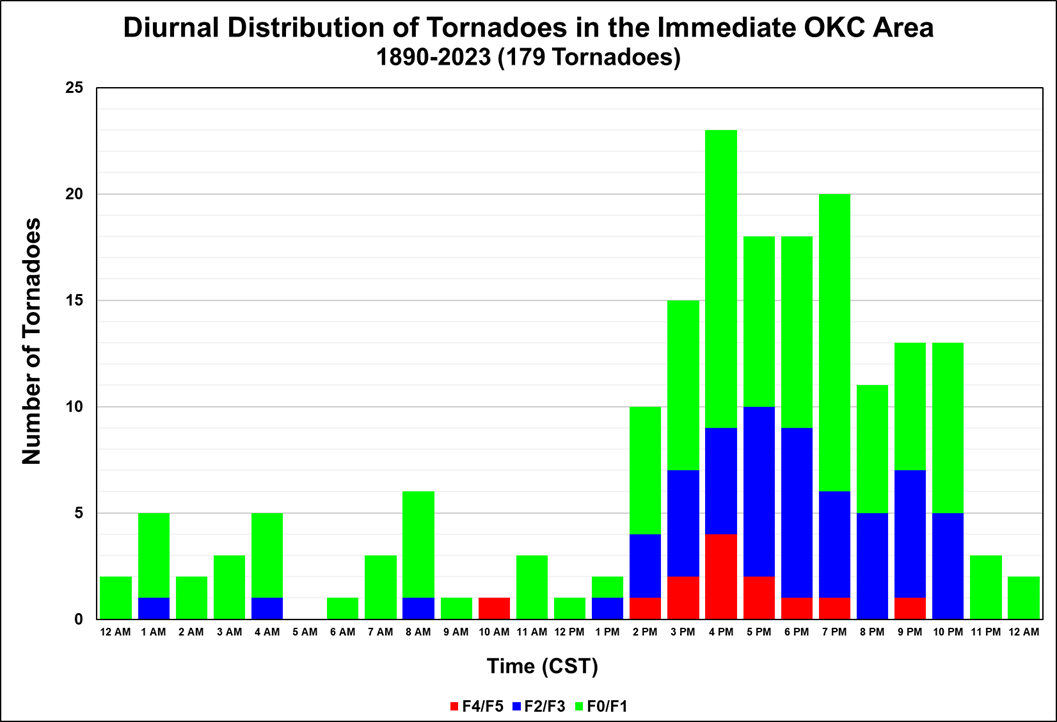
Quantifying the exact number of tornadoes in Oklahoma is a dynamic process, influenced by reporting methods and the intensity of weather systems. However, available data consistently points to Oklahoma as one of the most tornado-prone states in the Union.
Averages and Extremes
On average, Oklahoma experiences around 50 to 60 tornadoes per year. This number can fluctuate significantly from year to year. Some years are relatively quiet, while others are marked by outbreaks of numerous severe storms and tornadoes. For instance, 2013 was a particularly devastating year for Oklahoma, with multiple powerful tornadoes impacting communities, including the EF5 tornado that struck Moore. The state has also experienced periods of intense tornado activity, such as the historic 2011 outbreak that produced over 150 tornadoes across several states, with Oklahoma being heavily affected.
Notable Tornado Events
Oklahoma has a long history of memorable and often destructive tornado events. The aforementioned Moore tornado in 2013 was one of the strongest and deadliest in recent history, causing widespread destruction and tragically claiming lives. Another significant event was the El Reno tornado in 2013, which was the widest tornado ever recorded, measuring 2.6 miles in diameter. While incredibly wide, its path was primarily over rural areas, and thankfully, it did not cause the same level of devastation as some narrower, but equally intense, tornadoes. The Tri-State Tornado of 1925, though not solely in Oklahoma, is the deadliest tornado in U.S. history and serves as a stark reminder of the destructive potential of these storms. While the state has seen its share of devastating events, it has also made significant strides in tornado preparedness and warning systems.
The Importance of Staying Informed
The high frequency of tornadoes means that awareness and preparedness are paramount for anyone living in or visiting Oklahoma. Travelers should always be aware of the weather forecast, especially during the spring months. Many hotels in Oklahoma offer tornado shelter information and have safety protocols in place. It is also advisable for travelers to familiarize themselves with local emergency alerts and siren systems. The National Weather Service provides real-time weather information and warnings, which are essential resources.
Planning Your Oklahoma Adventure Safely
While the prospect of tornadoes might seem daunting, it’s important to approach this aspect of Oklahoma‘s climate with informed caution rather than fear. Millions visit Oklahoma every year without incident, enjoying its rich history, vibrant culture, and stunning natural landscapes. By understanding the risks and taking appropriate precautions, travelers can have a safe and memorable experience.
Choosing the Right Time to Visit
For travelers who are particularly concerned about tornado activity, visiting Oklahoma outside of the peak spring months (March to June) can offer peace of mind. The fall months (September to November) can be beautiful, with pleasant temperatures and colorful foliage, and while still prone to severe weather, tornado activity tends to be less frequent and intense than in the spring. Summer months (July and August) can be hot but generally see a decrease in tornado activity. However, severe thunderstorms and localized flooding can still occur.
Accommodation and Safety Measures
When booking accommodation in Oklahoma, particularly during the spring, it’s wise to consider the safety features offered by hotels and other lodging options. Many hotels in tornado-prone areas will have designated storm shelters or safe rooms. It is recommended to inquire about these facilities when making reservations or upon arrival. Websites like Tripadvisor and Booking.com often feature reviews that may mention the availability and quality of storm shelters. Properties in cities like Oklahoma City or Tulsa are accustomed to severe weather and have established safety protocols. Look for hotels that are well-regarded for their service and amenities, as these are often indicative of a well-managed property with safety in mind. Consider accommodations that are built with reinforced structures or are located in areas less prone to direct tornado impacts, though it’s important to remember that tornadoes can form rapidly and unpredictably.

Experiencing Oklahoma’s Attractions
Oklahoma offers a wealth of attractions for every type of traveler. The Oklahoma City metropolitan area boasts the National Cowboy & Western Heritage Museum, the Oklahoma City National Memorial & Museum, and the vibrant Bricktown entertainment district. For those interested in natural beauty, the Wichita Mountains National Wildlife Refuge offers hiking, wildlife viewing, and scenic drives. History buffs will enjoy exploring the Will Rogers Memorial Museum in Claremore or visiting the historic Woolaroc Museum & Wildlife Preserve near Bartlesville. Even with the possibility of severe weather, these attractions are generally accessible and enjoyable, with most facilities prepared to provide shelter if necessary. It is always a good practice to check the operational status of attractions and to be aware of any weather advisories.
By staying informed, planning ahead, and choosing accommodations with safety in mind, visitors can confidently explore the diverse landscapes and rich culture of Oklahoma, embracing all that the Sooner State has to offer. The allure of Oklahoma lies not just in its resilience in the face of nature’s power, but also in its welcoming spirit and the endless adventures waiting to be discovered.
LifeOutOfTheBox is a participant in the Amazon Services LLC Associates Program, an affiliate advertising program designed to provide a means for sites to earn advertising fees by advertising and linking to Amazon.com. Amazon, the Amazon logo, AmazonSupply, and the AmazonSupply logo are trademarks of Amazon.com, Inc. or its affiliates. As an Amazon Associate we earn affiliate commissions from qualifying purchases.