
The question of “How old is Chicago?” transcends a simple numerical answer, instead inviting an exploration into centuries of dynamic history, architectural innovation, and profound resilience that has shaped one of the United States’ most iconic urban centers. While the city’s official incorporation as a municipality dates back to 1837, its story stretches much further, rooted in the ancient glacial movements that formed the Great Lakes and the indigenous communities who first recognized the strategic importance of its waterways. To truly understand Chicago’s age is to journey through its layers of transformation, from a marshy trading post to a global metropolis, each era leaving an indelible mark on its landscape and its spirit. This article delves into the chronological and developmental milestones that define Chicago’s remarkable journey, highlighting the pivotal moments and landmark achievements that have forged its identity over time.
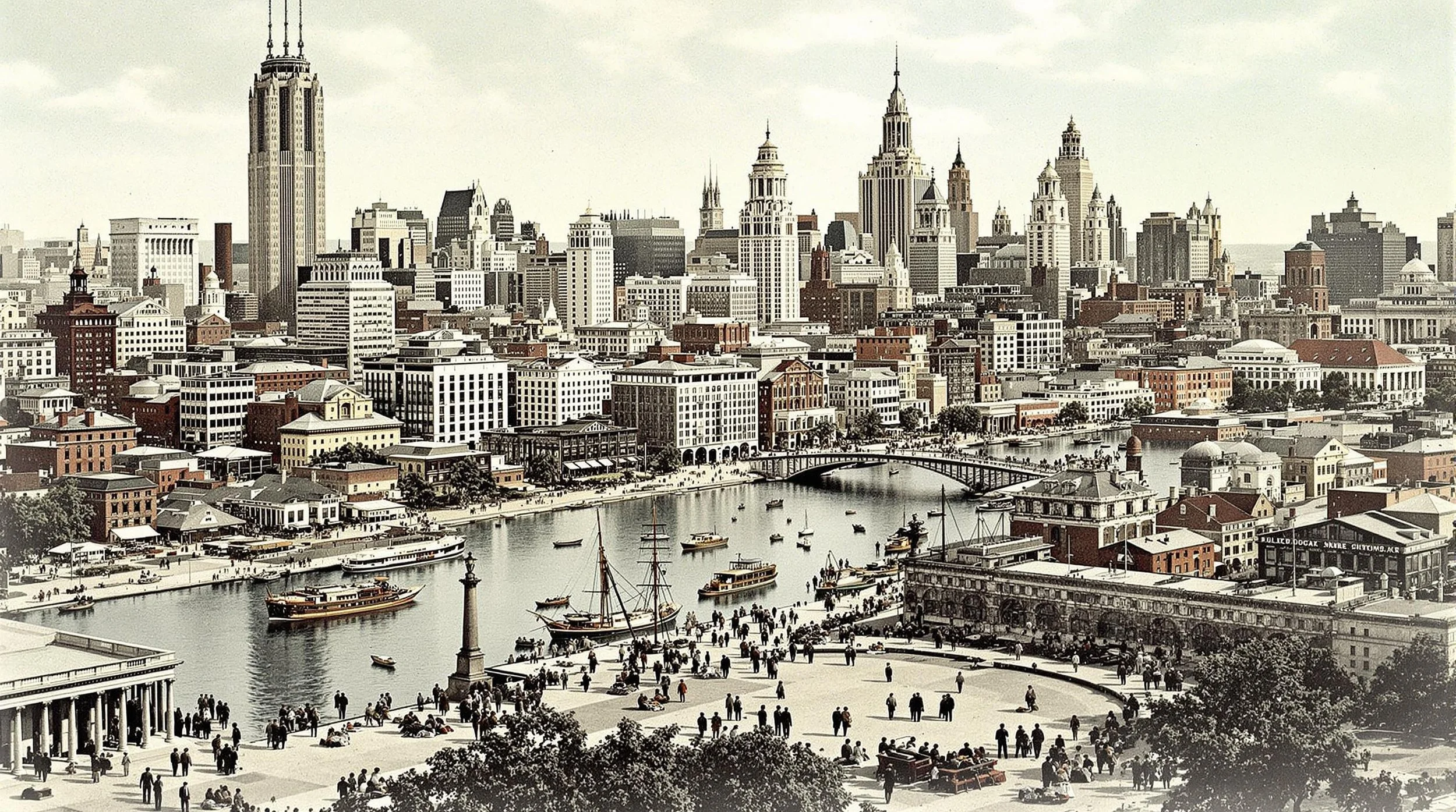
The Dawn of a Metropolis: Early Origins and Foundations
Long before towering skyscrapers pierced its skyline, the land that would become Chicago was a vibrant natural landscape, shaped by geological forces and inhabited by various indigenous peoples. Understanding these early origins is crucial to appreciating the deep roots of the city.
Indigenous Roots and Early Settlements
The strategic geographical location, particularly the easy portage between the Great Lakes (via the Chicago River and Lake Michigan) and the Mississippi River basin, made the area a vital nexus for trade and travel for thousands of years. Various Native American tribes, including the Potawatomi, Miami, and Illinois tribes, lived in and around the region, establishing trails and settlements. They called the area “Checagou,” a term believed to refer to the wild garlic (or leeks) that grew abundantly along the Chicago River or, alternatively, to a powerful chief or even a marshy, wild onion smell. These early inhabitants were the first to harness the land’s potential, creating a nascent economic hub long before European contact. Their historical presence remains a foundational layer of the city’s profound heritage, influencing subsequent development and cultural narratives.
Jean Baptiste Point du Sable and the First Permanent Settlement
The generally acknowledged “Founder of Chicago” is Jean Baptiste Point du Sable, a man of Haitian descent believed to have arrived in the late 1770s. By the 1780s, he had established a prosperous trading post near the mouth of the Chicago River. His homestead included a house, a barn, a mill, a bakehouse, and a smokehouse, serving as a hub for fur traders and local Native American communities. Du Sable’s settlement was not merely a temporary encampment but a permanent, self-sufficient enterprise, laying the practical groundwork for future urban development. His foresight in recognizing the commercial viability of this specific location cemented his legacy as the patriarch of the future city, marking a significant step in the area’s transition from indigenous territory to a multi-cultural frontier outpost.
Fort Dearborn and the War of 1812
Following the United States’ acquisition of the territory, the construction of Fort Dearborn in 1803 at the mouth of the Chicago River marked the beginning of an American military and economic presence. This fort served as a crucial defensive outpost and trading center. However, its early existence was fraught with conflict. During the War of 1812, the fort was attacked and destroyed by Potawatomi warriors, resulting in what is known as the Fort Dearborn Massacre. Although a tragic event, the fort was eventually rebuilt in 1816, signaling the enduring commitment of the United States to control the strategically vital Chicago portage. The presence of Fort Dearborn, even with its turbulent history, solidified American claims and provided a sense of stability that attracted further settlement, setting the stage for organized growth.
From Town to Thriving City: Rapid Growth and Incorporation
The period following the rebuilding of Fort Dearborn witnessed an explosion of growth, driven by ambitious infrastructure projects and Chicago’s inherent geographical advantages. This era saw its transformation from a modest village into a burgeoning urban center.
The Illinois and Michigan Canal
Perhaps no single project was more instrumental in Chicago’s early growth than the Illinois and Michigan Canal. Completed in 1848, this monumental engineering feat connected Lake Michigan to the Illinois River and, subsequently, to the Mississippi River. This artificial waterway created an unbroken water route between the Great Lakes and the Gulf of Mexico, effectively making Chicago the vital link between the East Coast industrial centers and the vast agricultural resources of the Midwest. The canal spurred an economic boom, attracting a massive influx of immigrants, traders, and entrepreneurs, rapidly swelling the town’s population and cementing its role as a crucial transportation and commercial hub.
The Railroad Boom
Hard on the heels of the canal’s success, the mid-19th century ushered in the age of railroads, a development Chicago was perfectly positioned to capitalize on. By 1856, Chicago boasted more railway lines than any other city in the United States, earning it the moniker “Railroad Capital of the World.” This extensive network facilitated the rapid transport of agricultural products from the fertile Western plains to Eastern markets and brought raw materials and manufactured goods back to the burgeoning Midwest. The confluence of water and rail transport created an unparalleled logistical advantage, transforming Chicago into the undisputed center for grain, lumber, and livestock trade. The Union Stock Yards, though established later, would become a testament to this dominance. This period of explosive growth laid the physical and economic foundations of the modern city.
Chicago’s Incorporation and Early Architecture
Amidst this rapid expansion, Chicago officially incorporated as a city on March 4, 1837, with a population of just over 4,000 residents. From this point, its growth trajectory became one of the most remarkable in urban history. The early architecture largely comprised wooden structures, often built quickly and cheaply, reflecting the transient nature of a frontier boomtown. The invention of the “balloon frame” construction method in Chicago around the 1830s revolutionized building, allowing for faster and more affordable erection of homes and commercial structures, further accelerating the city’s physical expansion. While these early buildings were rudimentary compared to what would follow, they provided the essential infrastructure for the nascent city and housed the thousands who flocked to its promising opportunities.

The Great Chicago Fire and Rebirth: A Testament to Resilience
Just as Chicago was establishing itself as a prominent American city, a catastrophic event threatened to erase its progress entirely. Yet, this devastation ultimately became a catalyst for an unparalleled architectural and urban renaissance.
The Devastation of 1871
On October 8, 1871, the Great Chicago Fire erupted, likely in a barn owned by Patrick and Catherine O’Leary. Fueled by a dry summer, strong winds, and the predominantly wooden construction of the city, the fire raged for three days, consuming over three square miles of the city center. It destroyed more than 17,000 buildings, left over 100,000 people homeless, and caused an estimated $200 million in damages (over $4 billion in today’s money). The destruction was almost total, wiping out the downtown area, its fledgling commercial blocks, and thousands of homes. The event was a profound tragedy, seemingly an insurmountable setback for the young city.
Rebuilding Chicago: An Architectural Revolution
Miraculously, Chicago did not merely rebuild; it reinvented itself. The fire cleared the slate, providing an unprecedented opportunity for urban planners and architects to design a modern metropolis from scratch. This period gave birth to the renowned Chicago School of Architecture, characterized by its innovative use of steel-frame construction, large plate-glass windows, and an emphasis on functional aesthetics. Visionary architects such as Louis Sullivan, Daniel Burnham, and later Frank Lloyd Wright flocked to the city, eager to contribute to its rebirth. Their designs not only addressed the need for fire-resistant structures but also pushed the boundaries of what was architecturally possible, forever changing the urban landscape.
Pioneering Skyscrapers
The need for rapid and efficient reconstruction, combined with soaring land values in the central business district, made vertical expansion an economic imperative. This environment fostered the development of the world’s first skyscrapers. In 1885, the Home Insurance Building, designed by William Le Baron Jenney, was completed, standing 10 stories tall and utilizing a revolutionary iron-and-steel frame construction that supported its entire weight, rather than load-bearing walls. This invention marked the true birth of the skyscraper and fundamentally altered urban architecture worldwide. Chicago became the crucible for this new building type, with structures like the Rookery Building and the Reliance Building showcasing innovative engineering and design that continues to influence modern construction.
A Century of Innovation: Chicago in the Modern Era
Following its dramatic rebirth, Chicago continued its trajectory of innovation, setting standards for urban planning, design, and cultural development that resonate to this day.
The World’s Columbian Exposition of 1893
Just over two decades after the devastating fire, Chicago hosted the World’s Columbian Exposition of 1893. This grand international fair was a monumental success, attracting over 27 million visitors and serving as a dazzling showcase of American ingenuity, art, and architecture. The fair’s central “White City,” designed primarily by Daniel Burnham and Frederick Law Olmsted, presented a neoclassical vision of an ideal city, with magnificent buildings, lagoons, and integrated park spaces. While much of the architecture was temporary, the Exposition had a profound and lasting impact on American urban planning and civic design, inspiring the City Beautiful movement and bolstering Chicago’s reputation as a world-class city capable of monumental achievements.
Urban Planning and Green Spaces
The legacy of the World’s Columbian Exposition of 1893 directly led to the groundbreaking Plan of Chicago in 1909, co-authored by Daniel Burnham and Edward H. Bennett. This visionary document was the first comprehensive regional plan for the growth of an American city. It proposed extensive park systems, a magnificent lakefront for public use, improved transportation infrastructure, and a civic center. The plan’s emphasis on public spaces, particularly the preservation and expansion of the lakefront as parkland, resulted in iconic green spaces such as Grant Park and Lincoln Park. This dedication to urban planning and accessible natural beauty ensured that Chicago would develop as a livable, aesthetically pleasing city, balancing its industrial might with ample recreational areas.

Iconic Modern Landmarks
Chicago’s architectural legacy continued into the 20th and 21st centuries with the construction of several world-renowned landmarks that define its contemporary skyline. The Willis Tower (formerly the Sears Tower), completed in 1973, stood as the world’s tallest building for nearly 25 years and remains an engineering marvel. Its bold, bundled-tube design by Skidmore, Owings & Merrill epitomizes Chicago’s commitment to cutting-edge skyscraper technology. The equally iconic John Hancock Center (now 875 North Michigan Avenue), with its distinctive X-bracing, is another testament to the city’s architectural prowess.
More recently, Millennium Park, opened in 2004, transformed a former railway yard into a vibrant public art space. It features the instantly recognizable Cloud Gate sculpture (affectionately known as “The Bean”) by Anish Kapoor, the innovative Crown Fountain by Jaume Plensa, and the architectural wonder of the Jay Pritzker Pavilion by Frank Gehry. These modern landmarks not only add to Chicago’s visual splendor but also underscore its ongoing evolution as a leader in urban design and public art, constantly reinterpreting what a great city can be.
From its earliest indigenous presence to its current status as a global architectural capital, Chicago’s age is a tapestry woven from perseverance, innovation, and an unwavering vision for the future. The city, officially incorporated in 1837, stands as a testament to the power of human ingenuity and collective will, continually rebuilding, reinventing, and rising, its history etched into every building, park, and thoroughfare.
LifeOutOfTheBox is a participant in the Amazon Services LLC Associates Program, an affiliate advertising program designed to provide a means for sites to earn advertising fees by advertising and linking to Amazon.com. Amazon, the Amazon logo, AmazonSupply, and the AmazonSupply logo are trademarks of Amazon.com, Inc. or its affiliates. As an Amazon Associate we earn affiliate commissions from qualifying purchases.