
Adding another individual to a property deed in Florida is a significant legal process that impacts ownership, rights, and responsibilities associated with real estate. Whether it’s to gift a share of your home, add a spouse, or bring a partner into ownership, understanding the procedures and implications is crucial. This guide aims to demystify the process, outlining the necessary steps and considerations for accurately transferring property ownership in the Sunshine State.
Understanding Property Deeds and Ownership in Florida
Before delving into the mechanics of adding someone to a deed, it’s essential to grasp the fundamental concepts of property deeds and how ownership is structured in Florida. A deed is a legal document that transfers ownership of real estate from one party (the grantor) to another (the grantee). It serves as proof of ownership and must be recorded with the county’s clerk of court to be legally effective against third parties.

In Florida, various types of deeds exist, each with different implications for the grantor and grantee:
- Warranty Deed: This is the most common type of deed. The grantor warrants that they have clear title to the property and will defend it against any claims. This offers the most protection to the grantee.
- Special Warranty Deed: The grantor warrants the title only against claims arising during their period of ownership. They do not guarantee against claims that may have existed before they acquired the property.
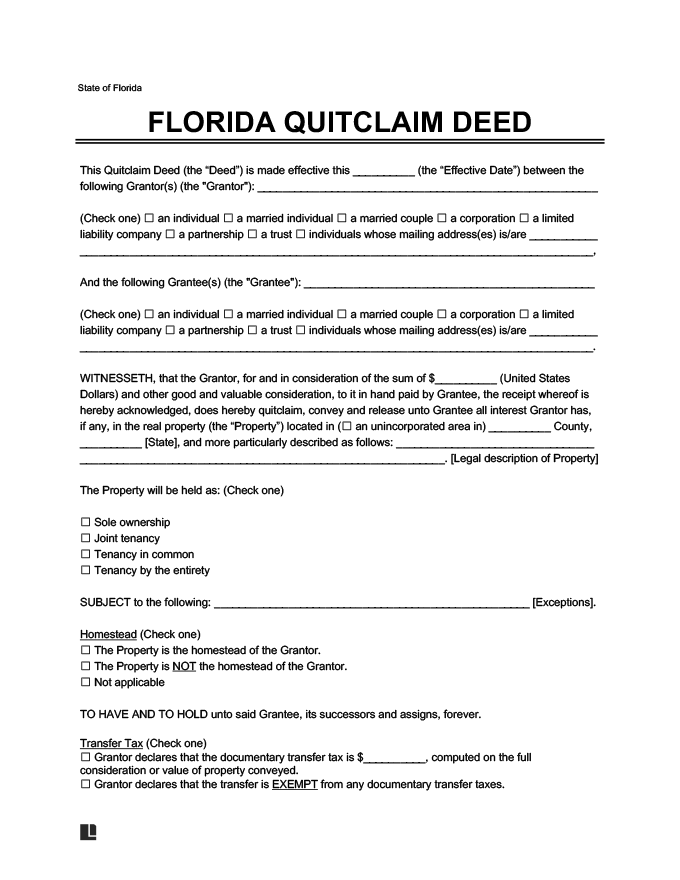
- Quitclaim Deed: This deed transfers whatever interest the grantor has in the property, without any warranties or guarantees. The grantee receives only what the grantor possesses, if anything. This is often used between family members or in situations where ownership is already clear, but a formal transfer is needed.
Ownership interests can also be held in different ways:
- Tenants in Common: Each owner holds an undivided interest in the property, and their share can be inherited by their heirs.
- Joint Tenants with Right of Survivorship (JTWROS): When one owner dies, their share automatically passes to the surviving joint tenant(s), bypassing the probate process. This is a common method for spouses or close family members.
- Tenants by the Entireties: This form of ownership is exclusively for married couples. It provides the same survivorship rights as JTWROS but also offers protection against creditors of only one spouse.
The decision of which deed type and ownership structure to use when adding someone to your property will depend on your specific circumstances, intentions, and the relationship with the person you are adding.
The Importance of Legal Counsel
It is strongly recommended to consult with a qualified real estate attorney in Florida before proceeding with any deed transfer. An attorney can:
- Advise on the most appropriate type of deed for your situation.
- Explain the tax implications (e.g., gift tax, documentary stamp tax).
- Ensure the deed is drafted correctly and meets all legal requirements.
- Guide you through the recording process.
- Prevent potential future disputes or legal challenges.
While the process might seem straightforward, errors in documentation or understanding can lead to complex legal issues down the line, potentially affecting the ownership and value of your property.
Steps to Add Someone to a Deed in Florida
The process of adding a new owner to a Florida property deed typically involves creating and executing a new deed that transfers a portion of the current owner’s interest to the new individual. The existing deed remains relevant as it establishes the current ownership, but a new document is necessary for the addition.
1. Determine the Type of Deed and Ownership Structure
As discussed earlier, the first critical step is deciding how the new owner will hold their interest.
- Consider the intent: Are you gifting a share? Adding a spouse for survivorship? Bringing in a partner for investment?
- Consult with an attorney: This is where legal advice is paramount. An attorney will guide you on whether a Warranty Deed, Special Warranty Deed, or Quitclaim Deed is most suitable, and whether you should aim for Joint Tenancy with Right of Survivorship, Tenancy by the Entireties, or Tenancy in Common.
For instance, if a parent wishes to add their child to the deed to ensure the property passes to the child without probate, they might opt for a Quitclaim Deed to create Joint Tenancy with Right of Survivorship. If adding a spouse to a jointly owned property, Tenancy by the Entireties would likely be the choice.
2. Obtain the Necessary Information
You will need precise information for both the grantor(s) (the current owner(s)) and the grantee(s) (the person(s) being added). This includes:
- Full legal names: As they appear on official identification.
- Marital status: This is particularly important for Tenancy by the Entireties.
- Current address: For mailing purposes and official records.
- Social Security Numbers (SSNs): Often required for tax purposes and title searches.
3. Draft the New Deed
This is a highly technical step that should ideally be handled by an attorney. The deed must accurately describe:
- The Grantor(s): The current owner(s) of the property.
- The Grantee(s): The person(s) being added to the deed.
- The Property: A legal description of the property, usually found on the existing deed or obtained from a title search. This description is precise and cannot be simply the street address.
- Consideration: While a deed can be drafted with “ten dollars and other good and valuable consideration” to signify a transfer, the actual intent (gift, sale) is also important for tax purposes.
- Habendum Clause: This clause defines the type of ownership being conveyed (e.g., “to have and to hold… as joint tenants with right of survivorship”).
- Legal Covenants: Depending on the deed type, these will specify warranties or lack thereof.
A misstatement or omission in the legal description or ownership designation can render the deed invalid or create significant title defects.
4. Execute the Deed

Once drafted, the deed must be signed by the grantor(s) in the presence of a notary public. The notary will verify the identity of the signer(s) and administer an oath. This notarization is a critical step for the deed to be legally recognized for recording.
5. Pay Documentary Stamp Tax and Intangible Tax
In Florida, when a deed is recorded, documentary stamp tax is typically due. The rate is $0.70 per $100 of the value of the property being transferred. For example, if a property worth $200,000 is being transferred, the stamp tax would be $1,400. There are some exemptions, such as transfers between spouses or to add a spouse to the title in certain circumstances, but these should be confirmed with an attorney.
Intangible tax is generally not applicable to residential property transfers, but it’s a consideration for other types of real estate.
6. Record the Deed
The newly executed and notarized deed, along with proof of payment for the documentary stamp tax, must be filed with the Clerk of Court in the county where the property is located. This recording provides public notice of the ownership change and protects the new owner’s interest against subsequent claims. The clerk will typically issue a new deed number and record the transaction in the official public records. The original deed, once recorded, will usually be mailed back to the party who submitted it for recording, often the new owner or their attorney.
Considerations and Potential Implications
Adding someone to a property deed is not a decision to be taken lightly. It has far-reaching implications that extend beyond simple ownership.
Tax Implications
- Gift Tax: If the transfer is a gift and exceeds the annual federal gift tax exclusion amount, the grantor may need to file a gift tax return and potentially use a portion of their lifetime gift tax exemption. Consulting with a tax advisor or attorney is crucial to understand these implications.
- Property Tax: Adding a new owner does not automatically change the assessed value of the property for tax purposes, but future changes in ownership or exemptions might affect future property tax assessments.
- Capital Gains Tax: The new owner’s cost basis will be influenced by how they acquired their interest. If it was a gift, their basis is generally the grantor’s basis. If purchased, it’s the purchase price. This impacts potential capital gains tax liability when the property is eventually sold.
Financial and Legal Responsibilities
- Mortgage: If there is an existing mortgage on the property, adding someone to the deed does not remove the original owner from the mortgage obligation. The original owner remains legally responsible for the mortgage payments unless the mortgage is refinanced or assumed by the new owner, which is a separate and complex process.
- Liability: All owners listed on the deed share legal and financial responsibility for the property. This includes potential liabilities arising from accidents on the property, code violations, or any other legal claims related to the real estate.
- Creditors: In Florida, depending on the form of ownership, creditors of any owner may be able to place a lien on the property. For example, if property is held as Tenants in Common, a creditor of one tenant can place a lien on that tenant’s share. Tenancy by the Entireties offers significant protection against individual creditors.
Estate Planning and Probate
- Survivorship: As mentioned, using Joint Tenancy with Right of Survivorship or Tenancy by the Entireties allows the property to pass directly to the surviving owner(s) upon death, avoiding the probate process. This can simplify the transfer of assets to heirs and reduce associated costs and delays.
- Wills and Trusts: Adding someone to a deed can impact how the property is distributed according to a will or trust. It is essential to ensure that the deed transfer aligns with your overall estate plan.
Difficulty in Future Transactions
Adding multiple owners can complicate future decisions regarding the property, such as selling, refinancing, or making significant improvements. All owners on the deed typically must agree to such actions. This can lead to disagreements and deadlock, especially if relationships change over time.
For instance, if a parent adds a child to their home deed and later decides to sell it, the child’s consent and cooperation would be required. If the child disagrees or is uncooperative, the parent might face significant challenges in liquidating the asset.
Alternatives to Adding Someone to a Deed
Depending on your goals, there might be alternative methods to achieve a similar outcome without directly adding someone to the property deed. Exploring these options can sometimes provide greater flexibility and fewer immediate complications.
Living Trusts
A living trust is a legal entity that holds your assets, including real estate. You can name beneficiaries in the trust who will inherit the property upon your death, often without going through probate. The advantage here is that you maintain control of the property during your lifetime as the trustee, and the beneficiaries receive their inheritance according to the terms of the trust. This offers a robust estate planning tool that can manage ownership and distribution without immediate co-ownership.
Transfer on Death Deed (TODD)
While Florida does not currently recognize Transfer on Death Deeds for real property, some other states do. For Florida residents, the closest equivalent for avoiding probate for real estate is typically a living trust or holding title as Joint Tenants with Right of Survivorship or Tenants by the Entireties.
Gifting Property Through a Will
You can specify in your will that your property be left to a particular individual. This ensures that the asset is distributed according to your final wishes after your death, but it will go through the probate process. While less immediate than a deed transfer, it offers a clear method of inheritance without relinquishing ownership during your lifetime.
Establishing Power of Attorney
A Power of Attorney (POA) allows you to appoint someone to make financial decisions on your behalf, including potentially selling or managing property. However, a POA does not transfer ownership. It is a document granting authority, and the appointed person (the agent) acts in your stead, not as an owner. This is a useful tool for managing affairs if you become incapacitated, but it does not add someone as a co-owner.
Choosing the right method depends heavily on your personal situation, your relationship with the individual you wish to benefit, and your long-term financial and estate planning goals. Again, professional legal advice is indispensable in navigating these complex decisions and ensuring that your intentions are legally and effectively implemented.
LifeOutOfTheBox is a participant in the Amazon Services LLC Associates Program, an affiliate advertising program designed to provide a means for sites to earn advertising fees by advertising and linking to Amazon.com. Amazon, the Amazon logo, AmazonSupply, and the AmazonSupply logo are trademarks of Amazon.com, Inc. or its affiliates. As an Amazon Associate we earn affiliate commissions from qualifying purchases.