
Navigating the process of establishing a legal business identity in Texas can feel like a complex endeavor, especially for new entrepreneurs. One crucial step for many businesses operating under a name different from their own legal name (whether it’s a sole proprietorship, partnership, or even a corporation/LLC) is filing a “Doing Business As,” or DBA, also known as a “Fictitious Name Certificate.” This legal document allows a business to operate under an assumed name, which is essential for various aspects of business operations, including opening bank accounts, signing contracts, and marketing. This guide will walk you through the essential steps for applying for a DBA in Texas, ensuring a smooth and compliant path to your business’s legal operation.
Understanding the DBA in Texas
A DBA in Texas is not a separate business entity; it’s a filing that allows an existing legal entity or individual to conduct business under a name that differs from their registered legal name. For instance, if John Smith, a sole proprietor, decides to open a bakery named “Sweet Delights,” he would need to file for a DBA for “Sweet Delights” so he can legally operate the business under that name. Similarly, a Limited Liability Company (LLC) or corporation might file a DBA if they wish to operate a specific product line or division under a distinct brand name.
Who Needs a DBA in Texas?
- Sole Proprietors: If you operate your business using a name other than your own legal name, a DBA is typically required. For example, if you are Jane Doe and your business is called “Jane’s Pet Grooming,” you’d need a DBA. If you were simply operating as “Jane Doe, Pet Groomer,” you would likely not need one.
- Partnerships: Similar to sole proprietorships, if a partnership operates under a name that isn’t the legal names of all the partners involved, a DBA is necessary.
- Corporations and LLCs: While corporations and LLCs are already distinct legal entities, they may choose to file a DBA to operate a new brand, product, or service under a name different from the registered corporate or LLC name. For example, if “Innovative Solutions Inc.” wanted to launch a new software product under the name “CloudBurst Software,” they might file a DBA.
Key Benefits of a DBA
- Legal Operation: It provides the legal framework to operate your business under a chosen brand name.
- Banking and Financials: Most banks require a DBA to open a business bank account under the assumed business name. This is crucial for separating personal and business finances.
- Credibility and Branding: A professional business name enhances your brand’s image and credibility with customers and clients.
- Contracts and Agreements: Allows you to enter into contracts, leases, and other agreements using your business name.
- Marketing and Advertising: Essential for all your marketing materials, websites, and advertising campaigns.
The Application Process: Step-by-Step in Texas
The process for filing a DBA in Texas primarily involves the county clerk’s office where your principal place of business is located. Unlike some states where a central state agency handles DBA filings, Texas operates on a county-by-county basis.
Step 1: Determine Your Business Structure and Location
Before you can file, you need to be clear about your existing business structure (sole proprietorship, partnership, corporation, or LLC). This will influence the specific forms and information required. More importantly, identify the county in Texas where your primary business operations are physically located or where you reside if you are a sole proprietor without a physical business address.
Step 2: Choose Your Business Name Wisely
Your chosen business name is critical. It must be unique and not infringe on existing trademarks or business names registered in Texas.
Name Availability Search
- Texas Secretary of State Website: While the DBA is filed at the county level, it’s wise to check the Texas Secretary of State’s website for existing business entity names. This can help avoid conflicts, especially if you are a corporation or LLC filing a DBA. You can search for existing business names registered with the state.
- County Clerk’s Office: You may also want to contact the county clerk’s office directly or check their website for any local business name registrations that might conflict.
- U.S. Patent and Trademark Office (USPTO): For a more comprehensive search, especially if you plan to market your brand nationally, consider checking the USPTO database for federal trademarks.
Naming Guidelines
- No Misleading Names: The name cannot be misleading about the nature of your business.
- No Prohibited Words: Avoid using words like “Bank,” “Trust,” “Insurance,” or “University” unless you have specific authorization and meet stringent regulatory requirements.
- Distinguishable: The name should be distinguishable from other registered names.
Step 3: Obtain the Correct Forms
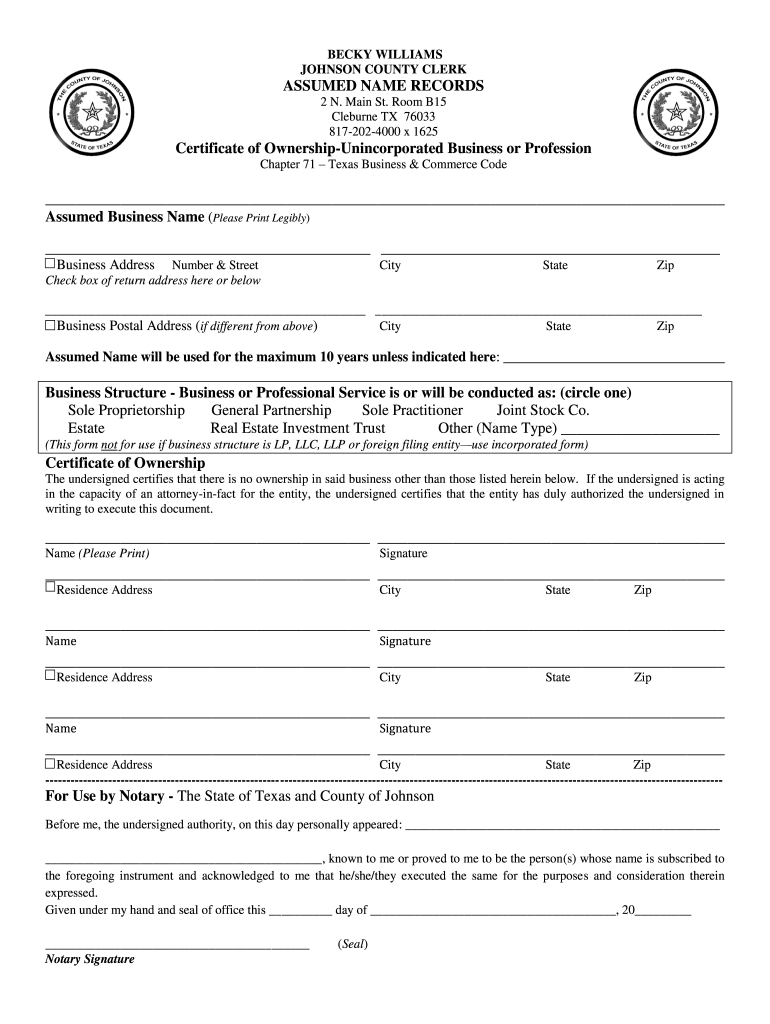
The primary document you’ll need is a “Assumed Name Certificate” or “Fictitious Name Certificate.” The exact terminology and forms can vary slightly by county.
- County Clerk Website: The most efficient way to get the correct form is to visit the website of the County Clerk for the county where you will be filing. Most Texas county clerk websites provide downloadable forms and instructions.
- In Person: You can also visit the County Clerk’s office in person to obtain the necessary forms.
Step 4: Complete the Assumed Name Certificate
Carefully fill out the Assumed Name Certificate. You will typically need to provide the following information:

- The Assumed Business Name: The name you wish to use (your DBA).
- The Legal Name of the Owner: This is your full legal name if you are a sole proprietor or the full legal name of your partnership, corporation, or LLC.
- The Address of the Owner: Your current residential address (for sole proprietors) or the principal business address.
- The Principal Place of Business in Texas: The physical address of your business within the county.
- For Corporations/LLCs: You will likely need to provide your Secretary of State file number.
- Signature: The certificate must be signed by the owner(s) or an authorized representative. This signature often needs to be notarized.
Step 5: File with the County Clerk
Once the form is completed and notarized, you will submit it to the County Clerk’s office.
- Filing Fees: There will be a filing fee, which varies by county. You can typically find this information on the county clerk’s website or by calling their office.
- Submission Methods: Most county clerks accept filings in person, by mail, or sometimes online. Check the specific procedures for your county.
- Public Record: Upon filing, the Assumed Name Certificate becomes a public record.
Step 6: Publication Requirements (Important Distinction for Texas)
A significant aspect of filing a DBA in Texas is that publication is generally NOT required for Assumed Name Certificates. This is a common point of confusion, as many other states do mandate publication. In Texas, filing with the county clerk is usually sufficient. However, it’s always prudent to confirm this with the specific county clerk’s office where you are filing, as local rules can sometimes have nuances.
After Filing Your DBA
Congratulations, you’ve filed your DBA! However, the process doesn’t end here. There are several important follow-up steps to ensure your business is fully compliant and ready to operate smoothly.
Open a Business Bank Account
With your filed Assumed Name Certificate in hand, you can now approach a bank to open a business checking account under your DBA name. This is crucial for maintaining financial clarity and professionalism. You will likely need to provide the filed certificate, your personal identification, and possibly your EIN (Employer Identification Number) if you have one.
Obtain Necessary Licenses and Permits
Filing a DBA does not exempt you from obtaining any other required federal, state, or local business licenses and permits. Depending on your industry and location, you may need specific permits to operate legally. Research the requirements for your business type and city/county.
Update Your Business Materials
Begin using your DBA name on all your business-related materials:
- Website and Social Media: Update your online presence to reflect your new business name.
- Marketing Materials: Business cards, brochures, advertisements, signage, etc.
- Invoices and Contracts: Ensure all future financial documents and legal agreements use the official DBA name.
Renewals and Amendments
- Expiration: In Texas, an Assumed Name Certificate is generally effective for a period of 10 years. You will need to file a new certificate if you wish to continue using the name after this period.
- Amendments: If any information on your original filing changes (e.g., your business address or legal name), you will need to file an amendment to your Assumed Name Certificate with the county clerk.
- Discontinuance: If you decide to stop using your DBA name, you should file a “Discontinuance of Assumed Name” certificate with the county clerk’s office. This is a good practice to officially close out the record.
Common Pitfalls and Best Practices
Navigating the DBA filing process can be straightforward, but it’s easy to stumble if you’re not aware of potential issues. Adhering to best practices will ensure a seamless experience.
Common Pitfalls to Avoid
- Incorrect County: Filing in the wrong county is a common mistake. Always confirm the county where your principal place of business is located.
- Name Conflicts: Failing to adequately research name availability can lead to legal challenges and the need to rebrand later.
- Ignoring Business Structure: Not understanding whether your business structure requires a DBA can lead to unnecessary filings or operating without legal standing.
- Not Notarizing: Many counties require the Assumed Name Certificate to be notarized. Failing to do so can result in the rejection of your filing.
- Assuming Publication is Required: As mentioned, publication is typically not required for DBAs in Texas. Relying on outdated information or practices from other states could lead to unnecessary expenses.

Best Practices for a Smooth Process
- Start with Online Research: Begin by thoroughly exploring the websites of the Texas Secretary of State and your specific county clerk.
- Read Instructions Carefully: Pay close attention to all instructions provided on the forms and on the county clerk’s website.
- Consult Legal Counsel (If Needed): If you have complex business structures, concerns about name availability, or are unsure about any aspect of the process, consulting with a business attorney in Texas is highly recommended.
- Keep Copies: Always retain copies of all filed documents for your business records.
- Stay Organized: Maintain a system for tracking important dates, such as renewal deadlines, to ensure ongoing compliance.
By understanding the requirements and following these steps meticulously, you can successfully obtain a DBA in Texas, laying a solid legal foundation for your business’s brand and operations. This essential step empowers you to trade under your chosen name, build your brand identity, and conduct business with confidence and legal legitimacy across the Lone Star State.
LifeOutOfTheBox is a participant in the Amazon Services LLC Associates Program, an affiliate advertising program designed to provide a means for sites to earn advertising fees by advertising and linking to Amazon.com. Amazon, the Amazon logo, AmazonSupply, and the AmazonSupply logo are trademarks of Amazon.com, Inc. or its affiliates. As an Amazon Associate we earn affiliate commissions from qualifying purchases.