
Navigating the complexities of obtaining a hardship license in Florida can be a daunting task, especially when facing driving restrictions. This type of license, often referred to as a business or employment purpose license, is designed to allow individuals with a suspended or revoked driver’s license to drive under specific, limited circumstances. Understanding the eligibility requirements, the application process, and the necessary documentation is crucial for a successful outcome. This guide aims to demystify the process, providing a clear roadmap for residents seeking to regain limited driving privileges in the Sunshine State.
Understanding Florida’s Hardship License
A hardship license is not a carte blanche to drive freely. It is a privilege granted by the Florida Department of Highway Safety and Motor Vehicles (FLHSMV) to individuals who can demonstrate a genuine need for driving to maintain their livelihood or for other essential purposes. The core principle behind its issuance is to allow individuals to continue their employment, attend necessary medical appointments, or transport dependents to school or medical care when other transportation options are not feasible.
Eligibility Criteria for a Hardship License
The FLHSMV has stringent criteria for approving hardship license applications. It’s not a simple request; applicants must prove their case. Generally, eligibility hinges on several factors:
- Type of Suspension/Revocation: The reason for your license suspension or revocation plays a significant role. Certain offenses, such as those involving DUI with serious bodily injury or death, may make you ineligible. However, for many first-time DUI offenses or other non-criminal traffic violations, a hardship license might be an option.
- Completion of Required Programs: For alcohol-related offenses, you will likely need to have completed a DUI program, such as the Traffic Alcohol and Drug Education (T.A.D.E.) or Alcohol Safety Education (A.S.E.) course. Proof of completion is mandatory.
- Demonstrated Need: The applicant must provide compelling evidence that driving is essential for employment, education, medical treatment, or caring for a dependent. This is the cornerstone of the application. Simply wanting to drive for convenience will not suffice.
- Lack of Alternatives: You will need to show that viable alternative transportation methods are unavailable or impractical. This might involve detailing the lack of public transportation in your area, the prohibitive cost of taxis or ride-sharing services for daily commutes, or the absence of willing family members or friends to provide consistent transportation.
- Clean Driving Record (Post-Suspension): While you may have had a reason for your suspension, a history of further driving infractions after the suspension began can severely jeopardize your application.
Types of Hardship Licenses
Florida offers different types of hardship licenses tailored to specific needs. Understanding these distinctions can help you apply for the most appropriate one:
- Employment Purpose License: This is the most common type. It allows you to drive to and from your place of employment and perform job-related duties. This might include driving a company vehicle or using your personal vehicle for sales calls or deliveries.
- Education Purpose License: If you are enrolled in an educational program, this license permits you to drive to and from school or university, as well as to attend required educational activities.
- Medical Purpose License: This license is for essential medical appointments for yourself or for individuals under your care. It covers transportation to and from doctor’s offices, hospitals, and therapy sessions.
- Dependent Care Purpose License: If you are the primary caregiver for a dependent, such as a child or an elderly parent, and you need to transport them for essential services like school or medical appointments, this license may be granted.
It is crucial to be precise about the type of license you are applying for, as the documentation and justification requirements will align with the specific purpose.
The Application Process for a Hardship License
Applying for a hardship license in Florida involves a detailed submission process with the FLHSMV. It is not something that can be done online in most cases, and it often requires an in-person appearance.
Step-by-Step Application Guide
-
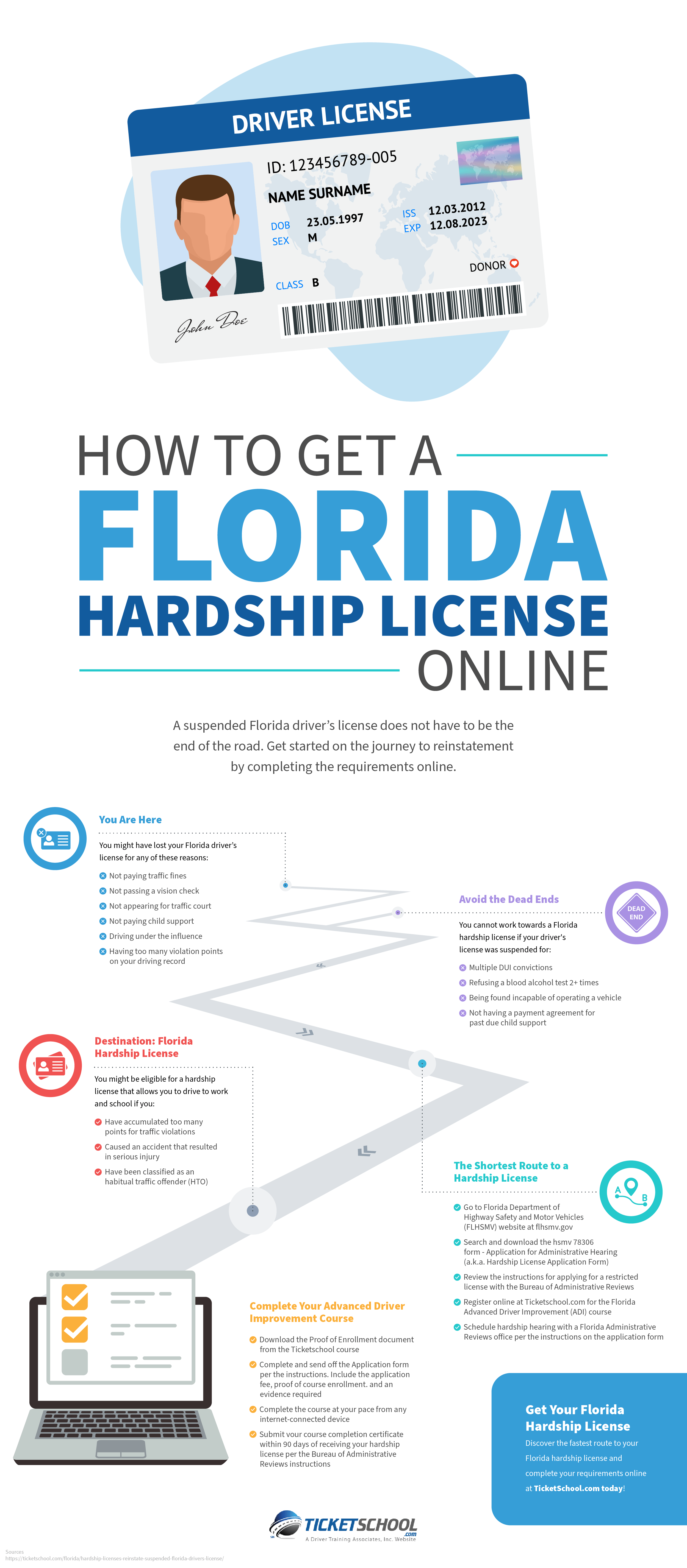
Determine Eligibility and Gather Documentation: Before initiating the application, thoroughly review the eligibility criteria outlined by the FLHSMV. Begin collecting all necessary documents. This is arguably the most critical phase, as incomplete or incorrect documentation is a primary reason for denial.
- Proof of Identity and Residency: Valid Florida driver’s license (if you still have it), birth certificate, passport, or other government-issued identification. Proof of residency may include utility bills or lease agreements.
- Suspension or Revocation Order: The official document detailing the reason for your license suspension or revocation.
- Proof of Completion of Required Programs: Certificates of completion for DUI school, traffic school, or any other court-ordered programs.
- Employment Verification: A letter from your employer detailing your job title, work hours, the necessity of driving for your employment, and the employer’s willingness to provide verification. If you are self-employed, you may need business registration documents, tax returns, and a detailed explanation of how driving is essential to your business operations.
- Education Verification (if applicable): A letter from your educational institution confirming your enrollment, course schedule, and the necessity of driving for attendance.
- Medical Verification (if applicable): A letter from your physician or a medical facility detailing the need for transportation for medical treatment for yourself or a dependent. This letter should specify the frequency and duration of necessary appointments.
- Dependent Care Verification (if applicable): Documentation proving your responsibility for a dependent and the necessity of driving for their essential needs (e.g., school enrollment, medical appointments).
- Proof of Ignition Interlock Device (IID) Installation (if required): For certain DUI-related suspensions, installation of an IID in your vehicle may be a prerequisite.
- Proof of SR-22 Insurance: This is a certificate of financial responsibility that an insurance company files with the FLHSMV. It assures the state that you have the minimum required auto insurance coverage.
-
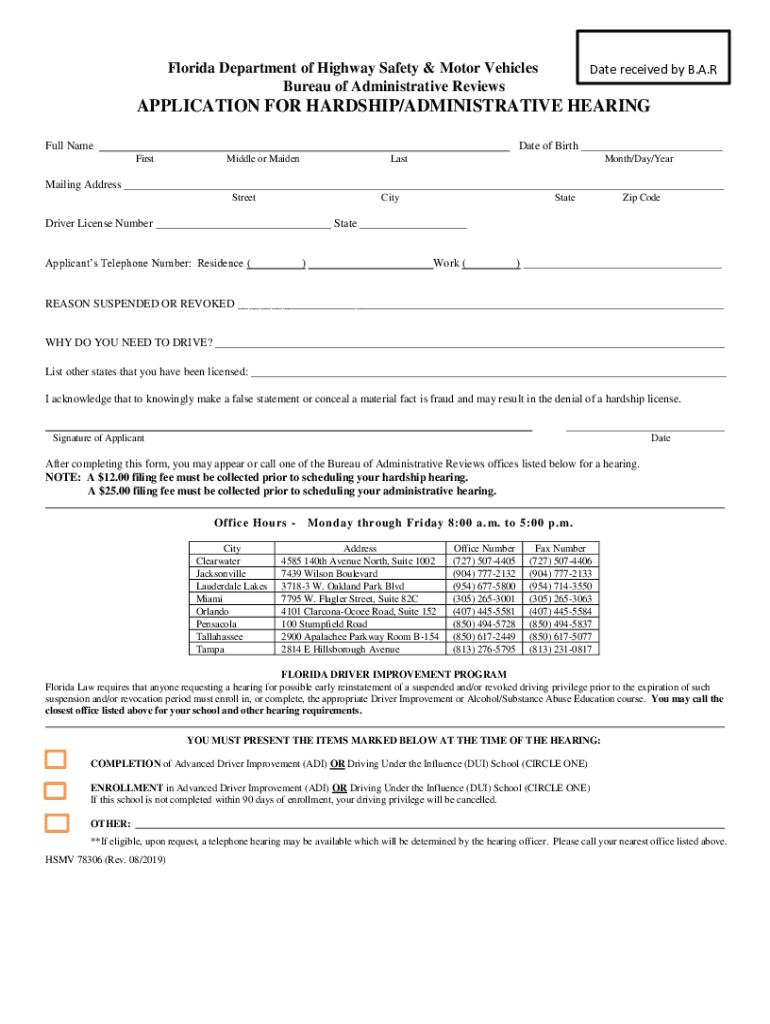
Complete the Application Form: Obtain the official application form for a hardship license from the FLHSMV website or a local driver license service center. Ensure you fill it out accurately and completely, paying close attention to all fields.
-
Schedule an Appointment: In most cases, you will need to schedule an in-person appointment at a Florida driver license service center. Appointments can often be made online through the FLHSMV website or by calling their customer service line. Be prepared for potential wait times, as these centers can be busy.
-
Attend the Appointment: Arrive at your scheduled appointment with all your original documentation and copies. Be prepared to answer questions from the FLHSMV representative regarding your need for a hardship license. Honesty and clarity are paramount.
-
Pay Applicable Fees: There are fees associated with applying for and obtaining a hardship license, as well as for any required administrative services. Ensure you have the means to pay these fees at the time of your application.
Dealing with Denial and Appeals
If your application for a hardship license is denied, it is important not to lose hope. You have the right to appeal the decision.
- Understand the Reason for Denial: Carefully review the denial letter from the FLHSMV to understand the specific reasons for the rejection. This will guide your appeal strategy.
- Gather Additional Evidence: If the denial was due to insufficient documentation or a lack of clarity, you may need to gather more supporting evidence to strengthen your case.
- File an Appeal: The FLHSMV will provide instructions on how to appeal their decision. This typically involves submitting a written request for an administrative hearing.
- Attend the Hearing: Be prepared to present your case before an administrative law judge. This is an opportunity to explain your situation in detail and provide any additional evidence not previously submitted.
Maximizing Your Chances of Approval
While the process can be rigorous, several strategies can significantly increase your likelihood of having your hardship license application approved.
The Importance of Preparation and Honesty
Thorough preparation is the bedrock of a successful hardship license application. This means:
- Meticulous Documentation: Double-check every document for accuracy, completeness, and validity. Ensure dates align and signatures are present where required. If a document is missing, find out how to obtain it.
- Clear and Concise Justification: Articulate your need for the license in a clear, logical, and compelling manner. Avoid vague statements. Instead, provide specific examples of how the lack of a license impacts your ability to work, seek medical care, or care for dependents.
- Proactive Communication: If you have any doubts about the requirements or the process, contact the FLHSMV directly. Their customer service representatives can provide clarification and guidance.
Seeking Professional Assistance
For complex cases or if you are finding the process overwhelming, consider seeking legal counsel from an attorney specializing in traffic law or driver’s license reinstatement in Florida. An experienced attorney can:
- Assess your eligibility: They can provide an honest evaluation of your chances of approval based on your specific circumstances.
- Help gather and organize documentation: They can ensure you have all the necessary paperwork and that it is presented effectively.
- Represent you in hearings: If your application is denied and you need to appeal, an attorney can represent you in administrative hearings, presenting your case persuasively.
- Navigate legal jargon: They can interpret the complex legal language and regulations associated with license suspensions and hardship applications.
Maintaining Compliance and Safe Driving Habits
Once you are granted a hardship license, strict adherence to its terms is paramount.
- Understand the Restrictions: Be acutely aware of the specific times, routes, and purposes for which you are permitted to drive. Violating these restrictions can lead to further suspension or revocation of your driving privileges.
- Drive Responsibly: Operate your vehicle safely and in compliance with all traffic laws. Any new traffic violations while on a hardship license can have severe consequences.
- Keep Records: Maintain records of your authorized driving activities, such as mileage logs for work or appointment confirmations. This can be helpful if you need to demonstrate continued compliance.
Obtaining a hardship license in Florida is a process that demands patience, thoroughness, and a clear demonstration of need. By understanding the eligibility requirements, meticulously preparing your application, and adhering to the terms of the license, you can significantly improve your chances of regaining essential driving privileges.
LifeOutOfTheBox is a participant in the Amazon Services LLC Associates Program, an affiliate advertising program designed to provide a means for sites to earn advertising fees by advertising and linking to Amazon.com. Amazon, the Amazon logo, AmazonSupply, and the AmazonSupply logo are trademarks of Amazon.com, Inc. or its affiliates. As an Amazon Associate we earn affiliate commissions from qualifying purchases.