
Navigating the complexities of estate planning, especially in a state as dynamic as California, can feel overwhelming. While discussions about wills and end-of-life arrangements might seem distant, proactive planning is crucial. One significant aspect that many Californians are keen to understand is how to avoid probate. Probate is the legal process by which a deceased person’s assets are identified, valued, and distributed to their heirs. It can be a time-consuming, costly, and public affair, often delaying the transfer of property and potentially diminishing its value. Fortunately, there are several well-established strategies to bypass this process, ensuring a smoother and more private transition of your estate.
This guide will explore the primary methods available to Californians looking to steer clear of probate. These strategies often involve careful planning and the establishment of specific legal instruments before one’s passing. By understanding these options, you can make informed decisions that align with your wishes and provide peace of mind for yourself and your loved ones. Whether you’re planning a luxury travel escape to Europe or simply want to ensure your assets are handled efficiently, avoiding probate is a smart move.
Understanding the Probate Process in California
Before diving into avoidance strategies, it’s essential to grasp why avoiding probate is often desirable. The probate process in California is governed by state law and can involve several stages.
The Costs and Delays Associated with Probate
When a person dies owning assets solely in their name that exceed a certain value, their estate typically goes through probate. The process begins with filing a petition with the superior court in the county where the deceased resided. An executor, named in a will, or an administrator, appointed by the court if there’s no will, manages the estate. This involves:
- Notifying Beneficiaries and Heirs: All individuals with a legal claim to the estate must be informed.
- Inventorying and Appraising Assets: A comprehensive list of all assets (real estate, bank accounts, investments, personal property) is created, and their fair market value is determined.
- Paying Debts and Taxes: Creditors are notified, and claims against the estate are paid. This includes outstanding mortgages, credit card bills, and any applicable taxes.
- Distributing Remaining Assets: Once all debts and taxes are settled, the remaining assets are distributed to the beneficiaries according to the will or intestate succession laws.
The primary drawbacks of probate are the significant time it can take and the associated costs. Probate proceedings in California can easily last anywhere from six months to several years, depending on the complexity of the estate and any potential disputes. This delay can be particularly distressing for heirs who rely on the inherited assets, perhaps for immediate living expenses or to maintain a beloved family home.
Furthermore, the costs can be substantial. Court filing fees, attorney fees, and executor fees are all factored into the probate process. In California, statutory fees for attorneys and executors are based on the gross value of the estate, not its net value after debts. This means even if an estate has significant liabilities, the fees are calculated on the total value of the assets, potentially leading to a larger slice of the pie being consumed by probate costs. These costs can range from several thousand dollars for smaller estates to tens or even hundreds of thousands of dollars for larger ones.
Beyond financial and temporal burdens, probate is a public record. This means anyone can access information about the deceased’s assets, debts, and beneficiaries, which may compromise privacy for some families.
Key Strategies for Avoiding Probate in California
Fortunately, California law offers several effective ways to bypass the probate process. These methods generally involve ensuring that your assets are not solely titled in your name at the time of your death, or that they are structured to pass directly to beneficiaries outside of the probate court’s jurisdiction.
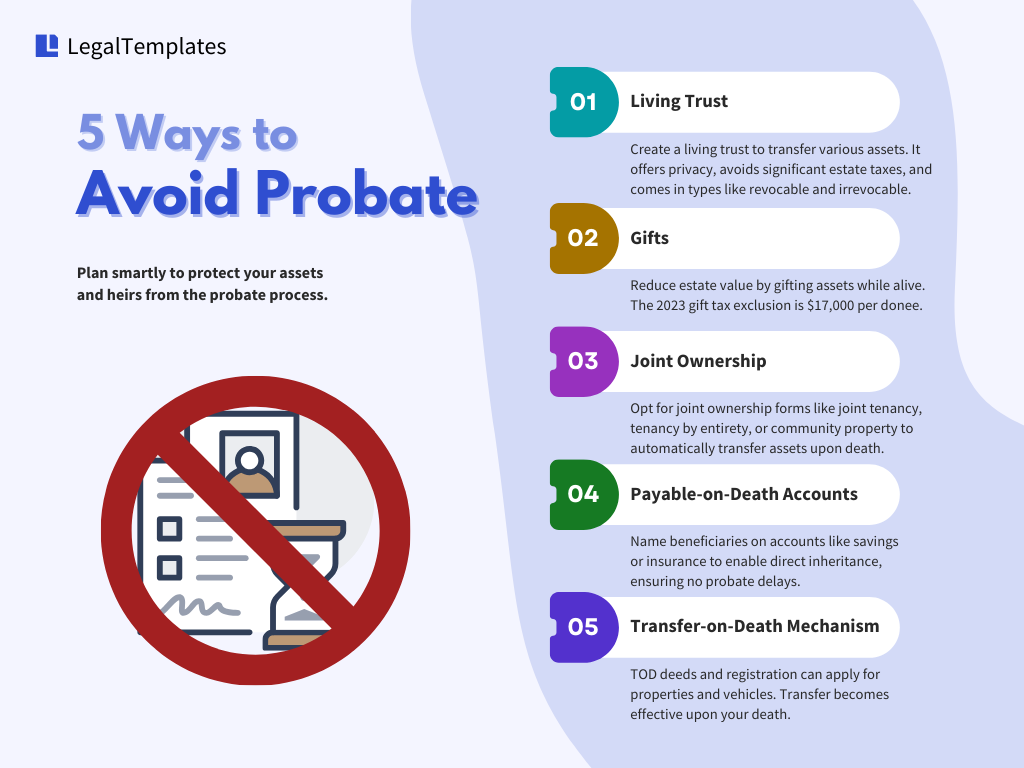
1. Establishing a Revocable Living Trust
One of the most popular and effective probate avoidance tools in California is the revocable living trust. A living trust is a legal entity created during your lifetime that holds your assets. You, as the grantor, transfer ownership of your assets into the trust. You also appoint yourself as the trustee, giving you complete control over the assets during your lifetime.
How a Revocable Living Trust Works
When you establish a revocable living trust, you designate a successor trustee who will manage the trust upon your incapacitation or death. Crucially, assets properly funded into the trust do not go through probate. Instead, the successor trustee distributes them to your named beneficiaries according to the terms you’ve outlined in the trust document.
The advantages of a living trust are numerous:
- Probate Avoidance: This is the primary benefit. Assets held in the trust bypass the probate court entirely.
- Privacy: Unlike probate, the terms of a trust and the distribution of assets are private.
- Incapacity Planning: The trust can specify how your assets should be managed if you become unable to do so yourself, avoiding the need for a conservatorship.
- Flexibility: You can amend or revoke the trust at any time while you are alive and competent.
To make a revocable living trust effective, you must actively transfer ownership of your assets into it. This is known as “funding the trust.” This involves retitling bank accounts, investment accounts, real estate, and other significant assets into the name of the trust. For example, if you own a home in Los Angeles, you would execute a new deed transferring ownership from your name to the name of your trust. If you plan a long-term stay in a villa in Italy, ensuring any properties you own are properly titled in the trust is essential.
2. Utilizing Beneficiary Deeds and Payable-on-Death (POD) / Transfer-on-Death (TOD) Designations
For certain types of assets, California allows for direct transfer to beneficiaries outside of probate through specific designations.

Beneficiary Deeds for Real Estate
California allows for a Revocable Transfer on Death Deed (RTODD), often referred to as a beneficiary deed. This legal document allows you to name a beneficiary who will automatically inherit your real property upon your death. The property does not become part of your probate estate, and the transfer is immediate upon recording your death certificate.
To be valid, the RTODD must be properly executed and recorded with the county recorder’s office in the county where the property is located before your death. It’s crucial to ensure that the deed is drafted correctly to avoid any potential challenges. This method is straightforward for real estate but does not cover other types of assets.
Payable-on-Death (POD) and Transfer-on-Death (TOD) Accounts
Many financial institutions offer Payable-on-Death (POD) designations for bank accounts and Transfer-on-Death (TOD) designations for investment accounts, brokerage accounts, and retirement accounts like IRAs and 401(k)s.
When you set up a POD or TOD account, you name one or more beneficiaries who will directly receive the funds in that account upon your death. These assets bypass probate entirely, as they are not considered part of your probate estate. The beneficiary simply needs to present a death certificate to the financial institution to claim the funds. This is a simple and effective way to transfer liquid assets and is often used in conjunction with other probate avoidance strategies. Imagine wanting to leave funds for a family member’s trip to Disneyland – a POD account can ensure they have quick access to those funds.
3. Joint Tenancy with Right of Survivorship
Another common method for avoiding probate is holding property as a joint tenant with the right of survivorship. This form of ownership is typically used for real estate and bank accounts.
Understanding Joint Tenancy
When two or more individuals own property as joint tenants with the right of survivorship, the surviving joint tenant(s) automatically inherit the deceased owner’s share of the property upon their death. This transfer occurs outside of the probate process. The surviving owner simply needs to record a death certificate with the county recorder’s office to remove the deceased’s name from the title.
This method is straightforward but comes with considerations:
- Loss of Control: You are sharing ownership with the joint tenant during your lifetime.
- Creditor Issues: The property may be subject to the creditors of all joint tenants.
- Tax Implications: While it avoids probate, there may be gift tax implications when initially establishing joint tenancy, and the surviving owner’s basis for capital gains tax purposes can be complex.
For example, if a couple owns a home in San Diego as joint tenants, upon the death of one spouse, the surviving spouse automatically becomes the sole owner without probate. This is a common approach for married couples or parent-child arrangements where a smooth transfer is desired, perhaps to maintain a vacation home in Lake Tahoe.
4. Other Considerations and Advanced Planning
While trusts, POD/TOD designations, and joint tenancy are primary methods, other strategies and considerations can complement your probate avoidance plan.
Small Estate Procedures
California has simplified procedures for small estates, which can avoid full probate. If the total value of a deceased person’s assets that would otherwise go through probate is below a certain threshold (which is adjusted periodically for inflation), the heirs may be able to collect assets without formal probate proceedings. As of recent updates, this threshold is generally $184,500 for estates where the deceased died after April 1, 2022. This involves filing a petition with the court and presenting an inventory and appraisal. While it avoids the full probate process, it still involves court involvement and paperwork.
Life Insurance and Retirement Accounts
As mentioned with TOD designations, life insurance policies and retirement accounts (like IRAs, 401(k)s, and pensions) with named beneficiaries automatically pass to those beneficiaries upon the insured’s or account holder’s death. These assets are not part of the probate estate and do not require probate for distribution. It’s crucial to regularly review and update beneficiary designations on these accounts, as they supersede any instructions in a will. This is particularly important if your travel plans become more ambitious, perhaps involving a guided tour of the Grand Canyon or a resort stay in Hawaii, as your financial provisions should reflect your current life circumstances.
Gifting Assets During Your Lifetime
While not directly a probate avoidance tool in the same vein as a trust, gifting assets during your lifetime can reduce the size of your taxable estate and, consequently, the assets that might be subject to probate. However, be mindful of IRS gift tax rules, particularly the annual exclusion and lifetime exclusion amounts. For large gifts, it’s advisable to consult with an estate planning attorney or tax professional.
Conclusion
Avoiding probate in California is a strategic goal that can save your heirs significant time, money, and emotional distress. By understanding the intricacies of the probate process and the tools available, you can proactively structure your estate to ensure a smooth and private transfer of your assets. Whether you opt for a revocable living trust, utilize POD/TOD designations, establish joint tenancy, or combine several of these methods, the key is to plan ahead. Engaging with an experienced estate planning attorney is highly recommended to tailor a plan that best suits your individual circumstances, family dynamics, and financial goals, ensuring your legacy is protected and your wishes are honored. This careful planning allows you to focus on enjoying life’s adventures, from exploring the charming streets of Paris to relaxing at a beachfront resort.
LifeOutOfTheBox is a participant in the Amazon Services LLC Associates Program, an affiliate advertising program designed to provide a means for sites to earn advertising fees by advertising and linking to Amazon.com. Amazon, the Amazon logo, AmazonSupply, and the AmazonSupply logo are trademarks of Amazon.com, Inc. or its affiliates. As an Amazon Associate we earn affiliate commissions from qualifying purchases.