
Navigating the landscape of social support programs can often feel complex, yet understanding eligibility for essential services like food stamps is crucial for many households. In Florida, the Supplemental Nutrition Assistance Program (SNAP), commonly known as food stamps, provides vital assistance to low-income individuals and families to purchase nutritious food. This guide offers a professional and insightful overview of the criteria and processes involved in securing these benefits, aimed at empowering residents to access the support they need to maintain a stable and healthy lifestyle.
Understanding the Supplemental Nutrition Assistance Program (SNAP) in Florida
The SNAP program is a federal initiative, but it is administered at the state level, meaning eligibility requirements and application processes can vary slightly from one state to another. In Florida, the program is overseen by the Florida Department of Children and Families (DCF), which plays a critical role in evaluating applications and distributing benefits.
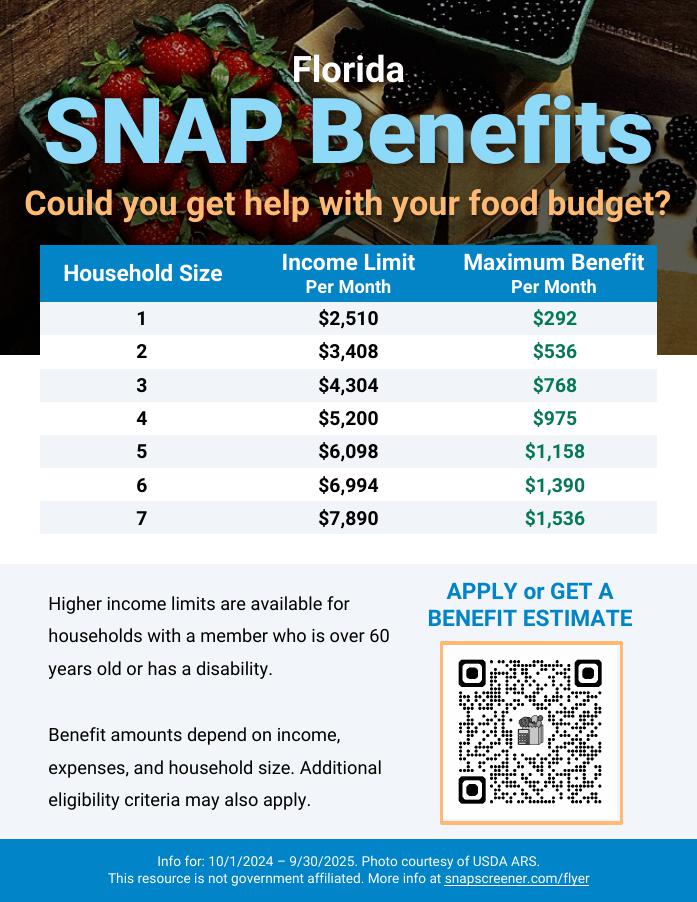
What is SNAP?
SNAP provides eligible households with a monthly allocation of funds loaded onto an Electronic Benefit Transfer (EBT Card). This card functions much like a debit card and can be used at authorized grocery stores, farmers’ markets, and other food retailers to purchase eligible food items. The primary goal of SNAP is to supplement the food budget of low-income families, enabling them to afford healthy and nutritious foods that they might otherwise struggle to access. This support contributes significantly to food security, improving public health outcomes and reducing the prevalence of hunger across the state.
The Role of the Florida Department of Children and Families (DCF)
The DCF is the state agency responsible for implementing SNAP in Florida. Their responsibilities encompass:
- Processing applications for SNAP benefits.
- Determining eligibility based on federal and state guidelines.
- Conducting interviews and verifying applicant information.
- Issuing EBT Cards to approved recipients.
- Providing ongoing case management, including processing changes in household circumstances and conducting periodic redeterminations of eligibility.
Understanding the DCF’s role is vital, as all interactions regarding your application and ongoing benefits will typically be through this agency. They serve as the primary point of contact and resource for those seeking food assistance in Florida.
Key Eligibility Criteria for Florida Food Stamps
Eligibility for SNAP benefits in Florida hinges on several factors, primarily related to a household’s financial situation, residency, and other specific requirements. It’s important to understand that eligibility is determined for the entire household, not just individual applicants. A “household” for SNAP purposes generally includes individuals who live together and customarily purchase and prepare food together.
Income Limits and Gross vs. Net Income
Income is arguably the most critical factor in determining SNAP eligibility. Florida considers both gross income (total income before deductions) and net income (income after certain deductions).
- Gross Monthly Income: For most households, gross monthly income must be at or below 200% of the federal poverty level. This threshold helps ensure that working families who may still struggle to make ends meet can qualify.
- Net Monthly Income: After certain deductions (like a standard deduction, earned income deduction, dependent care, medical expenses for the elderly/disabled, and housing costs), a household’s net monthly income must be at or below 100% of the federal poverty level.
- Elderly or Disabled Exception: Households containing an elderly (60+) or disabled member only need to meet the net income limit. They are exempt from the gross income test.
These income limits are updated annually and vary based on the number of individuals in the household. It is crucial to refer to the most current DCF guidelines or use their online screening tool for precise figures applicable to your household size.
Asset Limits
In addition to income, Florida also considers a household’s countable assets.
- For most households, countable assets (like money in bank accounts, cash, stocks, bonds) must not exceed $2,750.
- For households with at least one member aged 60 or older, or a disabled member, the asset limit is higher, at $4,250.
It is important to note that certain assets are generally not counted, such as your home, land around your home, most retirement accounts, and the value of one vehicle per adult. Understanding which assets are countable is essential for an accurate eligibility assessment.
Residency and Citizenship Status
To be eligible for SNAP benefits in Florida, applicants must:
- Be a resident of Florida. You must live in the state and intend to remain there.
- Be a U.S. citizen or a qualified non-citizen. This includes lawful permanent residents (green card holders), asylees, refugees, Cuban/Haitian entrants, and victims of trafficking, among others. There are specific rules regarding how long a qualified non-citizen must have been in the U.S. to be eligible. Unauthorized immigrants are not eligible for SNAP. However, eligible members of a household can receive benefits even if other household members are ineligible.
Work Requirements
Most able-bodied adults without dependents (ABAWDs) between ages 18 and 50 are subject to specific work requirements to receive SNAP benefits.
- These individuals must be working or participating in a work program for at least 80 hours per month, or volunteering for a specified number of hours.
- If they do not meet these requirements, they can only receive SNAP for a limited time (generally 3 months in a 36-month period), unless they are exempt. Exemptions can apply due to disability, pregnancy, caring for a child, or participating in a drug or alcohol treatment program, among others.
The Application Process: Step-by-Step
Applying for SNAP benefits in Florida involves several steps designed to ensure accuracy and fairness in determining eligibility.
Gathering Necessary Documentation

Before starting your application, gather all necessary documents to expedite the process. This typically includes:
- Proof of Identity: Driver’s license, state ID, passport.
- Proof of Residency: Utility bill, lease agreement, mail with your name and address.
- Proof of Income: Pay stubs, employer statements, award letters for benefits (Social Security, unemployment, etc.), child support statements.
- Proof of Assets: Bank statements, stock certificates.
- Household Information: Social Security numbers and dates of birth for all household members.
- Expenses: Rent/mortgage statements, utility bills, child care receipts, medical bills (for elderly/disabled).
Having these documents ready will allow you to complete the application accurately and respond quickly to any requests from the DCF.
Submitting Your Application
You can apply for SNAP benefits in Florida through several convenient methods:
- Online: The fastest and most common method is through the DCF’s MyFLFamilies website, specifically the Florida ACCESS portal. This allows you to complete and submit your application electronically.
- In Person: You can visit a local DCF service center to apply.
- Mail or Fax: Download an application form from the DCF website, complete it, and mail or fax it to the appropriate office.
Once your application is submitted, the DCF has a processing timeframe, typically within 30 days. Expedited SNAP (emergency food assistance) may be available for households with very low income and few liquid assets, usually within 7 days.
The Interview Process
After submitting your application, a DCF caseworker will schedule an interview, which can often be conducted over the phone. During this interview, the caseworker will review your application, ask questions to clarify information, and explain your rights and responsibilities. This is an opportunity to provide any missing documentation or answer further questions about your household’s circumstances. It is crucial to attend this interview or reschedule if necessary, as failing to do so can result in delays or denial of benefits.
Receiving Your EBT Card
If your application is approved, you will receive an EBT Card in the mail, usually within a few weeks of approval. The card will be loaded with your monthly SNAP benefits and can be used at most major grocery stores and authorized food retailers. Along with the card, you will receive instructions on how to activate it and a PIN number. It is vital to keep your EBT Card and PIN secure, as they function like cash.
Maximizing Your SNAP Benefits and Maintaining Eligibility
Once approved for SNAP benefits, understanding how to use them effectively and maintain your eligibility is paramount.
Understanding Benefit Amounts
The amount of SNAP benefits a household receives each month is based on its size, income, and allowable deductions. The maximum benefit amount is determined annually by the federal government and adjusted for inflation. It’s important to budget your benefits to last the entire month, as they are intended to supplement, not fully cover, a household’s food needs.
Reporting Changes
To ensure continuous eligibility and accurate benefit amounts, you are required to report certain changes in your household’s circumstances to the DCF. These changes include:
- Changes in income (e.g., new job, job loss, raise).
- Changes in household size (e.g., someone moves in or out, birth of a child).
- Changes in residency.
- Changes in assets that could affect eligibility.
Failure to report these changes in a timely manner (typically within 10 days of the change) can result in overpayments, benefit reduction, or even program disqualification. The DCF will also periodically conduct “redeterminations” to re-verify your eligibility, usually every 6-12 months.
Resources and Assistance
Beyond the DCF, numerous non-profit organizations and community services in Florida can assist with applying for SNAP and provide additional food support. Food banks, local pantries, and advocacy groups often offer guidance, help with paperwork, and access to other food programs. Connecting with these resources can provide a comprehensive support system for managing food security.
Common Misconceptions and Additional Support
Despite its crucial role, SNAP is often subject to misconceptions.
Addressing Stigma
It’s important to remember that SNAP is a program designed to help individuals and families facing economic hardship. There should be no stigma associated with seeking or receiving this support. The program is a safety net that allows people to meet basic needs, providing a foundation for stability and self-sufficiency. Utilizing SNAP is a responsible step toward ensuring health and well-being for your household.

Other Food Assistance Programs
While SNAP is the largest food assistance program, Florida offers other programs that may complement SNAP benefits or provide support for specific populations:
- WIC (Special Supplemental Nutrition Program for Women, Infants, and Children): Provides food, healthcare referrals, and nutrition education for low-income pregnant women, new mothers, infants, and children up to age five.
- School Meal Programs: Offers free or reduced-price breakfasts and lunches for eligible children during the school year.
- Summer Food Service Program: Provides free meals to children when school is out of session.
- Food Banks and Pantries: Local community organizations often operate food banks and pantries, offering emergency food assistance regardless of SNAP eligibility.
By understanding the eligibility requirements and application process for food stamps in Florida, residents can confidently access the support available to them. The SNAP program is a fundamental component of the state’s social safety net, empowering individuals and families to secure adequate nutrition and foster a healthier lifestyle.
LifeOutOfTheBox is a participant in the Amazon Services LLC Associates Program, an affiliate advertising program designed to provide a means for sites to earn advertising fees by advertising and linking to Amazon.com. Amazon, the Amazon logo, AmazonSupply, and the AmazonSupply logo are trademarks of Amazon.com, Inc. or its affiliates. As an Amazon Associate we earn affiliate commissions from qualifying purchases.